Understanding Rust Spots on Stainless Steel Sinks
Most marks that look like rust on a stainless steel sink are actually surface deposits of iron particles left behind by water, cookware, or metal cans. The sink itself rarely corrodes in normal residential conditions, so these spots can almost always be removed without replacing the fixture.
Stainless steel contains chromium, which reacts with oxygen to form a passive oxide layer. This invisible shield prevents rust from forming on the steel itself. High-quality sinks made from 18/10 chrome nickel steel are especially resistant to corrosion in typical kitchen use. The brushed grain of the metal, however, acts like fine sandpaper, catching rust flakes, iron dust, and mineral residue from other objects.
When a cast iron skillet, a steel wool pad, or a wet can sits on the surface, moisture releases tiny iron particles. As the water evaporates, those particles oxidize and bond to the sink. The result looks exactly like the sink is rusting, but it is usually just a stain that can be lifted with the right technique.
Why Your Sink Looks Rusty Even When It Is Not
The visible brown or orange marks are almost never corrosion of the sink basin itself. They are transfer stains caused by iron that has oxidized on top of the stainless steel. Stainless steel can rust only in extreme conditions, such as prolonged contact with bleach, strong acids, or embedded steel wool fibers.
Water quality also plays a role. Hard water contains dissolved minerals like calcium and magnesium, and sometimes trace iron. When water droplets dry on the sink, those minerals remain and can create a rough surface that traps more particles. This is why rust spots often appear in areas where water pools, such as near the drain or around faucet bases.
How to Identify Surface Rust vs. Real Corrosion
Run a fingernail lightly over the spot. Surface rust deposits feel raised or rough, while real corrosion may feel like a shallow pit or crater in the metal. Another quick test is to wipe the mark with a damp cloth and a little baking soda. If the brown color transfers to the cloth, it is surface iron and not the sink itself.
- Raised, rough, or dusty mark: Surface deposit from iron particles.
- Brown ring under a can or pan: Transfer rust from the object.
- Smooth but discolored patch: Could be waterborne mineral staining or early surface contamination.
- Pitted or rough hole: Rare real corrosion, usually caused by prolonged acid or bleach exposure.
Tools and Materials You Need
You do not need aggressive abrasives or a replacement kit. Most rust-colored marks on stainless steel respond to pantry staples, plus one acid-based commercial cleaner for difficult rings.
- Baking soda – mild alkaline powder for lifting oxidized metal and minerals.
- White distilled vinegar – mild acid that helps dissolve iron deposits.
- Non-abrasive sponge or microfiber cloth – safe for brushed finishes.
- Bar Keepers Friend or oxalic acid-based cleaner – stronger option for stubborn can rings.
- Warm water – for rinsing and preparing the surface.
- Rubber gloves – protect skin from acidic cleaners.
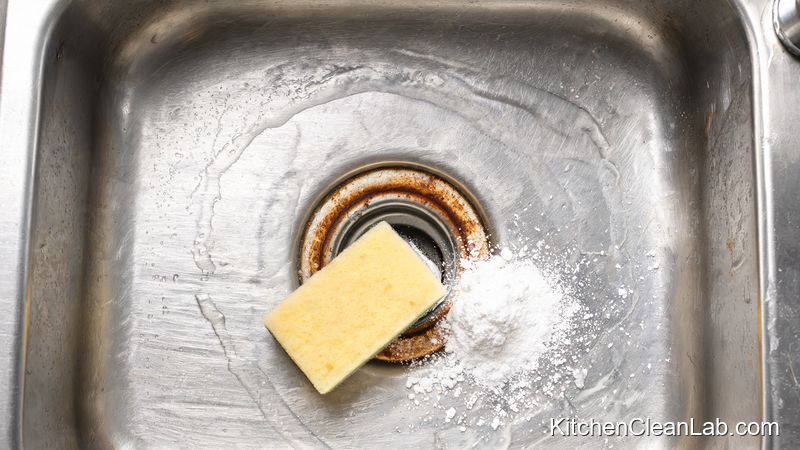
Step-by-Step: Remove Rust Spots with Baking Soda and Vinegar
This is the safest first-line method for light to moderate rust-colored marks. It pairs the mild abrasive action of baking soda with the acid lift of vinegar to detach iron deposits without scratching the sink.
- Clear and rinse the sink. Remove dishes, sponges, and debris. Rinse the entire basin with warm water to loosen surface film.
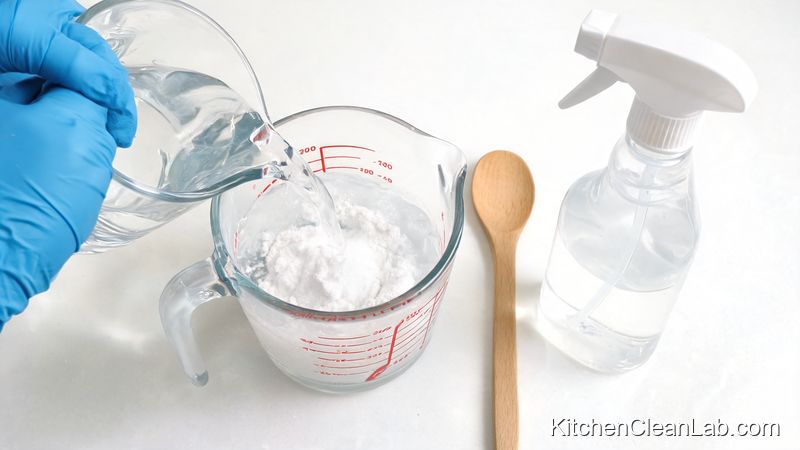
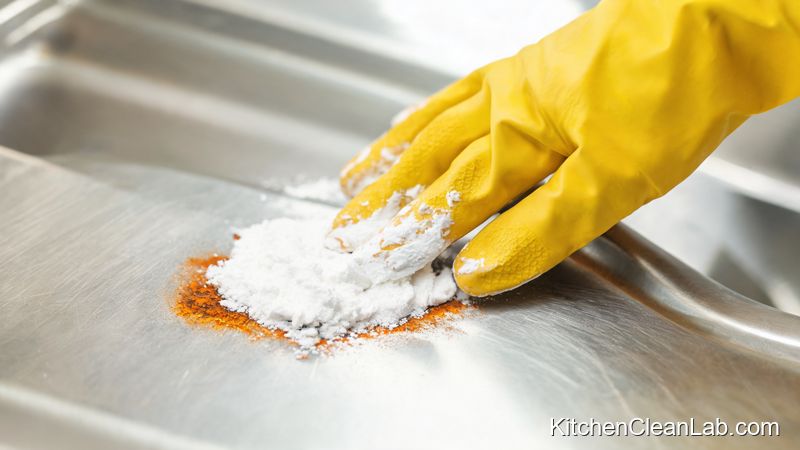
- Mix a paste. Pour 2 to 4 tablespoons of baking soda into a small bowl. Add distilled white vinegar a few drops at a time. Stop when the mixture has a spreadable consistency between toothpaste and liquid hand soap. Do not add vinegar all at once or the bowl will foam over.
- Apply the paste to the rust spot. Use a soft sponge, a microfiber cloth, or gloved fingers to spread a thick layer over the stain and the surrounding area.
- Let it sit. Allow the paste to work for 1 to 10 minutes. Rings left by cans may need the full 10 minutes. Do not let the paste dry completely because that can make residue harder to rinse.
- Rub with the grain. Look at the sink under bright light and find the fine brushed lines. Rub only in that direction with light to medium pressure. Rubbing across the grain can leave micro scratches that dull the finish.
- Rinse and dry. Rinse thoroughly with running water, then wipe the entire sink with a dry microfiber cloth. Leaving water to air dry is what encourages new deposits.
- Polish if needed. Apply a small amount of stainless steel cleaner to a clean cloth and wipe the whole basin to restore luster.
If the mark has faded but not disappeared, repeat the process once or twice. These deposits are often layered, and each pass removes more iron.
How to Remove Rust Spots Around the Drain and Faucet Base
Rust marks often appear in tight curves and around sink fixtures where water and iron particles pool. The same cleaning agents work, but the technique changes slightly for tight spaces.
- Use an old, soft-bristled toothbrush to apply paste or commercial cleaner to curves and crevices.
- Wrap a damp microfiber cloth around a wooden spoon handle to buff around the faucet base without scratching the surrounding steel.
- Flush with plenty of water after cleaning so acidic residue does not sit in the drain area.
- Dry all curved surfaces with a clean cloth, paying attention to seams where water collects.
If rust forms repeatedly in the same spot near the faucet, inspect the faucet base and mounting hardware. The stain may be coming from a rusting washer or bracket, not the sink.
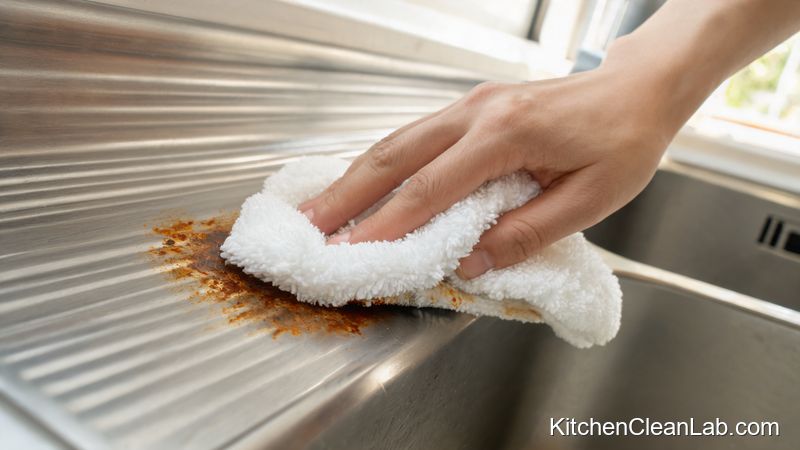
Commercial Cleaners for Stubborn Rust Rings
When a wet can or cast iron pan leaves a deep brown ring, baking soda alone may not be potent enough. In those cases, an oxalic acid-based cleaner such as Bar Keepers Friend works faster. Apply it to a damp sink, rub gently with the grain, and rinse within one minute to avoid over-etching.
CLR and similar calcium and lime removers can also dissolve rust and hard water minerals. Wet the stain, apply a small amount, and let it sit for 2 to 3 minutes before scrubbing with a non-scratch pad. Always wear gloves and open a window or run the exhaust fan because acid-based cleaners can release irritating fumes.
Do not use chlorine bleach. Bleach can break down the passive chromium oxide layer and make the sink more vulnerable to real corrosion. Do not use steel wool, wire brushes, or harsh scouring powders. These leave tiny iron particles behind and create deep scratches that trap more rust.
Quick-Reference: DIY vs. Commercial Rust Removal Methods
Use this guide to match the method to the severity of the stain. Each option requires a final rinse and thorough drying to prevent a repeat mark.
- Baking soda and vinegar paste: Best for light, surface-level rust-colored water marks. Very low risk and inexpensive.
- Lemon juice and salt paste: Useful for moderate rings if baking soda is not enough. Let it sit overnight, then rub gently with the grain.
- Bar Keepers Friend: Strongest over-the-counter option for deep can rings and cast iron marks. Use sparingly and rinse quickly.
- CLR or lime scale remover: Works on rust plus hard water mineral deposits. Follow label directions and never mix with bleach.
- 600-grit wet/dry sandpaper: Last resort for embedded iron particles. Wet sand lightly with the grain, then polish with stainless steel cleaner. This can change the sheen if you press too hard.
Preventing Future Rust Spots
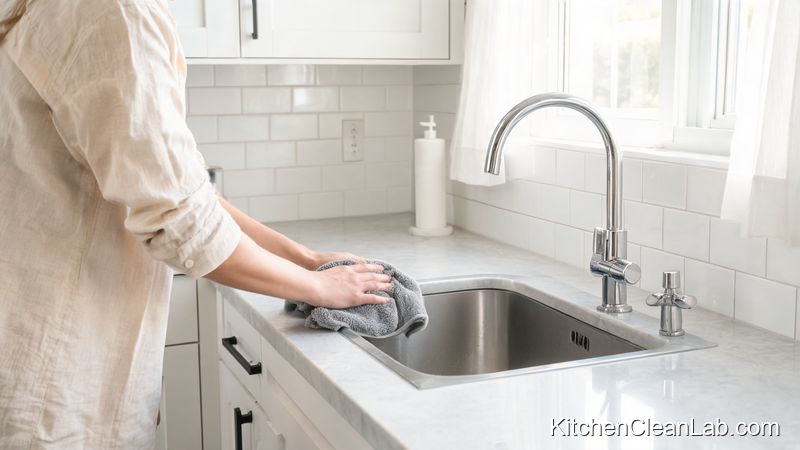
Prevention is easier than removal. The single most effective habit is to dry the sink after each use. A quick wipe with a microfiber cloth removes the waterborne minerals and iron particles that cause spots.
- Do not leave metal objects in the sink. Cast iron cookware, steel wool, carbon steel baking sheets, and wet cans should not sit on the stainless steel surface overnight.
- Avoid plastic bowls for washing up. Some plastic scuffs the sink, creating fine scratches that hold rust particles.
- Rinse after contact with salt, vinegar, citrus juice, mustard, or pickles. Acidic and salty foods can attack the surface if allowed to dry on it.
- Use a sink grid or mat. A removable protective grid keeps heavy pots and pans from scraping the basin and reduces the number of places where rust deposits can collect.
- Apply a stainless steel cleaner monthly. A polish or cleaner such as Franke Kitchen Care Stainless Steel Sink Cleaner leaves a protective barrier and evens out the finish.
Common Mistakes to Avoid
Even the right cleaner can fail if you use it incorrectly. Avoid these errors to keep the sink looking bright without dulling the finish.
- Scrubbing across the grain. Stainless steel has a directional brushed finish. Rubbing across it leaves visible swirls and micro scratches.
- Using chlorine bleach. Bleach damages the chromium oxide layer and can cause true rusting over time.
- Reaching for steel wool or wire brushes. These leave tiny iron particles embedded in the sink, recreating the exact problem you are trying to solve.
- Mixing cleaners. Never combine acidic rust removers with bleach or ammonia. The fumes can be dangerous.
- Skipping the final drying step. If you rinse and walk away, the same waterborne minerals will simply settle back into the grain and leave a new spot.
Frequently Asked Questions
Can a stainless steel sink actually rust?
In normal household conditions, a quality 18/10 stainless steel sink should not rust through or corrode. Rust-looking spots are usually iron particles from other sources that have settled on the surface. True rusting is extremely rare and typically linked to prolonged contact with bleach, strong acids, or embedded steel wool particles.
Why did my can of beans leave a rust ring on the sink?
The bottom of a metal can is usually coated steel or tin, not stainless steel. When moisture sits under the can, the bottom oxidizes and transfers a fine layer of rust onto the sink. The ring is a stain on the surface, not a hole in the stainless steel.
Will baking soda scratch a stainless steel sink?
Baking soda is mildly abrasive but generally safe when used as a paste and rubbed with the grain. Avoid using it dry or with a gritty scouring pad. If you are concerned about scratching, test on an inconspicuous area first.
What should I do if rust spots keep coming back?
Repeated rust spots usually mean something in the kitchen is still shedding iron onto the sink. Look for cast iron pans, steel wool pads, metal storage cans, or rusting dish racks. Remove those sources, dry the sink after each use, and apply a stainless steel cleaner to protect the surface.
The Bottom Line on Stainless Steel Sink Rust Spots
Treat rust spots as a cleaning issue, not a structural failure. Start with the baking soda and vinegar paste because it is safe and effective for almost every surface mark. If that fails, move up to an oxalic acid cleaner, always rubbing with the grain and rinsing thoroughly. The real secret is consistency: wipe the sink dry, remove metal objects, and use a microfiber cloth to maintain the passive oxide layer. With these habits, your stainless steel sink will look clean and bright for decades without replacement.