Why Grease Builds Up on Top of Kitchen Cabinets
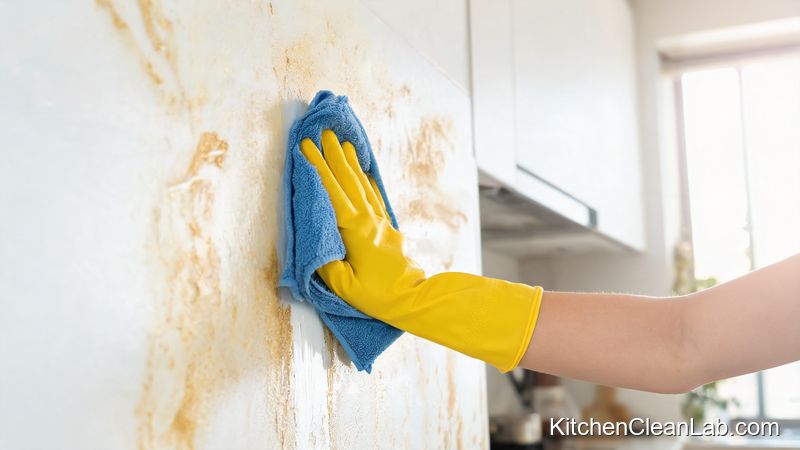
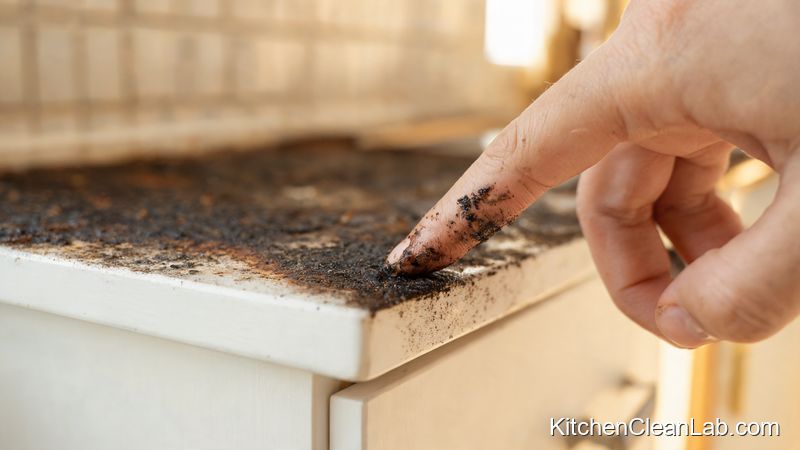
Grease builds up on top of kitchen cabinets because hot cooking oil vapor rises, cools near the ceiling, and traps dust on horizontal surfaces. Over months, this forms a sticky, amber film that requires degreasing, not just dusting. This area is often missed until it feels tacky.
Few people inspect this area because it sits above eye level. The problem is worse in kitchens without a properly vented range hood or when high-heat frying is common. The combination of airborne cooking oil, household dust, and cabinet finish warmth creates a tacky layer that hardens over time. Once that happens, regular dusting simply smears the grease instead of removing it.
Before you start, know this: you are not just cleaning dirt. You are removing a bonded oil film that can pull paint or stain if you use the wrong product. The right approach is to dissolve the bond with a degreaser, lift it with a microfiber cloth, and dry the surface completely.
The Easy Trick: Clean Once, Then Lay a Replaceable Barrier
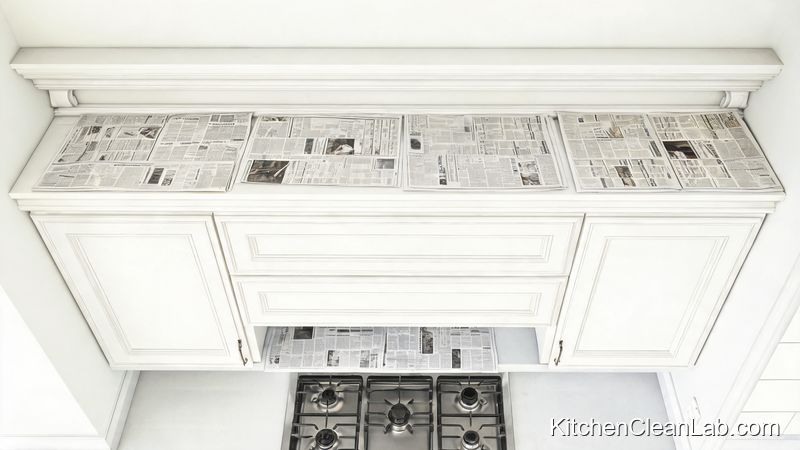
The easy trick is to deep-clean the cabinet top once, then cover it with a replaceable barrier such as newspaper, wax paper, or plastic wrap. Future grease lands on the liner, not the cabinet, so monthly cleanup takes under two minutes.
Most people overlook cabinet tops until the grease is thick. The hack that makes this easier is not another cleaner: it is a physical barrier. After you remove the existing film, line the top with newspaper, wax paper, or plastic wrap. The next time grease and dust land, they settle on the disposable layer. You roll it up, throw it away, and lay a fresh sheet.
This is especially helpful above the stove, refrigerator, and sink runs. You do not need to see the liner from below because cabinet tops are usually hidden. Use the method only after you have done the real degreasing work; a liner over old grease traps moisture and makes the mess worse.
What You Need Before You Start
Gather a sturdy step stool, three microfiber cloths, dish soap, white vinegar, baking soda, and a disposable liner like newspaper or wax paper. Wear rubber gloves and always test any cleaner on a hidden section before wiping the full cabinet top.
Working above your head is awkward, so setting up properly prevents falls and finish damage. You will need:
- Sturdy step stool or small ladder — never stand on countertops or cabinets.
- Three microfiber cloths — one for cleaning, one for rinsing, one for drying.
- Dish soap — Dawn or any grease-cutting brand.
- White distilled vinegar — use a 1:1 mix with warm water for moderate grease.
- Baking soda — add only if you have stubborn sticky patches.
- Rubber or nitrile gloves — degreasers can dry out skin quickly.
- Newspaper, wax paper, or plastic wrap — the easy long-term barrier.
- Drop cloth or old towel — protect counters from drips.
Safety note: Open a window or turn on the range hood if you use vinegar in a tight space. The odor is mild, but overhead work puts it close to your face.
Step-by-Step: How to Degrease the Top of Kitchen Cabinets
Degrease the top of kitchen cabinets by wiping with warm water and dish soap, treating stuck spots with a baking soda paste or vinegar, rinsing thoroughly, and drying completely. Then add a disposable liner to capture future oil droplets before they harden.
Work from one end of the cabinet run to the other. Start with the mildest cleaner and escalate only where grease remains.
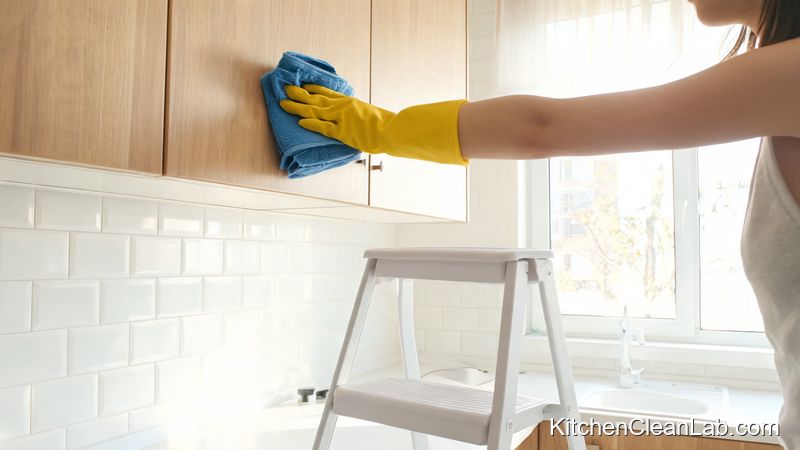
- Set up your workspace. Place a step stool on a stable, level floor. Lay a drop cloth over the counter below. Put on gloves.
- Remove loose dust and debris. Use a dry microfiber cloth or a vacuum with a brush attachment. Do not use a damp cloth first; wet dust becomes a muddy paste that spreads grease.
- Apply a degreasing solution. Mix 2 cups warm water with a few drops of dish soap. Dampen a microfiber cloth and wring it out well. Wipe the cabinet top in the direction of the wood grain or front to back on laminate.
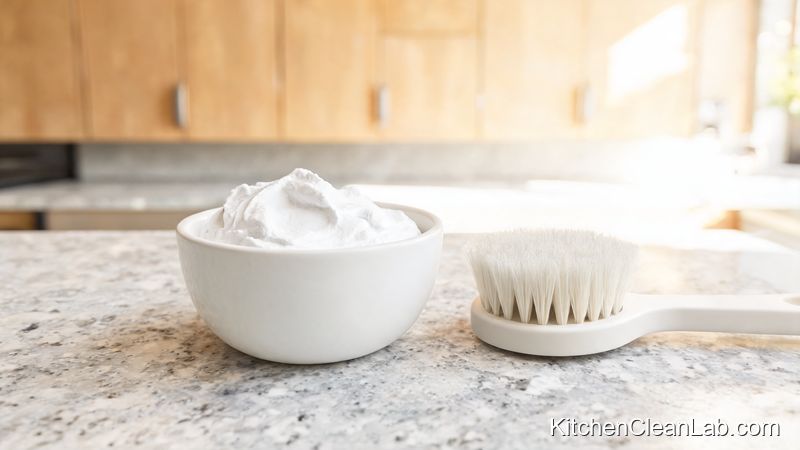
- Tackle sticky spots. If the surface still feels tacky, spray a 1:1 vinegar and warm water solution onto the cloth, not directly onto the cabinet. Let the damp cloth sit on the spot for two to three minutes. For thick buildup, make a paste of 2 tablespoons baking soda and 1 tablespoon water. Rub lightly with a soft-bristled brush, then wipe away.
- Rinse the surface. Wet a clean microfiber cloth with plain warm water, wring it thoroughly, and wipe every cleaned area. Soap residue can attract more dust and leave streaks.
- Dry completely. Use a dry microfiber cloth. Moisture left on wood or laminate can cause clouding, swelling, or water marks.
- Lay the replaceable barrier. Cut newspaper, wax paper, or plastic wrap to fit the cabinet top. Overlap pieces slightly so oil does not reach gaps. Replace when it looks dirty or every 4-6 weeks.
Cleaning Different Cabinet Finishes Safely
Wood cabinets need dish soap, limited water, and no ammonia. Painted cabinets scratch with abrasive powders, so use liquid cleaners only. Laminate tolerates mild degreasers but swells if water seeps into exposed edges, so dry thoroughly. Always test every product on a hidden spot first.
The top of a cabinet is often finished differently than the doors or frames. Some manufacturers use a less expensive top panel, so do not assume it will handle the same scrubbing as the front.
| Cabinet Finish | Best Degreaser | Avoid | Key Step |
|---|---|---|---|
| Wood or stained | Dish soap and warm water; diluted vinegar if tested | Ammonia, soaking, steel wool | Dry immediately |
| Painted | Dish soap; diluted vinegar | Baking soda paste, scouring pads | Use a soft microfiber cloth |
| Laminate or thermofoil | Dish soap; diluted vinegar | Excess water at seams | Wipe and dry edges thoroughly |
If you are unsure whether the top is wood, painted, or laminate, check the front of a door stile or underside. Open a cabinet door and look at the top edge from inside; this area is often raw or lightly finished, which tells you how porous the surface is.
Common Mistakes That Make Cabinet-Top Grease Worse
Avoid dry paper towels, direct spraying, and skipping the final dry step. These mistakes spread grease, push moisture into seams, and leave a sticky residue that traps more airborne cooking oil. Work with a damp cloth, not a wet one.
- Using dry paper towels or general-purpose wipes. They do not dissolve grease; they push it around and leave fibers behind.
- Spraying cleaner directly onto the cabinet. Excess liquid runs into seams, corners, and along the underside. Always spray the cloth.
- Skipping the rinse. Leftover soap or vinegar holds dust and can alter the sheen of the finish.
- Soaking the surface. Wood and laminate can swell or delaminate, especially at the front edge where the top meets the face frame.
- Using abrasive scrubbers on painted cabinets. A scouring pad can remove the topcoat and create a dull patch that is visible under light.
- Leaving old liners in place for months. Newspaper liners eventually absorb oil and can stain the cabinet underneath.
If you notice a white haze after cleaning, stop immediately. That is often finish damage or trapped moisture. Let the area dry, then evaluate if a cabinet-safe polish or touch-up is needed. Prevention is far easier than finish repair.
How to Keep Cabinet Tops Clean Longer
Run the range hood before and during cooking, replace the cabinet-top liner every four to six weeks, and wipe the top monthly with a damp microfiber cloth. These habits stop oil vapor from bonding with dust and hardening into sticky grease.
- Turn on the exhaust fan early. It needs to pull steam and oil vapor away before they rise and cool.
- Reduce high-heat frying near open cabinet runs. A grease splatter screen helps contain airborne oil at the stove.
- Keep cabinet tops lined. Newspaper, wax paper, or plastic wrap works because it is flat and disposable.
- Check the liner monthly. If it feels sticky to the touch or looks yellowed, replace it.
- Dust the top every time you clean the kitchen. A quick pass with a dry microfiber cloth prevents dust from becoming part of the grease layer.
- Do not forget the cabinet sides and crown molding. Grease travels upward and sideways, so wipe the adjoining vertical surfaces when you degrease the top.
Frequently Asked Questions About Degreasing Cabinet Tops
Most cabinet-top grease responds to dish soap and warm water. For heavier sticky residue, use a 1:1 vinegar-water solution or a baking soda paste, but painted and wood finishes need a spot test first. Never soak the surface, and always dry thoroughly.
Can I use Dawn dish soap on top of kitchen cabinets?
Yes. Dawn or any high-quality degreasing dish soap is safe for most wood, painted, and laminate cabinet tops when diluted in warm water. Use only a few drops per 2 cups of water, wring the cloth well, and rinse thoroughly to avoid residue.
How do you remove sticky grease from wood cabinets without damaging the finish?
Start with the gentlest method: warm water and a few drops of dish soap. If stickiness remains, test a 1:1 vinegar-water mix on a hidden spot. Apply it to a cloth, not the wood, and dry immediately. Avoid ammonia, bleach, and soaking. For stubborn spots, a paste of baking soda and water can be used lightly, but only on sealed wood and not on antique or waxed finishes.
What is the best homemade degreaser for cabinet tops?
A mix of equal parts white distilled vinegar and warm water is the best all-purpose homemade degreaser for moderate cabinet-top grease. For thicker buildup, a paste made from 2 tablespoons baking soda and 1 tablespoon water adds mild abrasion. Always follow with a clean-water rinse and thorough drying.
Is vinegar safe for painted kitchen cabinets?
Diluted vinegar is generally safe for fully cured painted cabinets. Use a 1:1 solution and apply it with a soft microfiber cloth. Avoid letting it pool, and rinse with plain water afterward. If the paint is old, flat, or unfinished, test first because acid can dull some sheens.
Final Take: Clean the Grease, Then Stop It Before It Sticks
Degreasing the top of kitchen cabinets is only half the job. The easy trick, laying a replaceable liner after cleaning, prevents future grease from bonding with dust and keeps monthly maintenance under two minutes. That is the long-term win.
The most effective routine is simple: degrease with dish soap and warm water first, treat stubborn patches with vinegar or baking soda only as needed, dry the surface completely, and then cover the top with a disposable barrier. This protects the finish and saves you from repeating heavy scrubbing. When the liner gets dirty, replace it and move on. That is the easiest way to keep sticky cabinet-top grease off your kitchen for good.