Why Marble Kitchen Backsplashes Need a Different Cleaning Approach
Marble is calcium carbonate, so acidic cleaners etch polished surfaces and abrasive tools create permanent scratches. A pH-neutral stone cleaner, warm water, and a soft microfiber cloth remove grease without dulling the stone or damaging grout lines. Always avoid vinegar and bleach on marble.
Marble backsplash tile brings unmatched depth, but it is not as forgiving as ceramic or glass. The stone's polished or honed surface can be dulled by acids, including vinegar, lemon juice, tomato sauce, and many all-purpose kitchen sprays. Because a backsplash sits directly behind the cooktop, it faces oil splatter, steam, and food particles daily. Grease that would be easy to wipe from glass can settle into marble's microscopic pores if left too long.
Stone care professionals treat marble as a delicate, porous surface. Even sealed marble can etch when exposed to acidic products. Your cleaning routine should focus on lifting oil and food residue without changing the mineral structure. You do not need aggressive scrubbing; you need the right product chemistry and a repeatable maintenance habit.
Another key point is that marble backsplash tiles are usually paired with cement-based grout. Grout lines can absorb grease and cleaner residue, becoming darker or yellow over time. Using an acid-based tile cleaner on the grout may damage both the grout and the surrounding marble edges. A pH-neutral product protects both surfaces at the same time.
Daily and Weekly Maintenance to Prevent Grease Buildup
Wipe the marble backsplash with a dry or lightly damp microfiber cloth after cooking. A weekly wash with warm water and a pH-neutral stone cleaner prevents oil splatter from becoming a sticky, hard-to-remove film. This habit protects the stone and keeps deeper cleaning fast.
Most marble backsplash damage happens slowly, not from a single spill. A few drops of oil left overnight can create a faint stain. A daily wipe takes less than one minute and keeps the surface looking clean without chemical cleaners. Keep a clean microfiber cloth near the range and use it after frying, sautéing, or simmering sauces.
For a weekly routine, use the following:
- Remove small appliances near the backsplash to reach hidden splatter.
- Dust the surface with a dry microfiber cloth to trap dry particles.
- Spray a pH-neutral stone cleaner onto the cloth, not directly onto the stone, to control saturation.
- Wipe in broad, overlapping passes from bottom to top to avoid streaking.
- Dry with a separate clean cloth to prevent water spots.
If you cook often with high heat or fry foods, increase the wipe-down to after every major meal. A backsplash behind a gas range sees more airborne oil than one behind a sink or prep area.
Step-by-Step Guide to Cleaning a Marble Kitchen Backsplash
Use a pH-neutral stone cleaner, distilled water, and non-abrasive cloths. Work in small sections from bottom to top, rinse with clean water, and buff dry to prevent water spots and streak marks. Test any cleaner in a hidden area first, and avoid abrasive scrub pads.
What You Will Need
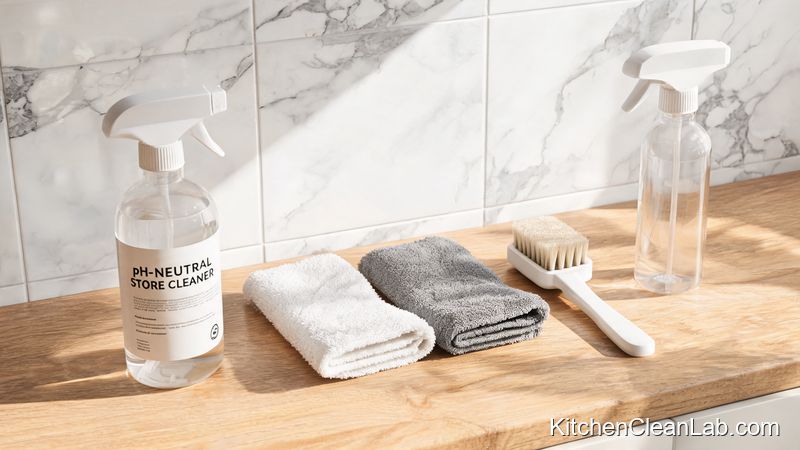
- pH-neutral stone cleaner or a drop of mild liquid dish soap
- Warm distilled or filtered water
- Two or three clean microfiber cloths
- Soft nylon brush for grout lines
- Dry towel for the countertop
- Rubber gloves and eye protection if using a spray cleaner
Turn off the cooktop and let the area cool completely. Lay a dry towel along the countertop below the backsplash to catch drips. Open a window or run the range hood fan for ventilation.
Cleaning Steps
- Dust first. Wipe the entire backsplash with a dry microfiber cloth. This removes loose dust and keeps it from turning into a paste when wet.
- Prepare the cleaning solution. Mix warm distilled water with a pH-neutral stone cleaner according to the label. If you use dish soap, add only one or two drops per quart of water. Too much soap can leave a film on marble.
- Test a hidden area. Apply the solution to a small spot behind the range or under a cabinet. Wait two minutes, wipe dry, and check for dullness or discoloration.
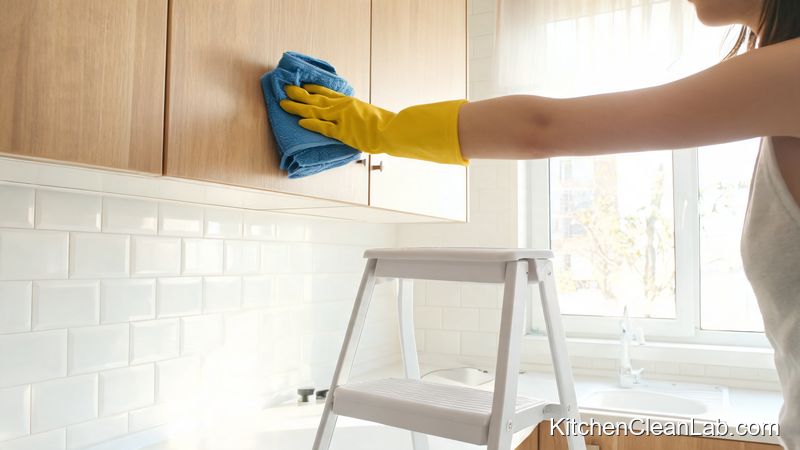
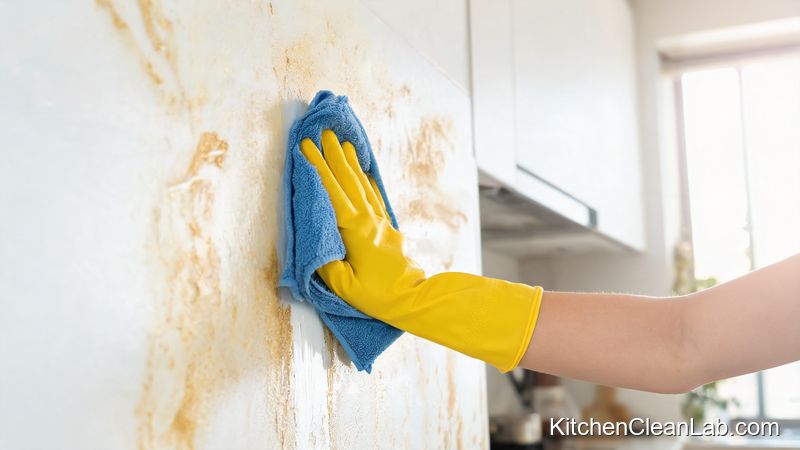
- Wipe the stone. Dampen a microfiber cloth with the solution and wring it well. Work in sections from bottom to top so dirty water does not run over dry areas and leave streaks.
- Clean grout lines. Dip a soft nylon brush in the solution and gently scrub grout joints. Do not use metal brushes or acidic grout cleaners.
- Rinse with clean water. Use a separate cloth dampened with plain warm water to remove cleaner residue. Cleaner left on marble can attract more dirt.
- Buff dry immediately. Finish with a dry microfiber cloth. Use circular or overlapping strokes to restore a streak-free finish.
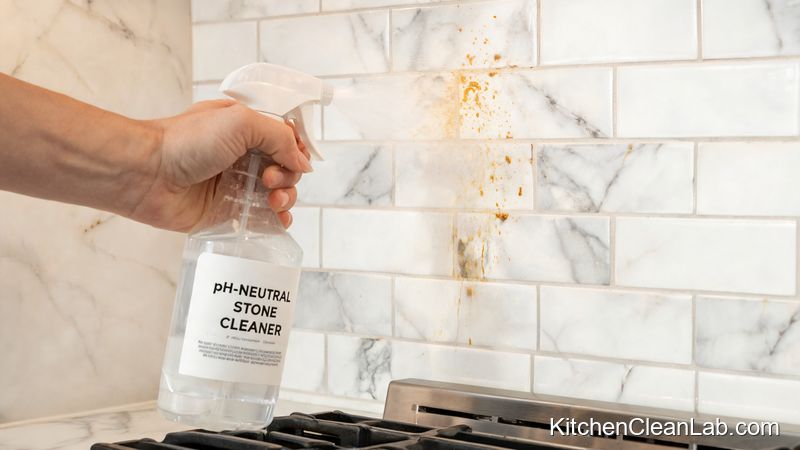
If the backsplash is heavily soiled, repeat the process once instead of pressing harder. Aggressive pressure on marble can create micro-scratches, especially on polished surfaces.
Removing Grease, Hard Water Stains, and Light Etching
For grease, use a stone-safe degreaser or pH-neutral cleaner. For hard water spots, choose a non-acidic marble film remover. Avoid vinegar, lemon, ammonia, and abrasive pads, which permanently etch or scratch marble. Let the cleaner dwell for 30 seconds before wiping, and dry thoroughly afterward.
Grease is the most common issue behind a cooktop. Fresh oil splatters wipe away easily with a damp microfiber cloth. For older, sticky grease, spray a pH-neutral stone cleaner onto the cloth and hold it over the spot for 30 seconds before wiping. This dwell time breaks the oil bond without soaking the stone.
If grease has hardened, place a cloth wet with warm water over the area for two or three minutes. Do not use a razor blade or steel wool. Once softened, wipe with a stone-safe cleaner. For a stubborn oil stain that has penetrated the stone, use a commercial marble poultice according to the manufacturer's instructions. Avoid homemade baking soda pastes on polished marble; they can be abrasive and alkaline enough to dull the surface.
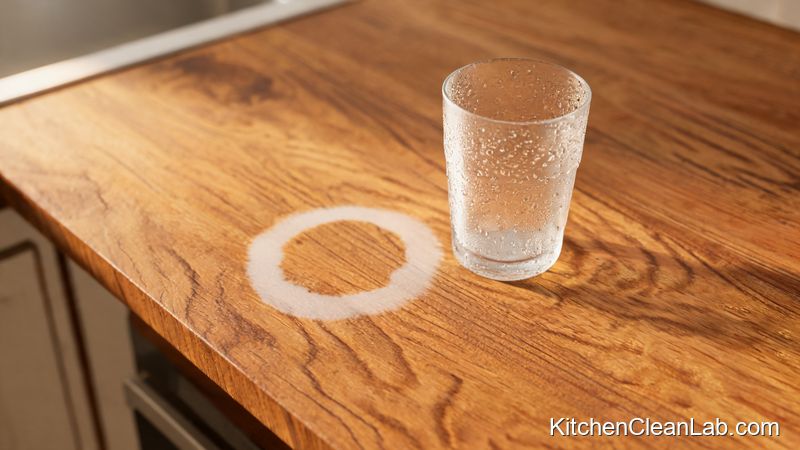
Hard water stains are mineral deposits. They often appear as cloudy white spots or rings near the sink or dishwasher. Acid-based removers will remove the mineral buildup but can also etch the marble. Use a non-acidic stone film remover made for marble or let a soft cloth dampened with distilled water sit on the area for several minutes to soften the film. Then wipe with a pH-neutral cleaner and dry thoroughly.
Light etching looks like a dull or lighter mark where an acid sat on the stone. Cleaning cannot reverse etching. If the mark is shallow, a marble polishing powder may improve the appearance. Deeper etching should be handled by a stone restoration specialist.
| Safe for Marble | Never Use on Marble |
|---|---|
| pH-neutral stone cleaner | Vinegar, lemon, and citrus sprays |
| Warm distilled or filtered water | Bleach and ammonia |
| Microfiber or soft cotton cloth | Steel wool and abrasive scrub pads |
| Soft nylon grout brush | Acid-based grout cleaners |
| Stone-safe impregnating sealer | Wax or acrylic floor polish |
Sealing and Long-Term Protection for Marble Backsplashes
Seal marble backsplashes every 6 to 12 months with an impregnating stone sealer. Sealing reduces oil and water absorption, but it does not make marble acid-proof; wipe spills quickly even after sealing. Reseal when water no longer beads, and seal grout lines too.
Sealing a marble backsplash is simpler than sealing a countertop because it is a vertical surface with less direct food contact. Use an impregnating sealer designed for natural stone. It works by filling the microscopic pores below the surface while allowing the stone to breathe. Do not use film-forming sealers, waxes, or acrylic polishes, which can create a cloudy layer and trap moisture.
Before sealing, clean the backsplash thoroughly and let it dry for at least 24 hours. Apply the sealer to the tile and grout with a clean cloth or applicator pad, following the label. Wipe away excess before it dries to avoid hazing. A second coat may be needed for highly porous marble.
To test whether the backsplash needs sealing, place a few drops of water on the stone. If the water beads up, the sealer is working. If the water soaks in and darkens the stone within a few minutes, it is time to reseal. Cooking heat, steam, and frequent cleaning gradually wear down sealers, so an annual check is more useful than relying on a fixed calendar.
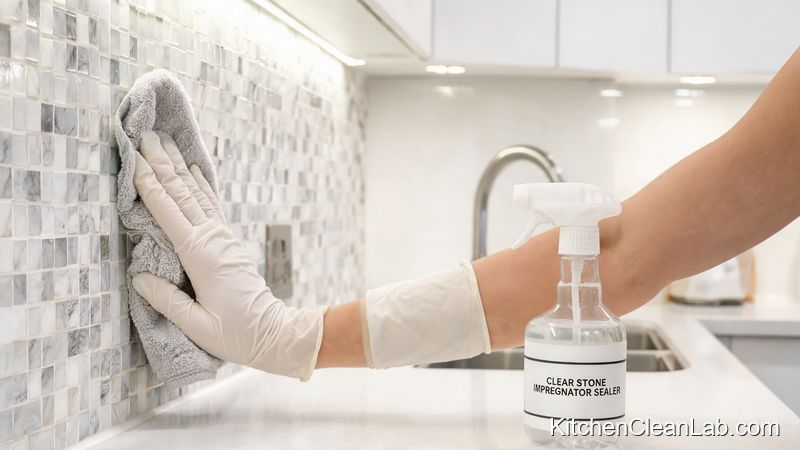
Grout lines need the same protection. Apply sealer to grout joints as well. A soft artist's brush or grout sealer applicator helps direct product exactly where it is needed without spreading too much onto the marble surface.
Common Mistakes That Damage Marble Backsplashes
Using vinegar, bleach, citrus cleaners, or scrub sponges can etch, bleach, or scratch marble. Other mistakes include leaving water to air-dry, using too much cleaner, and skipping the annual sealant test. Always use pH-neutral products and soft cloths, and never scrub with abrasive pads.
- Spraying cleaner directly onto the stone. This can over-saturate porous marble and grout. Spray the cloth first.
- Using vinegar or citrus cleaners. Even diluted vinegar etches polished marble and leaves dull spots.
- Scrubbing with steel wool or green pads. These create scratches that catch light and hold dirt.
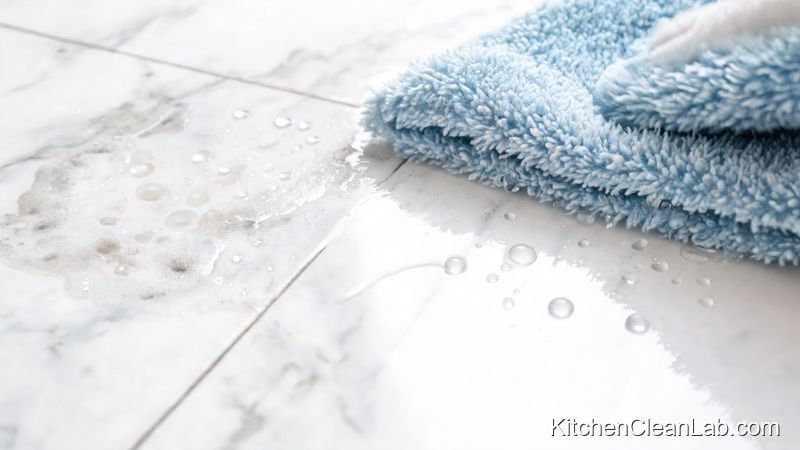
- Letting water evaporate on the surface. Minerals in tap water can leave new hard water spots. Always buff dry.
- Leaving oil splatter overnight. Fresh grease is much easier to remove than aged, polymerized grease.
- Skipping the water droplet test. A worn sealer allows stains to penetrate deeper and become permanent.
If you hire a house cleaning service, specify that marble requires pH-neutral, stone-safe products. Many general kitchen cleaners contain acids or bleach that can damage the surface in one visit.
Frequently Asked Questions About Cleaning Marble Kitchen Backsplashes
These answers cover the most common marble backsplash cleaning questions, including vinegar safety, sealing frequency, and stain removal. Always use pH-neutral stone cleaners and soft cloths for regular care, and test any new product on a small hidden area before full use.
Can I use vinegar to clean a marble backsplash?
No. Vinegar is acidic and will chemically react with marble, causing etching that appears as dull or lighter spots. Use a pH-neutral stone cleaner instead. If vinegar spills on the backsplash, rinse it immediately with water and dry the area.
How often should I seal a marble kitchen backsplash?
Seal marble backsplash tile and grout every 6 to 12 months, depending on exposure. Test by placing water drops on the stone. If the water soaks in rather than beading, reseal. After cleaning, allow the surface to dry for 24 hours before sealing.
What removes grease from marble without damaging the stone?
A pH-neutral stone cleaner or stone-safe degreaser removes grease without etching marble. Dampen a microfiber cloth, hold it over the grease for 30 seconds, then wipe gently. For deeper oil stains, use a commercial marble poultice.
How do I remove hard water stains from marble tile?
Use a non-acidic marble film remover specifically made for hard water deposits. Avoid vinegar and lime-scale removers. Soften the mineral film with distilled water, wipe with a pH-neutral cleaner, and dry immediately.
Keeping Marble Backsplashes Clean Long-Term
Consistent pH-neutral cleaning, immediate spill cleanup, and periodic sealing keep marble backsplashes looking clean without etching or stains. A simple routine protects the stone's polish and makes deeper cleaning faster. Focus on the cooktop area, and always dry the surface after cleaning.
A marble kitchen backsplash does not require daily scrubbing, but it does require the right products and a consistent routine. The most important step is avoiding acid-based cleaners before they touch the stone. Once the surface is sealed and you have a microfiber cloth within reach, maintenance becomes a habit rather than a chore.
Focus on the area behind the range, since it collects the most oil. Keep a spray bottle of pH-neutral stone cleaner in a nearby cabinet, and never use the same all-purpose cleaner you might use on ceramic or stainless steel. If you are unsure about a product, check the label for words like acidic, citrus, vinegar, or lime remover, and avoid those on marble.
Over time, even well-maintained marble may develop a subtle patina. Some homeowners appreciate this as natural aging, while others prefer a more uniform polished look. If the surface becomes dull or etched in high-use areas, consult a stone restoration professional rather than attempting aggressive DIY polishing.
With the right routine, a marble backsplash can stay bright, grease-free, and protected for years. It is one of the few kitchen surfaces where product choice matters as much as cleaning frequency.