Why Is Your Dishwasher Leaving White Residue on Glasses?
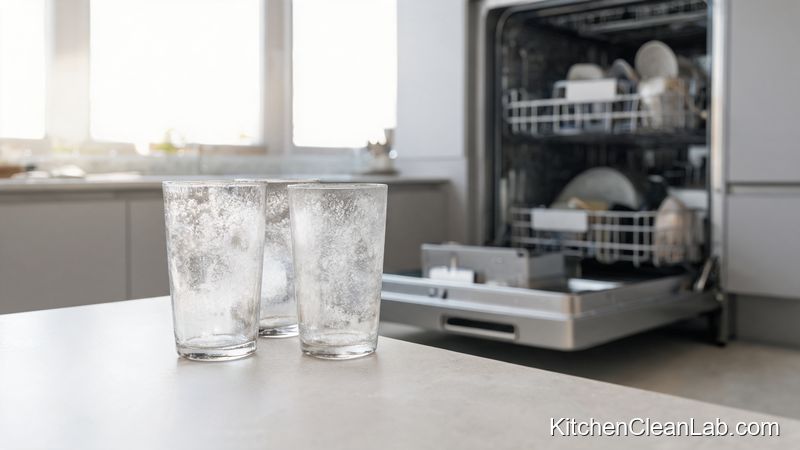
Direct answer: That chalky haze is usually calcium carbonate and magnesium silicate left behind when hard water evaporates during the hot dry cycle. The minerals are already dissolved in your home’s water supply, so the glasses can look cloudy even after a perfectly clean wash.
You unload the dishwasher and the wine glasses look frosted, but not from food. This white residue is not a sign that the cycle failed. It forms because the water itself contains dissolved minerals. According to the U.S. Geological Survey, roughly 85% of U.S. households have hard water. Inside a dishwasher, water temperatures between 130°F and 155°F accelerate mineral fallout, bonding those minerals to smooth glass surfaces.
What the White Film Actually Is: Hard Water Minerals vs. Detergent Residue
Direct answer: In most homes, the white residue is mineral scale from hard water, not soap scum. If the film dissolves with white vinegar, it is calcium and magnesium scale; if it remains frosted after vinegar, the glass has likely been etched and cannot be restored.
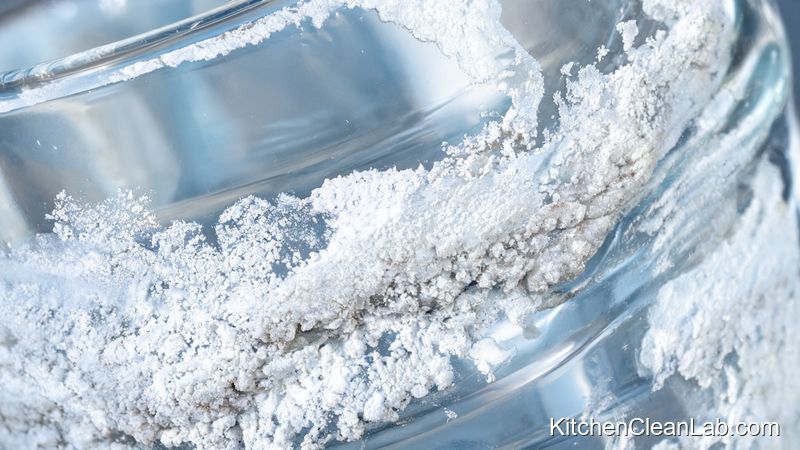
Hard water picks up calcium and magnesium as it moves through limestone and chalk. When the dishwasher heats that water, the minerals precipitate and cling to glassware. The residue is largely calcium carbonate and magnesium silicate — the same material that builds up in kettles, coffee makers, and showerheads. Detergent residue is less common, but it can appear when you overdose powder detergent, load the wrong type, or wash in water that is already very soft. The two problems need different fixes, which is why testing matters.
Repeated hard water exposure and high heat can also cause a permanent condition called etching. The minerals chemically interact with the silica in the glass, leaving behind microscopic pits. Once a glass is etched, no cleaner, vinegar soak, or rinse aid brings it back. This is why older 'good glasses' often become permanently cloudy after a year or two in a hard-water dishwasher.
Why Rinse Aid and Stronger Detergent Alone Often Fail
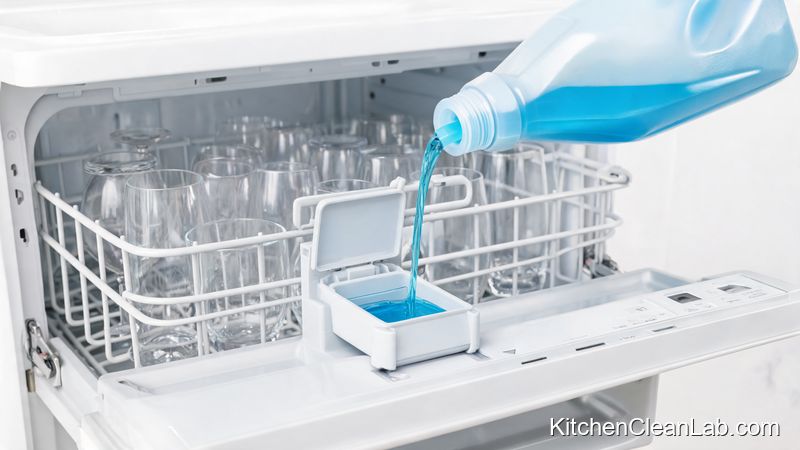
Direct answer: Rinse aid makes water sheet off glass, but it does not remove dissolved calcium and magnesium. Detergent enzymes and oxygen bleach break down food soil and grease, not mineral scale, so they cannot stop new white film from hard water.
Many people add extra detergent or rinse aid and still see cloudy glasses. Detergent boosters such as enzymes and oxygen bleach are designed for proteins and starches, not minerals. Rinse aid reduces surface tension; it helps prevent water spots and speeds drying, but it does not soften water. Citric-acid additives and vinegar can dissolve existing scale during an empty cycle, but they only clean the machine temporarily. The next load brings the same hard water back. If your home has hard water above roughly 7 grains per gallon, you need to treat the water itself or consistently use a dishwasher salt and softener function.
How to Diagnose Your Cloudy Glassware in 60 Seconds
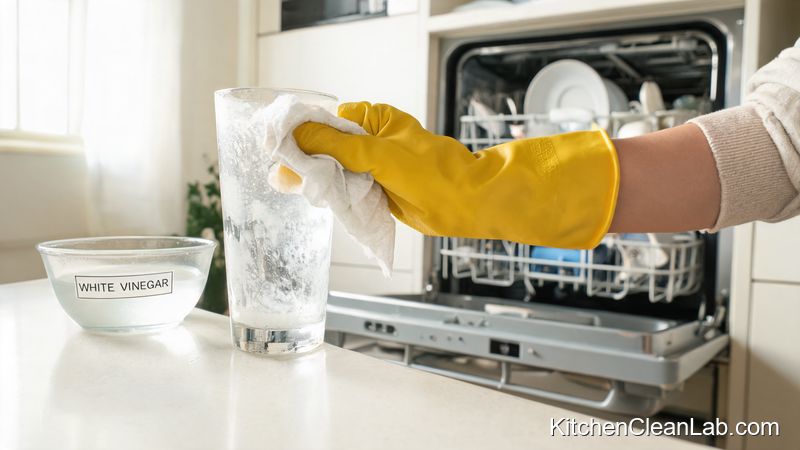
Direct answer: Wipe a dry cloudy glass with a paper towel dampened in white vinegar. If the haze dissolves immediately, it is hard-water mineral scale. If the glass remains frosted or pitted in bright light, the surface is etched and the damage is permanent.
Run this test before buying water treatment equipment or replacing detergent:
- Remove a glass straight from the dishwasher while it is dry.
- Dampen a paper towel or soft cloth with undiluted white vinegar.
- Rub one section of the glass for 10–15 seconds.
- Compare the wiped area with the rest. A clean, clear patch means mineral deposits.
- If the glass still looks milky and slightly textured after wiping, you are seeing etching, not removable film.
You can also use a hard water test strip from a hardware store. Readings above 7 grains per gallon typically produce visible scale within 90 days. Glassware etching can start as low as 5 gpg over repeated hot cycles. A 2024 Water Quality Association report found homes with water harder than 7 gpg see noticeable scale buildup on appliances within 90 days.
Step-by-Step: How to Remove White Residue and Stop Future Buildup
Direct answer: Soak newly affected glasses in undiluted white vinegar for 15–30 minutes and scrub them with a non-abrasive sponge. Then set up prevention: fill dishwasher salt or a whole-home softener, use rinse aid, and run a monthly descaler cycle.
Follow this sequence to clean the glasses and reduce repeat buildup:
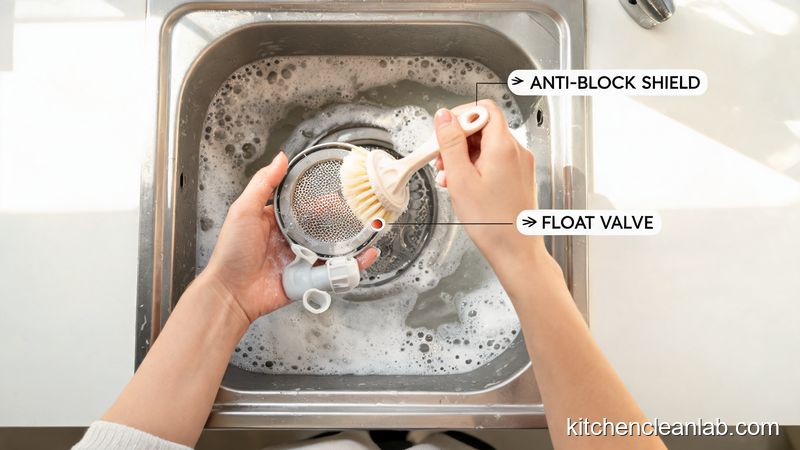
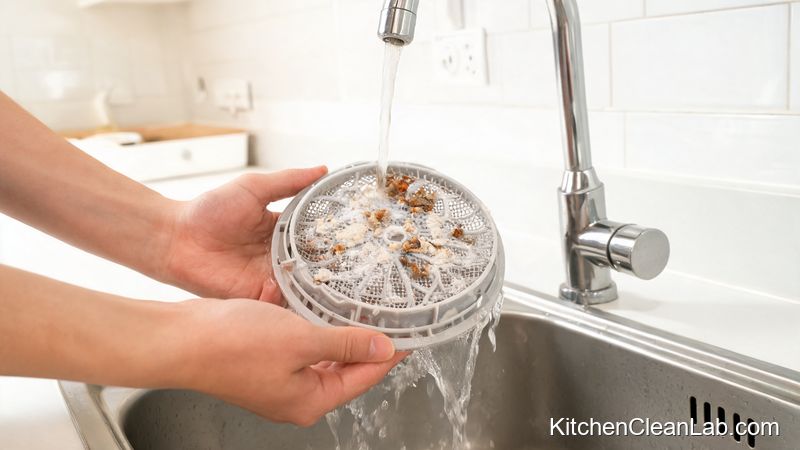
- Inspect and clean the dishwasher filter. A clogged filter recirculates soil and mineral particles. Remove the bottom rack, unlock the filter, and rinse it under warm water. Wipe the filter housing with a damp cloth.
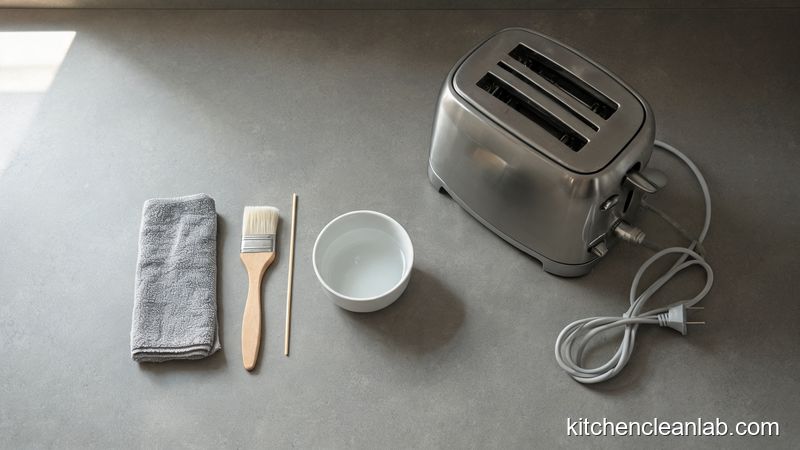
- Clear the spray arms. Use a toothpick or soft brush to open clogged water jets. Limescale flakes can block spray pressure and leave poor rinsing on the top rack.
- Soak the cloudy glasses. Place them in a plastic basin filled with undiluted white vinegar for 15–30 minutes. Wear kitchen gloves if you have sensitive skin, and work in a ventilated area if the vinegar odor bothers you. Do not soak delicate hand-painted or gold-rimmed glassware; test a small spot first.
- Scrub gently. Use a non-abrasive sponge or microfiber cloth to remove softened mineral scale. Rinse the glasses thoroughly with clean water and dry with a lint-free towel.
- Test your water hardness. Use a test strip. If the result is above 7 gpg and your dishwasher has a built-in softener, fill the salt reservoir with dishwasher salt and set the hardness level according to the manual.
- Switch to a quality detergent tablet. Use the correct amount. Too much powder in soft water can cause a different film; too little in hard water leaves food and scale behind.
- Refill rinse aid. Open the dispenser and fill to the maximum line. If your model has an adjustable rinse aid setting, increase it for hard water or decrease it if you notice sticky blue streaks.
- Run a descaler cycle once a month. Use a dishwasher descaler or about 1 cup of citric acid in an empty machine. Run the hottest cycle. This removes internal limescale before it flakes onto glassware.
- Consider whole-home treatment. A salt-based water softener removes calcium and magnesium. A salt-free template-assisted crystallization system changes minerals so they do not stick. Whole-home treatment protects the dishwasher, water heater, and plumbing.
Dishwasher Maintenance Habits That Prevent White Film
Direct answer: Cleaning the filter and spray arms monthly, using proper detergent doses, and not skipping rinse aid will stop many repeat cases. Maintenance removes limescale and food particles that can redeposit as white haze on the top rack.
- Run the kitchen sink hot water before starting the dishwasher so the first fill is already hot.
- Load glasses on the top rack only, angled slightly so water drains away.
- Do not overcrowd the top rack; spray needs to reach every glass.
- Use the normal or heavy cycle instead of quick wash when washing glassware. Quick cycles often skip the high-temperature final rinse.
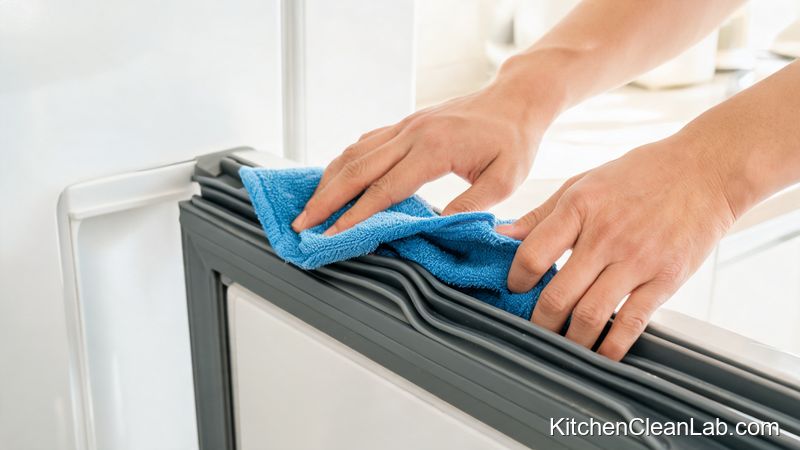
- Clean the door seal and filter area monthly to prevent white grit from recirculating.
- Inspect glassware after every few loads. If haze appears quickly, your water hardness may have increased seasonally.
Dishwasher Salt, Rinse Aid, or Whole-Home Softener: Which One Do You Need?
Direct answer: If your dishwasher has a built-in softener, dishwasher salt and rinse aid are usually enough. If your whole home has very hard water, a salt-based softener or salt-free conditioner treats the source, protecting every appliance and faucet.
- Dishwasher salt: Use only if the dishwasher manual specifies a salt reservoir. It regenerates the built-in ion-exchange softener. Do not use table salt or rock salt.
- Rinse aid: Needed in almost all machines. It does not soften water but reduces droplet spotting and filming.
- Citric acid or descaler: Best as a monthly maintenance treatment, not a substitute for water softening.
- Whole-home salt-based softener: The most effective choice for very hard water above 25 gpg or if you want soft water for laundry, bathing, and all appliances. It requires salt refills and a drain connection.
- Salt-free conditioner: Uses template-assisted crystallization to convert hardness minerals into a form that does not bond to surfaces. It is low-maintenance but may be less effective at extreme hardness.
Common Mistakes That Make Cloudy Glasses Worse
Direct answer: Overloading the top rack, skipping rinse aid, using the wrong detergent dose, and repeatedly washing thin glass at high temperatures can worsen white film or cause permanent etching. Address these habits before replacing the dishwasher.
- Overdosing powdered detergent: In soft water, too much detergent can leave a silicate or phosphate film on glassware.
- Using too little detergent: In hard water, too little detergent fails to suspend minerals and soil, leaving a greasy-white layer.
- Skipping dishwasher salt in softener-equipped models: Without salt, the built-in softener cannot regenerate, so hard water reaches the glassware.
- Washing crystal, antique, or hand-painted glass in hot cycles: The combination of heat, alkaline detergent, and minerals can cause permanent etching or decoration loss.
- Putting aluminum cookware in the same load: Aluminum can react with alkaline dishwasher detergent and create gray or white marks on glass. Check manufacturer labels before dishwashing aluminum.
- Using vinegar too often on etched glass: Vinegar is safe for mineral scale, but it cannot repair etched surfaces and may make the frosted appearance more noticeable on already damaged glass.
FAQ: People Also Ask About White Residue on Glasses
Direct answer: Hard water mineral scale is the most common cause of white film on dishwasher glassware. It is not dangerous, can often be removed with vinegar, and is best prevented by softening the water and maintaining the dishwasher.
Is white film on glasses from the dishwasher dangerous?
No. The film is primarily calcium carbonate and magnesium silicate, the same minerals found in hard water and many mineral waters. It is not toxic. The real risk is long-term scale damage inside the dishwasher and water heater, which can shorten appliance life and increase energy and repair costs.
Can vinegar remove white residue from dishwasher glasses?
Yes, if the residue is fresh mineral scale. Soak the glasses in undiluted white vinegar for 15–30 minutes and gently scrub with a non-abrasive sponge. If the cloudiness remains after soaking and looks frosted, the glass is etched. Etching is permanent and cannot be reversed by vinegar or any cleaner.
Why do my glasses get cloudy even though I use rinse aid?
Rinse aid helps water sheet off the glass, but it does not remove dissolved calcium and magnesium. If your water is moderately hard and the dishwasher does not have a functioning built-in softener, fresh mineral deposits can still form on glasses with every load, even when the rinse aid reservoir is full.
Can citric acid or a dishwasher cleaner fix cloudy glasses?
Citric acid and dishwasher descalers can dissolve existing mineral scale on glassware and inside the machine. They are most effective as a monthly empty-cycle maintenance treatment. However, they do not soften incoming water, so they will not prevent new mineral buildup unless combined with dishwasher salt or a whole-home treatment system.
Final Word: Clear Glassware Starts with the Water, Not Just the Dishes
White residue on glasses is a visible warning that your water contains dissolved minerals. You can scrub the glassware, but unless you address the water source or use the dishwasher’s softening system correctly, the film will return. Start with the vinegar test, clean the dishwasher filter and spray arms, refill rinse aid, and check your water hardness. Since the scale also builds inside the dishwasher, water heater, and plumbing, a whole-home treatment system often pays for itself by extending appliance life. Clear glasses are usually a sign of balanced water, correct detergent, and consistent maintenance—not a stronger detergent cycle.