How Often Should You Clean Your Range Hood Filter?
Most households need a monthly cleaning for metal mesh or baffle filters. If you cook daily with oil, fry, or sear meat often, move that up to every two to three weeks. Light cooks can clean every three months, but a quick visual check should happen after each week of heavy cooking.
The exact interval depends on three things: how often you use the cooktop, what oils and methods you use, and which filter type your hood uses. A once-a-month baseline prevents the sticky film from hardening into a fire hazard. When you see an amber or brown coating, do not wait for a calendar reminder. Grease that hardens becomes much harder to remove and can pass odors back into the kitchen.
For daily cooks, think of the filter like a fryer basket. If you would not reuse it without washing away caked-on oil, the same standard applies to the exhaust filter above it. Set a recurring monthly reminder and inspect more often when you notice heavy smoke or spattering.
Why a Dirty Range Hood Filter Is a Safety Risk
A clogged range hood filter traps flammable grease near the cooktop, reduces exhaust suction, and makes the blower motor work harder. That combination increases fire risk, lowers indoor air quality, and shortens the life of the hood.
Range hoods exist to capture grease, smoke, and moisture before they spread through your kitchen. When the filter is saturated, the hood cannot pull air efficiently. Steam lingers, smoke drifts toward cabinets, and the motor draws more electricity while producing less airflow. In a worst-case scenario, a flare-up on the cooktop can ignite the grease trapped in the filter or ductwork.
From an indoor air quality perspective, a dirty filter also stops capturing fine particles. Those particulates can settle on countertops, cabinets, and floors. If you have family members with asthma, allergies, or respiratory sensitivity, a clean filter is part of managing kitchen air quality.
Filter Type Changes the Cleaning Schedule
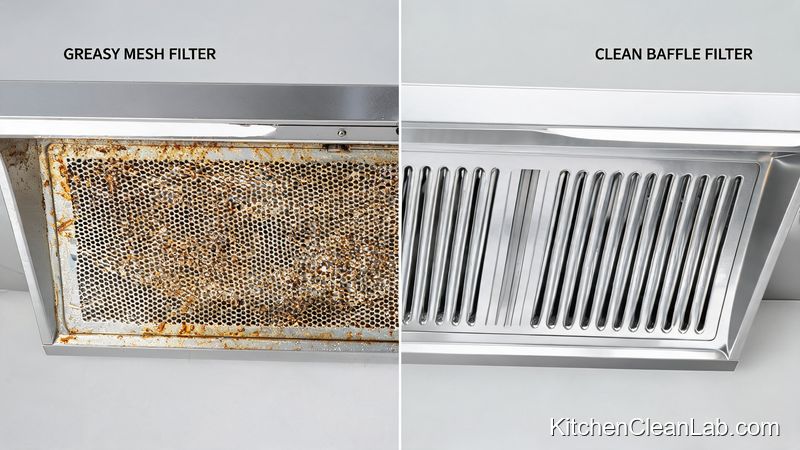
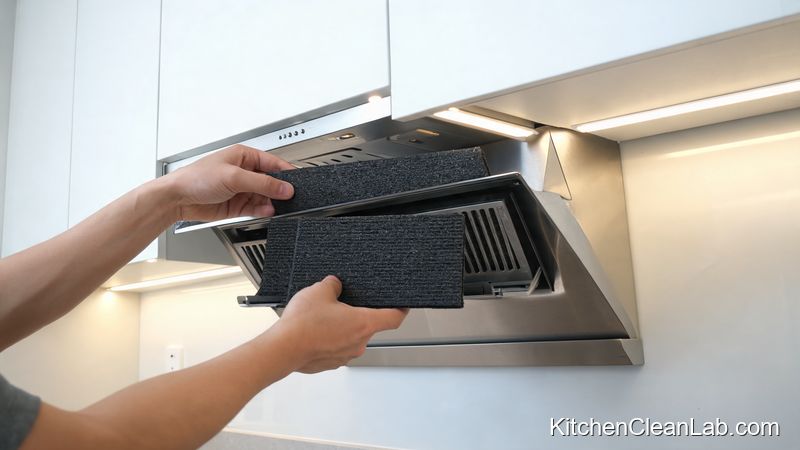
Metal mesh and baffle filters are washable and typically need monthly cleaning. Charcoal filters are not washable; replace them every 6 to 12 months depending on cooking activity. Always check the manufacturer's label before soaking any component.
Different hoods use different filtration systems. Understanding which one you have prevents damaging an expensive component.
- Metal mesh filters: Made from aluminum or stainless steel mesh. They catch grease in the layers and can be washed by hand or in the dishwasher. Monthly cleaning is the standard for regular cooks.
- Baffle filters: Typically stainless steel panels that redirect grease into collection channels. They are common on high-output pro-style hoods and handle heavy cooking well. Clean them monthly or every two weeks for daily frying.
- Charcoal filters: Used in ductless or recirculating hoods to neutralize odors. They cannot be washed. Replace charcoal filters every 6 to 12 months, depending on how often you cook.
- Paper or fabric filters: Some older or budget hoods use disposable filters. Follow the manual, but many need replacement every 1 to 3 months with regular cooking.
If you are unsure which filter you have, remove it after the hood has cooled and look for a label or model number. A quick search of the part number usually confirms whether it is washable or disposable.
Step-by-Step: How to Clean a Range Hood Filter Safely
Turn off the hood, remove the filter, and soak it in hot water with a heavy-duty degreaser. Scrub gently with a non-abrasive brush, rinse thoroughly, and let the filter dry completely before reinstalling it to prevent motor strain or odors.
Cleaning a washable filter takes about 15 to 30 minutes, most of which is soaking time. Follow these steps in order.
- Power down the range hood. Turn off the fan and lights at the control panel. If you can, unplug the hood or switch off the circuit breaker for extra safety.
- Protect the cooktop. Lay a towel or newspaper over the burners to catch drips when you remove the filter.
- Remove the filter carefully. Most filters slide out from the underside or release with a latch. Support it with both hands; grease can drip.
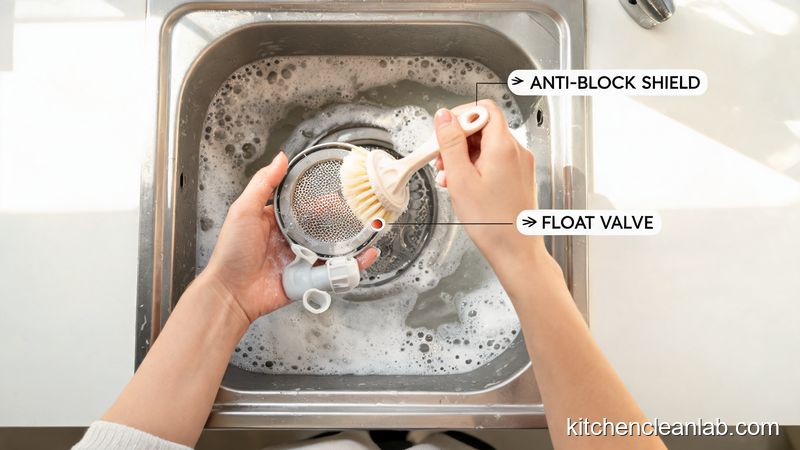
- Soak the filter in hot water. Fill a sink or basin with hot water and add a grease-cutting dish soap, white vinegar, or a dedicated kitchen degreaser. Let the filter soak for 10 to 20 minutes. For tougher buildup, add a few tablespoons of baking soda.
- Scrub gently. Use a soft-bristle brush or non-abrasive sponge to work the degreasing solution through the mesh or baffle channels. Avoid steel wool, which can scratch the surface and make future grease stick more easily.
- Rinse thoroughly. Rinse with hot water until the water runs clear and no soap film remains.
- Dry completely. Shake off excess water and let the filter air dry fully before reinstalling. Reinstalling a dripping filter can pull moisture into the blower motor.
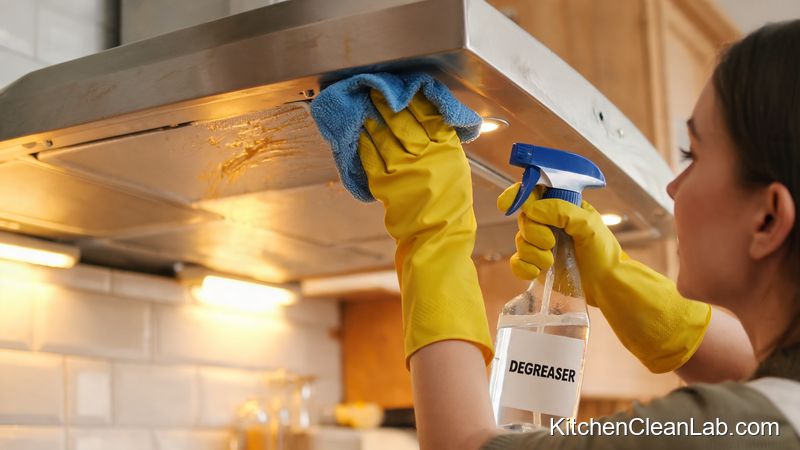
- Wipe the hood housing. While the filter dries, clean the underside and exterior of the hood with a degreaser and microfiber cloth.
For a homemade degreaser, mix 1 cup of white vinegar, 1 cup of hot water, and 2 tablespoons of dish soap. For heavy grease, sprinkle baking soda directly on the filter and let it sit for 15 minutes before scrubbing.
Common Cleaning Mistakes That Damage Filters and Hoods
Never put a charcoal filter in the dishwasher or soak it in water. Avoid using bleach, oven cleaner, or abrasive pads on aluminum mesh or baffle filters. These products can corrode metal, warp the frame, and leave chemical residue in the air.
Even with good intentions, homeowners often reduce the life of their range hood components by using the wrong products or methods. Avoid these mistakes:
- Soaking charcoal or paper filters. They lose their odor-absorbing ability and may fall apart.
- Using oven cleaner or bleach. Harsh chemicals can discolor stainless steel and weaken aluminum.
- Scrubbing with steel wool. Scratches create tiny grooves that trap grease and make future cleaning harder.
- Reinstalling a wet filter. Moisture can reach electrical connections and cause corrosion or motor issues.
- Ignoring the drip trays or collection channels. On baffle filters, grease accumulates in narrow channels. If you clean only the outer panels, buildup continues to block airflow.
Signs It’s Time for Professional Range Hood Cleaning
Even a clean filter cannot fix grease packed inside the fan blades or ductwork. Schedule professional deep cleaning every 1 to 3 years. Watch for persistent odors, loud fan noise, weak suction, or grease visible at the exterior vent.
Most homeowners can maintain the exterior and washable filters. Internal components such as the blower wheel, motor housing, and ducts require specialized tools and should be handled by a qualified technician. Grease inside ductwork is a hidden fire risk and can reduce airflow even when the filter looks clean.
Call a pro if you notice any of these warning signs:
- Lingering odors after the filter is clean or replaced.
- A noisy fan that roars, rattles, or hums louder than it used to.
- Weak suction even when the filter is clean and the vent is open.
- Grease around the outside vent cap on a ducted system.
- Smoke or steam drifting into the room instead of being pulled into the hood.
Most kitchens benefit from an internal deep clean every 1 to 3 years. Households that fry frequently or cook with high heat should lean closer to the one-year mark.
How to Inspect Your Range Hood Filter Between Cleanings
Hold the filter up to a light source once a week. If light cannot pass through the mesh or baffle channels, grease is blocking airflow and the filter needs washing even if the calendar says otherwise.
Visual checks take less than a minute and catch buildup before it becomes stubborn. Remove the filter only when the cooktop is cool, and wear disposable gloves if grease is dripping. Look for dark amber residue, blockages in the channels, and any warped metal areas. If you see heavy buildup, clean the filter that day.
This simple habit is especially useful for households with variable cooking schedules. A month of light soups may not require cleaning, while a single weekend of deep frying can saturate a filter quickly.
Quick Reference: Cleaning Frequency by Cooking Style
Daily heavy cooking requires filter cleaning every 2 to 4 weeks and exterior wiping weekly. Moderate cooking needs monthly filter cleaning. Occasional cooking can extend filter cleaning to every 3 to 6 months, with visual checks before each use.
Use this quick-reference guide to set a schedule that matches your kitchen.
- Heavy daily cooking: Wash filters every 2 to 4 weeks, wipe the hood exterior weekly, and schedule professional internal cleaning every 1 to 2 years.
- Moderate cooking, 3 to 5 days per week: Wash filters monthly, wipe the exterior every two weeks, and schedule professional internal cleaning every 2 to 3 years.
- Light or occasional cooking: Wash filters every 3 to 6 months, wipe the exterior monthly, and schedule professional internal cleaning every 3 years.
- Recirculating hoods with charcoal filters: Replace charcoal filters every 6 to 12 months for moderate use, or every 3 to 6 months for daily frying or strong odors.
Frequently Asked Questions About Range Hood Filters
These are the questions homeowners ask most about filter maintenance. The short answers: metal filters are often dishwasher-safe, charcoal filters must be replaced, and a filter that stays greasy after washing may need replacement.
Use these answers as general guidance. Always check the manual for model-specific instructions.
Can I put my range hood filter in the dishwasher?
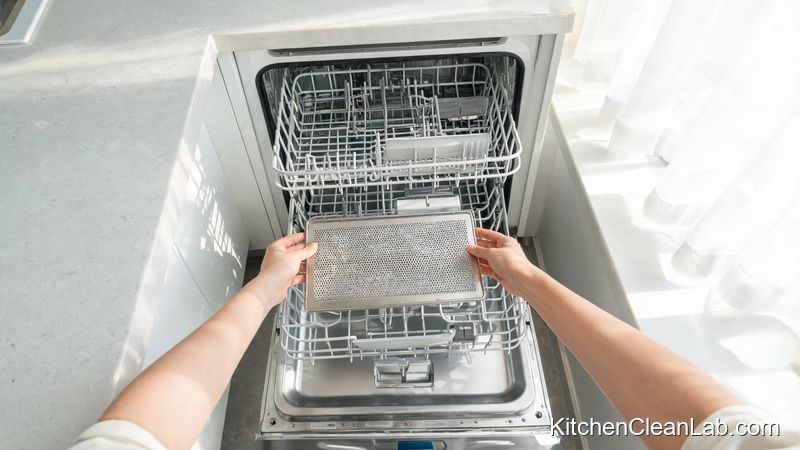
Most metal mesh and stainless steel baffle filters are dishwasher safe on the top rack. Use a normal cycle with a mild detergent. Avoid high-heat drying cycles that can warp thin aluminum frames. If the filter has rubber or plastic end caps, check the manual before using the dishwasher.
What happens if you never clean the range hood filter?
Grease hardens, airflow drops, and the hood has to work harder to move air. That increases fire risk, lets cooking odors linger, and can cause grease to drip back onto the cooktop. Over time, the blower motor may overheat or fail, leading to an expensive repair.
How do I know if my range hood filter needs replacing?
Washable metal filters usually last the life of the hood unless they become bent, corroded, or torn. Replace them if holes develop, the frame warps, or grease remains trapped after repeated cleaning. Charcoal filters need replacement every 6 to 12 months.
Are charcoal range hood filters washable?
No. Charcoal filters absorb odors and cannot be cleaned. Soaking or scrubbing them ruins the activated carbon and reduces odor control. Replace charcoal filters according to the manufacturer's schedule, usually every 6 to 12 months depending on cooking frequency.
The Takeaway for Home Cooks
Make range hood filter cleaning part of your monthly kitchen reset. A 15-minute soak and scrub protects your home from grease fires, keeps exhaust airflow strong, and prevents expensive blower motor repairs. For daily cooks, set a recurring calendar reminder every two weeks.
Clean filters also mean better air quality, less sticky residue on cabinets, and a quieter hood. Once you establish a simple routine, the task becomes quick and predictable. Pair it with other monthly kitchen tasks such as cleaning the microwave filter, descaling the coffee maker, or wiping cabinet fronts.
If you have not cleaned your filter in months, start today. Remove it, inspect it, and give it a soak. A few minutes now can prevent a serious fire hazard later.