Why Ice and Lemon Peels Work for Cleaning a Garbage Disposal
An ice and lemon peel rinse knocks off stuck food particles and neutralizes odor without chemical drain cleaners. Ice scrapes the grinding chamber, while lemon peel oils cut through grease and leave a fresh scent behind.
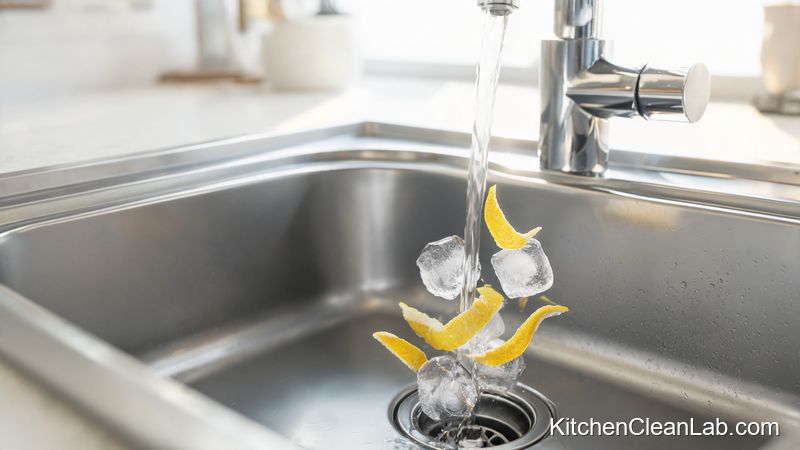
Most garbage disposals do not have sharp blades. They use spinning impellers that grind food against a ring. Over time, a film of starch, grease, and small food particles clings to the impellers and the inside of the grinding chamber. Ice cubes help because they are hard enough to dislodge that film but soft enough not to damage metal components. Lemon peels contribute d-limonene, a natural solvent in citrus oil that helps dissolve greasy residue and freshen the unit. Adding baking soda creates a mild abrasive fizz that can lift stubborn buildup. According to Eric Schultz, director of product management at InSinkErator, a simple load of ice, baking soda, and lemon slice is a safe and effective routine. Schultz recommends 2 cups of ice cubes, 1 tablespoon of baking soda, and 1 lemon slice, ground under cold running water until the noise smooths out.
What You Need Before You Start
Gather 2 cups of ice cubes, 1 lemon or a handful of lemon peels, 1 tablespoon of baking soda, and cold running water. A flashlight is optional for inspecting the sink drain, but your hands should never go into the disposal.
- 2 cups of ice cubes - small to medium cubes work best
- 1 whole lemon or several lemon peels - cut into wedges or small strips
- 1 tablespoon baking soda - optional but adds scrubbing fizz
- Cold water - never hot water for disposal cleaning
- Sink splash guard or strainer - already installed on most disposals
If you do not have lemon peels, other citrus peels like lime or orange can work, but lemon is the most effective for odor control because of its higher acidity and bright scent.
Step-by-Step: How to Clean a Garbage Disposal with Ice and Lemon Peels
Run cold water, feed the ice and lemon peel mixture into the disposal, turn on the unit, and let it grind until the sound changes to a smooth hum. Continue flushing with cold water for 10 to 15 seconds afterward.
- Clear the sink area. Remove dishes, silverware, and any loose items from the sink basin so nothing falls into the disposal.
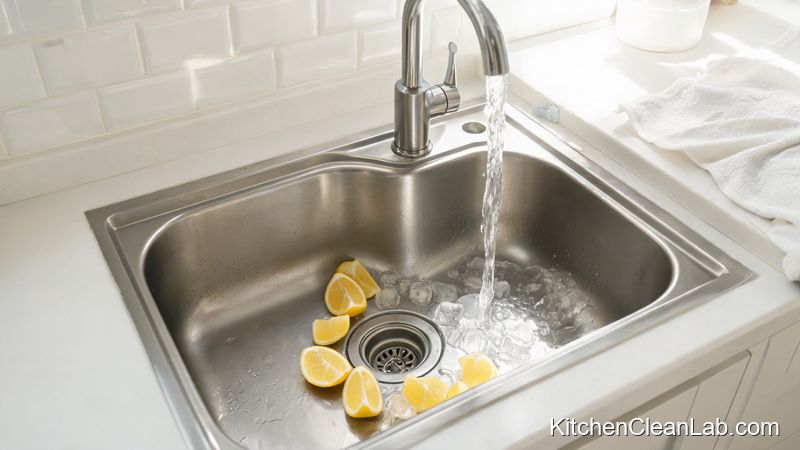
- Add the cleaning mix. Place 2 cups of ice cubes into the disposal. Sprinkle in 1 tablespoon of baking soda. Add 1 lemon slice or several small lemon peel strips. If using a whole lemon, cut it into eight small wedges first.
- Turn on cold water. Run the cold tap at a medium flow. Cold water keeps fats and oils congealed so they can be chopped and washed away instead of melting and re-coating the pipes.
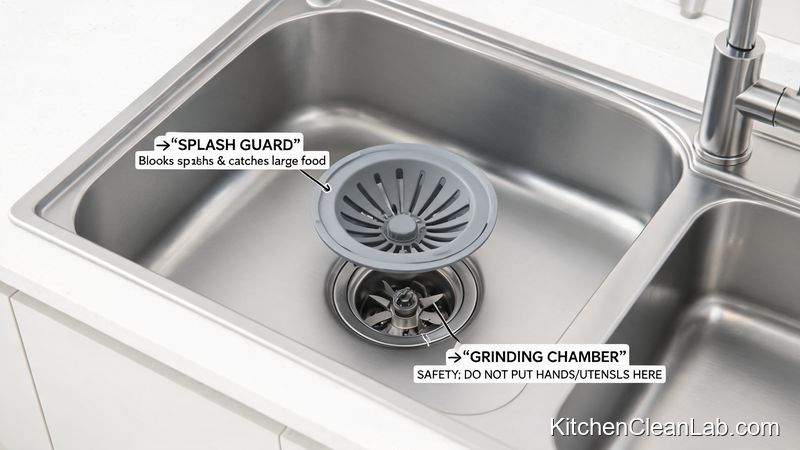
- Run the disposal. Switch on the garbage disposal. You may hear a loud grinding sound at first, followed by fizzing. The rubber splash guard should keep ice chips from flying out. Let the unit run until the loud crunching becomes a steady hum, usually 30 to 60 seconds.
- Flush with cold water. Keep the cold water running for an extra 10 to 15 seconds after the grinding sound stops. This pushes loosened food particles down the drain line.
- Optional power flush. For a deeper clean, plug the sink, fill it three-quarters full with cold water, then pull the plug and turn on the disposal to flush the grinding chamber and downstream pipe.
Safety Precautions and Common Mistakes to Avoid
Always use cold water, avoid harsh chemical drain cleaners, and never place your hand inside the disposal. Overloading the unit with citrus peels or hard scraps can jam the impellers and strain the motor.
Cleaning a disposal is safe when you follow a few clear rules. First, never use bleach or liquid drain cleaner inside a garbage disposal. These products can damage seals, splash back, and create toxic fumes, especially if mixed with other household cleaners. Second, do not reach into the disposal chamber. Even with the power off, sharp edges and impellers can cut fingers. Use tongs or pliers if you must remove an object. Third, always run cold water, because hot water melts grease and allows it to re-solidify deeper in the plumbing.
Common items to avoid putting down the disposal include oils and hot grease, seafood shells, corn husks, potatoes, banana peels, artichokes, and bones. Jennifer Rodriguez, chief hygiene officer at Pro Housekeepers, notes that some foods can clog the machine while others can damage pipes and wastewater systems. When in doubt, scrape large or fibrous scraps into the trash or compost bin.
How Often Should You Clean a Garbage Disposal with Ice and Lemon Peels?
Most households should clean the disposal once a month with the ice and lemon peel method. If you cook daily, wash greasy pans in the sink, or notice odors, increase the routine to every one to two weeks.
Aurielle Sayeh, founder of Moody Maids, recommends cleaning the disposal once a month. Monthly cleaning controls odor and removes the early stages of buildup before they become stuck. Between cleanings, run cold water for a few seconds before and after each use, feed scraps gradually, and avoid overloading the unit. These habits reduce the amount of food film that adheres to the chamber.
Other Natural Methods That Pair Well with Lemon Peels
Baking soda and vinegar can dissolve organic buildup, and a cold-water power flush can clear the grinding chamber and drain pipe. Use these methods between lemon peel cleanings or after heavy cooking days.
The ice and lemon method works well for routine monthly maintenance, but two other natural approaches are useful for deeper or immediate odor control.
Baking Soda and Vinegar
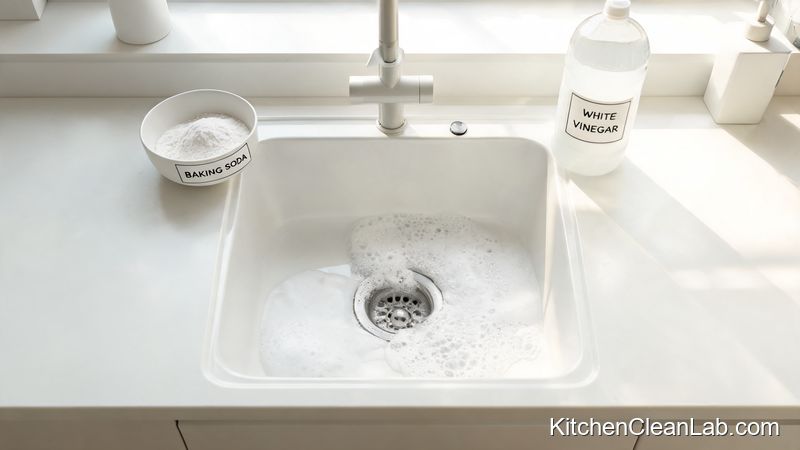
Pour ½ cup of baking soda into the disposal, then slowly add 1 cup of white vinegar or apple cider vinegar. Let the mixture fizz for 10 minutes. Run water from the faucet and turn on the disposal until the mixture washes away.
Cold Water Power Flush
Plug the sink and fill it three-quarters full with cold water. Pull the plug, switch on the disposal, and let the water rush through the chamber and drain line. This is excellent after heavy use or when a faint odor remains after lemon cleaning.
Here is a quick reference for natural disposal cleaning methods:
| Method | Ingredients | Best For | Frequency |
|---|---|---|---|
| Ice and lemon peel rinse | 2 cups ice, 1 lemon slice or peels, 1 Tbsp baking soda | Odor control and stuck food | Monthly |
| Baking soda and vinegar | ½ cup baking soda, 1 cup vinegar | Grease and organic buildup | As needed |
| Cold water power flush | Cold water only | Grinding chamber and drain pipe | After heavy use |
| Dish soap and cold water | Few drops dish soap, cold water | Light deodorizing | Weekly or as needed |
FAQ: Common Questions About Cleaning a Garbage Disposal with Ice and Lemon Peels
Can lemon peels damage a garbage disposal?
No, small lemon peels are generally safe. Cut them into small pieces and avoid feeding large amounts at once. The mild acidity helps break down grease, but using excessive citrus peels every day can leave fibrous pulp behind and may dull the unit over time.
Do ice cubes sharpen garbage disposal blades?
No. Garbage disposals do not have sharp blades in the traditional sense. They use spinning impellers that grind food against a stationary ring. Ice cubes do not sharpen anything, but they do scrape off sticky residue that makes the impellers less efficient.
Is it safe to put lemon peels down the disposal?
Yes, in moderation. Lemon peels are one of the safest natural deodorizers for a disposal. Cut peels into thin strips or small wedges, and always run cold water while the unit is on. Avoid sending entire lemon halves down at once.
How do I get rid of a strong garbage disposal smell fast?
Run 2 cups of ice, 1 tablespoon of baking soda, and several lemon peel strips through the disposal under cold water. For an extra boost, add ½ cup of salt with the ice. The abrasive salt helps scrub the chamber while the lemon neutralizes odors.
Keep Your Disposal Fresh Without Harsh Chemicals
The ice and lemon peel method is safe, inexpensive, and effective for monthly maintenance. Use cold water, avoid troublesome foods, and add a power flush when needed. This simple routine can help the unit run smoothly for years without bleach or chemical drain cleaners.