Why Regular Gas Grate Cleaning Matters
Grease, carbonized food, and spills accumulate on gas grates every time you cook. Left alone, that buildup can flare up, smoke, and transfer off-flavors. Regular cleaning keeps gas ports clear, protects the grate finish, and reduces risk of kitchen fires while making daily wipe-downs easier.
Gas grates sit directly above an open flame, so oil and food particles bake into a hard black film. That film can restrict flame contact, causing uneven heating and longer cook times. It also produces acrid smoke when you turn on a burner. In a worst-case scenario, a thick grease deposit can ignite. You do not need aggressive chemicals to fix this; the right routine with dish soap, baking soda, and warm water handles most residential buildup.
How Often Should You Clean Gas Stovetop Grates?
Clean grates once a week if you cook most days, and deep clean them monthly. If you fry frequently or notice dark sticky buildup, wipe them after every use and do a full soak every two weeks. That schedule prevents heavy carbon and keeps gas ports clear.
The cadence depends on your cooking style. A household that boils pasta and sears steak twice a week will see carbon accumulate faster than a light-cooking home. Visible grease, a burnt smell when the burner lights, or dull gray-black patches are signs you have waited too long. Consistent weekly care prevents the kind of baked-on carbon that requires long soaks and heavy scrubbing.
Tools and Cleaning Solutions You’ll Need
Most jobs need dish soap, baking soda, white vinegar, a non-scratch scouring pad, a soft towel, and a toothbrush. Avoid oven cleaner, steel wool, and bleach on coated grates because they damage the finish. Keep these supplies within reach before you start.
- Degreasing dish soap: Look for a formula that cuts grease without added bleach.
- Baking soda: Use it as a dry scrub or mixed into a paste.
- White vinegar: Optional for mineral spots and extra degreasing.
- Non-scratch scouring pad: Blue or white scrub sponges work well.
- Soft-bristle toothbrush: Cleans burner ports, seams, and tight corners.
- Microfiber towels: Lint-free drying prevents water spots.
- Plastic scraper: Lifts thick carbon off enamel without scratching.
- Rubber gloves: Protect hands from grease and hot water.
Step-by-Step Guide: Cleaning Gas Stovetop Burner Grates
Remove cooled grates, then soak enameled grates in warm soapy water for 20–30 minutes. Scrub with a non-scratch pad, rinse, and dry completely. Uncoated cast iron grates should never be soaked; use a stiff brush and minimal water instead. This routine takes about 30 minutes.
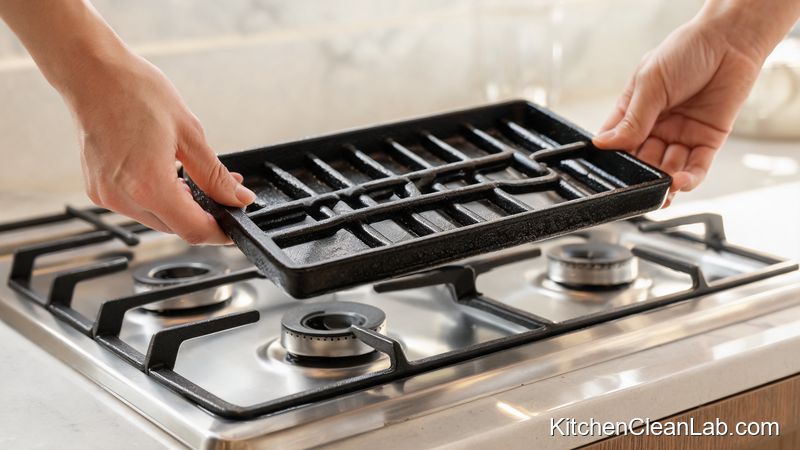
- Let the cooktop cool completely. Turn all burner knobs to the off position. If you have a gas shut-off valve within reach, close it. Never work on a warm grate; thermal shock from cold water can crack enamel.
- Remove the grates and burner caps. Lift straight up and set them on a towel. Check for rubber feet on the grate bottoms and place them somewhere they will not roll away.
- Identify the grate material. Enamel-coated cast iron or steel can be soaked. Uncoated cast iron or chipped enamel should stay out of standing water to prevent rust.
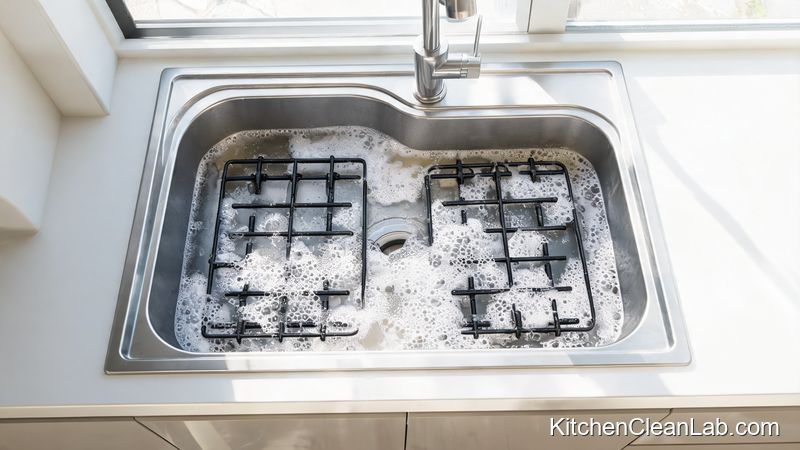
- Fill a sink or basin with warm water. Add about one tablespoon of degreasing dish soap per gallon of water. Swish to distribute the soap.
- Soak enameled grates for 20–30 minutes. Submerge them fully. For uncoated cast iron, skip the soak and move straight to scrubbing with a damp stiff-bristle brush.
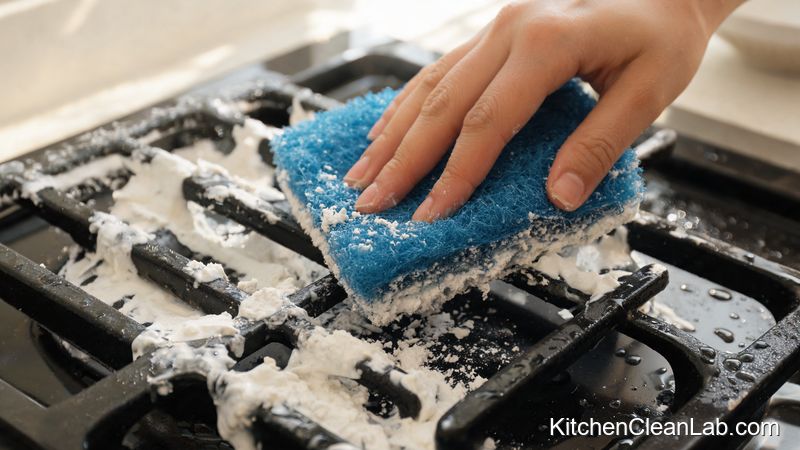
- Scrub away residue. Use a non-scratch scouring pad. For stubborn spots, sprinkle baking soda directly onto the pad or make a paste with water and work it into the soiled areas.
- Rinse and dry thoroughly. Rinse with hot water and dry immediately with a microfiber towel. Standing water on raw cast iron or chipped enamel leads to rust.
- Clean the burner heads and stovetop while grates soak. Wipe the recessed area with warm soapy water and a soft cloth. Use a dry toothbrush to clear loose debris from gas ports, but do not push debris deeper into the ports.
- Reinstall and test. Make sure every part is completely dry. Place the burner caps and grates back in their original positions, then turn on each burner briefly to confirm the flame is even and steady.
How to Clean Enameled vs. Uncoated Cast-Iron Grates
Enamel-coated grates can soak in warm soapy water and tolerate baking soda paste. Uncoated cast iron must be kept dry and scrubbed with a stiff nylon brush. Porcelain-coated grates fall between the two: soak briefly and avoid abrasive powders. Match the method to the material.
| Material | Soak? | Recommended Cleaner | Tools to Avoid |
|---|---|---|---|
| Enamel-coated cast iron or steel | Yes, 20–30 minutes | Warm soapy water, baking soda paste | Steel wool, oven cleaner, bleach |
| Uncoated cast iron | No | Damp stiff nylon brush, dry baking soda | Soaking, dishwasher, harsh acids |
| Porcelain-coated grates | Yes, 15–20 minutes | Dish soap, diluted white vinegar | Abrasive powders, metal scrapers |
If you are unsure what material you have, check the owner’s manual or look for a smooth, glossy finish. Enamel usually feels slick and has a uniform black, gray, or colored coating. Uncoated cast iron has a matte, slightly rough surface and can develop a brown rust bloom if left wet. Never use oven cleaner on any grate without verifying compatibility, because it can strip coatings and leave a residue that produces fumes on the next heat cycle.
How to Remove Burnt-On Grease and Black Carbon Stains
Make a paste of equal parts baking soda and water, apply it to the stained areas, and wait 30 minutes. Scrub with a non-scratch pad. For heavy carbon on enameled grates, a 30-minute soak in equal parts warm water and white vinegar helps loosen the layer before scrubbing.
Burnt-on grease looks worse than it is, but it often requires a repeat treatment. Avoid the temptation to use a metal scraper or wire brush on coated grates. Instead:
- Baking soda paste: Mix one part baking soda with one part water until it forms a spreadable paste. Coat the blackened areas and let it sit for 30 minutes. Scrub, rinse, and repeat if needed.
- Vinegar soak for enamel: Fill the sink with equal parts warm water and white vinegar. Soak enameled grates for 30 minutes, then scrub with a scouring pad.
- Plastic scraper for thick spots: After soaking, gently lift softened carbon with a plastic scraper held at a shallow angle.
- Dry baking soda scrub for uncoated cast iron: Sprinkle baking soda onto a damp stiff-bristle brush and work it into stained spots without soaking.
Common Mistakes That Damage Gas Grates
Skip soaking uncoated cast iron, steel wool, oven cleaner, and wet reassembly. These habits strip coatings, promote rust, and can leave harmful residues. Work only when parts are cool and rinse all cleaning products away completely. A little caution extends grate life.
- Soaking uncoated cast iron or chipped enamel. Water penetrates exposed iron and causes rust.
- Using oven cleaner or bleach. Harsh chemicals can dull or strip the finish and may release fumes when heated.
- Scrubbing with steel wool or metal brushes. These scratch enamel, which then traps more grease and weakens the coating.
- Reassembling while wet. Moisture around gas ports can affect ignition and promotes rust on hidden surfaces.
- Cleaning while the cooktop is hot. Burn risk plus thermal shock can crack coated grates.
- Ignoring burner caps and ports. Clean grates can still perform poorly if the burner head is clogged with grease or food dust.
Tips to Keep Gas Grates Clean Longer
Wipe grates with a damp cloth after each use once they cool, and cover pots during high-heat cooking. Address spills immediately. For uncoated cast iron, apply a thin coat of cooking oil and warm the grates occasionally to maintain a rust-resistant seasoning.
These habits reduce how often you need a deep clean:
- Use lids and splatter screens. Less splatter means less carbonized buildup on the grate surface.
- Watch boil-over risks. Pasta and starchy liquids bake into hard films quickly.
- Set heavy pans down gently. Banging cast iron skillets can chip enamel.
- Wipe down after every cooking session. A warm damp cloth removes oil before it polymerizes into sticky residue.
- Schedule a monthly deep clean. Even with good daily habits, a monthly soak and scrub keeps gas ports clear and the surface looking new.
Frequently Asked Questions
Here are the shortest, safest answers to common burner grate cleaning questions. The right method depends on the grate material and the type of buildup, but most household jobs are safe with dish soap, baking soda, and a non-scratch pad. Avoid aggressive chemicals unless your manual approves them.
Can I put gas stove grates in the dishwasher?
Only if the manufacturer explicitly labels them dishwasher-safe. High heat and harsh detergents can dull enamel, promote rust on exposed edges, and wear rubber feet. Hand washing is safer for most grates.
What is the fastest way to degrease stovetop grates?
Fill a sink with hot water and degreasing dish soap, soak enameled grates for 20 minutes, then scrub with a paste of baking soda and dish soap. For uncoated cast iron, skip soaking and scrub with a stiff nylon brush.
Does baking soda scratch cast iron grates?
No. Baking soda is mildly abrasive but generally safe for enameled and uncoated cast iron. Avoid steel wool, metal scrapers, and harsh scouring powders, which can leave visible scratches and damage protective coatings.
How do I get black residue off gas burner grates?
Make a thick baking soda paste, apply it to blackened spots, wait 30 minutes, and scrub with a non-scratch pad. For heavy carbon on enameled grates, repeat the treatment or precede it with a 30-minute diluted vinegar soak.
A Clean Grate Is Safer and More Efficient
You do not need specialty products to keep gas grates in good shape. A weekly wipe, a monthly soak for enameled grates, and a dry brush routine for raw cast iron prevent most grease fires, odors, and uneven flames. Make this a monthly habit.
The best approach is consistency. If you wait until the kitchen smells like burnt oil every time you cook, you are already overdue. Gather your dish soap, baking soda, and a non-scratch pad, and set aside 30 minutes this week. Once the grates are dry and back in place, the flame will look cleaner, the cooktop will feel better under your pan, and your next meal will start from a safer surface.