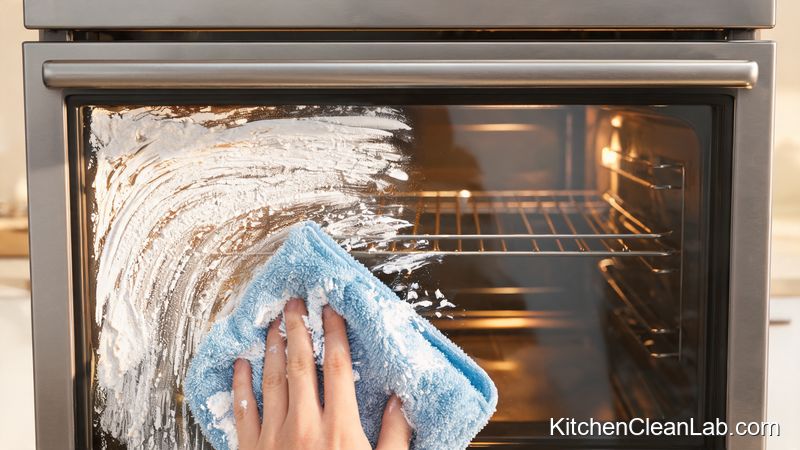
Why Washing Soda Outperforms Typical Kitchen Degreasers
Washing soda, also called sodium carbonate, grabs fatty acids in cooking oil and converts them into water-soluble soap through a reaction called saponification. That means the cleaner actually dissolves grease instead of just smearing it around.
Most commercial degreasers rely on strong solvents or synthetic surfactants to break up oil. Washing soda takes a different path. When sodium carbonate dissolves in warm water, it raises the pH of the solution and attacks the ester bonds in fats. The result is a slick, easy-to-wipe film that rinses clean with plain water. This is why washing soda is such a strong performer on sticky range hoods, greasy cabinet doors, and the film that builds up near the stove.
Washing soda is frequently confused with baking soda, but they are not the same product. Baking soda is sodium bicarbonate and has a pH around 8. Washing soda is sodium carbonate and has a pH around 11. That extra alkalinity gives it far more degreasing power, but it also means you should handle it with a little more respect. You can buy washing soda in the laundry aisle; Arm & Hammer Super Washing Soda is a common choice.
This alkaline reaction is why the no-rinse claim works only when the dilution is correct. If you use too much washing soda or let the spray dry on a hot surface, you may see a white haze. That haze is simply mineral residue, not damaged countertop, but it signals that you should use less powder or wipe with a wetter cloth next time.
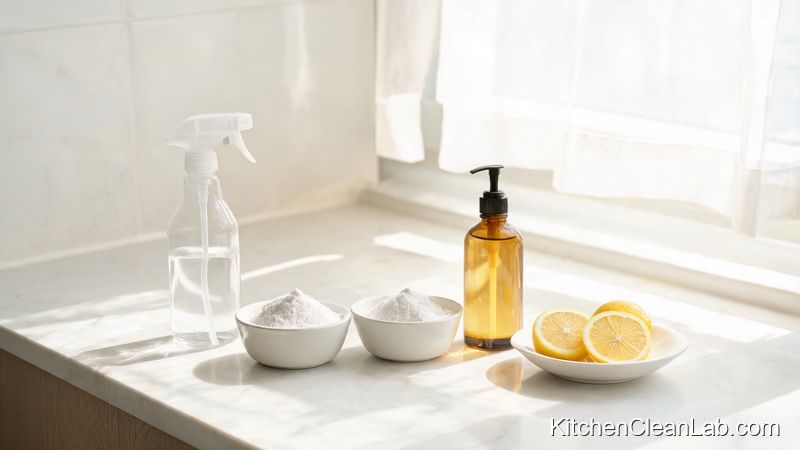
Core Ingredients and Tools for a Reliable Washing Soda Degreaser
You only need warm water, washing soda, and a small amount of liquid soap to make a basic degreaser. Adding borax helps with hard water, and a few drops of lemon or tea tree oil can boost odor control.
This is a low-cost formula that stores well in a spray bottle. Use distilled or boiled water if your tap water is very hard, because mineral buildup can leave streaks. The core ingredients are:
- 2 cups very warm water – heat speeds up dissolving and helps soften grease.
- 1 tablespoon washing soda – the primary degreasing agent.
- 1 tablespoon liquid castile soap or free-and-clear dish soap – acts as a surfactant to lift grease.
- 1 teaspoon borax – optional, but useful for hard water and extra clinging power.
- 3 to 5 drops essential oil – optional; lemon, sweet orange, or tea tree are good choices.
For a heavier mop-bucket version, scale up to 1/4 cup washing soda and 1 tablespoon dish soap in 2 gallons of very warm water. That dilution works well on tile floors, but it should be followed by a clean-water rinse on surfaces that will feel slippery.
Do not mix washing soda with vinegar or citric acid in a closed spray bottle. The acid-base reaction produces carbon dioxide gas, which can pressurize the container. If you want an acidic final wipe for shine, use it separately after rinsing.
If you do not have borax on hand, the degreaser will still work. Borax is a laundry booster that softens water and helps suspend soil, but the washing soda is doing the heavy lifting. Choose a liquid soap with few additives. Thick, heavily scented dish soaps often contain dyes and moisturizers that leave streaks on glass and stainless steel.
Warm water matters more than many people expect. Cold water slows down dissolving and reduces the cleaning reaction. Very warm tap water, around 100°F to 110°F, is enough to dissolve the powder quickly without creating a steam hazard.
Step-by-Step Recipe for a No-Rinse Kitchen Grease Cutter
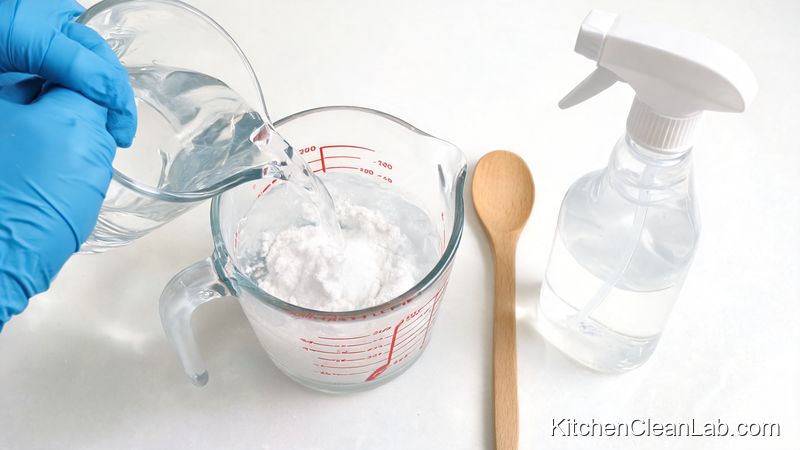
Measure 1 tablespoon of washing soda into a clean 16-ounce spray bottle, add 1 tablespoon of liquid castile soap, and fill it with 2 cups of very warm water. Shake gently until the powder dissolves, then spray and wipe with a damp microfiber cloth.
- Put on a pair of nitrile or rubber gloves and work in a ventilated area. Washing soda is not as aggressive as oven cleaner, but it can dry out skin.
- Add 1 tablespoon washing soda to a clean, empty spray bottle. Use a small funnel if the opening is narrow.
- Add 1 teaspoon borax if your water is hard or if you want extra grease-cutting power on cabinets and range hoods.
- Pour in 1 tablespoon liquid castile soap or a free-and-clear dish soap. Avoid heavily dyed or heavily perfumed dish soaps, because they can leave residue on stone and stainless surfaces.
- Fill the bottle with 2 cups of very warm water, leaving about an inch of headspace at the top.
- Cap the bottle tightly and swirl or shake gently for 20 to 30 seconds. Do not shake violently; the soap will create too much foam.
- Label the bottle as “Washing Soda Degreaser” and write the date. A batch this size usually lasts about one month if stored in a cool cabinet.
This recipe is designed for no-rinse use on sealed countertops when you wipe thoroughly with a damp cloth. On heavily soiled areas, let the spray sit for 60 to 90 seconds before wiping. Always test a small hidden spot first, especially on painted cabinets or sealed stone.
If you want a concentrated refill bottle, use 2 tablespoons washing soda and 2 tablespoons liquid soap in 2 cups of water. To use the concentrate, pour 1/4 cup into a spray bottle and fill the rest with warm water. This approach saves storage space, but the diluted spray should still be made fresh weekly if possible.
How to Use It on Stovetops, Backsplashes, and Range Hoods
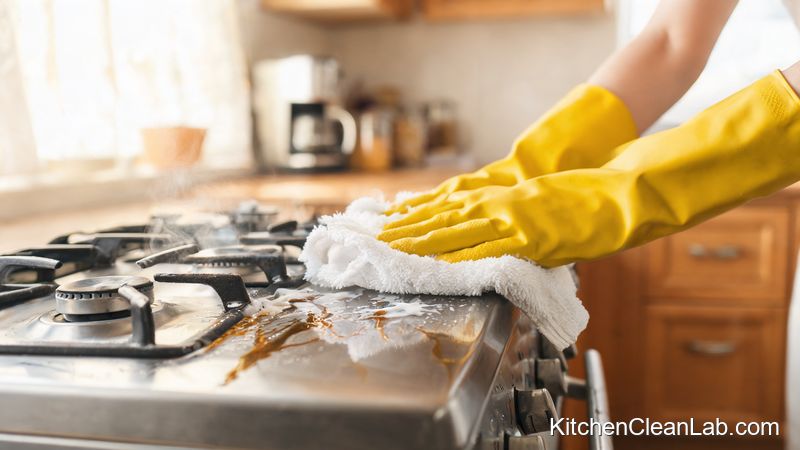
Spray the degreaser on a cool or warm surface, wait 60 to 90 seconds, and wipe with a damp microfiber cloth. For baked-on grease, use a non-scratch scrub sponge and follow with a clean-water rinse to prevent a white haze.
Different surfaces react differently to alkaline cleaners. Use the table below as a quick reference before you start spraying.
| Surface | Application Method | Dwell Time | Post-Cleaning Step |
|---|---|---|---|
| Sealed granite or quartz | Light mist, then wipe with damp microfiber | 30 seconds | Rinse with clean water and dry |
| Stainless steel stovetop | Spray generously, use non-scratch sponge | 60–90 seconds | Wipe with damp cloth, buff dry |
| Ceramic or porcelain tile backsplash | Spray and wipe with soft cloth | 45–60 seconds | Rinse or wipe with clean damp cloth |
| Range hood and metal filters | Spray heavily and scrub with old toothbrush | 2–3 minutes | Rinse thoroughly and dry |
| Painted cabinet tops near stove | Test hidden area first, then light mist | 30 seconds | Wipe immediately with clean damp cloth |
For range hood filters, remove the filters and place them in a shallow basin or sink. Spray both sides with the degreaser, wait a few minutes, and scrub with a nylon brush. Rinse well with hot water and let them air dry completely before reinstalling.
If grease is baked onto a stovetop grate or burner pan, do not rush. Spray the area heavily, cover it with a damp paper towel for two or three minutes, and then scrub. The towel keeps the solution in contact with the grease instead of letting it evaporate, which makes the washing soda more effective.
Safety Precautions and Common Mistakes to Avoid
Always wear gloves, keep the spray away from your eyes, and never mix washing soda with strong acids in a closed container. Even though it is a natural mineral, its high pH can damage unsealed stone and etch aluminum.
Washing soda is not a neutral cleaner. Treat it like a heavy-duty degreaser, not an everyday glass spray. These precautions will help you avoid the most common failures:
- Do not use it on unsealed granite, marble, limestone, or terrazzo. Alkaline solutions can etch or dull the surface over time.
- Do not spray it on hot glass oven doors. Rapid drying can leave a white mineral haze. Wait until the surface is cool.
- Avoid aluminum cookware and uncoated aluminum trim. Washing soda can cause pitting or darkening.
- Do not over-pour the powder. More washing soda does not mean faster cleaning; it only makes rinsing harder.
- Label the bottle clearly. Washing soda solution looks like water, so keep it away from children and pets.
- Rinse or buff visible residue. If you see a white film, you used too much product or the surface was not sealed.
If you want to add essential oils, choose oils that can handle an alkaline environment without separating. Lemon, sweet orange, and tea tree oil are popular. Add them after the washing soda has fully dissolved, not before, because the powder can trap the oils and make them less effective.
If the solution gets on your skin, rinse immediately with lukewarm water. Washing soda can cause dryness and irritation, but it is easily washed away. If it splashes into your eyes, flush with water for several minutes and seek medical advice if redness or pain continues.
Frequently Asked Questions About Washing Soda Degreasers
These answers cover the most common issues people hit when switching from store-bought degreasers to a washing soda formula. Always test a hidden area first, especially in older kitchens with unknown surface seals.
Is washing soda the same as baking soda?
No. Baking soda is sodium bicarbonate, while washing soda is sodium carbonate. Washing soda has a higher pH and much stronger degreasing action. You can bake baking soda in a 400°F oven for 30 to 45 minutes to convert it into washing soda at home. The powder should look duller, grittier, and less clumpy when ready.
Do I have to rinse this cleaner off kitchen counters?
On sealed counters and glass, a thorough wipe with a clean damp cloth is usually enough. If the surface feels slippery or shows a white haze, rinse again with plain water and buff dry. For food-contact surfaces, you can do a final wipe with a damp cloth and let the counter air dry.
Can I use washing soda on granite or marble?
Avoid using it on marble, unsealed granite, limestone, or any stone surface that has not been professionally sealed. Even sealed stone can wear over time, so test a hidden spot every few months. For natural stone, a pH-neutral stone cleaner is the safer long-term choice.
What is the fastest way to make washing soda from baking soda?
Spread a thin layer of baking soda on a baking sheet and bake it at 400°F for 30 to 45 minutes. Stir once halfway through. The baking soda becomes washing soda when it turns from bright white and fluffy to dull, opaque, and slightly grainy. Store the cooled powder in an airtight container away from moisture.
Keeping Grease Gone for Good
A weekly wipe-down with this washing soda degreaser prevents the hard, yellow film that builds up on cabinets and range hoods. Use the spray sparingly, rinse when needed, and dry stainless steel for a streak-free finish.
The real advantage of this DIY formula is control. You know exactly what is in the bottle, and you can adjust the dilution for light countertop misting or heavy-duty stove scrubbing. If a surface looks dull after cleaning, you have used too much washing soda or the surface is not sealed. Dial back the powder, use warmer water, and always finish with a clean, damp cloth. With the right ratio and a little patience, washing soda can handle almost any kitchen grease without the harsh chemical smell left behind by commercial degreasers.