Why Tea Tree Oil Works Against Kitchen Sink Mold
Direct answer: Tea tree oil works because terpinen-4-ol and alpha-terpineol break down the outer cell wall of mold spores. A 1-teaspoon-per-cup spray left on non-porous sink surfaces for at least one hour suppresses common kitchen strains like Aspergillus and Penicillium.
Kitchen sinks create a perfect storm: constant water, food residue, soap scum, and warm air around the faucet base. The rubber splash guard inside a garbage disposal and the caulk line behind the sink rim are often the first places mold appears. Unlike bleach, which removes surface staining but can leave water behind, tea tree oil helps inhibit spore reproduction after the visible mold has been lifted.
Kitchen sink mold is also hidden where you do not look: the underside of a sink mat, the base of a soap dispenser, the seam where the countertop meets the sink, and the damp gasket inside the disposal. Because these areas collect fats and sugars, mold growth can be faster and more odorous than bathroom mildew. Tea tree oil addresses both the living spores and the smell that often lingers after cleaning.
Tea tree oil will not repair failed caulk, stop an active drip, or penetrate saturated grout. Use it as a surface suppressant and low-toxicity maintenance spray, not as a replacement for plumbing repairs. If you see water staining on the cabinet floor under the sink, inspect the supply lines and drain first.
Bleach is often the default for sink mold, but it can be harsh on lungs and does not always reach the organic matter fueling mold. Tea tree oil offers a lower-odor alternative that is less likely to damage stainless steel or surrounding materials when used at the proper dilution. That said, it is not odorless; some people dislike the scent until it dissipates. Run the vent fan or open a window during the one-hour dwell time.
What You Need Before You Start
Direct answer: You need 100% pure tea tree oil, water, a glass spray bottle, a microfiber cloth, a soft-bristle brush or old toothbrush, dish soap, gloves, and safety glasses. A fine-mist spray bottle works best for sink rims and faucet bases.
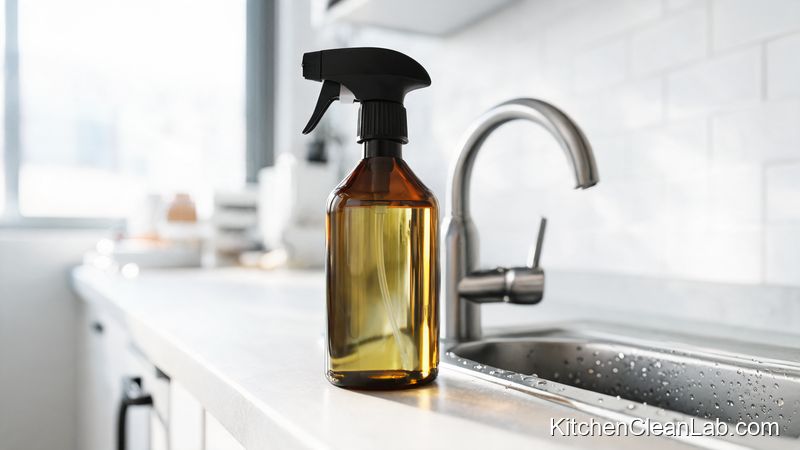
Keep a dedicated measuring spoon and spray bottle for cleaning products. Essential oil residue can be difficult to wash off plastic, and using the same spoon for food is not safe. Amber glass protects the oil from light, but a clear bottle is acceptable if stored inside a dark cabinet.
- 100% tea tree essential oil, often labeled Melaleuca alternifolia
- 1 cup warm water
- 1 teaspoon measuring spoon
- Dark glass spray bottle
- Soft-bristle brush or old toothbrush
- Microfiber cloths
- Dish soap for pre-cleaning
- Nitrile or rubber gloves
- Safety glasses or goggles and a mask
Step-by-Step: How to Apply Tea Tree Oil for Sink Mold Suppression
Direct answer: Mix 1 teaspoon tea tree oil with 1 cup warm water in a spray bottle. Shake well, spray the dry sink rim, drain collar, faucet base, and caulk line, wait at least one hour, scrub lightly, then rinse and dry. Repeat weekly.
- Clear and clean the sink first. Remove dishes, food debris, and surface grease with dish soap and warm water. Dry the sink with a microfiber cloth so the oil solution is not diluted by standing water.
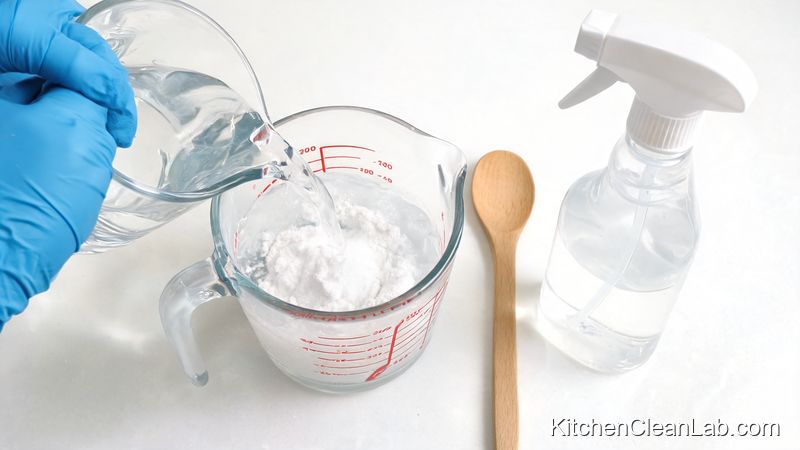
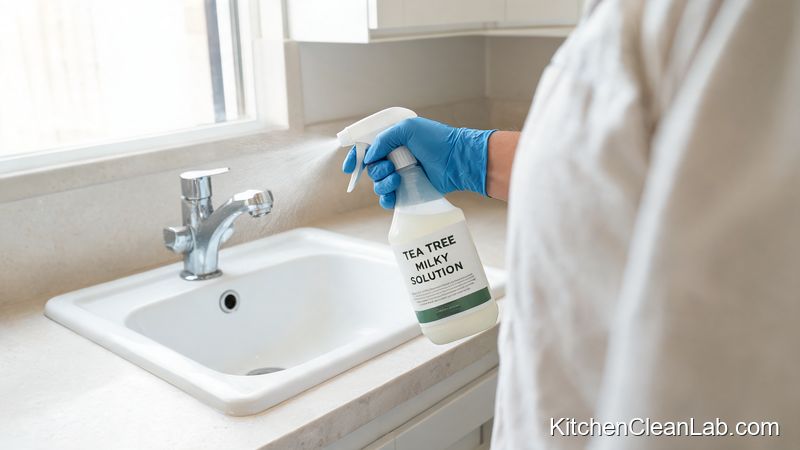
- Make the solution. Add 1 teaspoon of tea tree oil to 1 cup of warm water in a dark glass spray bottle. For heavy mold, increase to 1.5 teaspoons per cup, but never apply undiluted oil directly to sink surfaces.
- Shake before every spray. Oil and water separate, so shake the bottle until the liquid looks milky.
- Spray target zones lightly but thoroughly. Focus on the drain ring, the underside of the sink lip, the faucet base and escutcheon plate, the disposal splash guard, and any caulk or sealant lines. A light mist is enough for porous caulk.
- Allow at least one hour of dwell time. The solution needs contact time to rupture mold spore walls. For stubborn black spots, leave it for two hours.
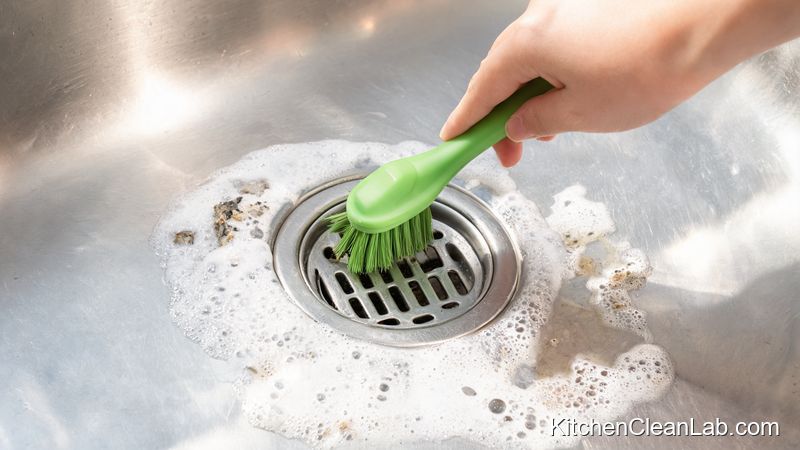
- Scrub gently. Use a soft brush or old toothbrush to lift dead mold from textured areas, then wipe with a clean cloth.
- Rinse and dry completely. Rinse with hot water and dry all surfaces with a microfiber cloth. Mold regrows in standing moisture, so the drying step is just as important as the oil.
Wear nitrile or rubber gloves because tea tree oil can irritate skin. Open a window or run the range hood during and after treatment. If you have dogs or cats, keep them out of the kitchen until surfaces are dry because tea tree oil can be harmful to pets if licked or inhaled in large amounts.
If the sink has a large amount of visible mold, put on an N95 mask before disturbing the area. Lightly mist the mold first to weigh down spores, then proceed. After the oil dwells and you scrub, use paper towels instead of a reusable cloth for the first heavy pass, then throw them away in a sealed bag. Follow with the weekly maintenance routine.
Which Kitchen Sink Materials Are Safe for Tea Tree Oil?
Direct answer: Tea tree oil spray is safe on stainless steel, porcelain, enameled cast iron, and most sealed composite or granite sinks. Avoid unsealed natural stone because the oil can leave a dark mark. Always run a spot test in an inconspicuous area first.
| Sink Material | Safe for Tea Tree Oil? | Use Notes |
|---|---|---|
| Stainless steel | Yes | Dry after rinsing to prevent water spots; safe for weekly use. |
| Porcelain or enamel | Yes | Use a soft brush to avoid scratching the glaze. |
| Quartz composite | Usually yes | Spot test first; avoid letting oil pool for long periods. |
| Sealed granite | Yes, if sealed | Wipe up spills quickly; reapply sealant as directed. |
| Unsealed granite or marble | No | Oil can stain the surface; use a stone-safe mold cleaner instead. |
| Acrylic or solid surface | Usually yes | Do not use abrasive brushes; rinse with water after one hour. |
Most American kitchen sinks are stainless steel or porcelain, which are ideal for tea tree oil use. Composite granite sinks are generally non-porous but can vary by manufacturer, so the spot test is not optional. If your sink has a mat or grid, remove it before spraying and clean the mat separately. Mold often grows underneath sink mats even when the visible bowl looks clean.
Common Mistakes That Make Sink Mold Worse
Direct answer: The biggest mistakes are spraying tea tree oil onto wet surfaces, not shaking the bottle, rinsing too early, leaving the sink wet, and ignoring the drain and splash guard. Avoid mixing tea tree oil with bleach or vinegar in the same spray bottle.
- Applying the spray to a wet sink. Water dilutes the solution and reduces contact time. Start with a dry surface.
- Not shaking the spray bottle. Tea tree oil separates from water within minutes. Shake before every trigger pull.
- Rinsing after only a few minutes. Mold spores need at least one hour of contact to rupture. Quick rinsing removes the active compounds before they work.
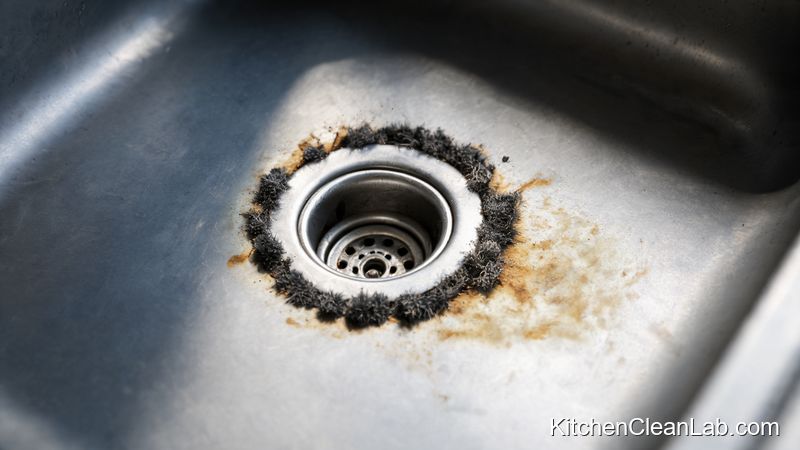
- Ignoring the garbage disposal splash guard. The black rubber guard traps moisture and food particles. Lift it weekly, scrub with a brush, and mist with the solution.
- Using undiluted oil. Pure tea tree oil can irritate skin and may leave a greasy film that attracts debris. Always dilute it.
- Mixing with bleach or vinegar. Do not combine tea tree oil with strong oxidizers like bleach. Use a separate water-based spray.
- Skipping the final dry wipe. Mold spores need moisture to grow. Even after treatment, dry the sink and surround with a clean cloth.
Weekly Maintenance Routine to Keep Kitchen Sink Mold Away
Direct answer: Use the tea tree oil spray once a week on the dry sink rim, faucet base, and drain collar. Also wipe the sink after every dishwashing session, run the exhaust fan, and fix dripping faucets or loose caulk to keep moisture from settling.
- Start with a dry sink after evening cleanup.
- Shake the tea tree oil spray and mist the rim, drain, and faucet base.
- Let it air dry for 30 minutes, or wipe after 15 minutes if you need to use the sink. For full suppression, leave it for one hour.
- Flush the drain weekly with a diluted rinse: add 2 to 3 drops of tea tree oil to 1 cup of warm water, pour it into the drain, wait 10 minutes, then run hot water for 30 seconds.
- Once a month, remove the disposal splash guard and soak it in warm soapy water with a few drops of tea tree oil. Scrub before reinstalling.
Moisture control is the real long-term fix. Run the exhaust fan or open a window whenever you boil water, run the dishwasher, or wash dishes by hand. Check the base of the faucet and the soap dispenser for small leaks. If the sink rim caulk is peeling or black inside, scrape it out, dry the joint completely, and recaulk with a mold-resistant kitchen sealant before spraying with tea tree oil.
Frequently Asked Questions About Tea Tree Oil and Kitchen Sink Mold
Direct answer: These answers cover black mold, drains, stone sinks, and how long tea tree oil takes to work. Use 100% pure tea tree oil, wear gloves, open a window, and if mold covers more than a few square feet, consult a professional.
Does tea tree oil kill black mold in kitchen sinks?
Tea tree oil can suppress the growth of common black-colored molds on non-porous sink surfaces, but no natural product reliably penetrates deep into drywall or thick caulk. For surface mold on metal, porcelain, or sealed composite, a 1 teaspoon per cup solution left for one to two hours is effective as a routine suppressant. If black mold covers a large area or keeps returning behind the sink, fix the leak and replace contaminated caulk.
Can I pour tea tree oil down the kitchen sink drain to stop mold?
Use only a very diluted rinse, not pure oil. Add 2 to 3 drops of tea tree oil to 1 cup of warm water, pour it slowly into the drain, wait 10 to 15 minutes, then flush with hot water. This can help with drain odor and surface mold around the drain collar, but it will not remove sludge or deep clogs. A weekly routine combined with cleaning the P-trap is better for persistent drain mold.
Is tea tree oil safe for granite or composite kitchen sinks?
It depends on the sealant. Sealed granite and most quartz composite sinks tolerate a light tea tree oil spray, but unsealed granite, marble, or limestone can absorb the oil and darken. Always spot test inside a small area near the drain or on the underside if possible. If the spot test leaves any sheen or color change, use a stone-safe mold cleaner instead.
How long does tea tree oil take to kill mold in a sink?
Leave the solution on the surface for at least one hour. For heavy or dark staining, extend the dwell time to two hours and scrub lightly with a soft brush. The oil begins breaking down the spore cell wall during that contact period, but mold stains may still need physical removal. Reapply weekly because tea tree oil suppresses spores but does not permanently sterilize a damp kitchen environment.
Keep Your Kitchen Sink Mold-Free Naturally
Direct answer: A simple tea tree oil spray works best as part of a dry-sink routine. Use it weekly on non-porous surfaces, scrub the drain and splash guard, fix leaks, and run ventilation. That combination keeps sink mold from becoming a recurring problem.
Tea tree oil is not a miracle cure for structural dampness. If water is leaking under the counter, behind the faucet, or through cracked caulk, no spray will stop mold permanently. But when used correctly on the sink rim, drain collar, and disposal splash guard, tea tree oil is a practical, low-odor natural tool that fits into a weekly kitchen reset. Store the spray in a dark cabinet, label it clearly, and keep it away from children and pets.