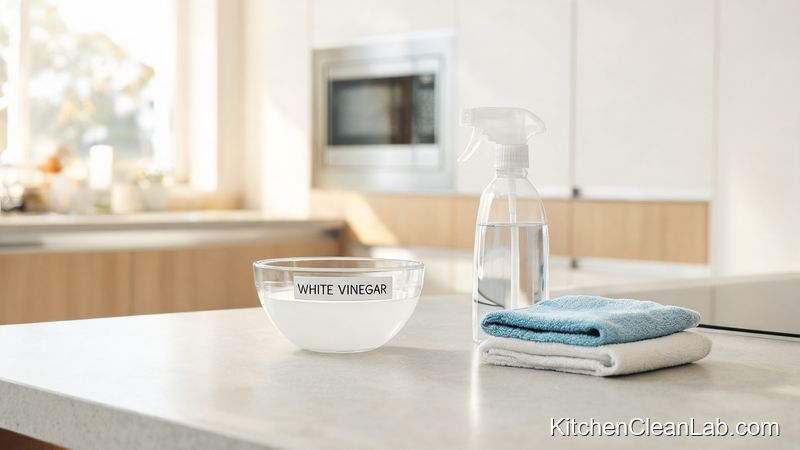
Why Baking Soda Paste Works on Tough Oven Stains
Baking soda is a mild alkaline abrasive that neutralizes acidic grease and loosens carbonized food residue without toxic fumes. Mixing it into a thick paste lets it cling to vertical oven walls and dissolve baked-on buildup overnight or within 15–20 minutes.
Most oven stains are not simple burnt food. They are polymerized grease, a chain of fatty acids and carbon that forms when oil and heat repeatedly hit the same surface. Sodium bicarbonate, the active compound in baking soda, has a pH around 8.4. That alkalinity works against the acidic nature of food residue, breaking the chemical bonds that make grease sticky. At the same time, the fine particles act as a gentle mechanical abrasive, which lets you scrub away carbonized spots without scratching porcelain enamel, glass, or stainless steel.
Unlike commercial oven cleaners that may contain potassium hydroxide, monoethanolamine, or butoxydiglycol, a baking soda paste does not require a hazmat suit. You still need to use good ventilation and avoid the heating elements, but you will not be fighting harsh chemical fumes. The paste also clings to ceilings and side walls, so the dwell time does the hard work while you do something else.
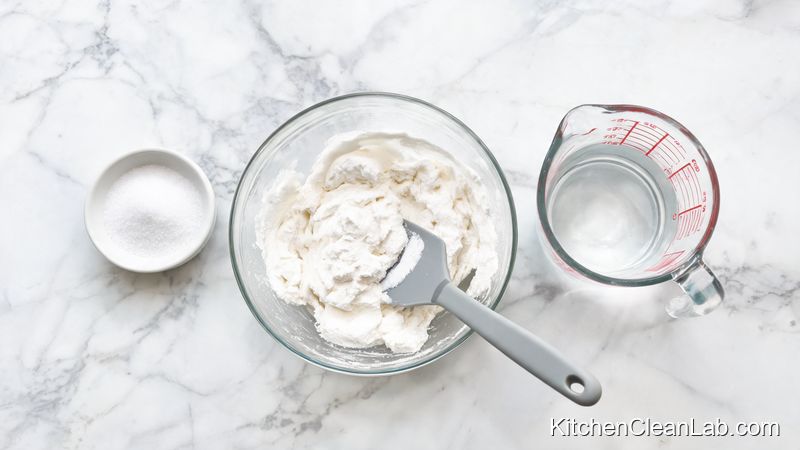
Ingredients and Ratios for a Heavy-Duty Baking Soda Paste
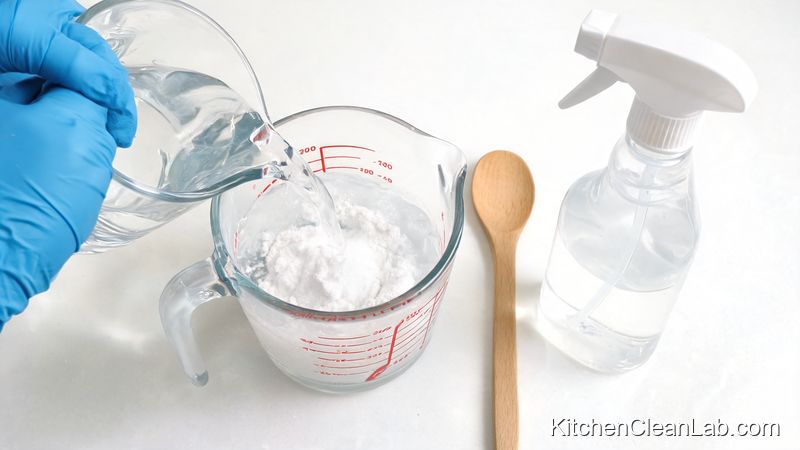
For heavy-duty oven stains use 1 cup of baking soda, 1 tablespoon of table salt, and 2–3 tablespoons of water to form a thick, cake-icing paste. Triple the batch if you plan to coat the oven floor, walls, ceiling, and glass door.
The salt acts as an extra abrasive and helps slow the paste from drying too quickly. Do not use coarse kosher salt or rock salt; fine table salt blends evenly. If you have sensitive skin, wear nitrile or dish gloves during mixing and application. Baking soda is mild, but prolonged contact can dry out skin.
Exact ratios depend on the condition of your oven:
- Light-duty paste: 1/2 cup baking soda + 3 tablespoons water, mixed to pancake batter consistency. Best for monthly maintenance.
- Heavy-duty paste: 1 cup baking soda + 1 tablespoon salt + 2–3 tablespoons water, mixed to thick cake icing. Best for baked-on carbon and set-in grease.
- Full oven treatment: 3 cups baking soda + 3 tablespoons salt + 6–9 tablespoons water. Enough for floor, ceiling, back, sides, and glass door.
| Paste Type | Baking Soda | Water | Additives | Dwell Time | Best For |
|---|---|---|---|---|---|
| Light-duty | 1/2 cup | 3 tbsp | None | 15–20 min | Recent spills, light grease |
| Heavy-duty | 1 cup | 2–3 tbsp | 1 tbsp salt | 8–12 hours | Stubborn, baked-on stains |
| Full oven | 3 cups | 6–9 tbsp | 3 tbsp salt | Overnight | Severe buildup, whole oven |
Add water 1/2 tablespoon at a time. If the paste is too runny, it will slide off vertical surfaces. If it is too dry, it will crumble before it can dissolve grease. You want the texture of thick frosting that can hold a spatula mark.
Step-by-Step DIY Oven Cleaning with Baking Soda Paste
Remove the oven racks and any loose debris, then smear the paste over every surface except heating elements, gas valves, and vents. Let it sit overnight for tough stains, then wipe with warm water and a 3:1 water-to-vinegar rinse.
- Turn off the oven and cool it completely. If your oven has a digital control panel, unplug it or switch off the circuit breaker before cleaning to avoid accidental heating. For gas ovens, do not disturb the gas supply; simply make sure the oven is off and cool.
- Take out the oven racks. Clean these separately in a sink or bathtub with warm soapy water and a baking soda paste if they are heavily soiled. Do not leave racks inside while paste sits because they will make maneuvering harder.
- Scrape away loose debris. Use a plastic scraper, silicone spatula, or a dry paper towel to remove carbon flakes and loose food. This keeps the paste in contact with the actual stain instead of surface crumbs.
- Apply the paste thickly. Spread it across the oven floor, walls, ceiling, and the inside of the glass door with a rubber spatula or gloved hand. Stay at least 1 inch away from heating elements, gas valves, and door vents. For corners and gasket grooves, use an old toothbrush.
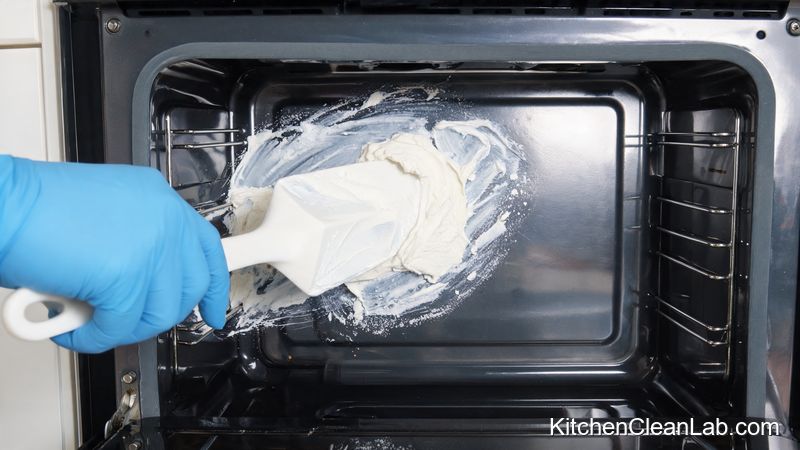
- Let it sit. For light stains, wait 15–20 minutes. For tough, carbonized stains, close the oven door and leave the paste overnight or for at least 8 hours. The paste may dry and harden; that is normal.
- Loosen the paste. In the morning, use a plastic scraper or silicone spatula to lift hardened paste into a dustpan or paper towel. Work in sections and avoid scratching the surface. Wipe the loosened residue with warm, wet paper towels or a microfiber cloth.
- Rinse with a vinegar solution. Mix 3 parts warm water to 1 part distilled white vinegar in a spray bottle. Spray the entire interior lightly and wipe with a clean cloth. The mild acidity neutralizes any remaining alkaline baking soda residue and prevents white streaks.
- Dry and inspect. Use a dry microfiber cloth to buff the glass and surfaces. If you see any remaining white haze, repeat the vinegar rinse. Reinstall the oven racks only when everything is dry.
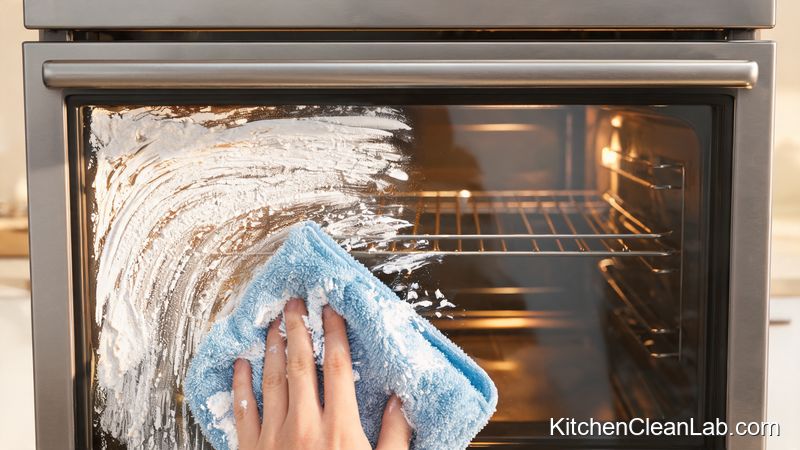
Baking Soda and Vinegar Method for Oven Spills
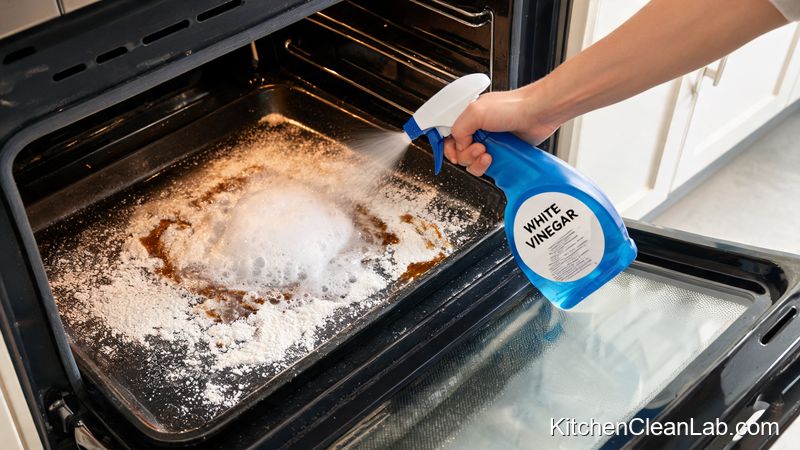
For fresh or small spills, sprinkle baking soda directly on the stain, spritz with water or a 3:1 water-to-white vinegar solution, let it bubble for 15–20 minutes, then wipe clean. This method is faster but works best on light to moderate residue.
This shortcut is ideal after a pie bubbles over or a casserole splatters. Do not use it inside a hot oven; wait until the surface is warm or fully cool to avoid steam burns and rapid bubbling. Work while the spill is still soft if possible.
- Blot the wet spill with paper towels, but do not scrub while it is still oily.
- Sprinkle baking soda liberally over the stain so it is fully covered.
- Spritz with water or a 3:1 water-to-vinegar solution. The mixture will fizz. Let that reaction lift the stain for 15–20 minutes.
- Wipe with wet paper towels, then rinse the whole interior with the same water-vinegar solution to remove residue.
If the spill has already turned into black, glass-like carbon, this quick method will not be enough. Switch to the heavy-duty overnight paste instead of reapplying vinegar multiple times, because acidic vinegar can dull aluminum surfaces and over-wetting can pool near electrical components.
Common Mistakes, Safety Precautions, and Pro Tips
Never spread paste on heating elements, gas valves, or oven door vents. Always unplug or turn off the oven at the breaker, wear nitrile gloves if you have sensitive skin, and avoid inhaling the dry powder. Rinse thoroughly to prevent white residue.
Mistakes to Avoid
- Coating the heating element. Baking soda can leave a corrosive film or smoke during the next preheat. Keep paste and rinsing water away from electrical connections.
- Using too much water. A runny paste drips into hard-to-clean gaps and can soak insulation around the oven cavity.
- Skipping the vinegar rinse. Without an acid rinse, baking soda dries as a white alkaline film that can attract new grime.
- Scrubbing with steel wool or metal scrapers. These can scratch porcelain and glass, giving grease more places to bond.
- Running the self-clean cycle after paste residue remains. High heat can bake any leftover paste into stubborn white marks.
Safety Checklist
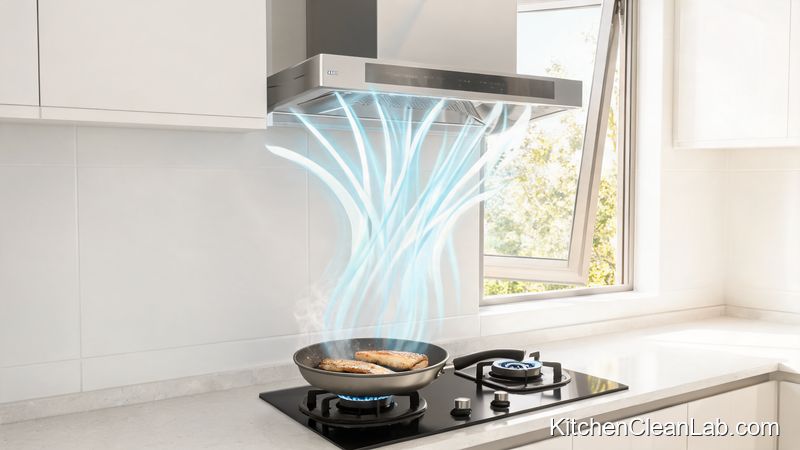
- Open windows or switch on the range hood for ventilation.
- Wear nitrile gloves if you have sensitive skin, and safety glasses if you are cleaning the oven ceiling.
- Keep children and pets out of the kitchen while the paste sits.
- Label any bowl of cleaning paste so it is not mistaken for food.
- Do not mix baking soda with commercial acidic or chlorine-based cleaners, except for the vinegar rinse after wiping up the paste.
Pro Tips for Stubborn Corners
Use an old, soft toothbrush to work paste into corners, around the door hinge, and under the gasket. For heavy grease on the oven door glass, lay a thin layer of paste over the glass, press plastic wrap on top, and let it sit for 2–3 hours. The plastic wrap slows evaporation and keeps the paste active. Remove the wrap and wipe as usual.
If you have a hidden bake element at the bottom of the oven, do not submerge it. Wipe around the element with a damp cloth and use a thin paste only on the surrounding metal floor.
Frequently Asked Questions About Baking Soda Oven Cleaning
Baking soda paste is generally safe for oven glass and porcelain enamel, but it can leave a white haze if you fail to rinse with a damp cloth and then a 3:1 water-vinegar wipe. Let heavy-duty paste sit for at least 8 hours, and always remove racks before cleaning.
Can baking soda damage oven glass or stainless steel?
Baking soda is a mild abrasive, but it is generally safe for coated oven glass, porcelain enamel, and stainless steel when used with plastic scrapers and non-scratch sponges. The risk comes from rubbing dry, undissolved baking soda with aggressive scrubbing pads. On glass, work with a wet paste and do not press hard. For stainless steel visible panels, follow the grain with a soft cloth. If you are unsure, test on a small hidden area first. After cleaning, rinse with a damp cloth and buff dry to avoid streaks.
How long should baking soda paste sit on oven stains?
For light grease and recent spills, 15–20 minutes is often enough to break down the surface film. For tough, carbonized stains on the oven floor or glass, leave the heavy-duty paste for 8–12 hours, preferably overnight. The longer dwell time lets the alkaline paste penetrate layers of polymerized grease. The paste can dry and harden; that is expected. If the stain is still present after the first round, apply a fresh paste only to the remaining spot and wait another 4–6 hours.
Do I need to rinse after cleaning with baking soda?
Yes. Baking soda leaves a thin white mineral film when it dries, and that film can attract oil and look cloudy on glass. After you wipe away the paste and loosened grime, spray the interior with a 3:1 water-to-white vinegar solution, then wipe with clean cloths. The vinegar neutralizes the alkaline residue and makes the surface shine. Follow with a dry microfiber cloth, especially on the glass door, to prevent water spots.
Will baking soda remove burnt-on sugar or polymerized grease?
It can, but it may take more than one application. Burnt-on sugar is carbonized and sometimes glass-like. Baking soda softens the outer layer, but you may need to use a plastic scraper and a second round of paste for thick black deposits. For severe polymerized grease, add salt to the paste and leave it overnight. Do not be tempted to mix baking soda with commercial oven cleaners; that could create unsafe reactions. Patience with the paste is safer than aggressive scraping.
Final Thoughts on Keeping Your Oven Stain-Free
The best way to handle tough oven stains is to combine a heavy-duty baking soda paste with an overnight dwell time and a thorough vinegar-water rinse. For recurring maintenance, use a light paste once a month or immediately after spills.
Cleaning the oven is never exciting, but a baking soda paste makes it predictable. Once the heavy layer is gone, maintain the surface with a 15-minute light paste at least once a month, or every time a spill leaves a visible stain. Keep a lidded container of dry baking soda near the oven as a reminder, and treat the oven glass the moment it starts to look hazy. If you avoid the self-clean cycle and stick with this non-toxic routine, you will not need heavy gloves, a respirator, or hours of scraping. The cleaning power is already in your pantry.