Why Lemon and Coarse Salt Work on Cutting Boards
Lemon juice delivers citric acid that dissolves odor compounds and light surface residue, while coarse salt provides safe mechanical abrasion. Neither ingredient alone is a reliable sanitizer for raw meat, but together they refresh, deodorize, and lift stains from daily wood care.
Wood and bamboo boards develop tiny surface channels after repeated slicing. Those channels trap moisture, food proteins, and odor molecules. A halved lemon works as a natural acid applicator. The juice loosens alkaline food debris and oxidizes some stain pigments, especially from berries, beets, and tomatoes. Coarse sea salt or kosher salt stays gritty long enough to work that acidic liquid into the grain without scratching like steel wool. From my tests on maple and acacia boards, a 2 to 3 minute scrub removes visible garlic and paprika residue more effectively than dish soap alone, but it does not replace washing.
The reaction is mechanical, not magical. Salt crystals break up dried debris. Citric acid cuts through thin oil films and reduces the pH at the surface, which helps neutralize sulfur-based odors from onions and garlic. The fresh lemon scent is temporary; the real benefit is lowering odor compounds before they soak deeper. That said, the process is surface-level. It will not kill all bacteria, and it is not a substitute for a proper sanitizing step after raw poultry or fish.
Use this method as part of a rotation, not as your only board care routine. Pair it with hot water washing, occasional diluted vinegar, and monthly oiling to keep the board stable.
What You Need Before You Start
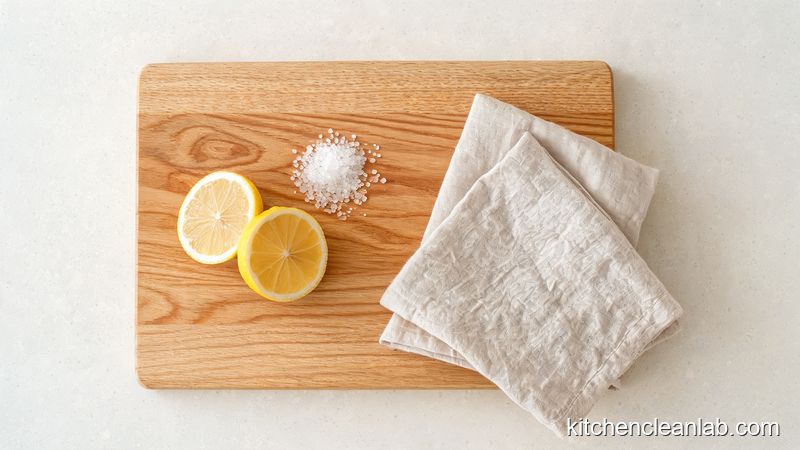
Gather one fresh lemon, coarse sea salt or kosher salt, warm water, a clean lint-free cloth, and food-safe mineral oil. Avoid fine table salt; it dissolves too quickly and can over-scrub the wood.
- One lemon: Choose a firm lemon; half is usually enough for a standard 45 x 35 cm board.
- Coarse salt: Sea salt, kosher salt, or coarse pickling salt. Avoid iodized table salt and rock salt with large sharp edges.
- Warm running water: Warm enough to lift residue, never boiling.
- Clean cloths: Use lint-free cotton or microfiber for drying and oiling.
- Food-safe mineral oil or board cream: For drying protection after acidic cleaning.
Do not use olive oil or vegetable oil for board conditioning; they can turn rancid inside the wood. If your board has deep cracks or visible mold, do not rely on lemon and salt. Sand it down or replace it.
Step-by-Step: Lemon and Coarse Salt Board Cleaning
Rinse, sprinkle salt, scrub with cut lemon in circular motion, rest 3–5 minutes, rinse, dry, and re-oil if needed. For raw poultry or fish, wash with hot soapy water first and use diluted vinegar if sanitizing is required.
- Rinse and wipe: Rinse the board under warm running water. Remove visible food particles with a soft brush or cloth. Never soak the board, because prolonged water contact swells wood fibers and can cause warping.
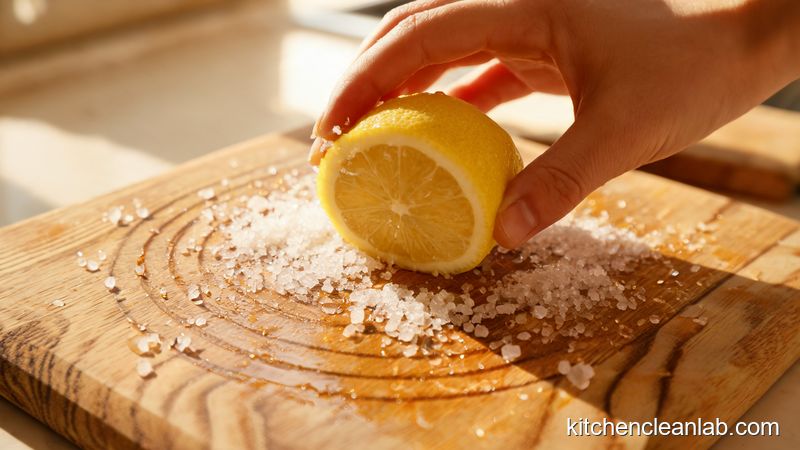
- Sprinkle salt evenly: Use about 1 tablespoon of coarse salt for a 45 x 35 cm board. For smaller boards, use half that amount. Spread it with your hand so the entire working surface has a thin, even layer.
- Scrub with lemon: Cut a lemon in half. Press the cut side into the salt and scrub in small circular motions for 2 to 3 minutes. Work across the grain and focus on knife marks, stained areas, and zones that still smell like garlic or onion.
- Rest for 3 to 5 minutes: Let the salty lemon juice sit on the surface. This short contact time lets citric acid work on stains and odor compounds. Do not leave it longer than 10 minutes; too much acid can dry the wood.
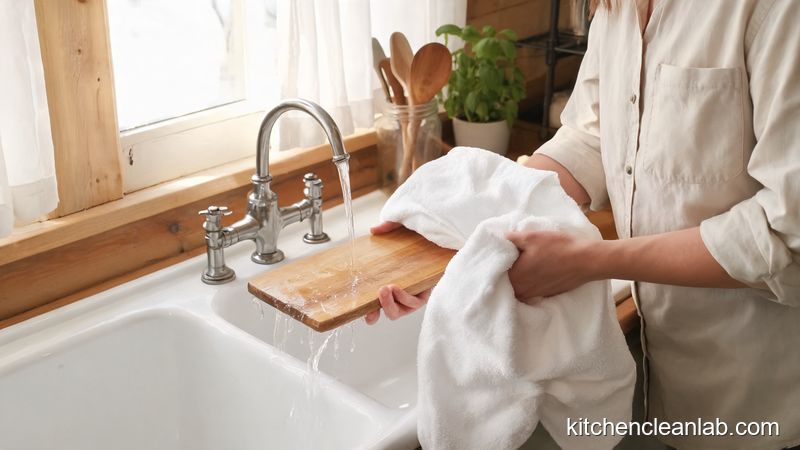
- Rinse and dry immediately: Rinse quickly with warm water. Wipe the board dry with a clean towel, then stand it upright so air reaches both sides. Moisture left in the board is the main cause of warping and bacterial growth.
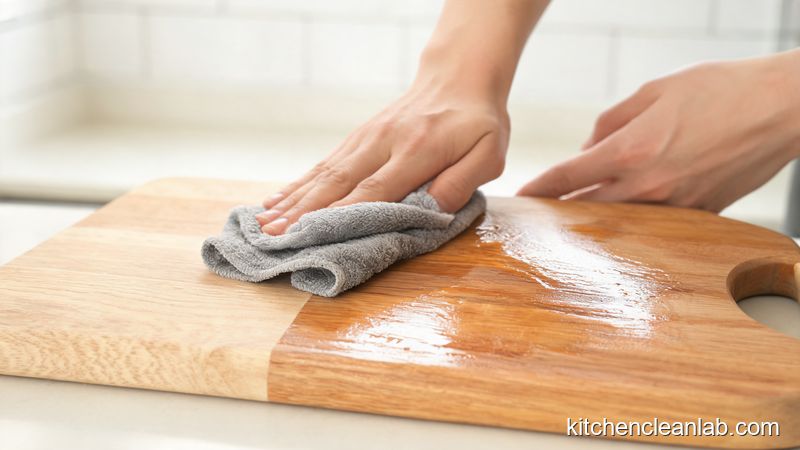
- Re-oil if the surface looks dry: If the board appears chalky or rough, apply 1 to 2 teaspoons of food-safe mineral oil with a dry cloth. Let it absorb for at least 4 hours or overnight before using the board again.
For bamboo and acacia boards, use a slightly lighter hand. Bamboo is dense but can show scratch marks on dark carbonized surfaces. Acacia is naturally oily, so it tolerates the acid well but still needs quick drying and regular conditioning.
Does Lemon and Salt Actually Disinfect?
Lemon and coarse salt refresh and deodorize, but they are not a certified disinfectant. For raw meat, wash with hot soapy water followed by 1:4 white vinegar solution or a food-safe sanitizer.
This is the most important distinction in board care. Lemon juice has a pH between 2 and 3, and that acidity can inhibit some bacteria in controlled lab conditions. But a kitchen cutting board is porous, textured, and covered with knife grooves. The acid contact is uneven and far too short to meet the contact times required for sanitizing or disinfecting a food-contact surface.
Salt pulls moisture from the board and can help dry out the surface environment that bacteria prefer. It does not reliably kill pathogens such as Salmonella, Campylobacter, or E. coli. If you have cut raw chicken, meat, or fish on the board, wash it first with hot water and dish soap, then apply a 1:4 solution of white vinegar and water or use an EPA-registered food-safe sanitizer. Let the vinegar solution sit for 5 minutes, then rinse lightly and dry thoroughly.
The honest answer to does lemon and salt disinfect a cutting board is no, not in the regulatory sense. It is a deep-cleaning and odor-control method. Use it that way, and you will avoid the false confidence that leads to cross-contamination.
Common Mistakes That Ruin Wooden Cutting Boards
Avoid soaking, using fine salt, skipping drying, and over-scrubbing with lemon. Moisture left on the board causes warping, deep cracks, and trapped bacteria.
- Soaking the board in water: Wood is porous. Soaking causes fibers to swell, board to warp, and glue joints to fail. Rinse only.
- Using fine table salt: It dissolves too quickly, turning into a salty paste that can over-dry the wood without enough abrasion to lift residue.
- Leaving lemon juice on too long: Long acid contact can strip natural oils and dry out bamboo or maple. Five minutes is enough for stains and odors.
- Skipping the dry step: Drying with a towel and standing the board upright is not optional. Bacteria need moisture, and a damp board is a perfect environment.
- Oiling too rarely: After acidic or salty treatments, the surface can lose protective oils. If it looks dry or feels rough, re-oil before storing.
- Using undiluted vinegar or bleach mixes too often: Strong acids and harsh oxidizers degrade wood fibers over time. If you need to sanitize, use a measured 1:4 vinegar solution or a food-safe product.
Quick Reference: Lemon Salt vs Vinegar vs Soap
Use lemon and salt weekly for stains and odors, diluted vinegar 1:4 after raw meat, and hot soapy water immediately after every use. Each method has a different job.
- Everyday after use: Hot water, a small amount of mild dish soap, and a quick scrub. Rinse and dry completely.
- Once a week: Lemon and coarse salt scrub for 2 to 3 minutes. This lifts stains, removes garlic and onion smells, and resets the surface.
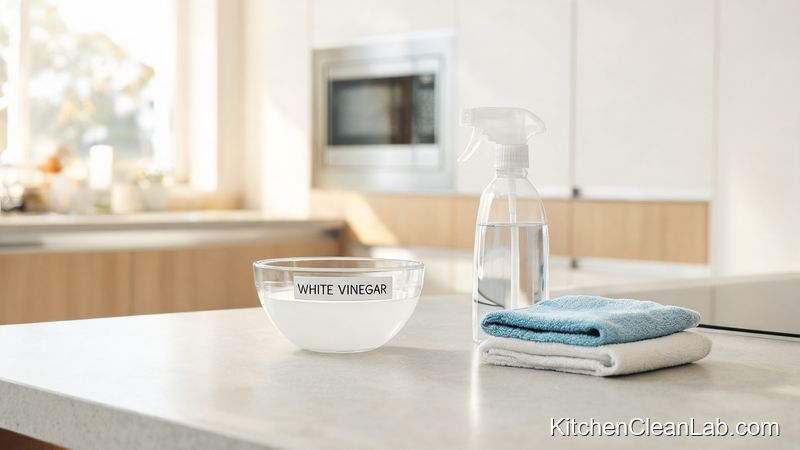
- After raw meat or fish: Wash with soapy water, then spray or wipe diluted white vinegar at a 1:4 ratio. Leave for 5 minutes, then dry.
- Once a month: Apply food-safe mineral oil or board cream to all surfaces, including edges and cutouts. Let it absorb overnight and wipe off excess.
If you prepare mostly vegetables and bread, the lemon and salt routine may be enough for regular care. If you process meat often, add the vinegar step after every raw protein contact.
Frequently Asked Questions
Here are direct answers to common questions about lemon and salt use on wood, bamboo, and acacia boards.
Can I leave lemon and salt on a cutting board overnight?
No. Lemon juice is acidic enough to dry out wood fibers if left for hours. Salt can also draw out too much moisture and leave the surface rough. The effective contact time is 3 to 5 minutes. If you want a deeper overnight reset, dry salt alone can be left on a board to draw out odors, but it should be brushed off, rinsed, and dried the next day.
How often should I clean a wooden cutting board with lemon and salt?
Once a week is enough for most home cooks. If the board sees heavy daily use or strong foods like garlic, onion, raw fish, or beets, you can do it twice a week. More frequent acid scrubbing can dry the wood, so follow up with oil whenever the surface looks chalky or rough.
Does lemon juice damage wood cutting boards?
Short contact times of 3 to 5 minutes are generally safe for maple, acacia, bamboo, and beech. Damage usually comes from leaving lemon juice on the surface, using excessive force, or failing to rinse and dry. If your board is already cracked, unfinished, or very dry, skip the lemon and use gentle soap and water followed by oiling.
What is the best way to remove garlic or onion smell from a cutting board?
A lemon and coarse salt scrub is the most effective natural method for sulfur-based odors. Rub the salted lemon across the board for 2 to 3 minutes, let it rest briefly, rinse, and dry. For stubborn smells, repeat once, then set the board in a dry, ventilated area. Baking soda paste can also help, but it does not provide the same deodorizing lift as lemon.
A Practical Weekly Board Care Routine
Pair daily wiping, weekly lemon-salt refresher, post-meat vinegar sanitizing, and monthly oiling to extend board life. Consistency matters more than aggressive scrubbing.
The best board care routine is boring but predictable. After every use, rinse with warm water and a drop of mild soap. On the weekend, do the lemon and salt scrub while you empty the dishwasher or prep vegetables. If you handled raw chicken, pork, or fish that week, add a 5-minute diluted vinegar pass. Once a month, oil the board and let it rest overnight.
This method keeps wood, bamboo, and acacia boards stable without turning your kitchen into a chemistry lab. It also makes future lemon-salt scrubs easier because stains and odors do not have time to sink deep into the board. Track the routine by feel: if the board feels dry or rough, oil it. If it holds a smell after washing, use lemon and salt. If you need sanitizing after raw meat, use vinegar. That simple decision tree prevents most board damage and keeps food prep safer.
For boards with deep stains, knife scars, or visible mold, natural cleaning has limits. Sanding away damaged fibers or replacing the board is the safer move. A clean board should look dry, feel smooth but not slick, and smell neutral. That is the goal behind each step.