Why a 10-Minute Kitchen Reset Works Before Guests Arrive
A 10-minute kitchen reset focuses on visual order, not deep cleaning. Clear the main counters, contain dirty dishes, wipe the sink and high-touch surfaces, take out smelly trash, and place a clean towel. That short sequence makes the room look cared for before the doorbell rings.
Most guests judge a kitchen from the doorway, breakfast bar, or drink station, not from inside your cabinets. The goal is to remove visual noise: scattered mail, sticky counters, overflowing sinks, and floor crumbs. I learned this after too many last-minute hosting situations where I wasted time scrubbing the inside of the microwave while guests walked into a cluttered counter. The kitchen is the first place people lean, snack, and set a drink, so it deserves the bulk of your pre-guest minutes. A speed clean before guests arrive is less about deep cleaning and more about removing the things that make a kitchen look out of control.
Assemble a 10-Minute Kitchen Cleaning Kit
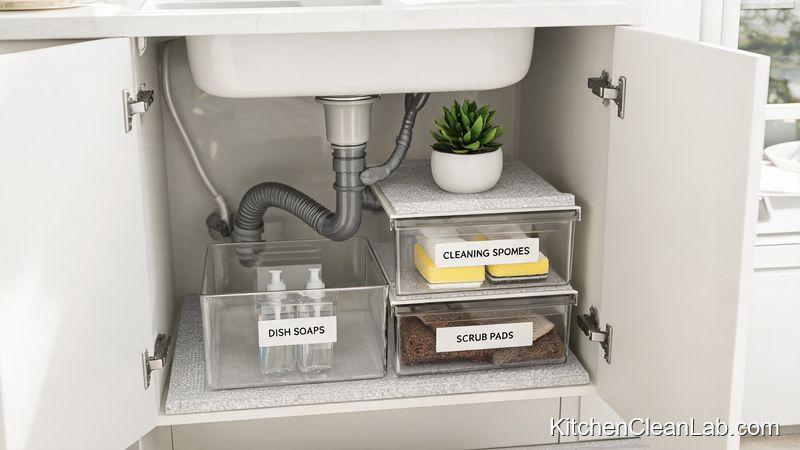
A simple caddy with an all-purpose cleaner, dish soap, microfiber cloths, a scraper, and trash bags saves more time than any deep-cleaning gadget. Keep it under the sink so you do not waste five minutes searching for products while guests are on the way.
The best speed-clean kits are boring on purpose: few products, always in the same place, and easy to grab with one hand. I keep a small caddy with two microfiber cloths, a spray cleaner, dish soap, a scrub brush, and a roll of trash bags under the kitchen sink. When someone gives me a thirty-minute warning, the first move is not to start cleaning. The first move is to pull out the caddy and a laundry basket.
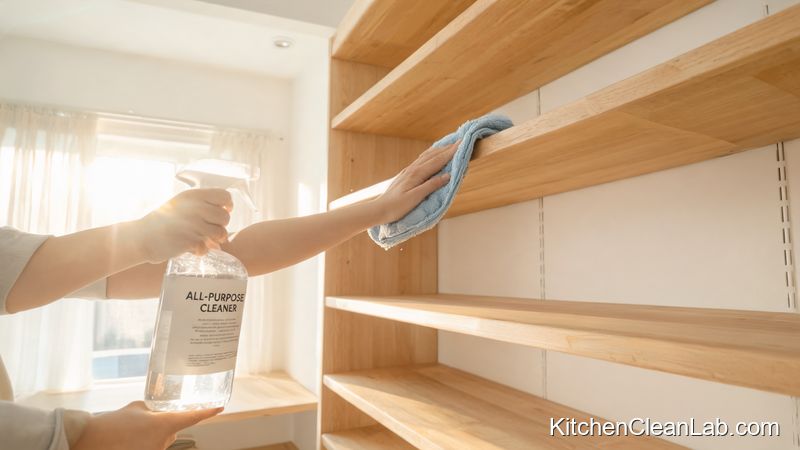
- All-purpose cleaner or pH-neutral spray: Use it for counters, handles, and the sink rim. Avoid acid-based cleaners like vinegar on marble, granite, or unsealed stone because they can etch the surface.
- Microfiber cloths: Bring at least two. One is for wet wiping, and one is for drying the faucet and sink rim.
- Grease-cutting dish soap: This handles both the soaking sink and visible stovetop spills.
- Scrub brush or scraper: Keep it nearby, but only use it if there is a visible stuck-on spot. The goal is speed, not restoration.
- Laundry basket or large container: This is the fastest way to clear counter clutter without making ten trips to other rooms.
- Fresh trash bag and a clean hand towel: These are final reset tools, not afterthoughts.
Step-by-Step: Speed Clean Your Kitchen in 10 Minutes
The most reliable sequence is clear, contain, wipe, sweep, and reset. Use a laundry basket or empty box to clear counters, stack or load dishes, wipe the sink and counters, sweep only visible debris, and finish with a fresh towel. Set a timer and do not stop to reorganize.
This is the exact 10-minute time map I use when I know guests are already on the road. It follows the guest path: what they see at counter height, what they smell, and what they touch. You will not clean under the sink or inside the refrigerator.
| Time | Action | Focus |
|---|---|---|
| 0:00–1:30 | Clear counters into a basket | Remove visual clutter |
| 1:30–3:30 | Contain or load dirty dishes | Make the sink look intentional |
| 3:30–5:30 | Wipe sink, faucet, stovetop | Create a clean focal point |
| 5:30–7:30 | Wipe counters and handles | Hit guest-touch surfaces |
| 7:30–9:00 | Sweep visible floor crumbs | Clear the main traffic path |
| 9:00–10:00 | Trash, towel, quick final scan | Reset the room for arrival |
0:00–1:30: Clear the Counters Into a Basket
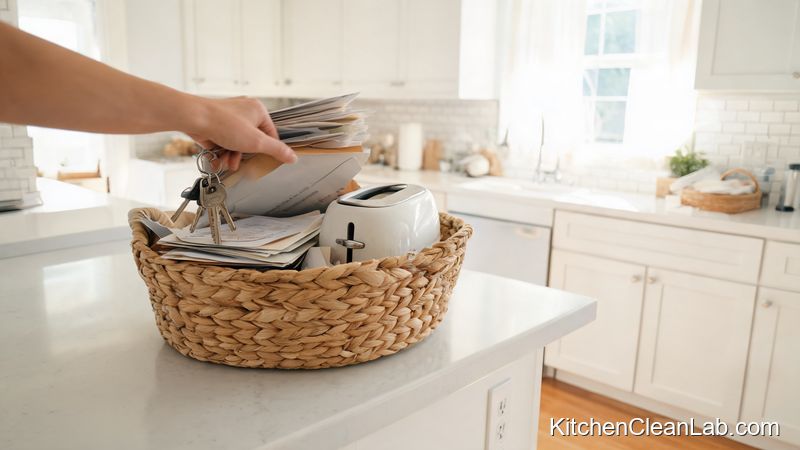
Grab a laundry basket, shopping bag, or empty box. Move mail, keys, chargers, lunch boxes, small appliances, and non-kitchen items into it. Do not sort them now. The point is to open up the main counter and the island or table area where guests will set drinks and snacks. If a junk drawer is nearby, you can drop a few small loose items inside, but do not open it as a project. The basket can be stashed in a pantry, closet, or behind a door if you run out of time. I use a low-backed woven basket because it hides clutter while looking like part of the kitchen.
1:30–3:30: Contain the Dirty Dishes
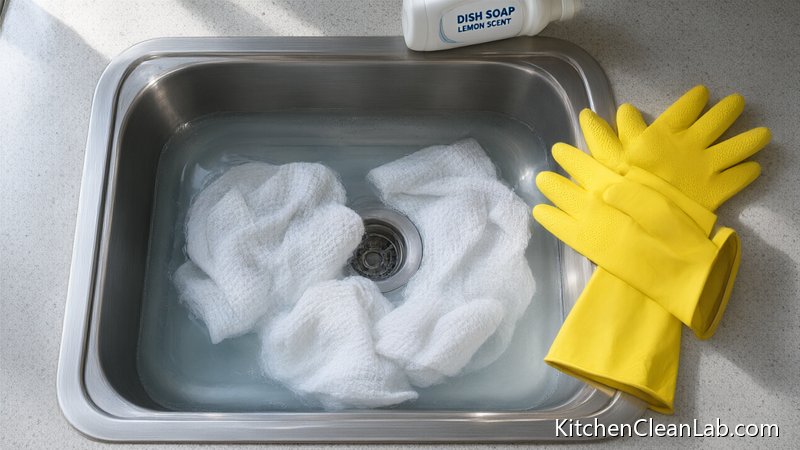
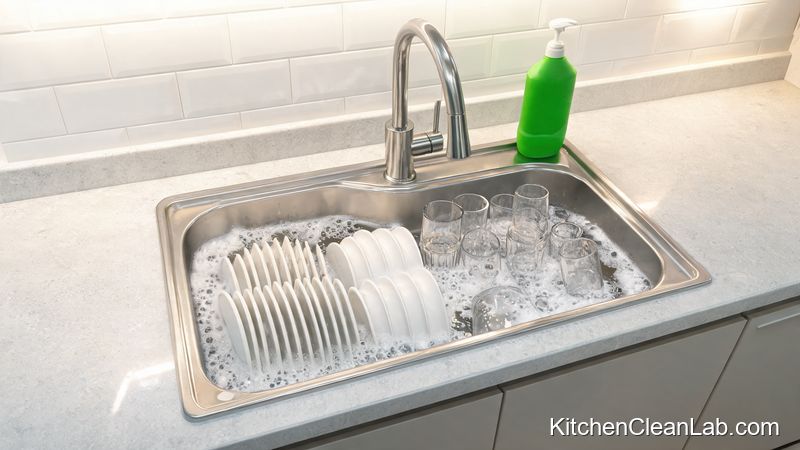
Scrape food into the trash or compost. If the dishwasher is empty or mostly empty, load it quickly with large plates, bowls, glasses, and silverware. Do not hand-wash every pot. If the dishwasher is full or you do not have one, fill the sink with hot, soapy water and stack dishes by size. A sink full of neat, soaking dishes looks far less chaotic than a counter covered with plates. Put large pans on the back burner or in the sink only if needed, not on the floor. The key here is containment. You are not trying to make every dish disappear; you are trying to make the dish situation look under control.
3:30–5:30: Wipe the Sink, Faucet, and Stovetop
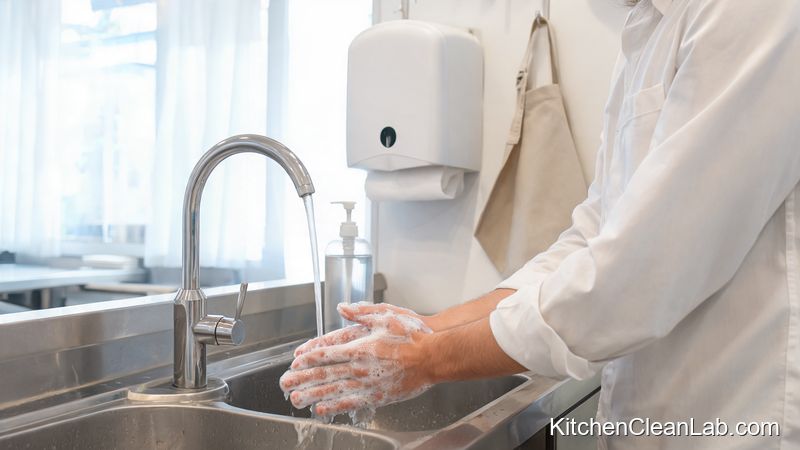
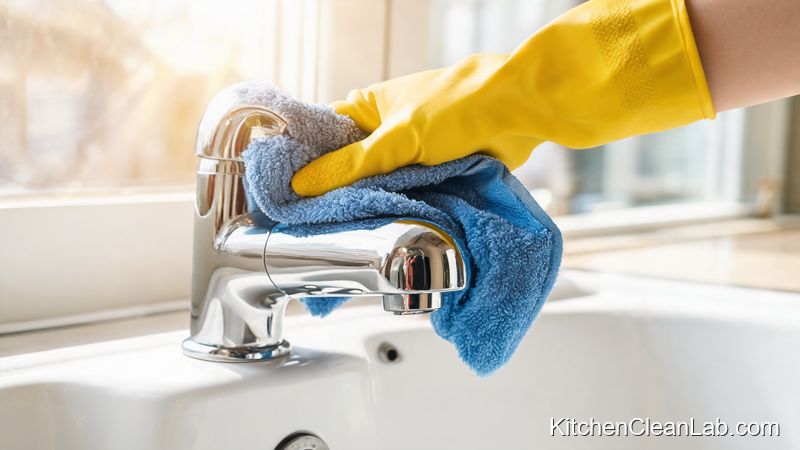
The sink is a focal point, and a clean faucet makes the whole area look brighter. After containing dishes, wipe the sink rim and faucet with an all-purpose cleaner or warm dish soap water. If you use a degreaser or bleach-based spray, open a window or turn on the exhaust fan and wear kitchen gloves. Never mix chlorine bleach with ammonia or vinegar. For visible stovetop spills, use a damp microfiber cloth and a drop of dish soap, but skip burned-on spots that require scrubbing. A clean sink and faucet create a strong halo effect even if there are still dishes soaking.
5:30–7:30: Wipe Counters and High-Touch Areas
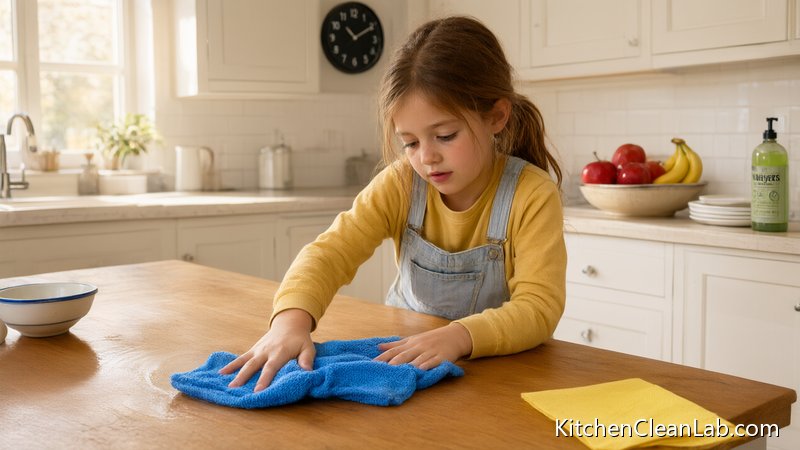
Spray an all-purpose cleaner on the main countertops, island, and the table or breakfast bar. Wipe in a single pass with a clean microfiber cloth. Then hit the surfaces guests are most likely to touch: fridge door handle, microwave handle, cabinet pulls, and the light switch by the kitchen entrance. Do not empty small appliances or polish stainless steel unless it is visibly greasy. This is a surface-level clean, not a deep clean. If you have a coffee station or bar cart that guests will use, give that surface one quick wipe too.
7:30–9:00: Sweep Only What Guests Can See
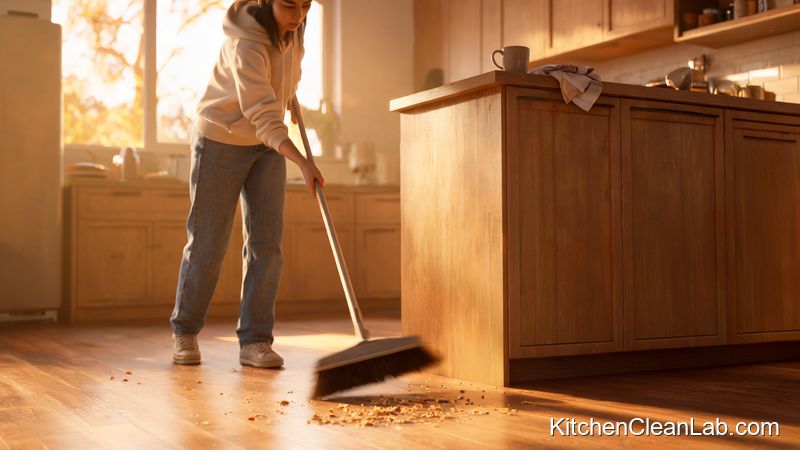
Use a broom, cordless vacuum, or even a damp paper towel to pick up crumbs near the sink, stove, island, and trash area. Do not mop. Wet floors can take too long to dry, and guests will not inspect floor shine unless there is an obvious sticky or oily spot. If you drop something sticky, spot-clean that area with a damp cloth and dry it with a towel. I aim for the main walk path from the kitchen entrance to the sink or drink station, because that is where eyes and feet go first.
9:00–10:00: Final Reset Signals
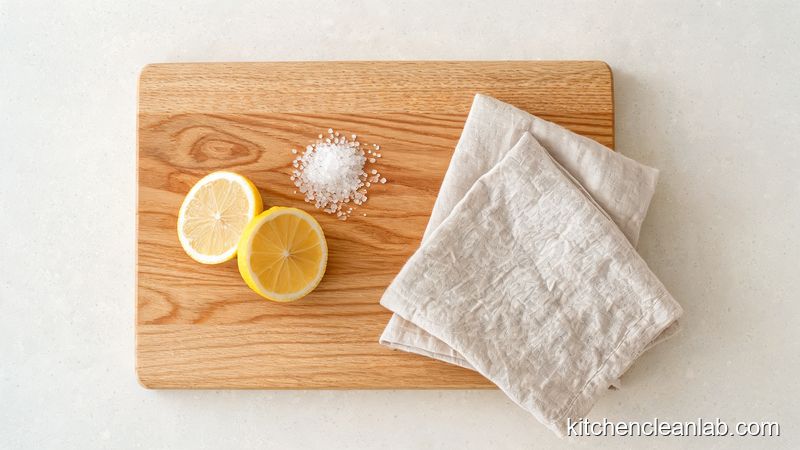
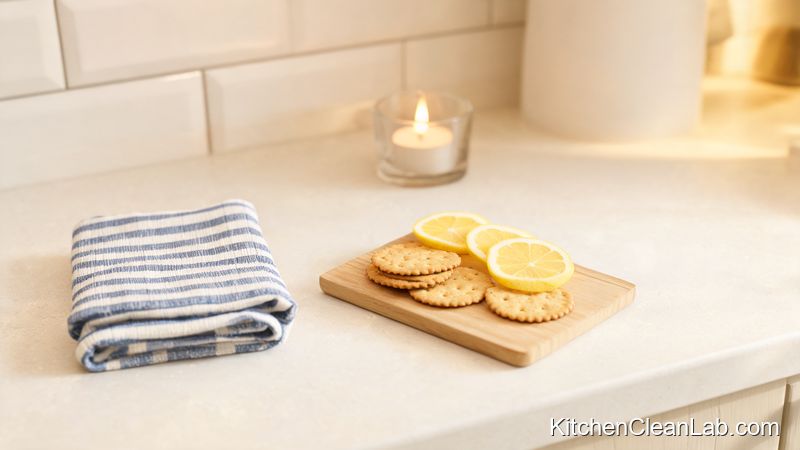
Take out the trash if it is full or smelly, and replace the bag. Put out a fresh hand towel. If you have a cutting board, set out a small snack, lemon wedge bowl, or drink station to signal readiness. Then stand at the main entry to the kitchen and scan the room from a guest's height: counters clear, sink contained, towel clean, floor walkable. Stop there. The timer matters. A quick last-minute reset works because it keeps you from chasing perfection and gives you time to wash your hands and greet people calmly.
What to Prioritize—and What to Skip—When You Have 10 Minutes
Priority zones are the counter, sink, faucet, floor path, and trash can. Skip the inside of the microwave, pantry shelves, cabinet fronts above eye level, and the refrigerator interior. Guests notice horizontal surfaces and smells first, not hidden storage.
This simple split keeps you from falling into the trap of cleaning a cabinet while the main counter still looks chaotic. If you have five minutes left, repeat this list. If you have two minutes left, take out the trash and put out the clean towel.
- Do: Clear main counters, contain dishes, wipe sink and faucet, wipe high-touch handles, sweep visible crumbs, replace trash bag, set out a clean towel.
- Skip: Mopping, cleaning inside the oven, reorganizing drawers, scrubbing cabinet faces, cleaning windows, polishing stainless steel, and deep-cleaning the microwave.
Common Speed-Cleaning Mistakes That Slow You Down
The biggest mistake is treating a 10-minute reset like a deep-clean session. Reorganizing drawers, using too many products, washing every dish, and starting in hidden areas will eat the clock before you reach the visible kitchen. Focus only on what guests see and smell.
These are the mistakes I used to make before I started timing my pre-guest resets. Most of them come from a good instinct—wanting the kitchen to be clean—but they are better saved for a proper weekly cleaning block.
- Sorting the junk drawer: This is a separate project. If the drawer is closed, leave it closed.
- Scattering dishes around the sink: Stack them. A contained pile looks intentional; a scattered pile looks like a mess.
- Using harsh cleaners without ventilation: Strong fumes can make guests think you are hiding an odor. Open a window, turn on the vent, and choose neutral or citrus scents.
- Mopping at minute nine: Wet floors are a slip hazard and take too long to dry. Spot clean instead.
- Cleaning the refrigerator interior: Guests are not opening your fridge. If they do, the problem is usually the shelf, not the smell.
Also, if you have more than one kitchen helper, split tasks: one clears counters, one collects trash, one wipes surfaces. Do not give two people the same zone. A second person can also run interference on the front door while you finish the last wipe.
Speed Clean Kitchen Before Guests: FAQ
Cleaning before guests usually comes down to hiding dirty dishes, fast odor control, and deciding whether to mop. Use soapy water for a sink full of dishes, wipe high-touch surfaces, and spot-clean sticky floors. Ten minutes is enough for visual calm if you do not deep clean.
Can you really clean a kitchen in 10 minutes?
Yes, but you are resetting the visible kitchen, not deep cleaning it. Set a timer for 10 minutes and follow the clear-contain-wipe-sweep-reset sequence. If you stop to organize a cabinet or scrub baked-on grease, you will miss the areas guests actually see. The result will look clean enough for a casual visit, even if hidden areas still need work.
What if the sink is full of dirty dishes and the dishwasher is full?
Stack dirty dishes in the sink with hot, soapy water and keep the faucet and sink rim wiped dry. If the pile is too high, leave large pans on the back burner or place them in a clean laundry basket inside a pantry or behind a door. The goal is containment, not invisibility. Guests may see a soaking sink, but it reads as ongoing cleanup rather than neglect.
How do I make my kitchen smell clean quickly?
Take out odor-heavy trash and recycling first. Run a lemon or lime wedge through the garbage disposal with warm water if you have one. For a neutral lingering scent, simmer water with citrus peels or a cinnamon stick on the back burner while you clean, or light a clean-burning candle. Avoid heavy air fresheners that can clash with food aromas.
Should I mop before guests arrive?
Usually not. Mopping consumes time, leaves wet floors, and can create a slip hazard right before people walk through. Spot-clean sticky or oily marks with a damp cloth and dry them with a towel. Sweep or vacuum only the visible crumb zones near the sink, stove, and island.
Final 10-Minute Kitchen Reset Checklist
Before you answer the door, check for this sequence: clear counters, contained dishes, clean sink and faucet, wiped high-touch points, swept floor path, empty or closed trash, and a fresh towel. If you get only half of these done, your kitchen will still feel more welcoming than it did ten minutes earlier.
- Timer set for 10 minutes
- Counter clutter in a basket
- Dishes stacked or loaded
- Sink and faucet wiped dry
- Counters and handles wiped
- Visible crumbs swept or vacuumed
- Trash and recycling taken out
- Fresh towel and small snack station out
When the timer ends, stop. Put the basket away, wash your hands, and switch into host mode. The point is not a flawless kitchen; it is a kitchen that lets you be present. I have found guests remember the welcome and the conversation far longer than a streak on the dishwasher.