Why Daily Kitchen Cleanup Matters for Kids
Daily kitchen cleanup teaches responsibility, motor skills, and ownership. Start with one small after-meal job, such as carrying a plate to the counter, and build from there. Consistency matters more than perfection, so keep sessions short and repeat the same order every evening.
Kids who participate in the daily reset learn sequencing, planning, and empathy for shared spaces. The kitchen is also a practical motor-skills lab: wiping a table builds shoulder stability, loading a dishwasher requires sorting and spatial reasoning, and putting away groceries involves reading labels and categorizing. These small jobs also reduce the hidden mental load parents carry. When your child clears the table without being asked, you gain back not only time but also decision energy.
Before you begin, separate training from peak rush. Choose a night when you have an extra ten minutes, and avoid launching a new cleanup system right before bedtime or during homework stress. Tell your kids the plan in one sentence: "After dinner, we all reset the kitchen before screens." Then keep your voice calm and your instructions visual.
Set the Right Mindset Before You Start
Frame cleanup as a shared family job, not a punishment. Say, "We all cook, so we all reset the kitchen." Use a visual checklist and accept that your child’s "clean" will be imperfect for months. Your job is to teach the routine, not to produce a showroom kitchen.
One of the fastest ways to kill cooperation is redoing a child's work while they watch. If you wipe the table again after your daughter just wiped it, she learns that her effort does not count. Instead, let the job be "good enough" for the first few weeks. You can fix hidden spots after she leaves or say, "Great job on the big crumbs. I'll rinse the cloth."
Use specific praise that names the action. Instead of "good job," say "You stacked all the plates beside the sink, so I don't have to walk around the table." That kind of feedback tells kids exactly which behavior to repeat.
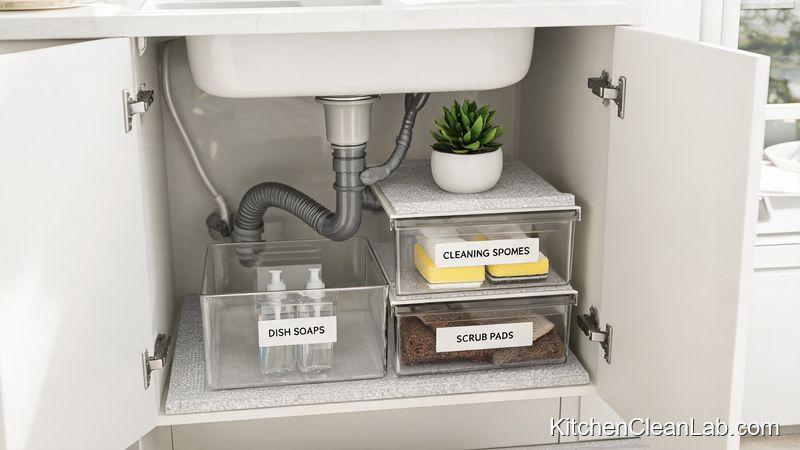
Keep tools small and accessible. A child who needs a spray bottle, a rag, and a step stool should not have to search under the sink. Store a kid-safe cleanup kit in a low drawer or caddy with a spray bottle of water, a microfiber cloth, a whisk broom, and a small dustpan.
Age-by-Age Kitchen Cleanup Tasks
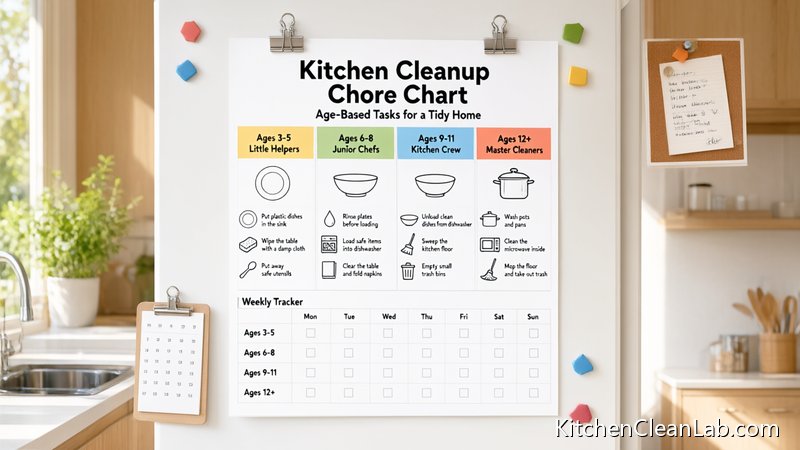
Match tasks to motor skills, attention span, and judgment. Toddlers can wipe unbreakable items; teens can sanitize and handle leftovers. Use this chart as a starting point, not a rigid checklist. A seven-year-old may surprise you, while an eleven-year-old may still need reminders.
| Age | Daily kitchen cleanup tasks | Supervision level |
|---|---|---|
| 2–4 | Carry spoons to the dishwasher, push in chairs, wipe low cabinets with a dry cloth | High |
| 5–7 | Set and clear the table, load unbreakable dishes, sort utensils, sweep crumbs | Moderate |
| 8–10 | Rinse and load dishes, wipe counters and tables, store leftovers, take out recycling | Moderate to low |
| 11–13 | Hand-wash large pots, clean the sink, wipe the stove, run the dishwasher | Low |
| 14+ | Run the full reset, clean refrigerator shelves, mentor younger siblings | Intermittent |
If siblings share jobs, rotate zones weekly instead of letting one child always scrub the sink. Post a small chart on the fridge with photos for non-readers. Review it at breakfast so dinner cleanup does not feel like a surprise.
The 10-Minute After-Dinner Reset Routine
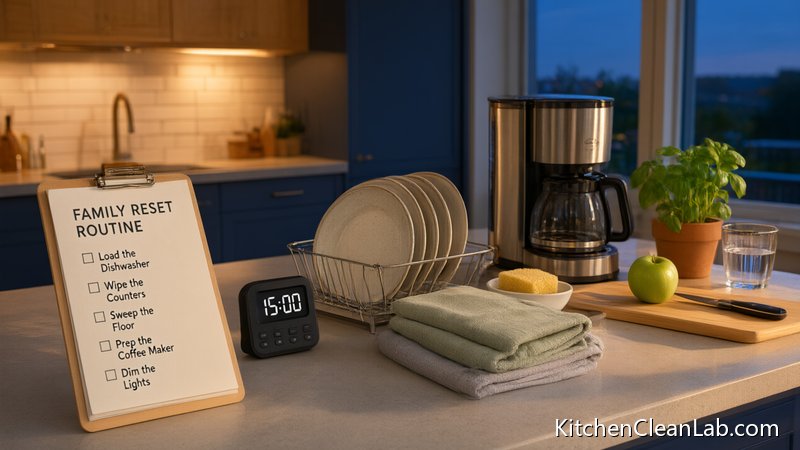
Use the same order every night: scrape, sort, wipe, sweep, inspect. A 10-minute reset works because children know what comes next and can move without repeated instructions. Set a visual timer and stop when it rings, even if the floor is not perfect.
- Scrape and stack (2 minutes): Everyone scrapes food into the compost or trash and stacks plates near the sink.
- Sort and store (2 minutes): Leftovers go into glass containers or the refrigerator. One child can check that covers are secured.
- Wipe first, sweep second (3 minutes): Wipe the table and counters before sweeping so crumbs fall to the floor. This avoids wiping a table twice.
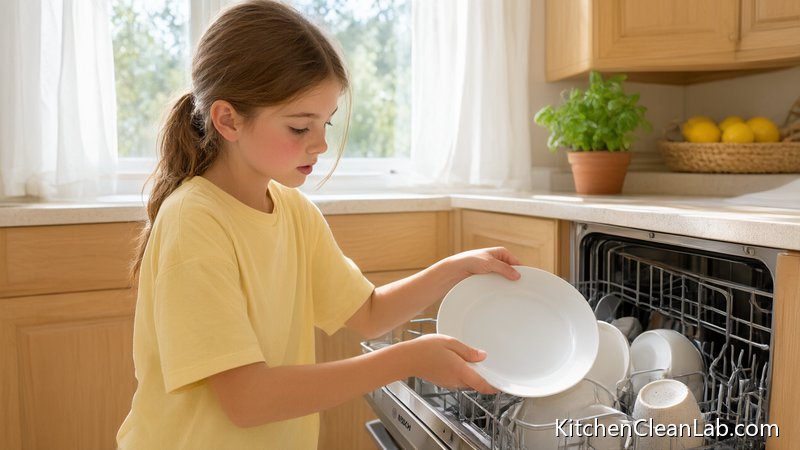
- Load and run the dishwasher (2 minutes): An older child loads silverware, soap, and starts the cycle if that is allowed in your home.
- Final sink and floor check (1 minute): Rinse the sink, spot sweep visible crumbs, and place the dish cloth to dry.
If you have multiple kids, assign a zone: one owns the table, one owns the floor, one owns the sink. Use "first done helps last done" so faster kids do not leave slower siblings with all the work.
Cleaning Skills That Prevent the Biggest Battles
Teach table wiping, counter clearing, and stove care as separate mini-lessons. Demonstrate the up-and-down wipe pattern, show where items belong, and let your child practice with water before adding any cleaner. One skill per week prevents overwhelm and builds real muscle memory.
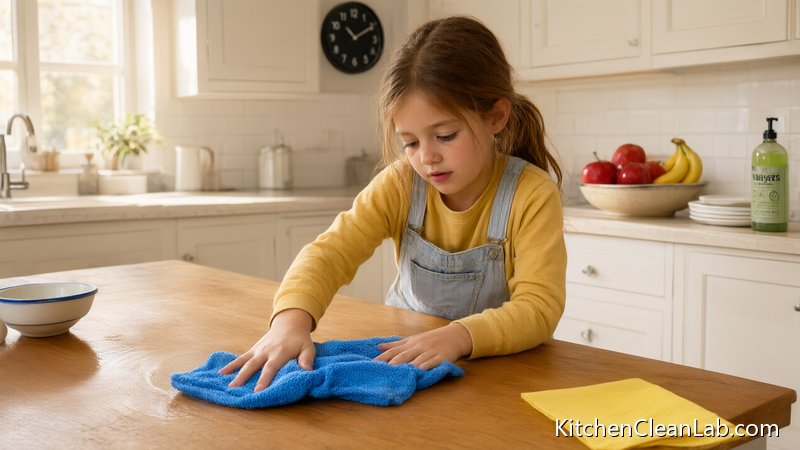
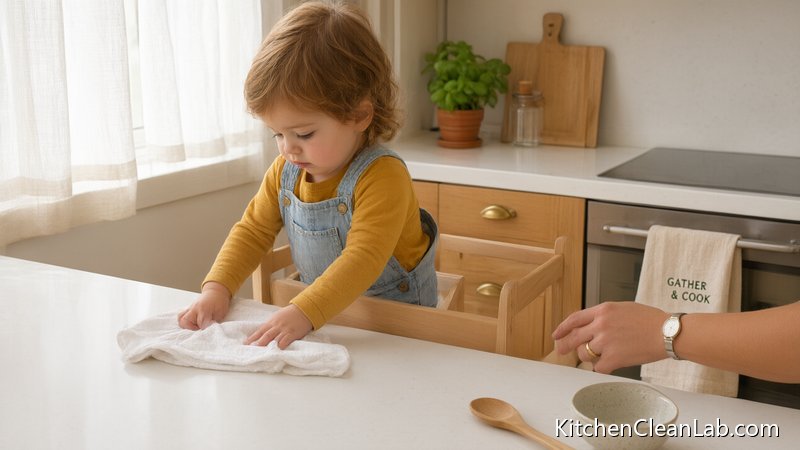
Table washing: Teach three actions: clear everything off, straighten the center items, then wipe in one direction toward a central point. Show the "up and down" method with a damp microfiber cloth. For young children, skip the spray bottle and hand them a lightly wet cloth instead.
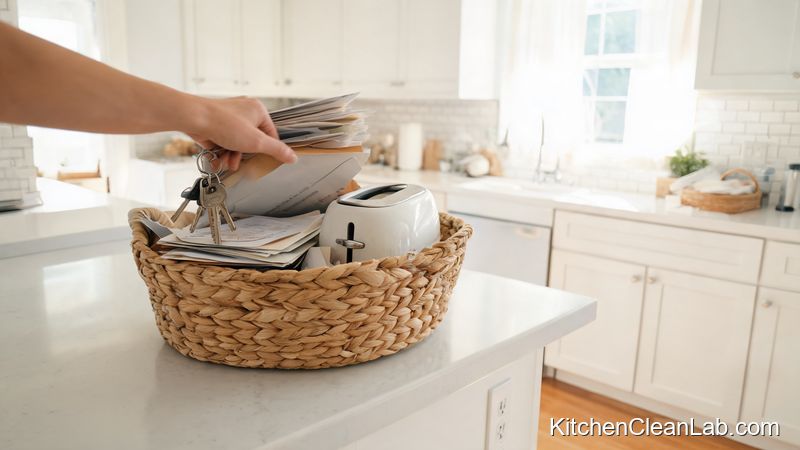
Counter clearing: Make a rule: "If it belongs in the pantry, put it in the pantry. If it belongs on the counter, put it in its spot." This teaches sorting and prevents the counter from becoming a drop zone.
Stove wiping: Once the cooktop is cool, an older child can wipe it with a cloth and warm water. This nightly habit prevents baked-on grease that requires harsh cleaners later. Keep heavy-duty sprays and scrubbers for adult use.
Sink rinsing: After dishes are loaded, rinse the sink basin and wipe the faucet with a dry cloth. The sink is the visual anchor of a clean kitchen, and a shiny sink signals "closed."
Common Mistakes That Derail Kitchen Cleanup Training
Avoid redoing their work, assigning too many tasks at once, or expecting adult speed. Kids quit when cleanup feels like criticism. Pick one or two behaviors, teach slowly, and let minor flaws go during the first weeks while the routine locks in.
- Redoing the job immediately. If you wipe the counter again, you remove the child's sense of contribution.
- Giving five commands at once. Say one step, wait for completion, then give the next step.
- Making cleanup a punishment. "You made the mess, you clean it" can be true, but a calm voice and shared work teach more than shame.
- Skipping demonstration. Kids need to see the exact motion and where the cloth goes.
- Changing the routine every night. A fixed sequence supports working memory and reduces arguing.
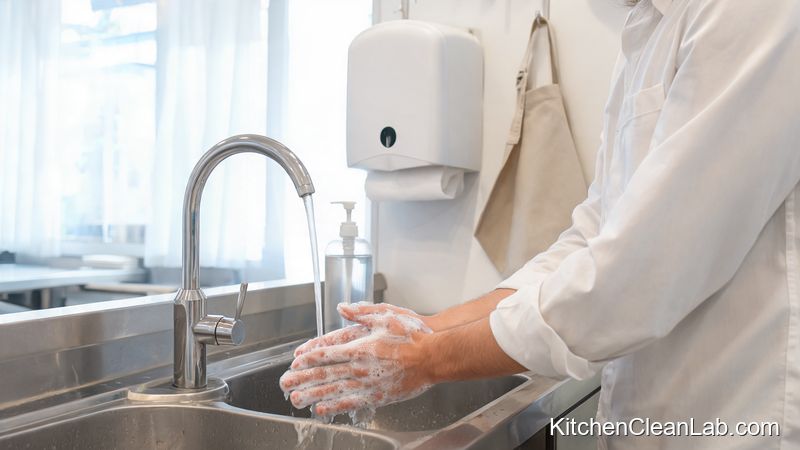
- Ignoring safety training. Teach handwashing after touching raw meat packaging and before wiping surfaces.
Safety First: Non-Negotiable Kitchen Cleanup Rules
Keep children away from raw meat juices, broken glass, and chemical cleaners until they are developmentally ready. Use a sturdy step stool for counter height, store sharp knives separately, and supervise hot surfaces even after cooking. Gloves and ventilation matter when older kids use sprays.
Cleaning chemicals: Elementary-age children should use only water, diluted dish soap, or vinegar solutions. If a teen uses a multi-purpose spray, require a ventilated room and gloves. Store all cleaners out of reach and never mix products.
Raw meat and cross-contamination: Teach kids to place cutting boards and utensils that touched raw meat directly in the sink or dishwasher, then wash hands before touching cabinet knobs or the fridge handle.
Step stools and falls: Wobbling on chairs causes more kitchen injuries than cleaning chemicals. Use a steady stool with non-slip feet, and keep one hand free. Do not ask a child to carry heavy glass containers to high shelves.
Broken glass: Make a family rule: children call an adult and step away if glass breaks. Adults sweep the large pieces, use a damp paper towel to pick up tiny shards, and dispose of them safely.
How to Keep Momentum Without Bribes
Use natural consequences and privileges, not constant payments. After cleanup is done, the family can move on to a game or read aloud. If a child skips a task, the next activity simply waits. This ties effort to the family schedule, not to candy or cash.
Some families use a simple "kitchen closed" phrase. Before cleanup, the kitchen is open. After the reset is done, you say, "The kitchen is closed," which signals that the next activity can begin. This works because it gives children a clear boundary and a shared finish line.
Rotate jobs weekly to prevent resentment over the "hard" chores. Let siblings thank each other instead of you always praising. If you choose to give an allowance, keep it separate from core daily kitchen work. Basic reset tasks are part of living in a family; extra jobs like cleaning out the fridge or organizing the pantry can be paid opportunities.
Finally, model the behavior. If you leave your own coffee mug on the counter all morning, your kids will see that cleanup rules are flexible for adults. Narrate your choices: "I'm putting my cup in the dishwasher now because I want the counter clear." Kids learn more from modeling than from charts.
Frequently Asked Questions About Kids and Kitchen Cleanup
Start with one task, not a full chore list. A child who routinely takes plates to the sink will eventually add wiping or sweeping. Keep lessons under five minutes and model the exact motion before expecting independent work.
At what age should kids start cleaning the kitchen?
Children can begin around age two with simple actions such as carrying a plastic cup to the sink or wiping a low cabinet with a dry cloth. More complex multi-step tasks like loading the dishwasher, storing leftovers, and wiping the stove usually develop between ages eight and twelve with regular practice.
How do I get a reluctant child to help with kitchen cleanup?
Lower the size of the ask and pair it with a predictable cue, like a cleanup song or a visual timer. Work beside the child for the first week, and use descriptive praise such as "You put every fork in the basket." Avoid redoing the job, arguing, or using cleanup as a threat.
Should I pay my kids for daily kitchen chores?
Most family kitchen reset tasks fall under shared housework, not paid labor. If you want to teach money skills, attach payment to extra jobs like cleaning the refrigerator, wiping cabinet fronts, or organizing the pantry. Keep basic tasks tied to belonging, not a transaction.
How long should kitchen cleanup take for kids?
For elementary-age children, a daily reset should take 5 to 12 minutes. Middle and high schoolers can handle 15 to 20 minutes for a fuller reset. Use a visual timer and stop when it rings so cleanup never feels endless.
The Long-Term Payoff
A capable teen who can run the kitchen reset is the real reward. You are not raising a perfect dishwasher loader; you are raising a person who notices what needs to be done and acts. That skill carries into apartments, jobs, relationships, and their own future kitchen.
Start tonight with one clear task. Say it, show it, and repeat it at the same point in the routine for five days. Within a few weeks, you will be handing over the sponge more often and standing at the sink less. The kitchen may not be spotless every night, but the daily habit will become part of your family culture.