Why Kitchen Sponges and Dish Cloths Need Daily Sanitizing
Kitchen sponges and dish cloths remain damp, dark, and loaded with food particles, making them ideal for Salmonella, E. coli, Listeria, and Staphylococcus growth. Daily sanitizing with heat or diluted bleach cuts the microbial load by 99.9% or more and reduces cross-contamination risk on dishes and counters.
Most home cooks assume hot, soapy water cleans a sponge, but food safety researchers have shown otherwise. The same absorbent pores that hold suds also trap water, proteins, and sugars. When a sponge or cotton dish cloth stays damp for hours, bacteria can double every 20 to 30 minutes. Harmless environmental bacteria make up most of the microbial community, but pathogens such as Campylobacter, Salmonella, Staphylococcus, E. coli, and Listeria can also establish a foothold. Because you use those items to wipe bowls, utensils, and counters, a contaminated sponge or cloth can spread bacteria to hands and food-contact surfaces.
Karen Fifield, food safety educator at Michigan State University Extension, says sponges are the perfect place for bacteria to grow because they are not kept super hot or super cold and are not always dry. A damp sponge inside a caddy or at the bottom of a sink creates an environment similar to a microbial incubator. Dish cloths are not immune: if they are folded while wet or left in a sink, they can harbor the same pathogens.
Quick reference for daily options:
- Microwave: wet sponge on high for 1–2 minutes
- Dishwasher: top rack with heated dry or sanitize
- Bleach soak: 1 minute in diluted food-safe chlorine bleach
- Boiling or vinegar: backup deodorizers only
The Microwave Method: Fastest Daily Sponge Sanitizing
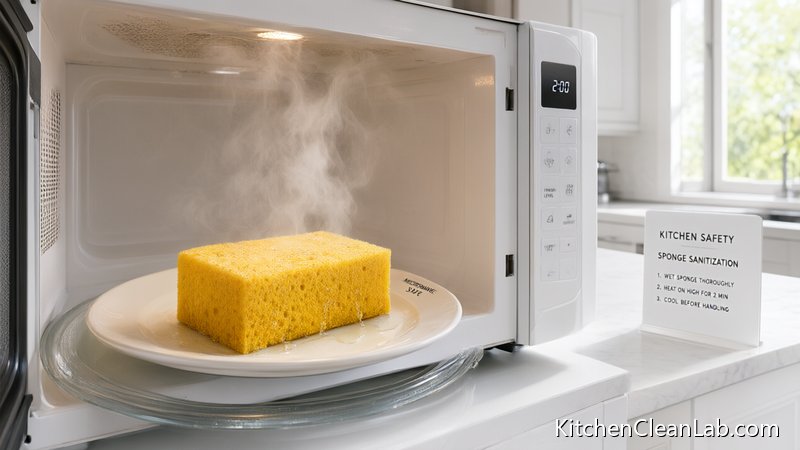
A wet sponge microwaved on high for one to two minutes kills 99.99999% of bacteria in USDA testing. It is the fastest daily method, but only if the sponge contains no metal and stays fully saturated to prevent fire.
The microwave works because water molecules in the sponge absorb electromagnetic energy and produce steam. That steam penetrates the sponge pores where bacteria hide. The USDA tested both microwave and dishwasher methods and found microwave reduced bacteria by 99.99999%, while the dishwasher reduced bacteria by 99.9998%. Both are excellent, but the microwave is often the best fit for daily use because it is fast and does not require a full appliance cycle.
- Check for metal. If your sponge has a metallic scrub pad, do not microwave it. Metal can arc and create a fire hazard.
- Fully saturate the sponge. Run it under water and squeeze several times. The sponge must be wet throughout, not just damp.
- Place it on a microwave-safe plate. Avoid plastic containers that could warp or melt under steam.
- Microwave on high for 1 to 2 minutes. For 1000-watt or higher microwaves, 1 minute is usually enough. Lower wattages may need 2 minutes. You should see visible steam.
- Wait 5 to 10 minutes before handling. The sponge will be extremely hot and can cause steam burns.
Safety warning: Never microwave a dry sponge, because it can catch fire. Also skip this method for any sponge with metal fibers, metallic scrubbing pads, or glued-on decorations.
Can you microwave dish cloths? Yes, but only if they are 100% cotton, fully wet, and free of any metallic thread. Even then, hot spots make this less uniform than a washing machine. If you want a daily dish cloth sanitizing step, the bleach soak or laundry method below is a better choice.
Dishwasher Sanitizing: Hands-Off Daily Cleaning
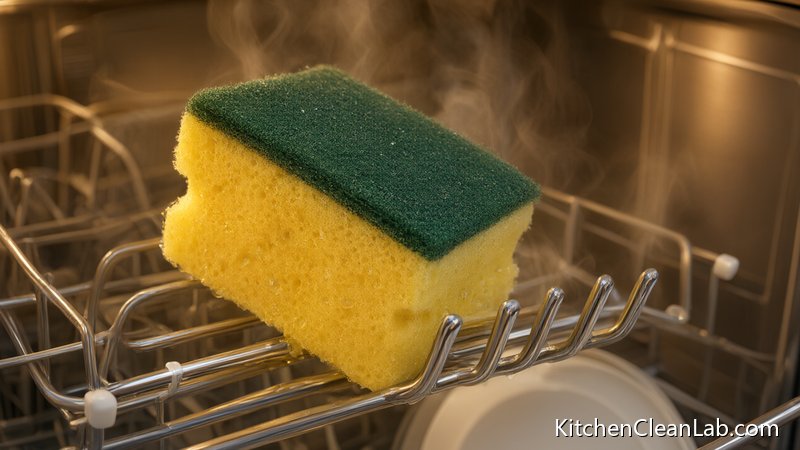
A dishwasher with a sanitize setting or heated dry cycle can eliminate 99.9998% of bacteria from a sponge placed on the top rack. It is the most hands-off daily method: just add the sponge when you start the evening cycle, and remove it after the cycle finishes.
The dishwasher works by combining hot water, detergent, and sustained heat during drying. The key is heat: if your machine does not reach high temperatures, it will clean but not sanitize. That is why the USDA specifically notes the heated dry or sanitize setting.
- Place the sponge on the top rack. Use the utensil basket or a dishwasher-safe mesh basket if the sponge is small enough to fall through the rack.
- Add your usual dishwasher detergent. You do not need extra detergent or rinse aid for the sponge.
- Select sanitize, high-heat, or heated dry. If your dishwasher has no heated dry, this method becomes less reliable for daily sanitation.
- Remove the sponge when the cycle ends. Wring it out and place it on a wire or magnetic holder to dry.
Dish cloths can also go on the top rack, but folded fabric is harder for water jets to penetrate. For dish cloths used heavily during the day, a washing machine with hot water and bleach is more consistent.
Bleach Soak Method: The Most Reliable for Both Sponges and Dish Cloths
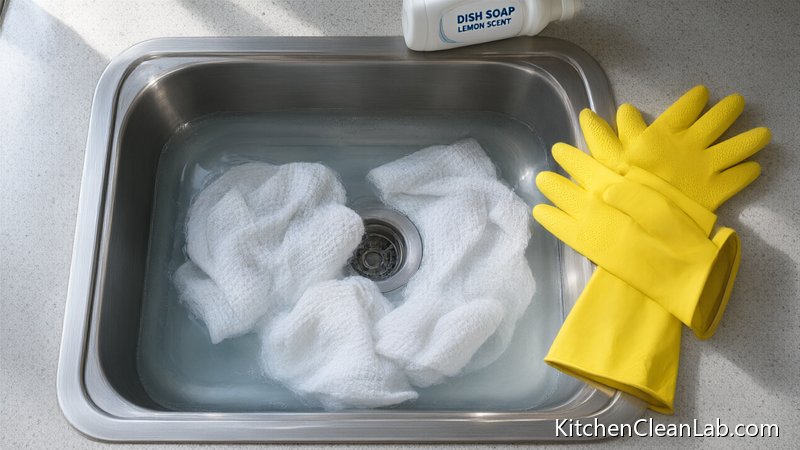
For both sponges and dish cloths, a one-minute soak in a weak chlorine bleach solution—1/4 teaspoon of 8.25% bleach per quart of warm water—provides food-safe sanitation. Rinse thoroughly and air-dry afterward to avoid residue.
Chlorine bleach is the most reliable method for sanitizing both sponges and dish cloths in the same step. Michigan State University Extension recommends 1 teaspoon of food-safe 8.25% hypochlorite bleach per gallon of warm water for at-home kitchen sanitation. For a smaller bowl, use 1/4 teaspoon per quart of warm water.
Bleach kills bacteria and viruses by oxidizing their cell walls, but the concentration and water temperature matter. Use warm water, not hot water. Hot water can degrade sodium hypochlorite and release more fumes. Also use unscented, non-splashless food-safe bleach when possible.
- Ventilate the kitchen. Open a window or turn on the exhaust fan.
- Put on reusable gloves. Bleach can irritate skin.
- Measure carefully. Mix 1/4 teaspoon bleach per quart of warm water, or 1 teaspoon per gallon.
- Submerge sponges and dish cloths fully. Agitate them so the solution reaches all fibers.
- Soak for at least 1 minute. If items smell sour, extend the soak to 5 minutes.
- Rinse thoroughly with warm water. Wring and rinse until the bleach odor is faint or gone.
- Hang or lay flat to dry completely. Never leave bleach solution standing in the sink while you walk away.
Never mix bleach with vinegar, ammonia, or acidic cleaners. The combination can create toxic gases. Even bleach and boiling water can produce more airborne chlorine, so use warm water only.
Dish cloths may fade with frequent bleaching. If you are concerned about color, choose white cotton dish cloths for sanitizing and reserve dark cloths for drying clean hands.
Vinegar and Boiling Water: Are They Enough Daily?
Vinegar soaks and boiling water can help with odors and light cleaning, but they have not matched the log-level reductions of microwave, dishwasher, or bleach methods. Use them as occasional backups rather than daily primary sanitizers.
White vinegar contains acetic acid, which can disrupt some bacterial cells. A five-minute soak in full-strength white vinegar can help with light loads and mineral residue. Boiling water can kill many vegetative bacteria, but it does not remove biofilms as effectively as bleach and it can cause burns. Repeated boiling also makes sponge fibers break down faster.
- Vinegar soak: Submerge the sponge in full-strength white vinegar for 5 minutes. Rinse thoroughly and dry.
- Boiling water: Place the sponge in a rolling boil for 5 minutes. Use tongs to remove it, and let it cool before wringing.
If your household includes someone at high risk for foodborne illness, stick with the USDA-validated heat or bleach methods. The natural options are better than nothing but should not be your daily default.
How to Dry and Store Sponges and Dish Cloths So Sanitizing Lasts
Sanitizing cannot compensate for a sponge or cloth that stays wet. Wring out all excess water after each use and store items where air can circulate on all sides; otherwise bacteria can rebound within hours.
Bacteria need available water to grow. A sponge stored on a solid tray or inside a closed caddy can stay wet for 12 hours or more, erasing the benefits of your sanitation step. The best practice is to create conditions that dry the item as fast as possible.
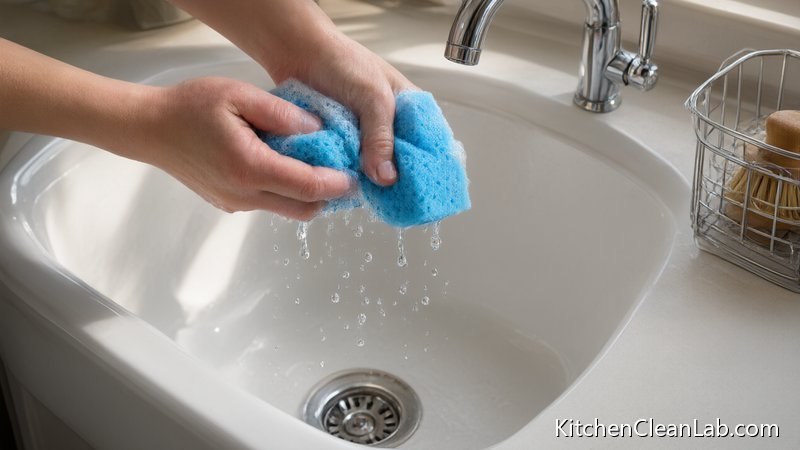
- Wring harder than you think. A quick squeeze may leave the core saturated.
- Use a wire or magnetic sponge holder. It should allow airflow underneath and around the sponge.
- Hang dish cloths over a rod or hook. Do not fold, bunch, or drop them into a drawer.
- Rotate between two sets. A 24-hour rest period lets fibers dry completely.
- Separate tools by task. Keep one cloth for dishes and one for counters, or use color coding.
- Do not use reusable sponges or cloths to wipe raw meat juices. Use paper towels and food-safe sanitizing wipes, then discard them.
When to Replace Sponges and Dish Cloths Even with Daily Sanitizing
Even with perfect daily sanitation, the official food safety recommendation is to replace kitchen sponges weekly. Dish cloths should be cycled more often: daily if used for multiple tasks, or every two to three days if reserved for drying clean hands and dishes.
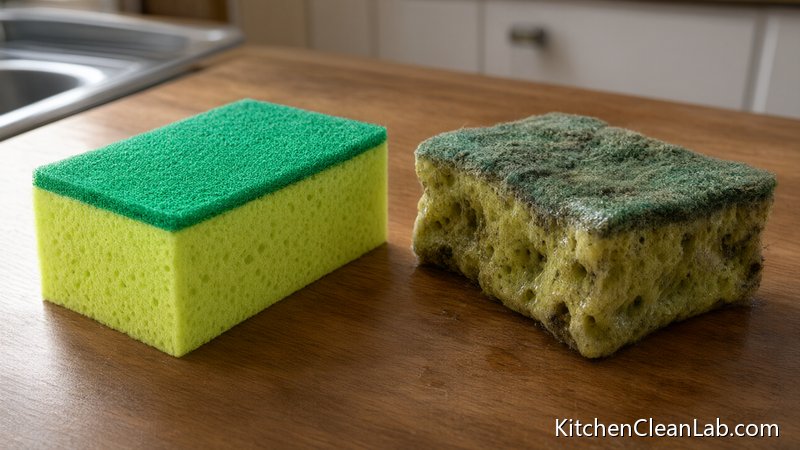
Sanitizing can lower bacterial counts, but it cannot restore damaged or degrading material. Holes, tears, and worn scrub pads create small pockets where food and bacteria can hide. A slimy film often indicates biofilm formation, which can resist basic cleaning.
- Sour or musty smell
- Slimy or greasy texture
- Black or green spots
- Visible tears, holes, or crumbling scrub pads
To reduce waste while following the weekly recommendation, cut sponges in half before use. You will still get a fresh surface each week without throwing away a full-sized sponge every time.
Common Sanitizing Mistakes That Leave Bacteria Alive
Common failures—microwaving dry sponges, mixing bleach with hot water or vinegar, skipping the final rinse, and leaving cloths bunched up—can leave live bacteria behind or create safety hazards.
A sanitation step only works if you execute it correctly. Even well-intentioned cooks make these mistakes:
- Microwaving a dry sponge. This can ignite the sponge and damage the microwave.
- Microwaving any metal scrubber. Metal can arc and create a fire risk.
- Using hot water with bleach. Heat reduces the active chlorine level and increases fumes.
- Mixing bleach with vinegar or ammonia. This creates toxic gas.
- Skipping the rinse after a bleach soak. Residual bleach can transfer to food and hands.
- Storing wet cloths in a ball or inside a closed caddy. This keeps moisture high and promotes growth.
- Assuming a soapy rinse is enough. Soap removes some debris but does not sanitize.
A Practical Daily Sanitizing Routine for Sponges and Dish Cloths
A reliable daily routine pairs one validated sanitation method with disciplined drying and rotation. At the end of each day, sanitize sponges by heat or bleach, wash dish cloths, and hang everything to dry completely.
You do not need all methods every day. Pick one that fits your evening routine and stick with it. The goal is to make sanitizing as automatic as locking the front door.
- After each use: Rinse the sponge or dish cloth in hot water and wring it hard.
- After dinner: Sanitize the sponge with the microwave, dishwasher, or bleach soak.
- Handle dish cloths separately: Put heavily used dish cloths into a washing machine with hot water and bleach or oxygen bleach, or do the same bleach soak as the sponge.
- Run the selected cycle. For microwave, wait for steam and let the sponge cool. For dishwasher, wait until the heated dry cycle finishes. For bleach, soak and rinse.
- Hang everything to dry. Place the sponge on a wire holder and spread the dish cloth over a bar or hook.
- Rotate the next morning. If the cloth is still damp, use a dry cloth from your rotation. Replace the sponge weekly even if it looks okay.
FAQs About Daily Sponge and Dish Cloth Sanitizing
Daily sanitation questions usually involve material safety, natural alternatives, and replacement frequency. Match the method to the fiber, use enough contact time or heat, and never store any item wet.
Can I sanitize a dish cloth in the microwave?
Yes, 100% cotton dish cloths can be fully wetted and microwaved for 1–2 minutes on high, but they can heat unevenly and may scorch if any area is dry. A washing machine with hot water and bleach or a bleach soak is more uniform for fabric.
How much bleach should I use to sanitize sponges and dish cloths?
Use 1/4 teaspoon of food-safe 8.25% chlorine bleach per quart of warm water, or 1 teaspoon per gallon. Soak for at least 1 minute, then rinse thoroughly with warm water. Avoid hot water, because heat degrades the bleach.
How often should I replace my kitchen sponge if I sanitize it daily?
The official food safety recommendation is still once a week. Daily sanitizing lowers pathogen and odor risk, but the sponge structure breaks down over time. Replace immediately if it smells sour, feels slimy, or shows black spots.
Should dish cloths be washed every day?
Yes, if the cloth is used for wiping counters, handling spills, or multiple kitchen tasks. If a cloth is reserved only for drying clean dishes or hands, you can wash it every 2–3 days. Always hang it to dry completely between uses.
Final Takeaways for a Safer Kitchen Routine
A safe kitchen routine is not about harsh chemicals or expensive tools. It is about daily heat or bleach sanitation, complete air-drying, and timely replacement before sponges and dish cloths become a contamination source.
Pick one method that works for your kitchen. For most people, that means microwaving a wet sponge every night and sending dish cloths through a hot laundry cycle or bleach soak. Keep a second set of cloths in rotation so there is always a dry one ready. Inspect your sponge and cloths daily for smell, slime, or dark spots. The goal is not perfection; it is consistency. A small nightly routine takes less than five minutes and meaningfully reduces the risk of foodborne illness in your kitchen.