Monthly Kitchen Maintenance Checklist to Prevent Costly Repairs
A monthly kitchen maintenance checklist should focus on condenser coils, door gaskets, burners, thermostats, spray arms, and exhaust hood filters. Completing these low-cost tasks every 30 days reduces emergency repair calls by catching airflow, electrical, and water issues before they become component failures.
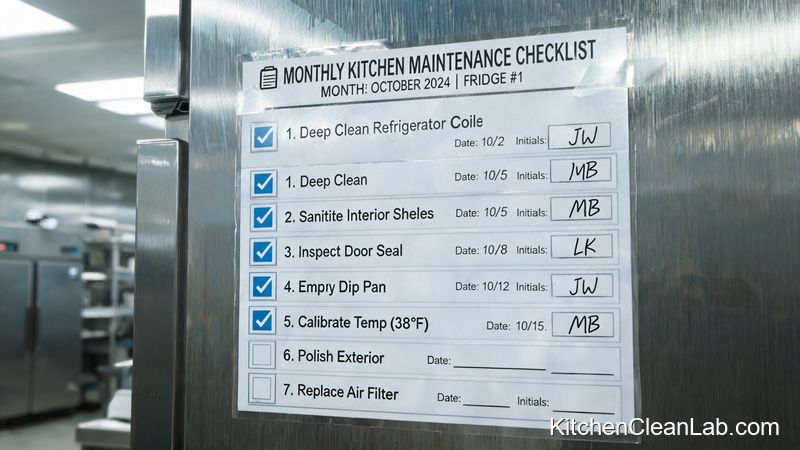
Monthly maintenance is the middle band between daily cleaning and quarterly technician service. It catches wear that daily tasks cannot see, but it does not require the downtime or cost of a full service call. A preventive schedule built around daily, weekly, monthly, quarterly, and annual bands can extend equipment life by roughly 25 to 40 percent compared with reactive maintenance. The monthly band is the highest-value slice for most kitchens because it catches calibration drift, airflow loss, and water leaks before they become component failures. When you combine a visible checklist with a named owner and a signed log, small problems stop becoming Saturday-night emergencies.
Step 1: Build a Written Monthly Checklist with Assigned Owners
A written checklist only works when one named person owns each piece of equipment and records every completed task. Shared ownership creates gaps because everyone assumes someone else handled the coils or the ice machine.
Start by listing every major appliance in the kitchen: refrigeration units, cooking equipment, fryers, dishwashers, ice machines, hoods, and smallwares. For each item, write down the manufacturer recommended monthly task, the tool or chemical required, and the pass-fail condition to check. Post a laminated copy directly on or near the unit. Do not bury it in a binder in the office.
- Assign a single equipment owner to each category or station.
- Require the owner to initial and date the log immediately after completing the work.
- Keep a master log organized by month and equipment type.
- Review the log at the end of each month and follow up on missing initials.
- Adjust intervals for high-volume kitchens, hard water areas, and humid climates.
Small kitchens may have the head chef or a closing manager own the entire list. Larger operations should split ownership by station: the sauté cook owns the range, the prep lead owns the walk-in, and the dishwasher owns the machine at their station. Ownership does not mean the owner does every task alone; it means they confirm the work and sign the log.
Step 2: Refrigeration and Ice Machines: The Costliest Repairs Start Here
Clean condenser coils, inspect door gaskets, and sanitize ice machine bins every month. These three actions prevent compressor overheating, door seal air leaks, and biofilm growth that leads to food safety violations.

For refrigerators and freezers, start by switching off the unit at the breaker or unplugging it if possible. Use a coil brush or a vacuum with a soft brush attachment to remove dust and grease from condenser fins. Straighten bent fins with a fin comb. While the unit is off, inspect the door gasket by closing the door on a dollar bill; if the bill slides out easily, the gasket needs replacement. Check the drain pan and drain line for sludge or blockages, and clean them with warm water and a manufacturer-approved cleaner.
- Condenser coils: monthly minimum, or every two weeks in high-grease environments.
- Door gaskets: inspect monthly for cracks, stiffness, or gaps.
- Drain lines: flush monthly to prevent mold and water backup.
- Ice machines: clean the bin and brush the condenser monthly; sanitize and descale every three to six months, and replace water filters on schedule.
Avoid using bleach on stainless steel or aluminum coil fins unless the manufacturer explicitly approves it. The wrong chemical can cause pitting and finish damage that shortens the unit life. If the unit has a rear coil near a dusty or grease-heavy surface, check it more often. In a high-volume kitchen, monthly coil cleaning may not be enough. Some operators schedule coil cleaning every two weeks while keeping the monthly log as the minimum audit point.
Step 3: Cooking Equipment: Ovens, Ranges, and Fryers
Verify thermostat accuracy, inspect burners and heating elements, and clean grease-control surfaces monthly. Temperature drift of just 10 degrees Fahrenheit can spoil product consistency, raise energy use, and hide failing components.
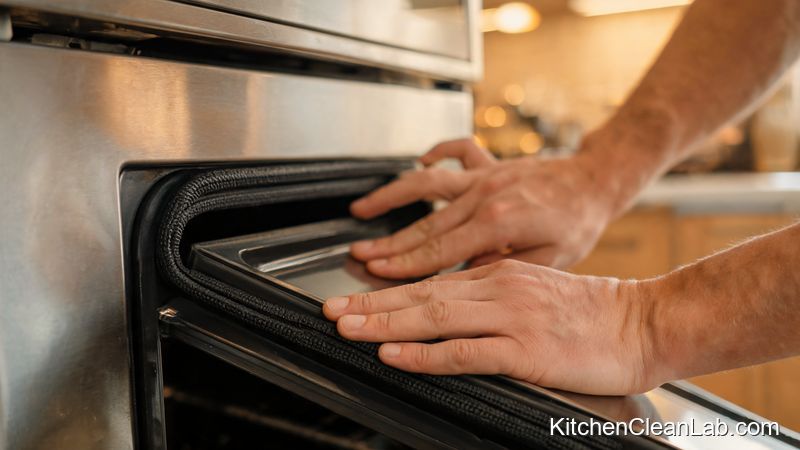
Place a digital oven thermometer in the center of the oven and compare it against the set temperature after 20 minutes. Record the result in your log. If the difference is more than 10 to 15 degrees Fahrenheit, adjust the thermostat or call a technician if calibration is not accessible. For gas ranges, check that burner flames are blue and steady. Yellow or orange flames indicate clogged ports, poor ventilation, or a gas mixture problem that requires a licensed gas fitter. For electric ranges and ovens, inspect heating elements for blisters, sagging, or burn spots.
- Ovens: calibrate thermostat monthly; inspect the door seal for tears and carbon buildup.
- Gas burners: confirm blue flames; clean clogged ports as needed.
- Fryers: check burner condition, o-ring seals for oil leaks, and thermostat accuracy monthly.
- Hood filters: remove and clean grease filters monthly at minimum, or weekly to biweekly for high-volume operations.
Never put water on a hot fryer or use abrasive pads on stainless surfaces. Let the unit cool, drain oil safely, and follow the manufacturer chemical instructions for boil-outs and degreasing. Check the oven door seal by running a hand around the gasket when the oven is cool. If you feel heat escaping during operation, replace the seal. A loose seal can raise energy consumption by 20 percent or more and overheat controls. For griddles, inspect thermostat probes and clean grease traps to avoid flare-ups.
Step 4: Dishwashers, Plumbing, and Ventilation Systems
Clean dishwasher filters and spray arms, check under-sink supply and drain connections, and test GFCI outlets monthly. These quick checks catch water leaks and electrical faults before they damage cabinetry, floors, or equipment.
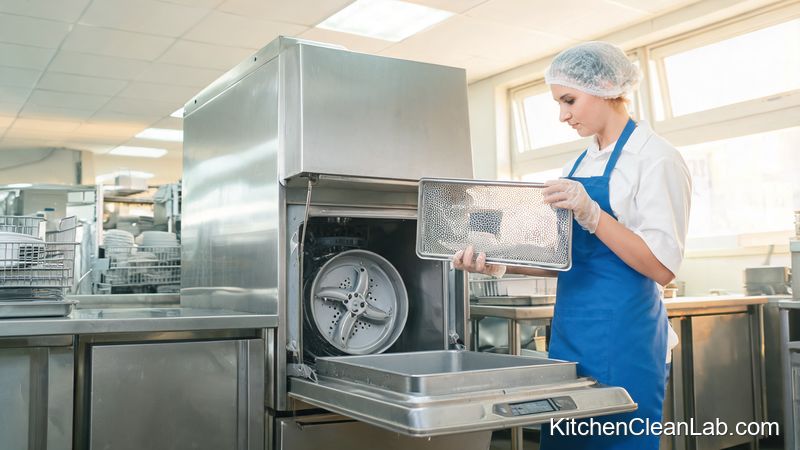
Remove and clean the dishwasher filter monthly. In hard water areas, de-lime spray arms and internal surfaces to prevent scale from blocking water flow. Inspect the supply hose and drain connection under the sink for moisture, kinks, corrosion, or loose fittings. Tighten connections by hand, but do not overtighten plastic fittings.
- Dishwasher filter: rinse and clean monthly.
- Spray arms: de-lime and check nozzle blockage monthly.
- Supply and drain lines: inspect for leaks, kinks, and corrosion monthly.
- GFCI outlets: press TEST and RESET to confirm ground-fault protection works.
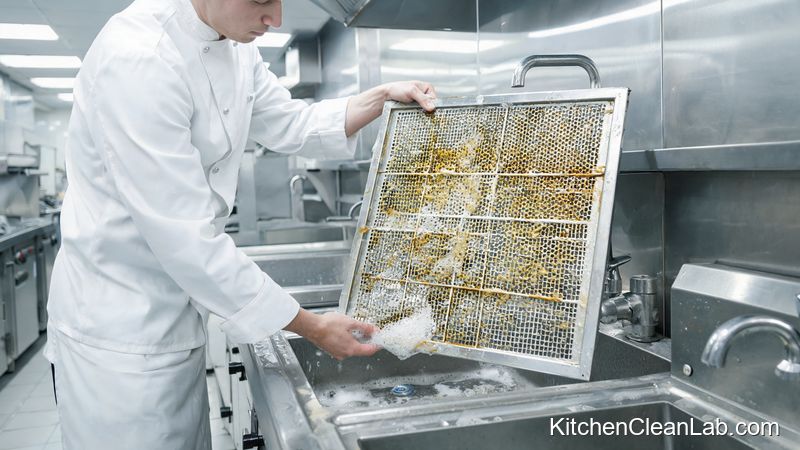
- Exhaust hood: clean hood grease filters monthly or more often based on volume; inspect visible duct sections for grease accumulation.
If the dishwasher is not draining or leaves white scale, test the chemical concentration levels against manufacturer specifications. Incorrect detergent or rinse aid levels are cheaper to fix than a pump replacement. Exhaust hood filters are often one of the most visible maintenance items. Grease filters should be cleaned weekly or biweekly in busy kitchens, but the monthly checklist should include a deeper inspection of the baffle condition and visible duct openings. Do not ignore fire suppression system tags: a monthly visual check confirms the system is charged and the pull station is clear.
Step 5: Common Monthly Maintenance Mistakes That Lead to Expensive Repairs
Shared ownership, ignored small leaks, and generic checklists are the biggest reasons monthly maintenance fails. A torn gasket or warm drain line is a minor fix; a seized compressor or flooded cabinet is not.
- Assigning tasks to the whole team instead of one named person.
- Failing to document completed work or auditing logs.
- Using a generic checklist that ignores model-specific cleaning, lubrication, or calibration requirements.
- Waiting for visible failure instead of replacing parts at the first sign of wear.
- Using harsh or incorrect chemicals on aluminum, stainless steel, or water-sensitive components.
- Ignoring hard water scale in dishwashers, ice machines, and steamers.
Another common failure is logging tasks before they are completed. If a manager accepts initials without spot-checking the equipment, the checklist becomes theater. Conduct a monthly walkthrough: touch the coil, check the filter, and compare the log to the physical condition. That audit closes the loop and keeps people honest.
How Monthly Tasks Fit Into a Larger Preventive Maintenance Program
Daily tasks catch immediate issues like temperature logging, surface cleaning, and obvious seal damage. Weekly tasks include deep-cleaning griddles, boiling out fryers, cleaning ice machine bins, and checking hood filters. Monthly work covers calibration, coil cleaning, gasket inspection, and drain line clearing. Quarterly and annual work should remain technician-led for refrigerant levels, hood and duct cleaning, fire-suppression systems, gas safety, and compressor servicing.
Monthly is the sweet spot because it finds drift before a quarterly service call. A thermostat that is off by 12 degrees in month one is a simple calibration. The same drift left unchecked for three months can become a food safety citation or a failed heating element. High-volume kitchens, humid environments, and hard water areas should shorten monthly intervals rather than waiting for the manufacturer default to catch up with reality.
Monthly Kitchen Maintenance Quick Reference Table
Use this quick reference table as a starting point. Add manufacturer tasks and update the log when equipment changes.
| Equipment | Monthly Task | Key Indicator | Pro Tip |
|---|---|---|---|
| Refrigerator or Freezer | Clean condenser coils, inspect door gasket and drain line | Compressor runs hot or gasket slips | Label the coil cleaning date on the unit |
| Ice Machine | Clean bin, brush condenser, check water filter | Cloudy or off-taste ice | Keep filter replacement records |
| Oven or Range | Calibrate thermostat, inspect burners and door seal | Temperature drifts or yellow flame | Use a digital oven thermometer |
| Fryer | Check burner, o-rings, thermostat | Slow recovery or oil leak | Boil out weekly and log oil filtration |
| Dishwasher | Clean filter, de-lime spray arms, check connections | Poor drying or white scale | Test chemical concentrations |
| Exhaust Hood | Clean grease filters, inspect visible ductwork | Grease buildup or weak airflow | Do not use abrasive pads on baffles |
Frequently Asked Questions About Monthly Kitchen Maintenance
What should a monthly kitchen maintenance checklist include?
It should include condenser coil cleaning, door gasket inspection, thermostat calibration, burner or heating element checks, hood filter cleaning, dishwasher filter and spray arm service, and GFCI outlet testing. Add equipment-specific tasks from manufacturer manuals and assign each item to one person with a signed log.
How often should refrigerator condenser coils be cleaned?
Every 30 days for commercial kitchens and busy home kitchens. High-grease or high-dust environments may require cleaning every two to four weeks. Clean coils improve heat exchange and reduce compressor strain, which extends equipment life and lowers energy use.
Can I perform monthly kitchen maintenance myself, or do I need a technician?
Most monthly tasks are safe to perform in house, including coil cleaning, gasket checks, filter cleaning, and GFCI tests. Contact a licensed technician for gas leaks, refrigerant handling, electrical issues, or any task the manufacturer restricts to qualified personnel.
How do I keep staff accountable for monthly maintenance tasks?
Use a single named owner for each piece of equipment, require initials and a date on a visible log, and audit the log weekly or monthly. Display a laminated checklist near each appliance and tie completion to shift close or opening duties.
Make the Monthly Checklist a Non-Negotiable Rhythm
The kitchens that avoid expensive repairs are rarely the ones with the most expensive equipment. They are the ones that clean the coil before the compressor fails, replace the gasket before the door frosts over, and calibrate the oven before the health inspector notices. A monthly checklist gives you that rhythm without a large time investment.
Start this month with one equipment category. Assign an owner, post the checklist, and sign the log. Once that becomes normal, add the next category. The goal is not a perfect binder; it is a boring, reliable routine that keeps repair budgets predictable and service running.