Why Under-Sink Cabinets Turn into Chaos
Under-sink cabinets become messy because they hide awkward plumbing, offer vertical dead space, and tend to collect mismatched cleaning products. The fastest fix is to stop treating the area as a catch-all, clear everything out, measure the usable space, and install vertical and pull-out storage that works around pipes.
Kitchen and bathroom sink bases rarely come with built-in shelves. The curved P-trap, supply lines, and garbage disposal create odd dimensions, so standard storage boxes often do not fit. Combine that with daily reach-in traffic and spray bottles falling over, and the area becomes a stress point. The good news? You do not need a full renovation or expensive custom cabinetry. A few measured organizers, the right cleaning routine, and zone-based sorting can transform the cabinet in under an hour.
Before buying anything, check the cabinet for moisture, leaks, and temperature swings. Wipe down the base and sides. If you store chemical cleaners, make sure the cabinet is not near a heat source and the door closes tightly. If you have young children or pets, add a magnetic lock. This is especially important if you keep bleach, drain cleaners, or dishwasher pods under there.
Step-by-Step Under-Sink Reset: From Chaos to Clean
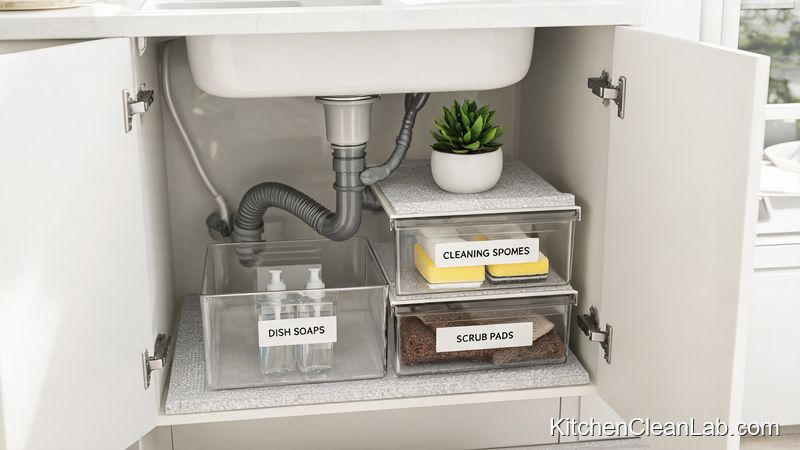
A reset works better than adding organizers to clutter. In about 45 minutes, you can empty, clean, sort, and rebuild the cabinet. Always start with an empty space, a trash bag, and a fresh look at the plumbing layout before buying storage.
- Empty everything. Place all items on a towel or counter. This reveals the true cabinet footprint and any hidden leaks.
- Inspect and wipe. Look for dark stains, drips, or warped wood. Clean surfaces with warm water and a few drops of dish soap. For mildew or musty odors, use a 1:1 white vinegar and water spray. Do not use bleach on porous wood unless necessary and never mix it with other cleaners.
- Measure usable dimensions. Record height, width, and depth. Mark where the P-trap, disposal, and shutoff valve sit so you avoid blocking them.
- Sort by frequency. Daily items up front, weekly items in the middle, refills and specialty tools in the back or upper shelf.
- Discard expired or duplicate products. Old cleaners, crusty sponges, and excess grocery bags are common clutter sources.
- Add a protective liner. A non-slip, waterproof shelf liner catches small drips and holds bins in place.
- Install organizers before refilling. Tension rods, adhesive hooks, drawer units, and lazy Susans should be placed to fit around plumbing.
- Return items in zones. Give each zone a label so the system sticks.
After the reset, open the cabinet door and look for anything touching the P-trap. If a bin blocks the shutoff valve, move it. In a plumbing emergency, the valve must stay reachable.
10 Under-Sink Organization and Cleaning Ideas You'll Love
These ten ideas solve the biggest under-sink pain points: falling bottles, lost sponges, wasted vertical space, and sticky cabinet bottoms. Pair each idea with a quick cleaning step to keep the zone sanitary and fresh.
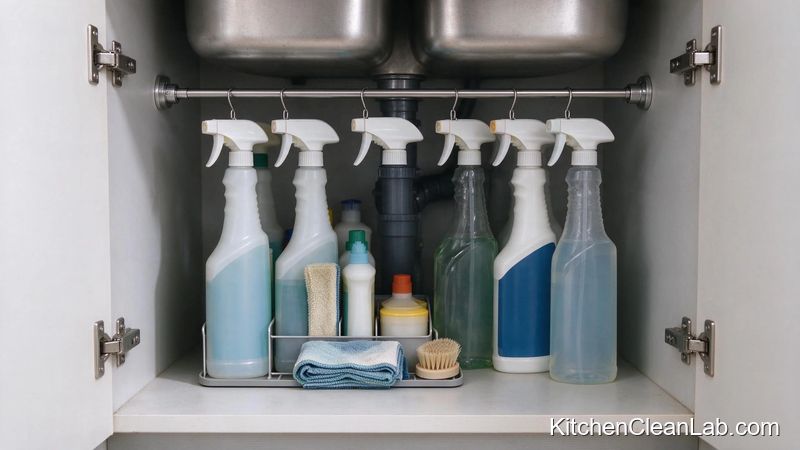
1. Tension Rod for Spray Bottles
Place a small tension rod between the cabinet sides, just below the sink bowl. Hang spray bottles by their trigger necks so they sit off the floor and dry without leaving residue rings. Choose a rod that fits the width and can support the weight of several bottles. For heavy glass bottles, use a fixed rod with wall brackets instead of a spring rod. This trick frees floor space for bins and keeps nozzles pointed downward.
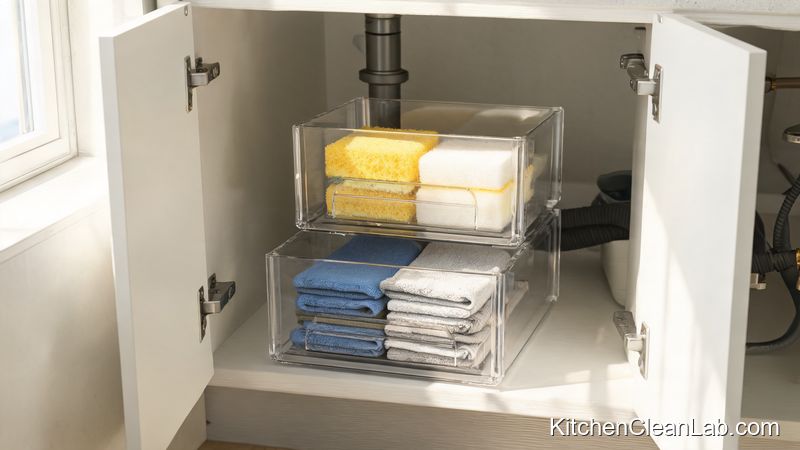
2. Clear Acrylic Drawers for Small Tools
Stackable clear acrylic drawers keep sponges, scrub pads, dishcloths, and refills visible without digging. Because they are transparent, they reduce the out of sight, out of mind problem. Use one drawer for daily cleaning tools and another for backup supplies. Wipe the drawer fronts each month to prevent dust and soap film buildup. Look for drawers with non-slip feet so stacked units do not slide when you open the cabinet.
3. Lidded Bins for Dishwasher Tabs and Powders
Small lidded containers keep dishwasher tabs, gloves, and scrub sponges separate. Lids block dust, moisture, and pest access. Label the front and stack bins no more than two high so the bottom bin remains easy to reach. In humid climates, add a food-grade desiccant packet inside the bin if you store powder products. Choose bins with straight sides to avoid wasted corner space under the sink.
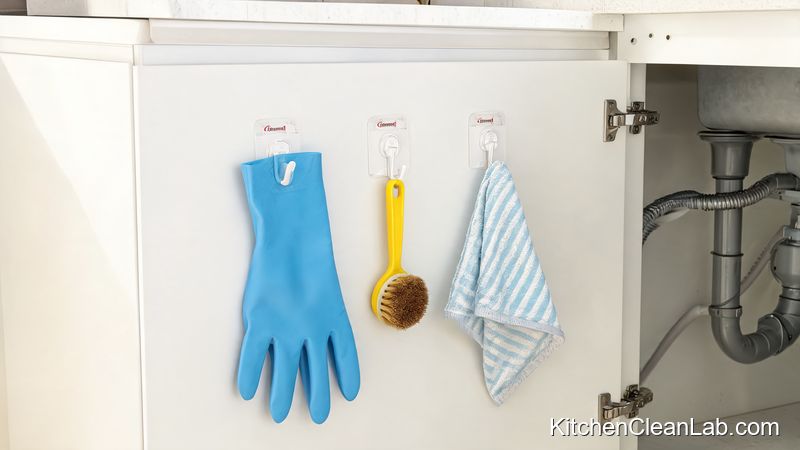
4. Command Hooks and Door-Mounted Storage
The inside of the cabinet door is valuable vertical real estate. Use adhesive hooks or a slim door rack to hold brushes, gloves, measuring spoons, or a small towel. Wipe the door surface with rubbing alcohol before applying adhesive so the hooks stay put. Do not hang heavy bottles on adhesive hooks; reserve those for lightweight tools. This works especially well in small bathrooms where base cabinet space is tight.
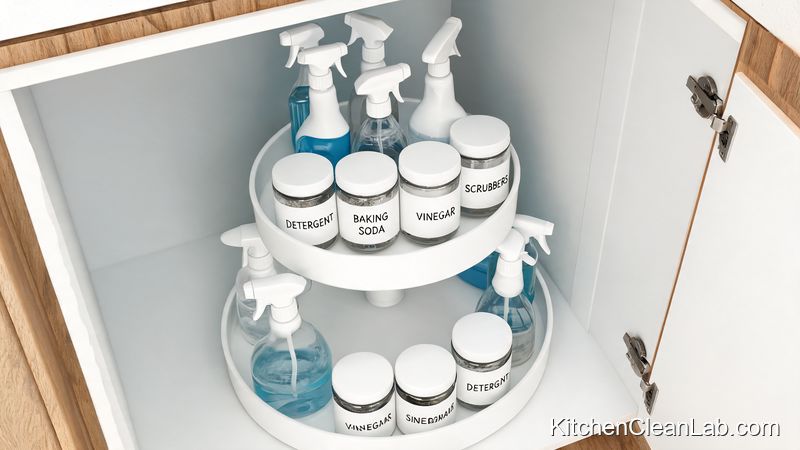
5. Two-Tier Lazy Susan for Deep Corners
A lazy Susan or turntable makes corner storage accessible. Use a two-tier version if vertical space allows. Place it on one side of the P-trap for cleaning sprays, smaller bottles, and jars. Give it a spin to reach the back without knocking over bottles. For a cleaner look, transfer products into matching reusable bottles and add a simple label. Check the spinning clearance before filling the turntable.
6. Portable Cleaning Caddy for Multi-Surface Jobs
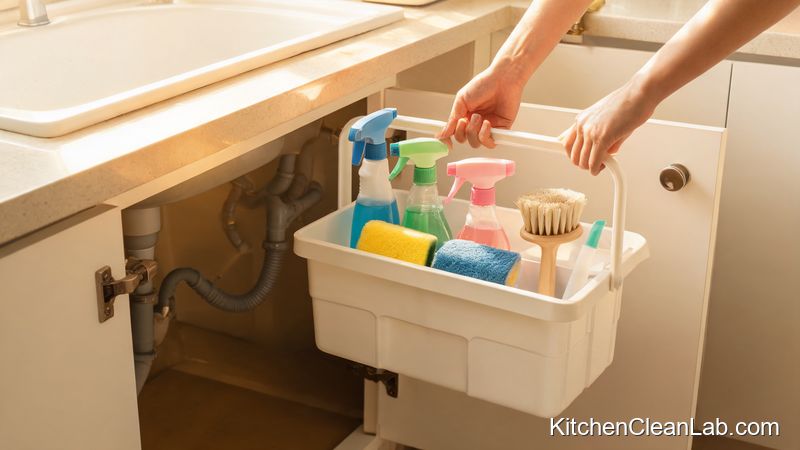
Keep daily cleaning supplies in a small open caddy with a handle. When you need to clean the bathroom or kitchen, lift the entire caddy out instead of grabbing individual bottles. This approach works especially well under bathroom sinks with limited space. Rinse and dry the caddy weekly to prevent soap scum and drip buildup. Choose a caddy with divided compartments so bottles stay upright.
7. Decant Dish Soap into a Pour Bottle or Oil Container
Bulky dish soap bottles waste space and often tip over. Pour dishwashing liquid into a slim oil dispenser or squeeze bottle with a spout. Use a clear container to see the fill level. Keep a small non-slip mat under the bottle to catch drips. If you buy bulk soap, store the refill in a larger container elsewhere, not under the sink. This simple swap frees several inches of usable shelf space.
8. Under-Shelf Basket for Dead Air Space
If your cabinet has a fixed shelf, attach a hanging basket beneath it for gloves, small tools, or a roll of trash bags. This uses the empty space between the shelf and the floor. Make sure the basket does not interfere with the cabinet door or shutoff valve. Choose wire or coated metal that resists rust. Wipe the basket rails during your monthly cleaning to prevent grime buildup.
9. Trash Bag Roll Holder or Dispenser
Mount a horizontal roll holder on the cabinet wall or door to store trash bags and recycling bags. A tension rod or adhesive paper towel holder also works. This eliminates the bulky box that becomes crushed and damp. Store the unopened refill pack in the garage or pantry to avoid clutter. Keep the active roll near the front so it is easy to grab without bending too far.
10. Non-Slip Liner and Odor-Control Station
Place a waterproof shelf liner on the cabinet bottom and a small open container of baking soda at the back to absorb moisture and odors. Alternatively, use activated charcoal pouches. Wipe the liner monthly and replace the baking soda every 30 to 60 days. This simple cleaning layer stops small drips from turning into sticky residue and keeps the cabinet smelling fresh.
Quick Reference: Which Under-Sink Organizer Works Best?
| Organizer | Best For | Watch Out For |
|---|---|---|
| Tension rod | Spray bottles, keeping floors clear | Heavy glass bottles may need fixed brackets |
| Clear acrylic drawers | Small tools, sponges, dishcloths | Overstacking can tip |
| Lazy Susan | Deep corner access | Needs clearance to spin |
| Command hooks | Brushes, towels, gloves | Not for heavy items |
| Portable caddy | Multi-surface cleaning | Can collect drip residue |
| Under-shelf basket | Dead vertical space | May block shutoff valve |
Cleaning Routine to Keep the Space Fresh and Safe
A five-minute monthly wipe-down prevents the messy under-sink cabinet from returning. Empty the cabinet floor, spray the liner, wipe bottle bottoms, and check for leaks. This quick reset keeps the cabinet ready for daily use without a deep clean.
- Weekly: Return misplaced items to their zones and wipe the front edge where drips land.
- Monthly: Empty the bottom, wash or wipe shelf liner, clean bottle bases, and inspect plumbing connections.
- Seasonally: Purge expired cleaners, wash bins in warm soapy water, and replace baking soda or charcoal odor absorbers.
- Safety step: After cleaning, leave the cabinet door open for 15 minutes to let moisture escape. If you store bleach or ammonia, make sure they are sealed and never stored next to each other.
For mold or mildew, spray full-strength white vinegar on the affected area, let it sit for one hour, then wipe with warm water. If the smell persists, place a small bowl of activated charcoal or a moisture absorber in the back corner.
Common Under-Sink Organizing Mistakes to Avoid
Even good organizers fail when the base system ignores plumbing, airflow, and daily habits. Avoid these mistakes to keep your setup working and your cabinet safe.
- Storing food or pet food under the sink. Heat, humidity, and cleaning chemicals can affect the food and attract pests.
- Using cardboard boxes. Cardboard warps in humidity and provides a hiding place for roaches and silverfish.
- Hanging items from pipes or valves. This can loosen connections or block the shutoff valve in an emergency.
- Ignoring a small leak. Organizers hide leaks until the cabinet floor warps. Fix the drip first.
- Overcrowding with duplicate products. Keep only one or two backups under the sink; store bulk refills elsewhere.
- Forgetting child safety. Dishwasher pods, bleach, and drain cleaners need a magnetic lock if little hands can reach.
Frequently Asked Questions About Under-Sink Organization and Cleaning
These are the questions homeowners ask most after a reset. Each answer combines storage function with cabinet safety and moisture control.
How do I organize under the sink without drawers?
Use adhesive hooks, a tension rod, stackable clear bins, and a turntable. These pieces create vertical and tiered storage without permanent hardware. Sort items by frequency, use a small caddy for daily cleaners, and label the bins so everything has a visible home.
What should you not store under a kitchen sink?
Avoid food, pet food, paper goods that can absorb moisture, and large refill boxes. Also keep bleach and ammonia sealed and stored away from each other. Anything sensitive to heat, humidity, or chemical fumes belongs in a pantry or utility closet.
How do I keep under-sink cabinets from smelling musty?
Fix any leaks, dry the interior, and place an open jar of baking soda or activated charcoal at the back. Wipe bottle bottoms before returning them. If the smell continues, check the cabinet floor for mildew and replace the shelf liner.
What is the best way to store cleaning bottles under the sink?
Hang spray bottles on a small tension rod or store them upright in a portable caddy. Keep the most-used bottles toward the front. For a neater look, transfer products into clear matching bottles with labels and store bulk refills elsewhere.
Final Thoughts on Maintaining an Orderly Under-Sink Cabinet
The under-sink cabinet does not have to be the most stressful spot in your kitchen or bathroom. Start with a full reset, measure the space around plumbing, and use simple vertical storage like tension rods, hooks, and clear bins. Pair storage with a monthly cleaning habit and the cabinet will stay functional, neat, and safe. Routine beats perfection.