The Chemistry: Why Vinegar Can Be a Risk on Quartz
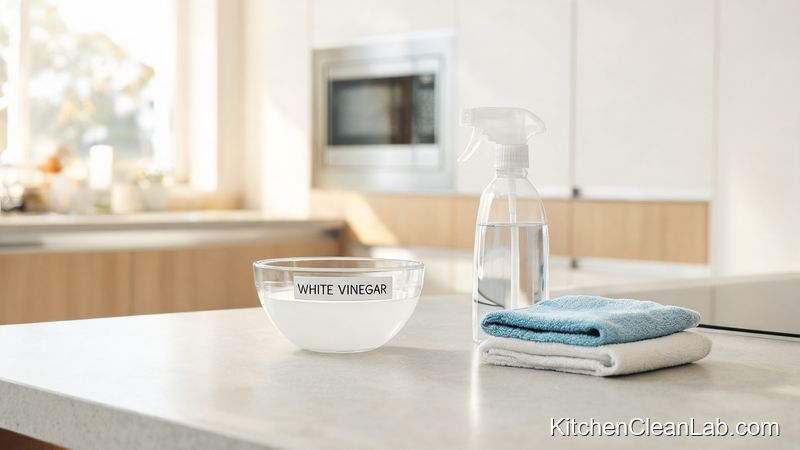
Vinegar is acidic enough to gradually etch the resin in engineered quartz, so it should not be your everyday quartz countertop cleaner. A heavily diluted solution of one part white vinegar to one part water can work occasionally for tough mineral spots, but only if you rinse immediately and dry the surface completely.
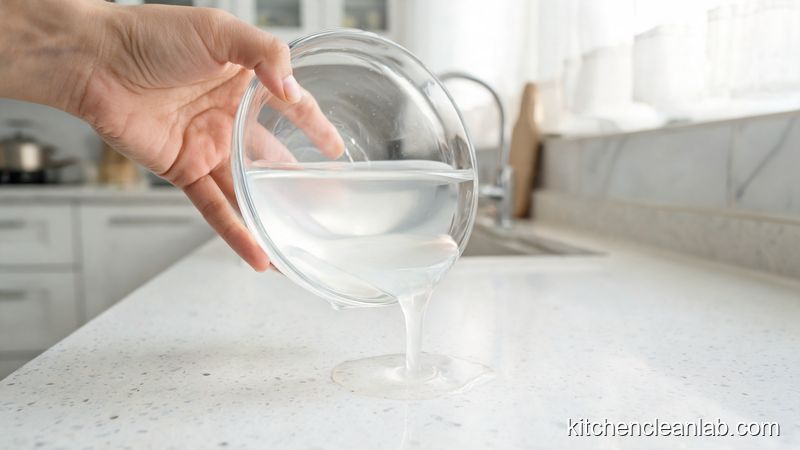
Quartz countertops are not solid slabs of natural stone. They are engineered from roughly 90% ground quartz minerals and 7% to 10% polymer resins and pigments. That resin is what binds the slab together and gives quartz its flexible durability, but it is also the reason strong acids can be a problem. White distilled vinegar contains acetic acid with a pH around 2.4 to 2.6. When that acid sits on the surface, it can soften the resin at a microscopic level. The result is not always immediate, but it often appears as a dull haze, cloudy spot, or loss of gloss after repeated exposure.
The confusion around vinegar is understandable. Some quartz manufacturers say diluted vinegar is fine for occasional use, while others warn against all acidic cleaners. The difference usually comes down to the resin formulation, finish, and how much risk the manufacturer is willing to accept. On a polished light-color slab, a dull area may be less visible early on. On a dark or heavily patterned quartz surface, acid etching can be more obvious.
If you choose to use vinegar at all, do not use apple cider vinegar or cleaning vinegar. Cleaning vinegar often has 6% to 10% acetic acid, which is significantly more aggressive than standard white distilled vinegar at 5%. Never let vinegar pool on the surface, and never spray it directly across large areas. Apply a small amount to a cloth, wipe the affected spot, then rinse immediately with clean water and dry with a microfiber towel.
Vinegar is often described as natural and non-toxic, which makes it popular for green cleaning. But natural does not mean chemically neutral. Acetic acid attacks mineral deposits and polymer binders alike. The mineral portion of quartz may remain intact while the surrounding resin slowly degrades, causing tiny pits and loss of reflective quality. Once the factory finish is compromised, repolishing may not fully restore the original look.
What Quartz Manufacturers and Stone Pros Actually Recommend
Most quartz manufacturers recommend a pH-neutral cleaner, warm water, and a soft microfiber cloth. Some brands say diluted white vinegar is acceptable for occasional use, while others warn against all acidic cleaners. To protect your warranty, follow the written care guide for your specific quartz slab.
One reason for conflicting advice is that quartz is a manufactured product. Different companies use different resin systems, pigments, and finishing processes. A polished surface may tolerate a quick vinegar wipe better than a honed texture, but both can suffer over time. In addition, warranty language often excludes damage from improper cleaning products. That makes the safest route clear: choose pH-neutral cleaners approved for quartz or stone use.
If your manufacturer explicitly allows diluted vinegar, follow these strict rules:
- Use standard 5% white distilled vinegar, not cleaning vinegar or apple cider vinegar.
- Mix one part vinegar with one part water; never apply full strength.
- Apply the solution to a soft cloth first, not directly onto the countertop.
- Do not let the solution sit longer than 30 to 60 seconds.
- Rinse thoroughly with clean water and dry with a microfiber towel.
Quartz Cleaning Product Quick Reference
| Product | Safe? | Precautions |
|---|---|---|
| White vinegar, 5% acidity | Only diluted 1:1 | Rinse immediately; never let it pool; not for routine use |
| Dish soap and water | Yes | Use a few drops in warm water; rinse well |
| Rubbing alcohol and water | Yes | Mix 1:1 for disinfection; avoid open flames |
| Baking soda paste | Yes | Use on stains; do not scrub aggressively |
| Hydrogen peroxide | Yes, with rinse | Nonacidic and nonabrasive; rinse after use |
| Ammonia-based glass cleaner | No or occasional | Can cause clouding; use ammonia-free only |
| Concentrated bleach | No | Can stain; dilute only if manufacturer allows |
| Abrasive powders or steel wool | No | Scratches and dulls the surface |
| Oven, grill, or paint removers | No | High pH; can permanently damage resin |
Safe Quartz Countertop Cleaning: A Step-by-Step Routine
The best daily quartz cleaner is a simple mix of warm water and a few drops of mild liquid dish soap. This removes grease and daily grime without the acidic or alkaline swing that can damage resin. Follow the steps below to maintain the surface without dulling it.
- Clear the countertop and remove loose crumbs or dried food with a dry microfiber or soft paper towel.
- Fill a bowl halfway with warm water and add two to three drops of mild liquid dish soap. Whisk gently until the soap dissolves.
- Soak a soft microfiber cloth in the solution and wring it out well. Wipe the surface in overlapping circular motions.
- Use a clean cloth with plain warm water to rinse every section, removing any soap film.
- Dry the countertop completely with a dry microfiber or paper towel. Do not let water air dry, because mineral deposits can remain.
For weekly disinfection, skip vinegar. Mix a 1:1 solution of 70% isopropyl rubbing alcohol and water in a spray bottle. Lightly mist the surface, let it sit for two to three minutes, then wipe with a clean microfiber cloth. This method is fast, evaporates cleanly, and avoids acid exposure.
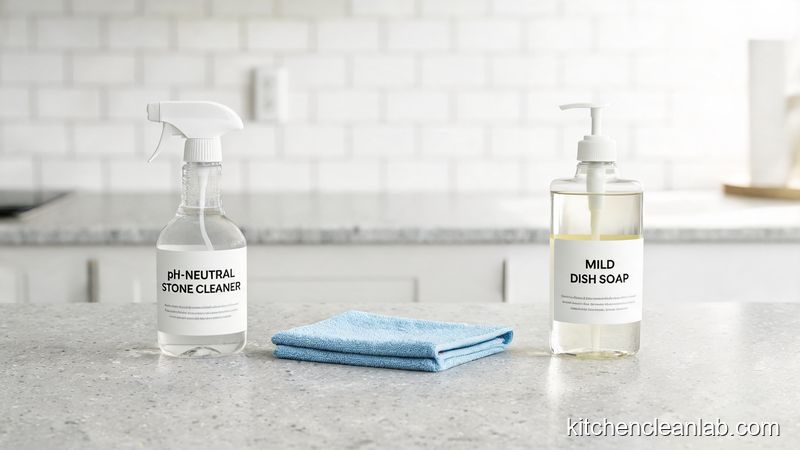
Keep a simple quartz-safe kit under the sink: microfiber cloths, a pH-neutral stone cleaner, mild dish soap, 70% isopropyl alcohol, baking soda, and non-abrasive sponges. This prevents the temptation to grab an acidic kitchen product when you need a quick clean.
How to Remove Stubborn Stains Without Vinegar
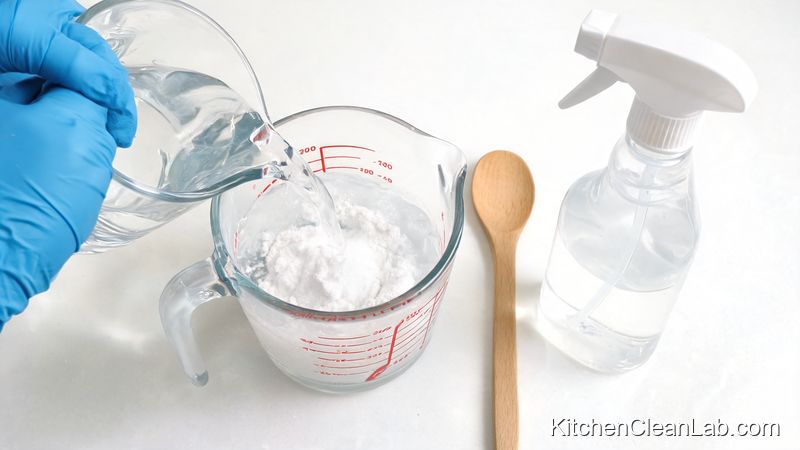
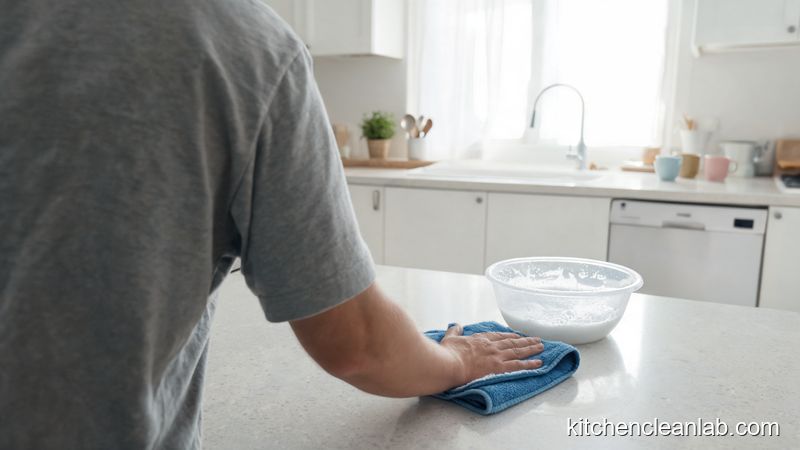
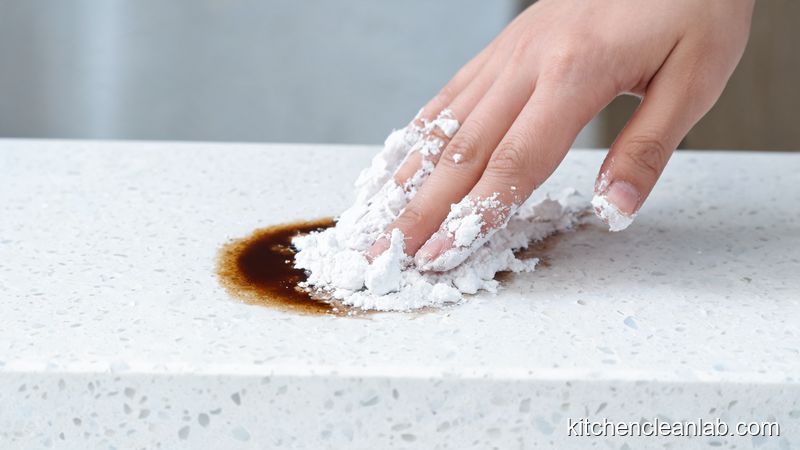
For coffee, tea, wine, or food stains, a baking soda paste is safer than vinegar. Make a thick paste with baking soda and water, apply it to the stain, and let it sit for five to ten minutes before wiping gently with a damp non-abrasive sponge.
Baking soda is slightly abrasive but much gentler than scouring powders, making it useful for lifting pigment stains without scratching quartz resin. It is also alkaline enough to help break up grease, but not so high on the pH scale that it creates the same risk as oven cleaners or paint removers when used briefly.
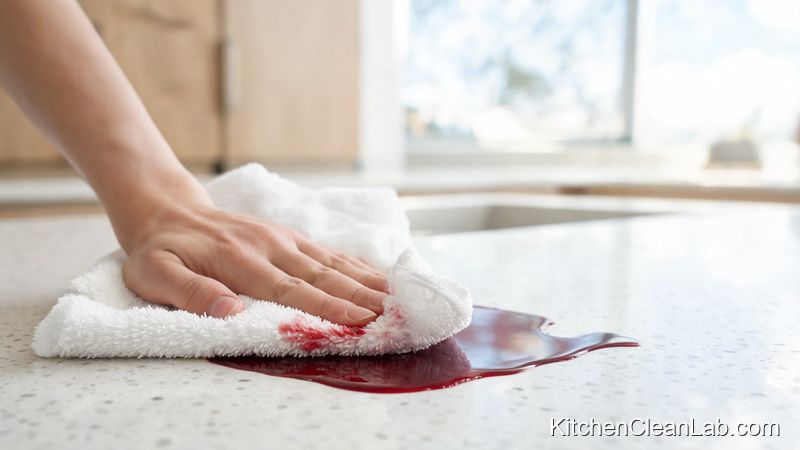
- Blot the spill immediately with a paper towel. Do not rub outward, which can spread the stain.
- Mix two tablespoons of baking soda with enough water to create a spreadable paste.
- Apply the paste to the stained area and let it sit for five to ten minutes.
- Wipe the paste away with a soft, damp microfiber cloth using light pressure.
- Rinse with plain water and dry completely.
For sticky adhesive, glue, ink, permanent marker, or blood, use a small amount of rubbing alcohol on a clean rag. Work in a circular motion, then wash the area with warm water immediately. Do not use paint remover, acetone, or nail polish remover. These solvents are too aggressive for the resin matrix in quartz.
The Worst Mistakes That Ruin Quartz Countertops
The fastest ways to ruin a quartz countertop are abrasive scrubbing, direct heat, and harsh high-pH chemicals. Avoid steel wool, scouring powders, oven cleaners, grill cleaners, paint strippers, and concentrated bleach. These products cause permanent dulling, staining, or surface damage and can void your warranty.
- Abrasive tools: Steel wool, green scouring pads, and powdered cleansers scratch the resin surface.
- High-pH cleaners: Oven cleaners, grill degreasers, paint removers, and undiluted dish detergent can break down the resin.
- Ammonia: Classic blue Windex and other ammonia-based glass cleaners can create clouding or hazing over time.
- Concentrated bleach: It can discolor the surface. Only use diluted bleach if the manufacturer explicitly allows it, and never make it routine.
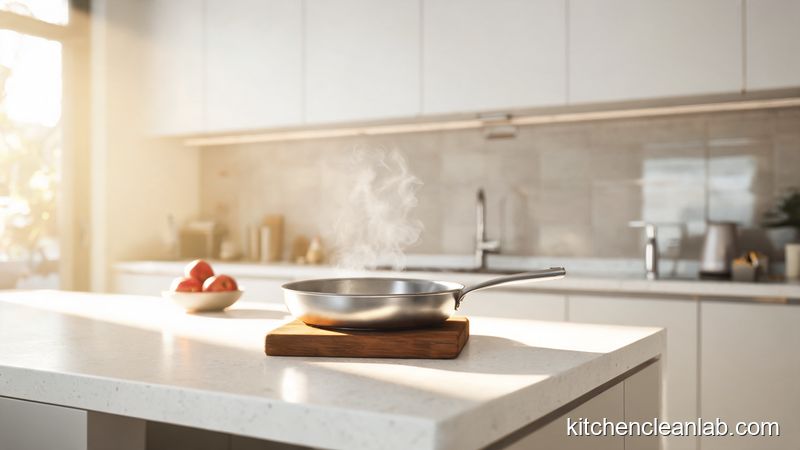
- Direct heat: Hot pots or pans can scorch quartz resin, creating permanent rings or cracks. Always use trivets and coasters.
- Leaving acidic spills: Lemon juice, tomato sauce, wine, and vinegar should be wiped up quickly, even though quartz resists stains better than natural stone.
If a spill sits on the countertop overnight, especially an acidic or heavily colored liquid, the surface can be exposed to slow chemical stress. The habit of wiping up spills immediately is one of the most cost-effective ways to preserve the slab’s original shine.
Frequently Asked Questions About Vinegar and Quartz Countertops
Here are the most common questions homeowners ask when deciding whether vinegar belongs in a quartz cleaning kit. The short answer is usually no for routine quartz care; the long answer depends on dilution, contact time, and your specific manufacturer's written care guide.
Can I use vinegar on quartz countertops if I dilute it?
You can use a heavily diluted solution of one part white vinegar to one part water for an occasional mineral deposit or hard water spot, but it is not ideal for daily cleaning. Apply it lightly, never let it sit, and rinse immediately with plain water. A pH-neutral quartz cleaner is always safer.
What happens if vinegar is left on quartz too long?
Leaving vinegar on quartz can cause etching, cloudiness, or dull spots as the acetic acid weakens the resin bonds. The damage may appear gradually and is often irreversible, so you should wipe up any vinegar spill immediately and rinse the area thoroughly.
Does apple cider vinegar or cleaning vinegar do more damage?
Yes. Cleaning vinegar typically has 6% acetic acid or higher, and apple cider vinegar also contains fruit acids. Both are more aggressive than standard 5% white distilled vinegar. The stronger the acidity, the greater the risk of dulling or etching the quartz surface.
What is the safest homemade quartz countertop cleaner?
The safest everyday homemade quartz countertop cleaner is warm water with a few drops of mild liquid dish soap. For disinfection, a 1:1 mix of water and 70% isopropyl rubbing alcohol works well without the acidic risks of vinegar.
The Bottom Line: Should You Use Vinegar on Quartz?
Vinegar is not the safest choice for quartz countertops, even though a heavily diluted solution may be acceptable for rare, short-contact cleaning. Because the resin in quartz can dull or etch with repeated acid exposure, a pH-neutral cleaner gives you the same practical result with far less risk. If you do use diluted vinegar, follow the one-to-one water ratio, avoid letting it pool, rinse immediately, and never make it part of your daily routine.
Quartz is a low-maintenance surface, but it is not maintenance-free. Your cleaning habits determine whether the surface keeps its polished look or develops a cloudy, worn appearance over time. When in doubt, choose a cleaner labeled for quartz or stone use, check your manufacturer’s care guide, and protect the slab from heat, harsh chemicals, and abrasive tools.