Why Ketchup and Salt Work on Copper Tarnish
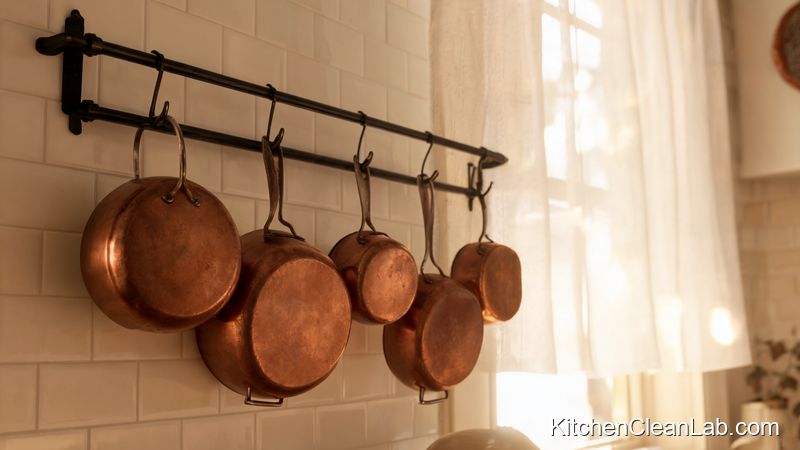
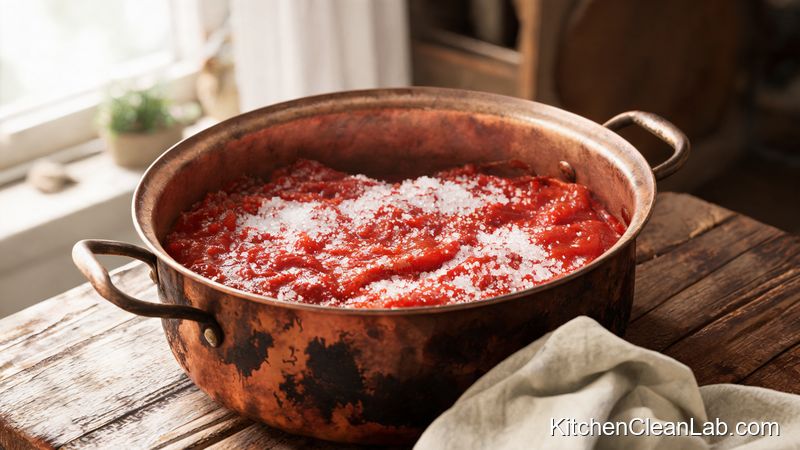
Ketchup contains acetic and citric acids that loosen copper oxide tarnish, while fine salt supplies gentle abrasion to lift residue without scratching bare copper. This food-safe combination brightens everyday copper cookware in under an hour and avoids the harsh fumes of commercial metal polish.
Copper tarnish is not baked-on grease. It is a reaction between copper, oxygen, and moisture that creates a dull brown or green oxide layer. The mild acids in ketchup, primarily from tomatoes and vinegar, break down that oxide layer. Salt then acts as a soft scouring element that helps carry the loosened tarnish off the metal without the need for aggressive scrubbing.
What You Need Before You Start
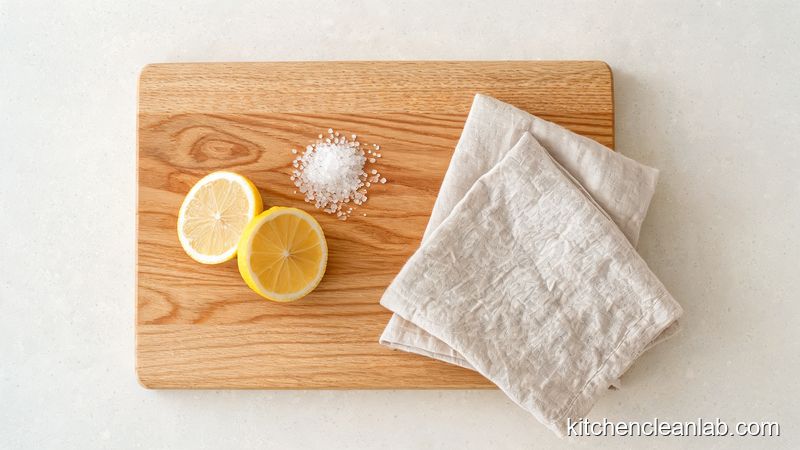
Gather a soft cotton or microfiber cloth, non-gel ketchup, fine kosher or table salt, warm water, and a dry towel. Avoid polyester cloths because synthetic fibers can micro-scratch bare copper. Also check that your piece is solid bare copper, not lacquered or coated, before applying any acidic cleaner.
- Non-gel ketchup, about 2 to 3 tablespoons per small pot
- Fine kosher salt or table salt, equal to the ketchup by volume
- Soft cotton cloth, flannel, or microfiber towel
- Warm water for rinsing
- Clean dry towel for buffing
- Optional: mineral oil for a soft sheen after cleaning
Safety note: Work on a protected surface. Ketchup is acidic and can etch natural stone counters if left to sit. Wear kitchen gloves if you have sensitive skin or small cuts.
Step-by-Step: How to Clean Copper Pots Naturally with Ketchup and Salt
Mix equal parts ketchup and salt into a paste, spread it over bare copper, and wait 10 to 15 minutes before rinsing. For heavy tarnish, leave it up to an hour, then buff gently with a soft cloth. Never let the paste sit inside a tin-lined pot because the acid can dull the lining.
- Confirm the surface. Use this method only on bare copper exteriors. If the copper has a clear lacquer, the paste will not reach the tarnish and may leave a sticky mess. If your pot is tin-lined inside, keep the mixture on the outside.
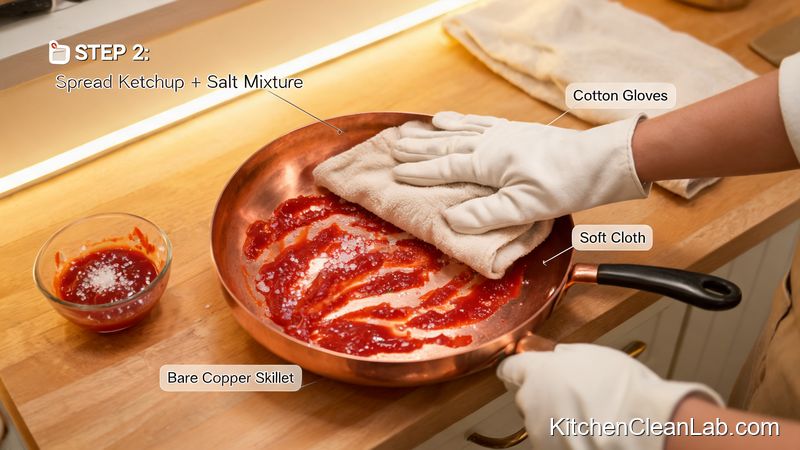
- Mix the paste. In a small bowl, combine equal parts ketchup and fine salt. Start with 2 tablespoons of each for a medium saucepan. Stir until the salt begins to dissolve slightly but the mixture still feels gritty.
- Apply a thick layer. Use your fingers or a soft cloth to spread the paste over the tarnished copper. Do not paint it on thinly. Aim for full coverage like barbecue sauce on ribs. Patchy application creates patchy results.
- Let it sit. Allow the paste to work for 10 to 15 minutes for light dullness or 30 to 60 minutes for heavy oxidation. Check at the 10-minute mark by wiping a small spot. If tarnish remains, reapply and wait longer.
- Buff without scrubbing. Dampen a soft cotton or microfiber cloth with warm water and gently work the paste in small circles. Let the salt do the work. Do not use steel wool, green scrub pads, or polyester scouring sheets.
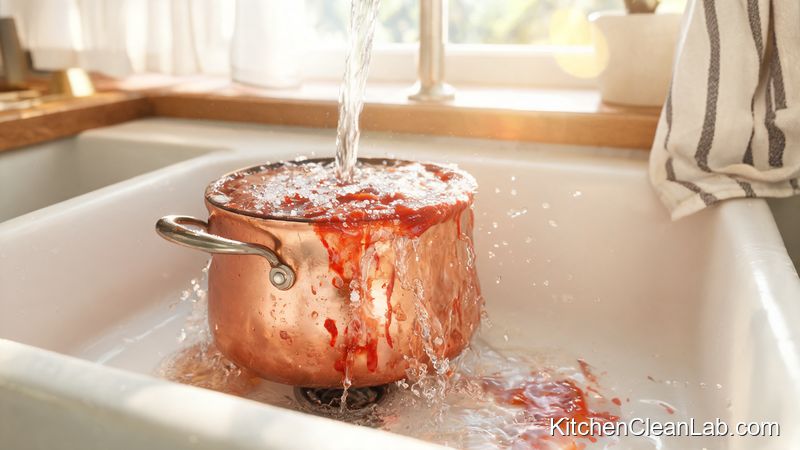
- Rinse thoroughly. Rinse the pot under warm running water until all ketchup and salt residue is gone. Pay attention to crevices around handles and rivets.
- Dry immediately. Wipe the copper with a clean, dry towel. Standing water can create water spots or new oxidation marks within minutes.
How Long Should You Leave the Paste On?
Light tarnish usually responds in 10 to 15 minutes; heavy tarnish benefits from 30 to 60 minutes. If you want a gentler no-rub approach, a ketchup-only layer can sit overnight on bare copper, but a ketchup-salt paste should not dry for hours because the salt becomes difficult to remove without scratching.
My kitchen tests show that short contact time works best for daily upkeep. When I clean a copper saucepan every few weeks, I apply the paste, wait 15 minutes, and then buff lightly. The result is a warm, clean copper surface rather than a mirror polish. For pans that have not been cleaned in months, I repeat the process twice instead of leaving one heavy layer on longer.
Natural Copper Cleaners Compared
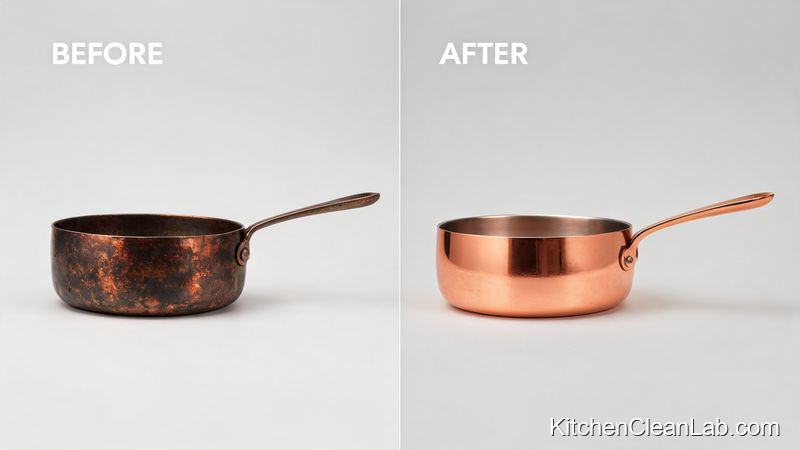
Ketchup and salt sit in the middle of natural copper cleaners: less abrasive than flour paste, slower than lemon juice and salt, and far gentler than commercial acid dips. Use this comparison to match the method to your pan's condition and your tolerance for patina.
| Method | Best for | Time | Finish |
|---|---|---|---|
| Ketchup + salt | Everyday bare copper pots | 10-60 minutes | Clean, warm matte glow |
| Ketchup only | Light patina, no-rub cleaning | 1 hour to overnight | Lighter but not shiny |
| Lemon juice + salt | Heavy tarnish on bare copper | 5-15 minutes | Bright, more polished |
| Vinegar + flour paste | Stubborn brown spots | 15-30 minutes | Even matte finish |
| Commercial copper polish | High-gloss presentation pieces | 5-10 minutes | Mirror-like shine |
Common Mistakes and Safety Precautions
Never use ketchup and salt on lacquered copper or antique pieces, and avoid scrubbing with steel wool or polyester pads. Rinse thoroughly with warm water and dry immediately to prevent water spots and uneven oxidation. Keep the paste away from tin or silver linings.
- Letting the paste dry hard. Salt can form a crust that requires aggressive scrubbing. Set a timer and do not walk away for hours unless you are using ketchup only.
- Using it inside a tin-lined pot. The acid can dull or degrade tin if left inside for long periods. Keep the mixture on the exterior copper only.
- Skipping the patch test. On vintage or mixed-metal pieces, test a small hidden area first. Copper alloys with decorative finishes can react unevenly.
- Rinsing with hot water. Warm water is enough. Very hot water can accelerate flash rusting or leave heat stains on some copper alloys.
- Using synthetic scrubbers. Polyester, nylon, and general kitchen scrubbers can create fine scratches that show on polished copper. Stick to soft cotton or microfiber.
Frequently Asked Questions
Ketchup and salt clean bare copper through mild acid plus gentle abrasion, but they do not restore a high-gloss mirror finish. The method is best for everyday cookware that you want brighter without heavy polishing or harsh chemical residues.
Can ketchup damage a copper pot?
On bare copper, ketchup will not etch or pit the metal under normal use. The risk is leaving the mixture on too long, especially inside a tin-lined pan, because the acid can dull the lining. Keep the paste on exterior copper and rinse thoroughly.
How long should I leave ketchup and salt on copper?
For light tarnish, 10 to 15 minutes is usually enough. For darker oxidation, leave the paste for 30 to 60 minutes and check occasionally. Do not let a salt-containing paste dry overnight; it becomes hard to remove without scratching.
Does this method make copper shiny or just clean?
It makes the copper visibly cleaner and lighter, but it does not produce a mirror shine. If you want a glossy finish after cleaning, buff the dry pot with a clean microfiber cloth and apply a single drop of mineral oil rubbed in evenly.
What if my copper pot has a clear lacquer coating?
Ketchup and salt will not reach tarnish beneath lacquer, so you will only create a sticky film. If the lacquer is worn or peeling, have it professionally stripped before using any natural acid cleaner on the bare copper.
The Takeaway for Everyday Copper Care
Use ketchup and salt when you want a low-cost, food-safe routine that brightens bare copper without harsh fumes. For heirloom, lacquered, or museum-quality pieces, skip DIY acids and use pH-neutral care or professional restoration.
This method suits the way real copper cookware is used: hauled out for cooking, dripped on, and put away without ceremony. Keep the paste on the outside, rinse it off before it dries, and dry immediately. The result is a clean, warmer copper surface that still looks like a tool, not a trophy.