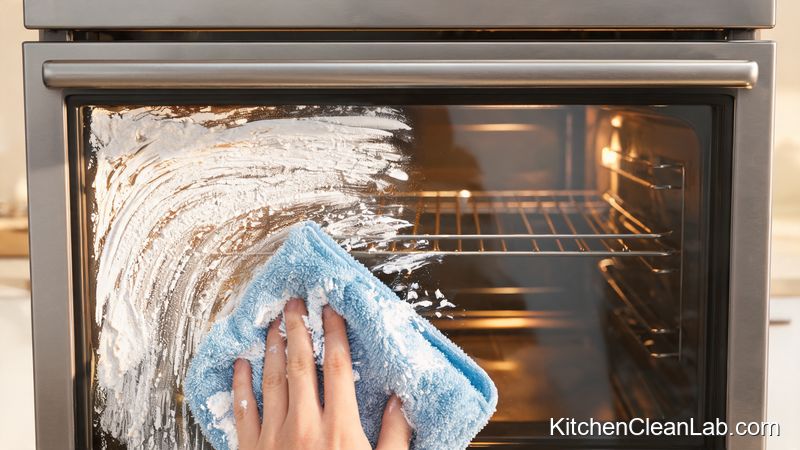
Why White Vinegar Works as a Kitchen Appliance Deodorizer
White vinegar neutralizes odors because acetic acid reacts with volatile, alkaline odor compounds and turns them into odorless salts. Since it also cuts through greasy residue, it removes the source of many appliance smells instead of simply masking them.
White distilled vinegar is the ultimate kitchen appliance deodorizer because it does not rely on heavy perfume. Most household white vinegar contains about 5% acetic acid and has a pH around 2.4. That acidity is strong enough to break down the volatile amines and sulfur compounds released by cooked fish, eggs, burnt food, and spoiled milk. In practical terms, the acid changes those odor molecules into non-volatile compounds that your nose cannot detect. As the vinegar dries, its own sharp scent quickly dissipates, leaving no sticky film. This makes it safe and practical for food-contact surfaces when used correctly.
The Right White Vinegar to Use
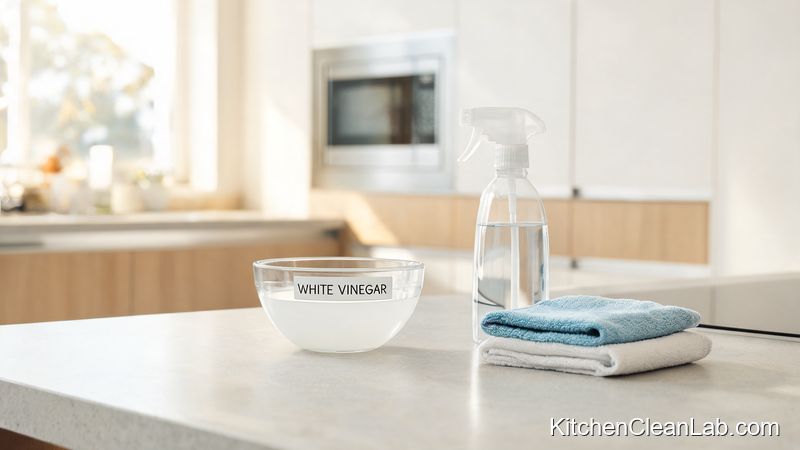
Distilled white vinegar is the best option for appliance deodorizing because it contains no coloring agents and holds about 5% acidity. Apple cider vinegar can work in a pinch, but its natural pigments may leave behind a slight stain or sticky film.
Look for a label that lists 5% acetic acid. This is the standard concentration sold in grocery stores and is strong enough to deodorize but safe for most appliance surfaces when diluted. Cleaning vinegar may have 6% acidity and is acceptable, but it should be handled with more caution. Avoid malt vinegar, balsamic vinegar, red wine vinegar, and rice vinegar in appliances because they contain sugars and colorants that can leave sticky residue or stain plastic interiors.
If the sharp vinegar smell is unpleasant, add a few drops of lemon or peppermint essential oil to your cleaning solution. Use only a small amount in a well-ventilated kitchen. Do not add oils to solutions used in coffee makers or kettles, because oil can leave a residue that is difficult to rinse.
Safety Rules and Surfaces to Avoid
White vinegar is non-toxic and biodegradable, but it is acidic enough to etch natural stone, dull some metals, and degrade rubber seals over time. Never mix it with bleach or hydrogen peroxide, and always rinse food-contact surfaces with water after treatment.
Before you start, check the appliance manual for warranty restrictions and rubber gasket recommendations. Then follow these safety rules:
- Do not use white vinegar on marble, granite, limestone, travertine, or unsealed grout. It can etch the surface.
- Avoid prolonged contact with aluminum, cast iron, brass, copper, and unsealed wood. Wipe spills immediately.
- Do not soak rubber seals, gaskets, or hoses in undiluted vinegar. Diluted vinegar is usually safe for quick wiping, but long exposure can dry out rubber.
- Never mix white vinegar with bleach. The combination produces toxic chlorine gas. Never mix vinegar with hydrogen peroxide; it forms peracetic acid, which can irritate your eyes, throat, and lungs.
- Ventilate the kitchen while using vinegar in heated appliances. Open a window or run the exhaust fan if the sharp smell bothers you.
Step-by-Step: Deodorizing a Microwave
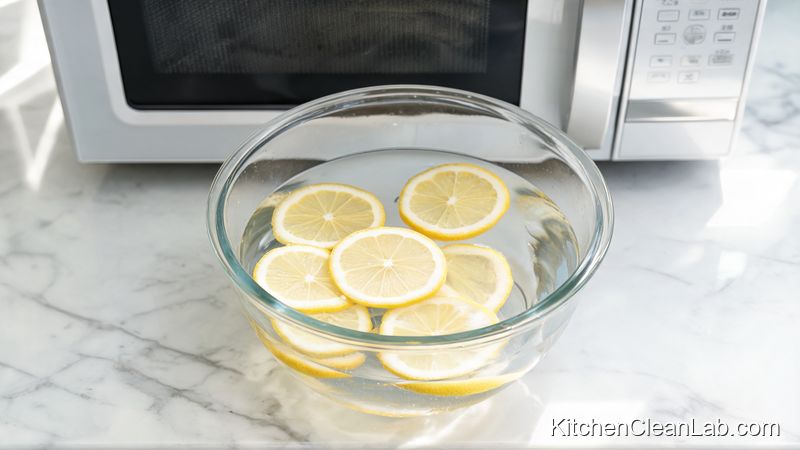
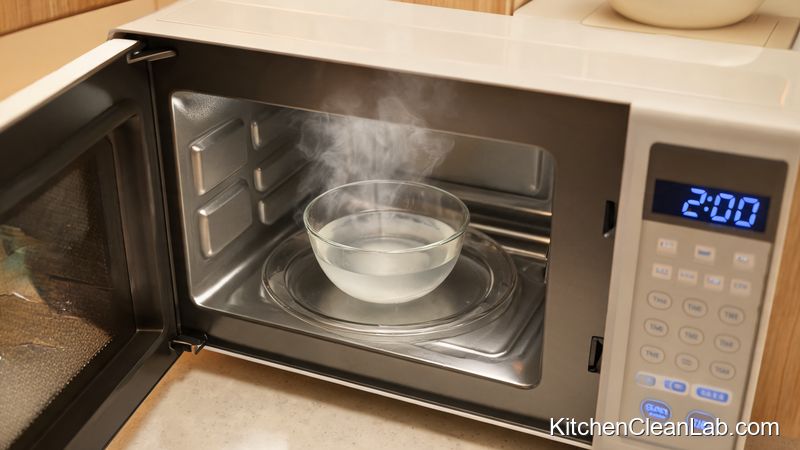
Mix one cup of white vinegar with one cup of water in a microwave-safe bowl. Heat it for five minutes on high, leave the door closed for another five minutes, then wipe down all interior surfaces including the door, ceiling, and turntable.
- Remove the turntable tray and support ring. Set them aside.
- Pour 1 cup of distilled white vinegar and 1 cup of water into a microwave-safe glass bowl. Do not use a plastic bowl that could melt or absorb odor.
- Place the bowl in the center of the microwave. Heat on high for 5 minutes. The liquid should boil and create steam.
- Leave the door closed for another 5 minutes. This allows the acidic steam to penetrate dried food splatter and neutralize odor compounds.
- Remove the bowl with oven mitts. Wipe the ceiling, walls, floor, and door with a damp microfiber cloth. For vent crevices, wrap a cloth around a wooden skewer.
- Wash the turntable tray and ring in warm soapy water or wipe them with the same vinegar solution. Rinse and dry.
- Leave the microwave door open for 15 minutes to air out any remaining vinegar scent.
Deodorizing a Dishwasher
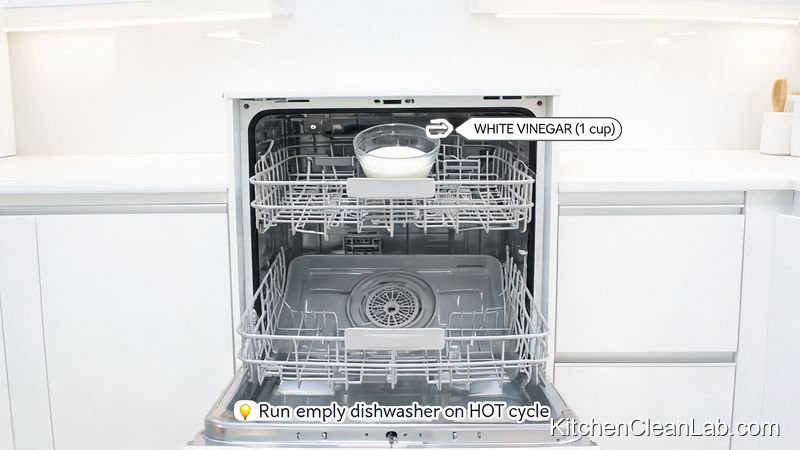
Once a month, place one cup of undiluted white vinegar in a dishwasher-safe bowl on the top rack. Run a full empty cycle without detergent to dissolve soap scum and flush the filter, spray arms, and drain line.
- Empty the dishwasher completely. Remove and rinse the filter according to the manual if you can access it.
- Place a dishwasher-safe glass bowl with 1 cup of undiluted white vinegar on the top rack. If your top rack is too shallow, pour the vinegar into the bottom of the dishwasher instead.
- Run the hottest, longest cycle with no detergent and no dishes. Do not add baking soda during this cycle.
- After the cycle ends, wipe the rubber door seal with a cloth dampened in a 1:1 water and vinegar solution, then rinse the cloth and wipe again with clean water.
- Leave the dishwasher door slightly open for a few hours to let the interior dry completely.
Refrigerator and Freezer Odor Removal
Empty the fridge, remove shelves and drawers, and wash them in a 1:1 solution of white vinegar and warm water. For stubborn fridge-wide odors, place a small bowl of undiluted vinegar on the center shelf for 12 to 24 hours.
- Unplug or turn off the refrigerator if you plan to leave the door open for more than 15 minutes. Otherwise, work quickly.
- Remove all food, shelves, and drawers. Discard spoiled items.
- Wash removable shelves and drawers in a sink with 1 part white vinegar and 1 part warm water. Rinse with clean water and dry thoroughly.
- Wipe the interior walls, floor, door liner, and gasket with a microfiber cloth dampened in the same 1:1 solution. Do not soak the gasket.
- If a strong odor remains, pour about 1/2 cup of undiluted white vinegar into a shallow bowl and set it on the center shelf. Close the door and leave it for 12 to 24 hours. The vinegar will absorb and neutralize airborne odor compounds.
- Remove the bowl, wipe the interior once more with clean water, and dry all surfaces before returning food.

Coffee Makers, Kettles, and Small Appliances
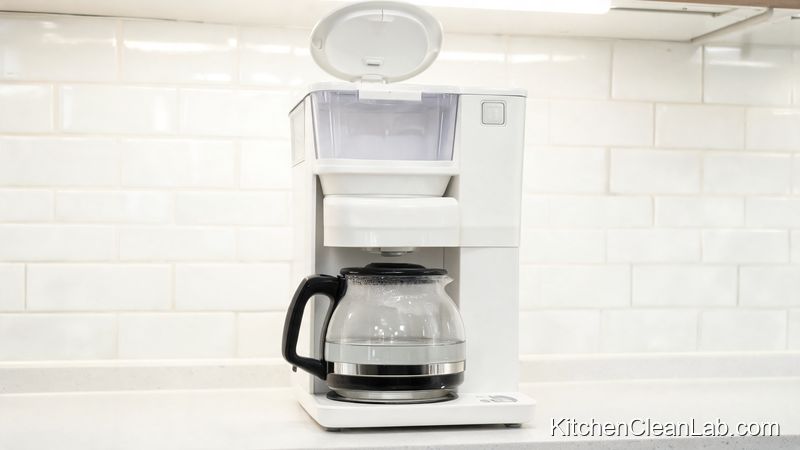
For drip coffee makers, run a 1:1 white vinegar and water solution through a normal brew cycle, then flush with two full cycles of clean water. For kettles, boil the solution, let it sit for 30 minutes, and rinse until no vinegar aroma remains.
Different small appliances need slightly different contact times:
- Drip coffee maker: Fill the water reservoir with a 1:1 mix of white vinegar and water. Run a full brew cycle without coffee. Then run two full cycles with clean water to remove any acidic residue.
- Electric kettle: Fill the kettle no more than three-quarters full with a 1:1 vinegar-water solution. Bring it to a boil, unplug it, and let the solution sit for 30 to 60 minutes. Pour it out, rinse with fresh water, and boil clean water once before normal use.
- Blender or food processor: Fill halfway with a 1:1 solution of white vinegar and warm water. Blend for 30 seconds, let it sit for 5 minutes, then rinse all parts with clean water.
- Toaster oven or toaster: Unplug the appliance and let it cool. Wipe interior surfaces with a cloth dampened in a 1:1 solution. Do not immerse the appliance or let liquid pool near heating elements. Dry with a clean cloth.
Common Mistakes That Make Odors Worse
The biggest mistake is applying vinegar to the wrong surface or adding baking soda before the vinegar has time to work. This can create a dramatic fizz but leaves a gritty residue and may not penetrate the odor source.
- Mixing vinegar with bleach or hydrogen peroxide. This creates dangerous fumes and does not improve deodorizing.
- Using vinegar on natural stone or unsealed grout. Acid can etch the surface and create places for moisture and odor to collect.
- Rinsing too soon. Vinegar needs contact time, typically 5 to 60 minutes depending on the appliance, to neutralize odors.
- Using too much in a closed appliance. Excess vinegar can leave a temporary smell that overpowers the kitchen. Use measured amounts and follow with a clean water rinse or air-out.
- Forgetting to dry rubber seals and gaskets. Trapped moisture encourages mildew, which creates a new musty odor that vinegar cannot remove if the seal stays wet.
White Vinegar vs. Commercial Deodorizers
White vinegar removes odor molecules and greasy film for pennies per use, while many commercial sprays mask smells with fragrance. Commercial enzyme cleaners and ozonators may be necessary for severe bio-based odors, but vinegar handles most appliance odors.
| Factor | White Vinegar | Commercial Deodorizer |
|---|---|---|
| Cost per use | Less than $0.25 | Often $1 to $5 |
| Odor mechanism | Neutralizes alkaline odor molecules and dissolves residue | Often masks with fragrance or uses enzymes |
| Residue risk | Minimal if rinsed and dried | Can leave film or strong scent |
| Best for | Microwave, dishwasher, fridge, coffee maker, kettle | Porous surfaces, pet urine, severe trash odors |
| Safety | Food-safe, non-toxic, but acidic on stone | Varies by formula; some require gloves |
Frequently Asked Questions
Here are direct answers to the questions most people ask before using white vinegar in kitchen appliances. These cover substitutions, odor safety, stainless steel compatibility, and chemical mixing risks.
Can I use apple cider vinegar instead of white vinegar to deodorize appliances?
Yes, but white distilled vinegar is preferred. Apple cider vinegar contains natural sugars and pigments that can leave a slight residue or stain. If you use it, dilute it with equal parts water and rinse thoroughly after treatment.
How long does the vinegar smell last after cleaning an appliance?
Usually 30 to 60 minutes with ventilation. Leaving the appliance door open or running a clean water rinse speeds up evaporation. The sharp vinegar scent fades completely as the acid dries, and it does not linger like synthetic fragrance.
Is white vinegar safe for stainless steel appliances?
Diluted white vinegar is generally safe for stainless steel when used as a quick wipe, then rinsed with water and dried with a microfiber cloth. Avoid undiluted vinegar on hot stainless surfaces, and never let it sit for long periods because acid can dull the finish.
What should I never mix with white vinegar when deodorizing?
Never mix white vinegar with bleach or hydrogen peroxide. Vinegar and bleach produce toxic chlorine gas, and vinegar with hydrogen peroxide forms peracetic acid, which can irritate eyes, skin, and lungs. Also avoid combining vinegar with commercial drain cleaners.
Bottom line: Why White Vinegar Earns a Permanent Spot in the Kitchen
White vinegar is the closest thing to a universal appliance deodorizer because it neutralizes odors, dissolves grease, and breaks down mineral scale with one inexpensive liquid. Use the right dilution, respect surface limitations, and the results will last. Used correctly, it reduces the need for a cabinet full of specialty products and keeps kitchen appliances smelling neutral without synthetic fragrance.