Why Lemon Steam Works to Clean a Microwave
Quick answer: Lemon steam loosens baked-on microwave grease because heated water vapor condenses on cooler interior surfaces, while citric acid and lemon peel oils help dissolve residue and neutralize odors. After a short steam soak, most splatters wipe away with a microfiber cloth.
Microwave splatters are not ordinary surface dirt. When oils, starches, and proteins are repeatedly heated, they polymerize and bond to the enamel or stainless interior. Dry scrubbing only scratches protective coatings. Steam changes the equation: as vapor penetrates the crust, it rehydrates the food film and weakens its grip. Adding lemon slices does more than add fragrance. Lemon juice contains about 5% citric acid, which can soften mineral films and cut through light grease, while oil in the peel releases d-limonene, a natural solvent that helps break down stubborn stains. The method is not a registered disinfectant, but it is a highly effective degreaser and deodorizer for routine maintenance.
What You Need Before You Start
Quick answer: You only need one fresh lemon, one cup of tap water, a wide microwave-safe glass bowl, heat-resistant mitts, and a clean microfiber cloth. For safety, add a wooden toothpick or skewer to prevent superheated water from erupting.
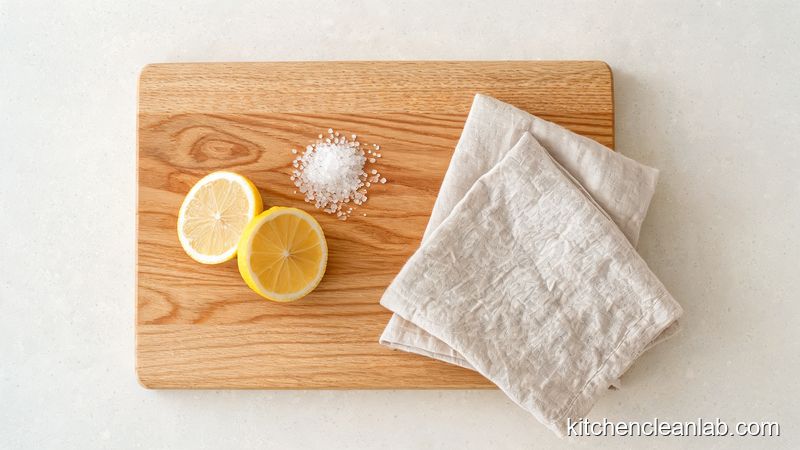
- 1 fresh lemon — sliced into 1/4-inch rounds or halved, depending on what you have.
- 1 cup of tap water — enough to create dense steam without boiling dry.
- Microwave-safe bowl — wide glass or ceramic; avoid narrow-necked containers.
- Wooden toothpick or skewer — gives water a nucleation point so it boils evenly rather than superheating.
- Oven mitts or a thick kitchen towel.
- Clean microfiber cloths — one damp for wiping, one dry for polishing.
Step-by-Step: DIY Steam Cleaning with Lemon Slices
Quick answer: Slice a lemon, add it to a microwave-safe bowl with about one cup of water, heat on high for three to five minutes until the window fogs, then let it sit closed for five to ten minutes before wiping the interior.
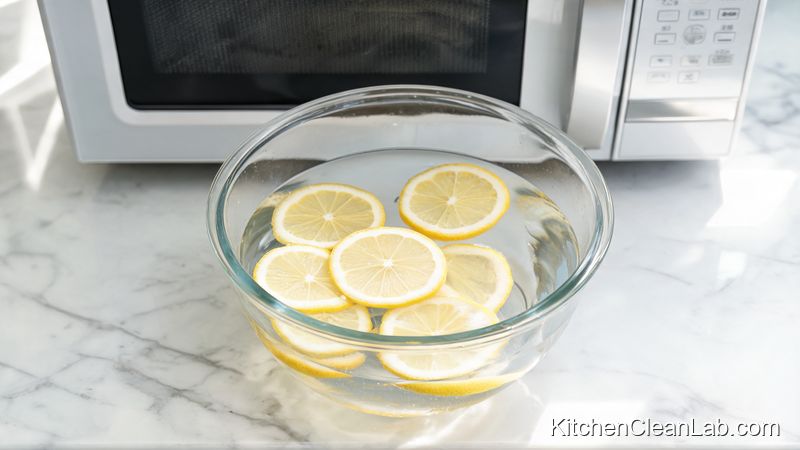
- Slice and load the lemon. Cut one lemon into 1/4-inch slices. Place the slices in a wide microwave-safe bowl, squeeze the remaining juice into the bowl, and add about 1 cup of water. Drop in a wooden toothpick or skewer if your microwave tends to heat silently.
- Position the bowl correctly. Set the bowl in the center of the glass turntable. Make sure it does not block the turntable from rotating freely. If your model has a removable turntable that is heavily soiled, you can take it out first, but keep the bowl centered on the support base.
- Heat on high until the window fogs. Run the microwave on full power for 3 to 5 minutes, depending on wattage. In my tests with a 1,000-watt model, 4 minutes was enough to coat the door with condensation. Stop early if you see water boiling hard or if the bowl nearly boils dry.
Use these heating times as a starting point for your microwave wattage:
- 700–800 watts: 5–6 minutes
- 900–1,000 watts: 4–5 minutes
- 1,100–1,200 watts: 3–4 minutes
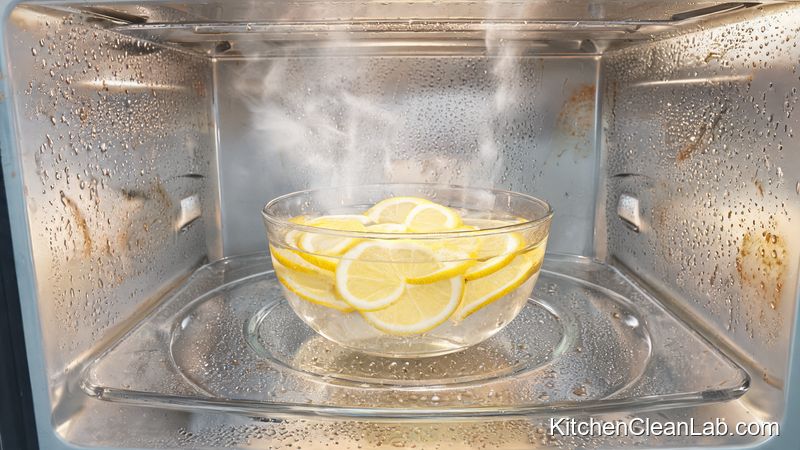
- Let the steam work. Keep the door closed for 5 to 10 minutes after the timer stops. This resting phase is when the vapor condenses into the greasy film and loosens it from the ceiling, side walls, and door seal. For heavy three-day-old splatters, use the full 10 minutes.
- Remove the hot bowl carefully. Open the door away from your face, put on oven mitts, and lift the bowl out slowly. Steam burns are the most common injury during this DIY method, so do not rush this step.
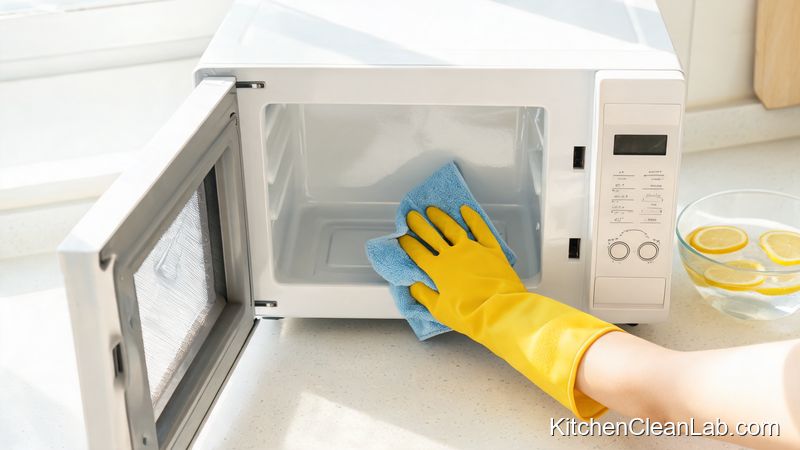
- Wipe every surface with a damp microfiber cloth. Start with the ceiling, then the side walls, floor, and door. Wipe in straight sections, rinsing the cloth in warm water as it picks up grease. For stubborn dots, dip the cloth in the leftover lemon water and hold it against the spot for 30 seconds before wiping.
- Polish and reassemble. Dry the interior with a clean cloth, then return the cleaned turntable and roller ring to the cavity. Leave the microwave door open for a few minutes to air out any excess moisture.
Common Mistakes and Safety Warnings
Quick answer: Never heat plain water in a microwave without a wooden skewer or lemon peel in the bowl, and never use a narrow-necked container. Sudden boiling of superheated water can cause severe scalding when you open the door.
The biggest safety risk is superheated water. In a smooth, narrow bowl, water can heat past its boiling point without visible bubbles. When you open the door or move the bowl, it can violently erupt. Adding lemon slices, a wooden toothpick, or a chopstick gives vapor bubbles a starting point. Always use a wide bowl and never heat plain water for more than a few minutes without something in it.
- Do not use abrasive scouring pads or steel wool before steaming. Scratches in the interior coating create places for grease and bacteria to collect.
- Do not let the bowl boil dry. A dry lemon and overheated bowl can burn, stain, or crack.
- Never use a sealed container. Trapped steam pressure can cause the bowl to burst.
- Do not squirt dish soap directly into the steaming water. Soap can foam heavily and overflow, leaving residue in the ventilation slots.
- Wear heat-resistant gloves when handling the bowl. Even a microwave-safe glass bowl can become very hot.
- Keep your face and hands clear of the steam. Open the door from the side and wait a few seconds before reaching in.
Cleaning the Turntable, Door Seal, and Hidden Vents
Quick answer: Remove the glass tray and roller ring after steaming, wash both in warm soapy water, and wipe the door seal with a damp cloth. Steam reaches most surfaces, but manual washing removes grease trapped under the rotating ring and along the door gasket.
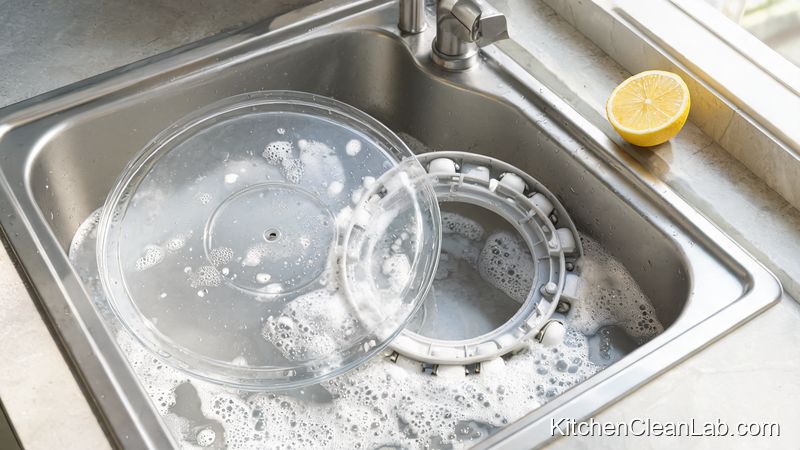
The rotating glass plate often carries heavier grease than the cavity walls. Leaving it in place during the wipe-down simply pushes oils into the track. Remove the turntable and roller support ring once the steam cycle is finished and wash them separately in the sink with warm water and mild liquid dish soap. If the roller channels feel sticky, use an old toothbrush to scrub the grooves. Rinse well and dry completely before snapping the ring back into place.
The inner door seal and hinges are easy to miss. Fold a damp microfiber cloth around a chopstick or cotton swab and run it along the rubber gasket to lift trapped food particles. Avoid drenching the vent area, because excess moisture can drip into the electronic board. Use a vacuum crevice tool or a dry toothbrush for visible dust on exterior vents.
- Microwave cavity walls and ceiling: lemon steam plus damp microfiber wipe
- Glass turntable and roller ring: hand wash in warm soapy water after every deep clean
- Interior door and rubber seal: damp cloth or cotton swab, no harsh chemicals
- Exterior keypad and handle: lightly dampened microfiber, then dry immediately
- Vents and hidden edges: vacuum crevice tool or dry soft brush
Preventing Future Buildup and Controlling Odors
Quick answer: Wipe spills as soon as the microwave cools, use a vented splatter cover, and run a quick lemon steam every one to two weeks. Leaving the door open for a few minutes after heating pungent food also discourages trapped odors and moisture.
Prevention is easier than scrubbing. A vented splatter cover keeps tomato sauce, butter, and broth from reaching the walls. If food boils over, immediately wipe the spot with a damp paper towel once the appliance is cool enough to touch. This prevents the amino acids and sugars in food from polymerizing into a hard shell after another heating cycle.
For odor control, keep a small bowl of dry baking soda inside the microwave when it is not in use, or run a 90-second lemon steam with one slice of lemon and half a cup of water. Ventilate after cooking fish, curry, or cheese by leaving the door ajar for two to three minutes. This allows moisture and volatile compounds to escape rather than condensing on the ceiling and exhaust ducts.
FAQ: People Also Ask About Lemon Microwave Cleaning
Quick answer: Steam cleaning with lemon slices answers several common microwave maintenance questions. The method loosens grease, reduces odors, and makes wiping easier, but it is not a substitute for disinfecting when raw meat or illness contamination is present.
Can I use bottled lemon juice instead of fresh lemon slices?
Yes. Bottled lemon juice works in a pinch, but fresh lemon slices add more peel oil and a stronger natural fragrance. Use 2 to 3 tablespoons of bottled juice in 1 cup of water. Avoid artificial lemon-scented cleaning products inside the cooking cavity.
Does lemon steam actually disinfect the microwave?
Steam may reduce some surface bacteria under controlled conditions, but lemon water is not an EPA-registered disinfectant. For raw meat splatters or after illness, wipe the cooled microwave with food-safe 3% hydrogen peroxide or another product labeled safe for food-contact surfaces, then rinse and dry.
How long should I leave the steam in the microwave?
Five to ten minutes is usually enough. Heavy, baked-on residue benefits from a 10-minute rest, but leaving steam for more than 15 minutes does not improve results and can cause excessive condensation around the door seal.
Can I add vinegar or baking soda to the lemon water?
You can add 1 tablespoon of distilled white vinegar to the water for extra degreasing, but it will create a stronger odor. Do not add baking soda to the steaming water, because it can foam or leave a gritty film. If you want baking soda action, make a paste with lemon juice and baking soda after steaming and apply it only to stubborn spots.
Final Verdict: A Weekly Habit That Prevents Heavy Cleanings
Quick answer: Using lemon slices to steam clean your microwave is one of the few DIY methods that actually reduces scrubbing, removes grease, and leaves a fresh scent. It works best as a weekly or biweekly maintenance habit rather than a one-time cure for severe neglect.
Most people wait until the microwave window is brown. At that point, no steam-only method will make the interior look brand new without some extra spot cleaning. The real value of the lemon slice method is frequency. Running a short 3-minute steam cycle once a week keeps oil films from turning into hard, lacquered layers.
I keep a glass bowl near the microwave and run the lemon steam while washing dishes, then wipe it down after the rest period. The process fits into an existing routine and eliminates the need for caustic oven cleaners or scratching pads.