Why Fish and Fried Food Smells Linger
Fish and fried food odors linger because microscopic grease droplets and proteins settle on porous surfaces. Clean the air, hard surfaces, and washable fabrics within the first 30 to 60 minutes to stop the odor from bonding permanently.
Pan-frying fish or chicken creates an invisible cloud of aerosolized oil, moisture, and odor compounds. These particles float through the kitchen, then cool and adhere to cabinets, ceilings, curtains, lamp shades, and even clothing. Fish adds a second challenge because its trimethylamine and omega-3 fats break down quickly under heat, producing that distinct seafood smell. Once those oily particles penetrate soft surfaces, a simple window fan cannot remove them. That is why the cleanup sequence matters: ventilation first, then hard-surface degreasing, then air and fabric odor neutralization.
Many people try to mask the smell with candles or fragrance sprays. This approach fails because the grease layer remains. The next time you cook, heat releases the trapped odor again. The goal is to remove the carrier, not just the scent.
Start While You Cook: Prevention and Ventilation
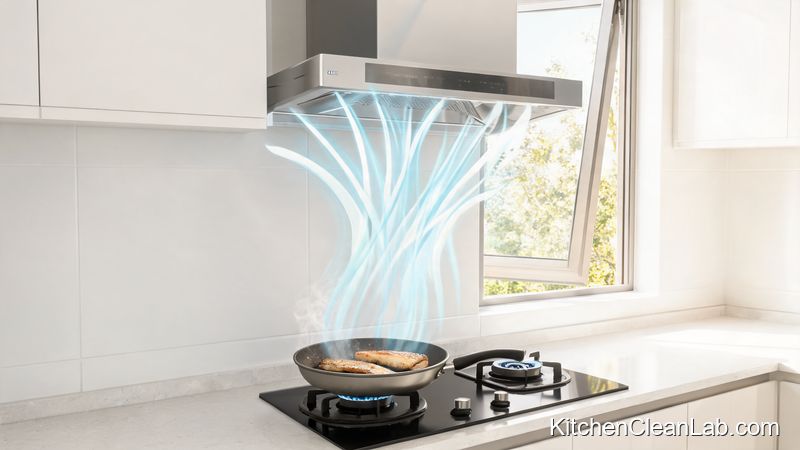
Turn the range hood on high before the pan gets hot and open a nearby window for cross-ventilation. This captures airborne oil droplets before they settle on cabinets, curtains, and towels.
The first 10 minutes of frying determine how much smell will haunt the room later. Switch the exhaust fan to its highest setting before adding oil to the pan. A well-maintained range hood sucks up aerosolized grease and moisture from the air. It also reduces combustion pollutants released during frying, including nitrogen dioxide and carbon monoxide. If you have a recirculating hood, check that the charcoal or baffle filter is clean; a clogged filter just pushes dirty air around.
Open a window or exterior door across from the cooking zone. This creates a cross-draft that helps direct airborne particles away from porous surfaces. Do not rely on the window alone. Wind can push particles back into the room, but paired with a strong hood fan, the airflow becomes much more predictable. If frying is a regular habit, also place a splatter screen over the pan. It reduces the escape of oil mist without making food soggy.
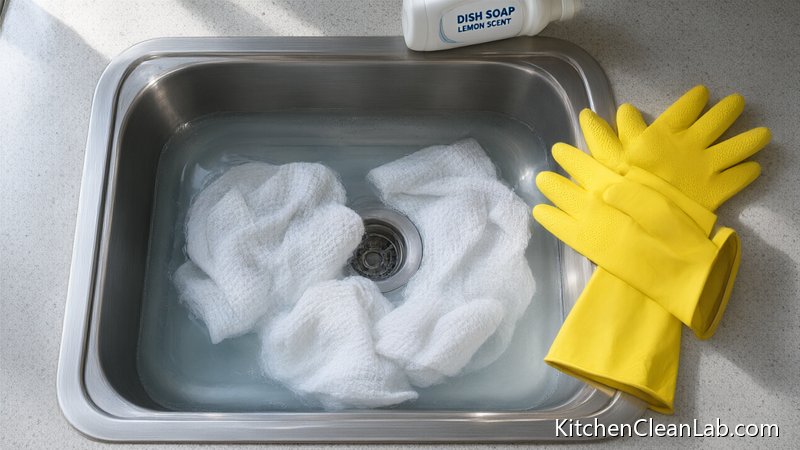
Keep a bowl of warm water with a few drops of dish soap near the stove while you cook. Use it to wipe the nearby counter, backsplash, and range hood buttons as soon as cooking ends. Grease is easier to remove when it is still warm and fluid.
How to Clean Kitchen Surfaces After Cooking Fish or Fried Food
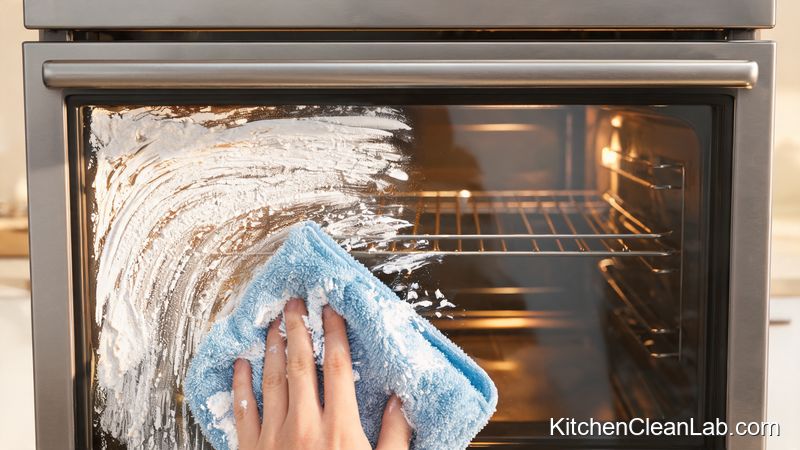
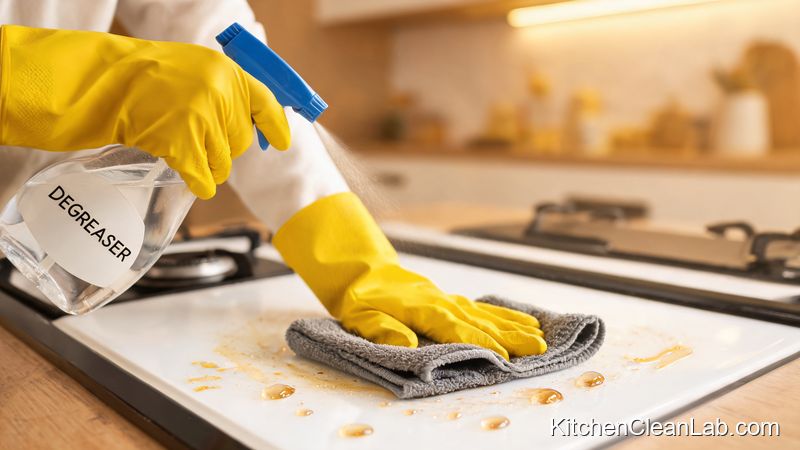
Use hot water and a degreasing dish soap on the stove, backsplash, counters, and cabinet fronts. Wipe in an S-pattern, then dry with a clean microfiber cloth to remove the invisible grease layer that traps odor.
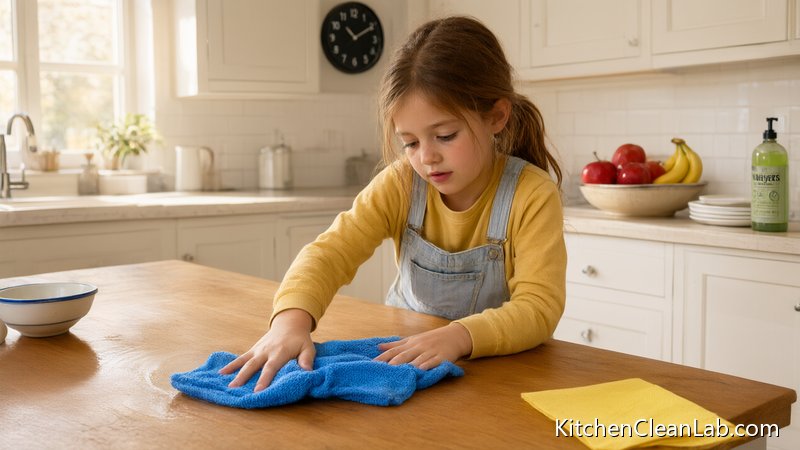
Wait until the stove surface is safe to touch, usually 10 to 15 minutes after turning off the burner. Then work from top to bottom so grease falls downward onto surfaces you have not cleaned yet. Start with the range hood and upper cabinet fronts, then move to the backsplash, counter, stovetop, and lower cabinet fronts. Use two microfiber cloths: one for washing and one for drying. Drying matters because leftover water can streak and redeposit oil.
For most surfaces, fill a basin or bucket with hot water and add a few drops of a plant-based or standard degreasing dish soap. Avoid using vinegar on natural stone like marble or granite. The acid can etch the surface. For sealed stone, use a pH-neutral stone cleaner. For stainless steel, wipe in the direction of the grain to avoid streaks. For painted or sealed wood cabinets, a mild soap-and-water solution works well, but wring the cloth tightly to avoid oversaturation.
Include this quick-reference table for the best cleaning mix by surface:
| Surface | Cleaner | Method |
|---|---|---|
| Stovetop and backsplash | Hot water plus degreasing dish soap | Scrub with non-scratch sponge; dry with microfiber |
| Sealed wood cabinets | Warm water plus 2 drops dish soap | Wipe with damp cloth; dry immediately |
| Stainless steel | Mild soap or stainless cleaner | Wipe with grain; buff dry |
| Marble or granite | pH-neutral stone cleaner | Spray and wipe; avoid acid |
| Tile grout | Baking soda paste | Apply 5 minutes; scrub with brush; rinse |
Do not forget the small spots. Cabinet handles, stove knobs, light switch plates, and the area above the range hood collect a surprising amount of oil. If those surfaces feel sticky, wipe them with the same degreasing solution. Replace kitchen towels immediately after cooking. A greasy towel becomes a powerful odor emitter as it dries.
Step-by-Step: Removing Odors from the Air and Fabrics
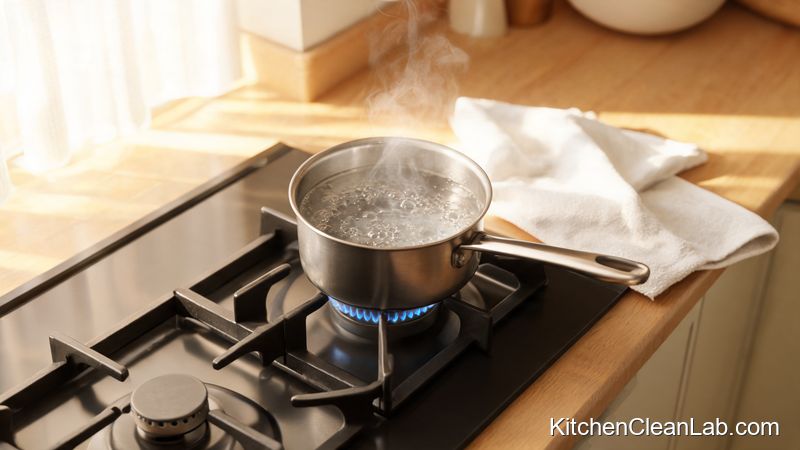
Simmer equal parts white vinegar and water for 15 minutes without the range hood fan. The acetic acid neutralizes alkaline fish and oil odors, while steam loosens grease on nearby soft surfaces.
After the hard surfaces are clean, tackle the invisible odor in the air and fabrics. Use this sequence for a faster, longer-lasting reset:
- Ventilate the room. Open windows and doors for at least 10 minutes. Turn the hood fan back on high if the kitchen is still smoky or steamy.
- Run a vinegar steam. Mix one part white vinegar with one part water in a stainless steel pot. Bring it to a boil, then reduce to a gentle simmer for 15 to 20 minutes. Do not run the range hood during this step because you want the steam to move through the room. Never leave a boiling pot unattended and keep it away from children and pets.
- Move fabric items closer. Place clean kitchen towels, chair cushions, or a lightweight curtain near the steaming pot so the vapor can neutralize the embedded odor. Do not place fabric over the pot or near an open flame.
- Set out bowls of baking soda or activated charcoal. After the vinegar steam, place small bowls of odor-absorbing powder in corners, near the trash can, and on the counter overnight. This helps remove residual smells without adding fragrance.
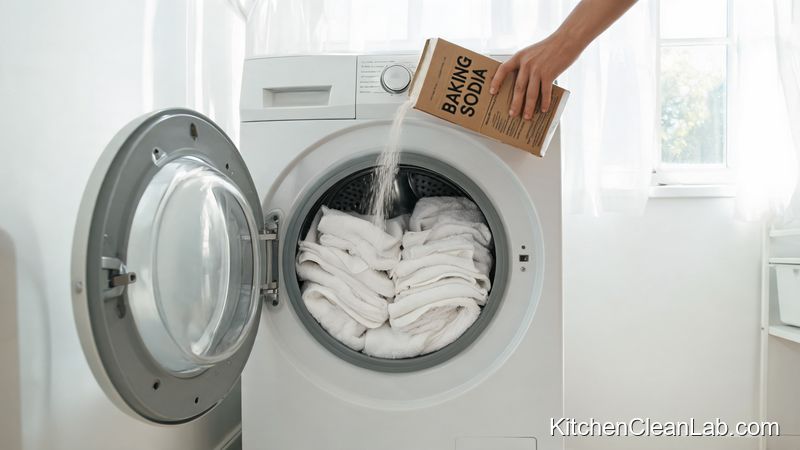
- Wash washable fabrics. Use the hottest water safe for the fabric and add half a cup of white vinegar or baking soda to the rinse cycle. Air dry if possible. For curtains that cannot be machine-washed, use a handheld garment steamer or a light mist of one part vodka to one part water in a spray bottle. Test on a hidden area first.
If fish odor persists inside the microwave, fill a microwave-safe bowl with water and a few lemon slices. Heat on high for 3 minutes, then leave the door closed for 5 minutes. Wipe the interior with a clean sponge. The steam loosens dried grease and the citrus cuts the fishy smell. For sinks and drains, pour half a cup of baking soda followed by one cup of white vinegar down the drain. Let it fizz for 10 minutes, then flush with hot water. Avoid using this method after recently pouring bleach down the drain, because mixing acid and bleach can create dangerous chlorine gas.
Common Mistakes That Make Kitchen Odors Worse
Avoid spraying air fresheners before cleaning grease, and never pour hot oil down the drain. Masking scents mix with fish oils and create a stale, rancid smell that lasts for days.
Even a good cleaning routine can fail if you accidentally spread the odor instead of removing it. Watch for these common errors:
- Using cold water on greasy surfaces. Cold water solidifies oil and makes it harder to wipe away. Always use the hottest water safe for the surface and your hands.
- Relying on bleach as a degreaser. Bleach sanitizes but does not cut kitchen grease effectively. It can also create dangerous fumes if mixed with vinegar or ammonia-based cleaners.
- Skipping the range hood filter. A saturated filter recirculates fishy air back into the kitchen. Wash metal baffle filters in hot soapy water or run them through the dishwasher monthly. Replace charcoal filters according to the manufacturer's schedule.
- Pouring cooking oil down the sink. Hot oil may look harmless, but it cools and clogs pipes, creating a sewage-like odor that worsens fish smells. Let oil cool and pour it into a sealable container, then dispose of it in the trash.
- Masking the smell too early. Scented candles, plug-ins, and fabric sprays do not remove the grease. They only mix with the fish odor. Clean and neutralize first.
Frequently Asked Questions
Most fish and fry odors can be cleared within an hour if you follow a three-part method: ventilate the room, degrease hard surfaces, and neutralize the air. The answers below cover the fastest fixes for persistent smells, cabinets, and fabrics.
How do you get fried fish smell out of your house fast?
Turn on the range hood and open a window before and during cooking. After cooking, wipe all hard surfaces with hot water and dish soap, then simmer equal parts white vinegar and water for 15 minutes. Wash towels immediately and set out bowls of baking soda to absorb leftover odor overnight.
Does boiling vinegar really remove cooking odors?
Yes. White vinegar contains acetic acid, which neutralizes alkaline odor compounds from fish and fried oils. The steam carries the acid through the room and helps settle airborne grease. The vinegar smell fades quickly and takes much of the fish or fry odor with it. Do not run the hood fan while steaming.
Can baking soda absorb fish odor overnight?
Baking soda is effective at absorbing mild residual odors, but it cannot remove heavy grease or wet oil. Use it after you have already cleaned and degreased. Place shallow bowls in the smelliest areas for 12 to 24 hours, then throw the powder away.
What is the best homemade degreaser for kitchen cabinets after frying?
A mixture of warm water and a few drops of degreasing dish soap is safest for sealed wood cabinets. For tougher grease, mix one part white vinegar with two parts water and add one drop of dish soap. Always test on a hidden area, and avoid vinegar on marble, granite, or unsealed wood.
The Fresh Kitchen Reset
Work in this order: ventilate, degrease hard surfaces, neutralize the air, and wash fabrics. Most kitchens recover within 45 to 60 minutes if you start while grease droplets are still warm and movable, not after they harden. This priority prevents leftover fish and frying oil from building up in hidden spots.
You do not need an arsenal of scented products. The most effective reset uses hot water, dish soap, white vinegar, baking soda, and moving air. Start with the range hood before the fish hits the pan, wipe grease from top to bottom, then use a vinegar steam to neutralize whatever escaped. The result is a kitchen that smells clean rather than covered up. If you cook fish or fry frequently, make a habit of washing the hood filter monthly and replacing kitchen towels after every meal. That small routine prevents the next odor from ever getting a foothold.