Why Hard Water Stains Form on Granite Countertops
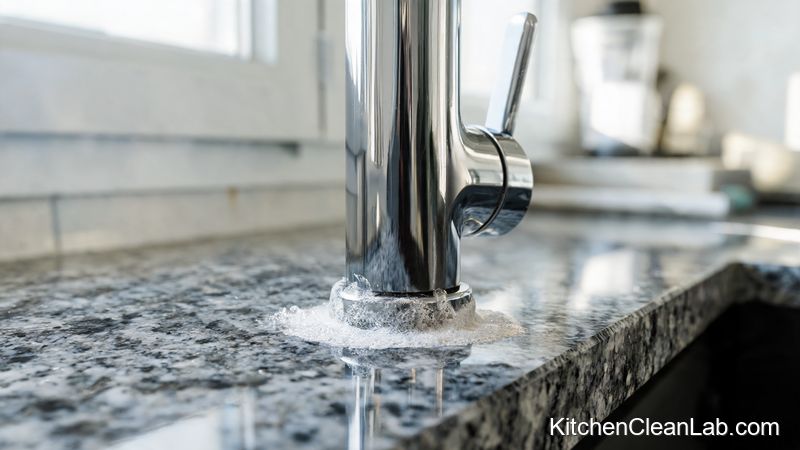
Hard water contains high levels of dissolved minerals, primarily calcium and magnesium. When tap water evaporates on a granite countertop, those minerals remain behind and bond to the surface, creating a cloudy white or gray film. Unlike etching, which is physical damage caused by acidic cleaners, hard water stains are usually mineral buildup that sits on top of or inside the stone pores.
Granite is an igneous rock composed of quartz, feldspar, mica, and other minerals. It is relatively dense, but no stone is completely non-porous. Around sinks and faucets, repeated splash water can penetrate unsealed granite. The minerals left behind form a mineral film that appears as white, gray, or chalky hard water stains. The longer the buildup remains, the more it can bond with the stone surface.
Hard Water Stains vs. Etching: Know the Difference
Before choosing a cleaning method, confirm that you are actually dealing with hard water mineral deposits. Etching is a physical or chemical dulling of the polished finish, often caused by acidic substances such as lemon juice or vinegar. Hard water stains, however, are mineral deposits that sit on the surface or in the pores. You can sometimes feel a rough texture with hard water buildup, while etching usually feels smooth but looks cloudy. Why this matters: etching cannot be removed with cleaning and may require professional polishing; hard water stains can often be removed at home.
If the spot appeared after water evaporated and has a white or chalky look, it is probably a hard water stain. If it appeared after contact with juice, wine, or acidic cleaner, it is more likely etching.
The Golden Rule of Granite Stain Removal
Always begin with the gentlest cleaning approach. Hard water stains are often easier to remove when they are fresh. Harsh acidic cleaners may promise quick results, but they can permanently damage granite. This guide walks through safe methods from mild daily cleaning to a targeted poultice, then to stone-safe commercial products.
What You Need Before You Start
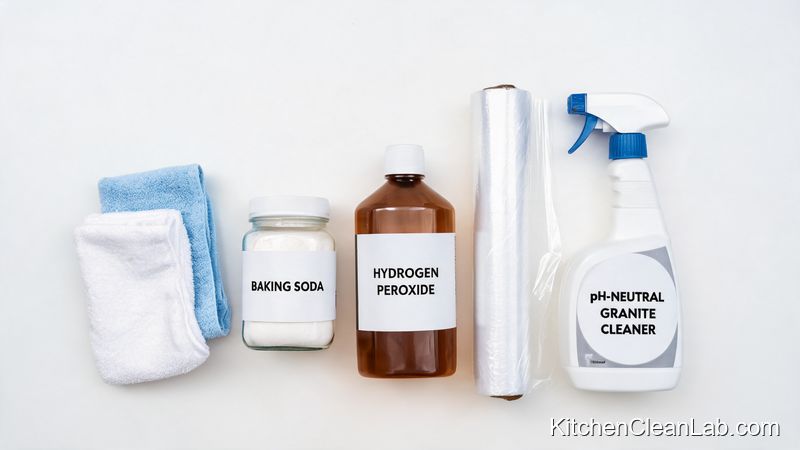
Using the wrong tools or cleaners can make the issue worse. For safe hard water stain removal, gather gentle supplies that will not scratch or etch the stone.
Supplies Checklist
- pH-neutral granite cleaner or mild dish soap
- Warm distilled water
- Baking soda
- 3 percent hydrogen peroxide
- Plastic wrap
- Soft microfiber cloths
- Non-abrasive sponge
- Plastic scraper
- Penetrating granite sealer
Method 1: Daily Cleaning for Light Hard Water Spots
This method is ideal for light hard water spots around faucets and soap dispensers. If you notice a faint white ring after water dries, the minerals have not yet had time to bond deeply. Soap plus warm water works because the surfactants in dish soap help lift mineral haze, while distilled water reduces the chance of new mineral deposits being left behind.
Step-by-Step Instructions
- Step 1: Wipe the surface dry. Use a dry microfiber cloth to remove dust and loose mineral particles.
- Step 2: Prepare a mild cleaning solution. Mix a few drops of mild dish soap with warm distilled water in a spray bottle.
- Step 3: Spray the affected area. Lightly mist the hard water stain and let the solution sit for one to two minutes.
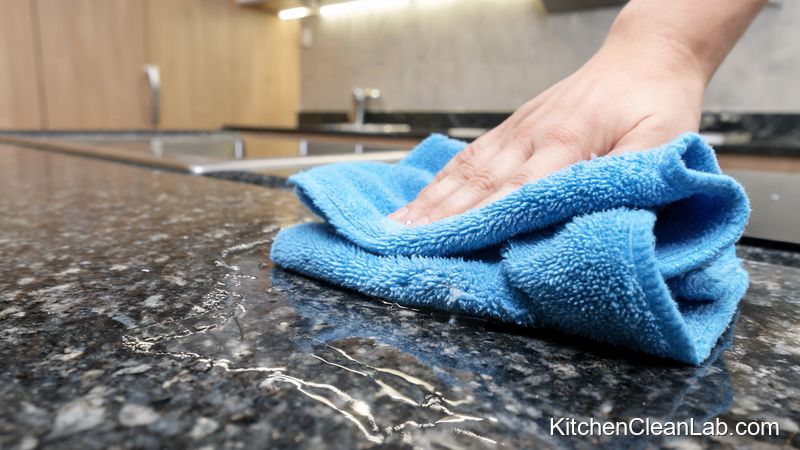
- Step 4: Wipe in circular motions. Use a soft, non-abrasive sponge or microfiber cloth. Do not scrub aggressively.
- Step 5: Rinse and dry completely. Rinse with clean water and buff dry immediately to prevent new mineral deposits.
Method 2: Baking Soda and Hydrogen Peroxide Poultice for Stubborn Stains
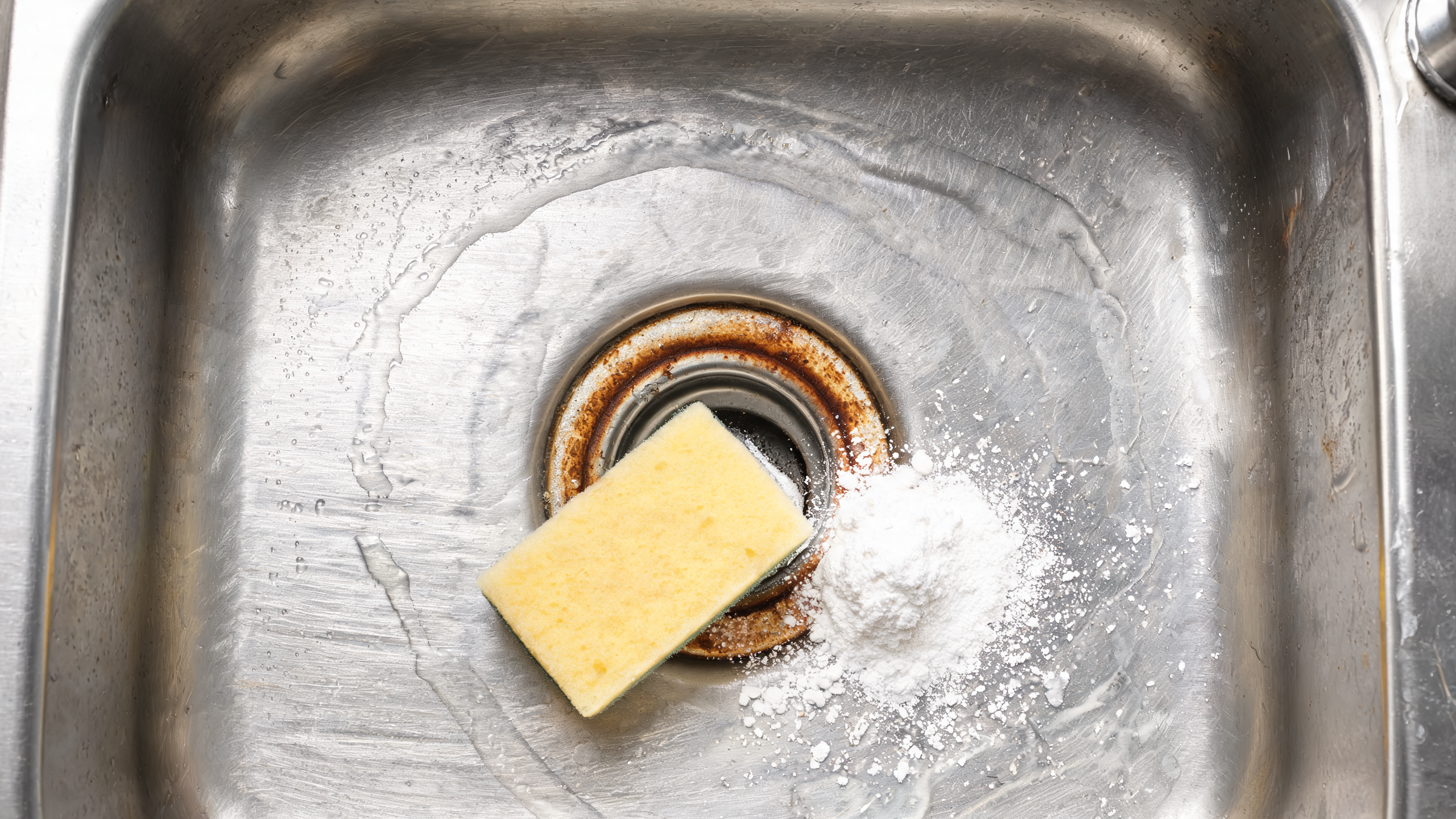
For hard water stains that have been present for days or weeks, a baking soda poultice is one of the safest and most effective treatments. The paste draws mineral deposits out of the granite pores without using harsh acids.
Important: Only use 3 percent hydrogen peroxide. Stronger concentrations can damage the stone's resin or sealant, and undiluted hydrogen peroxide should never be applied directly to granite.
Why it works: Baking soda is a mild alkali that helps loosen calcium and magnesium deposits, while hydrogen peroxide gently lifts mineral residue from the pores. The plastic wrap controls evaporation and keeps the poultice moist long enough to draw the stain out. This method is especially good for granite because it avoids acidic reactions that can dull the polish.
How to Make and Apply the Poultice
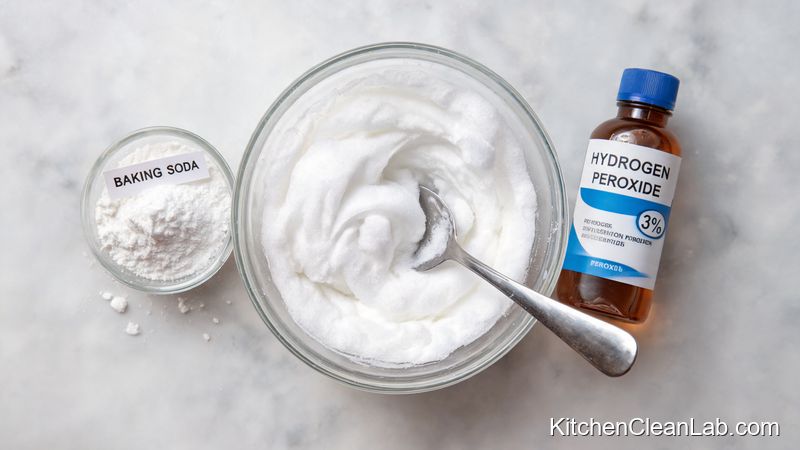
- Step 1: Mix the poultice. In a bowl, blend baking soda with 3 percent hydrogen peroxide until it forms a thick paste similar to peanut butter.
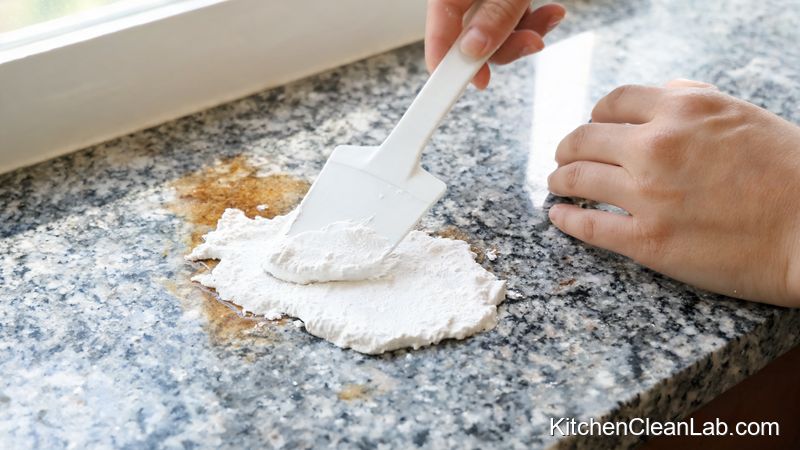
- Step 2: Apply it to the stain. Spread a layer about one-quarter inch thick over the entire hard water stain. Extend the paste slightly beyond the visible stain edges.
- Step 3: Cover with plastic wrap. Lay plastic wrap over the poultice and poke a few small holes to allow moisture to evaporate slowly.
- Step 4: Wait at least 24 hours. Let the poultice dry completely. The drying action pulls mineral residue out of the stone.
- Step 5: Remove with a damp soft cloth. Gently wipe away the dry paste. Do not use steel wool or abrasive scrub pads.
- Step 6: Rinse and dry. Clean the area with a pH-neutral granite cleaner and buff dry with a microfiber cloth.
How Long Does the Poultice Method Take?
Most light to moderate hard water stains respond after one 24-hour poultice. For thicker white scale, you may need to repeat the process two or three times. Do not leave the poultice longer than 48 hours without checking the stone. If the stain remains after three attempts, stop and consult a stone restoration professional.
Method 3: Using a Stone-Safe Hard Water Stain Remover
If a homemade poultice does not fully remove the stain, choose a commercial product specifically labeled stone-safe or granite-safe mineral deposit remover. Look for pH-neutral formulas or products designed for calcium and limescale buildup on natural stone.
How to Use a Granite-Safe Hard Water Remover
- Read the label. Confirm the product is safe for granite and does not contain vinegar, phosphoric acid, or harsh solvents.
- Test in a hidden area. Apply a small amount to an inconspicuous spot and wait 10 minutes.
- Apply as directed. Typically, you spray or dab the product onto the stain and let it dwell for the recommended time.
- Wipe gently. Use a microfiber cloth or soft sponge to remove the loosened minerals.
- Rinse thoroughly. Remove all product residue with clean water and dry the surface completely.
What Not to Use on Granite Countertops
Granite is durable, but it is not indestructible. Acidic cleaners and abrasive tools can cause etching, dull spots, and permanent surface damage. Avoid the following when removing hard water stains:
- Vinegar - Acetic acid can dull the polished finish and etch the stone.
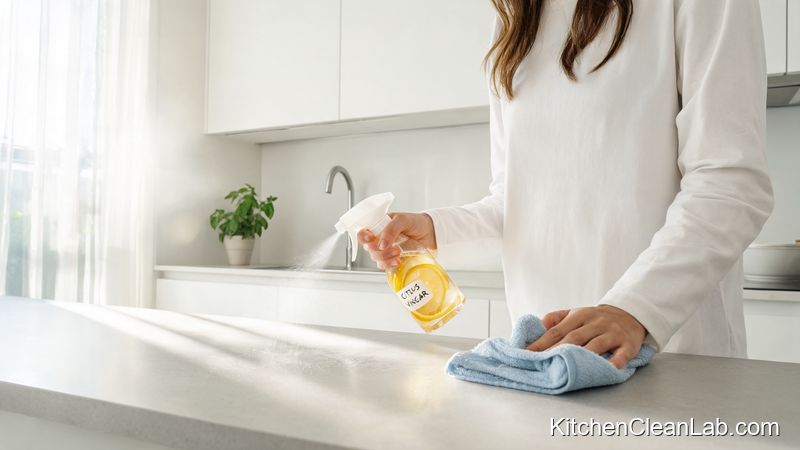
- Lemon juice - Citric acid is too harsh for granite surfaces.
- Ammonia - Repeated use can weaken sealers and cloud the finish.
- Bleach - Harsh oxidizers can fade color and break down sealant.
- CLR or lime scale removers - Many contain acids that are unsafe for natural stone.
- Steel wool, Brillo pads, and abrasive scrubbers - These scratch granite and destroy its polished layer.
How to Protect Granite from Future Hard Water Stains
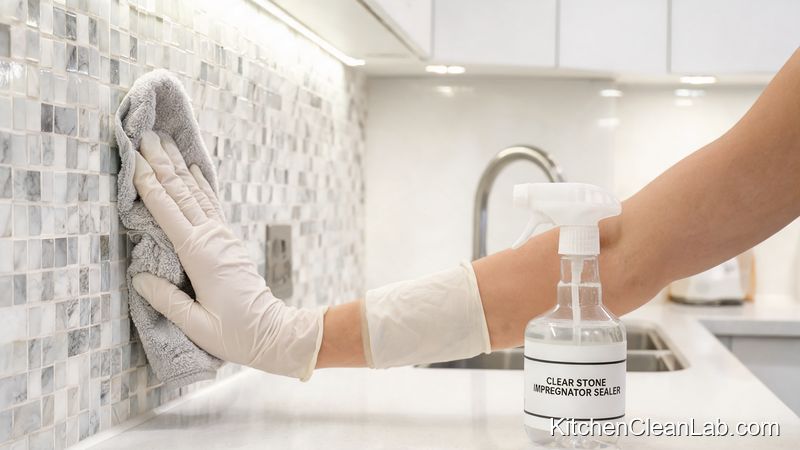
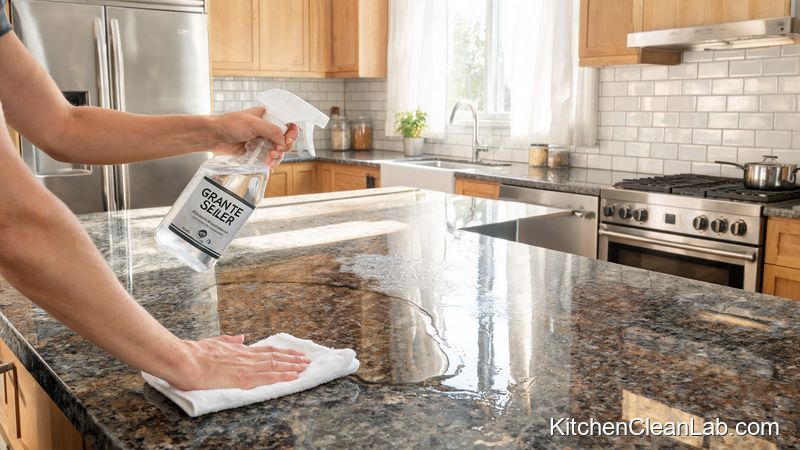
The most effective way to prevent hard water stains on granite countertops is to maintain a high-quality seal. A penetrating granite sealer fills the microscopic pores of the stone, reducing mineral and moisture absorption.
Simple Sealing Steps
- Clean and dry the countertop. Remove all dirt, oils, and water spots before sealing.
- Apply the sealer. Use a clean, lint-free cloth or applicator pad to spread an even coat of penetrating granite sealer.
- Let it absorb. Allow the sealer to sit for the time recommended on the product label, usually 10 to 15 minutes.
- Buff away excess. Wipe the surface dry with a microfiber cloth before the sealer becomes sticky.
- Repeat annually. Most granite countertops benefit from resealing every 6 to 12 months, depending on use and water hardness.
How to Test If Your Granite Needs Sealing
Place a few drops of water on the surface and wait 15 minutes. If the water beads up, the sealer is working. If the water darkens or flattens, your granite is ready for a fresh coat.
Practical Tips for Everyday Granite Care
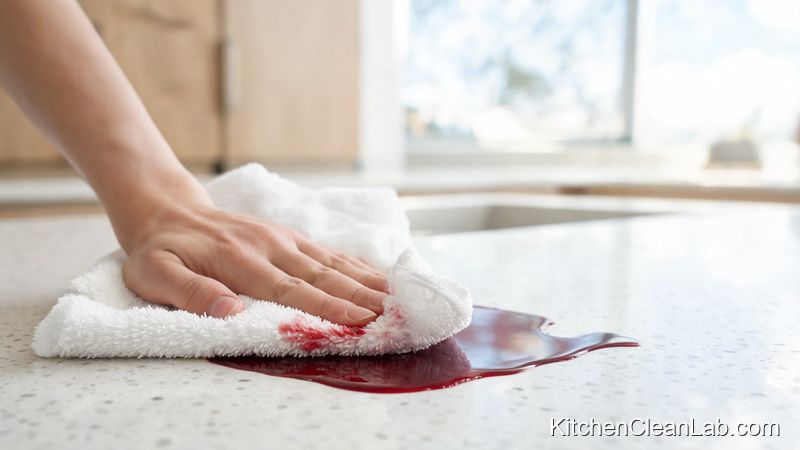
- Wipe spills immediately. Do not let water, coffee, wine, or oil sit on the surface.
- Dry around faucets daily. Use a microfiber towel to remove water droplets from high-splash areas.
- Use coasters and trivets. Place them under glasses, bottles, and hot pans.
- Install a water softener. If your home has very hard water, softening the water reduces mineral buildup throughout the kitchen.
- Stick to pH-neutral cleaners. Routine cleaning should never require harsh acids.
Frequently Asked Questions About Hard Water Stains on Granite
Can I use vinegar to remove hard water stains from granite?
No. Vinegar is acidic and can damage the polished surface by causing etching. Use a baking soda poultice or a stone-safe mineral deposit remover instead.
Will baking soda scratch granite countertops?
When mixed into a paste with water or hydrogen peroxide, baking soda is generally soft enough not to scratch granite. Always use a soft cloth and avoid aggressive scrubbing.
Are hard water stains on granite permanent?
Most hard water stains are mineral deposits, not permanent damage. They can usually be removed with daily pH-neutral cleaning or a poultice. However, if an acidic cleaner has been used, the cloudy mark may be etching, which requires professional restoration.
How often should I seal granite countertops?
Most granite countertops should be sealed every 6 to 12 months. Sealing frequency depends on the color, porosity, and how heavily the surface is used. Darker granites may need sealing less often, but light-colored granite often benefits from annual treatment.
Can hard water stains be prevented with a water softener?
Yes. Installing a water softener reduces calcium and magnesium content, which helps minimize mineral deposits on granite, glass, and faucets throughout the home.
Conclusion
Removing hard water stains from granite countertops does not require aggressive acids or abrasive tools. With gentle daily cleaning, a baking soda and hydrogen peroxide poultice, and occasional use of a stone-safe mineral remover, you can safely restore your countertop's natural shine. Finish by keeping the surface sealed and dry, and your granite will remain protected against future hard water buildup.