Introduction: Why Make a Citrus Vinegar Kitchen Spray?
If you want a greener way to clean your kitchen, learning how to make all-purpose kitchen spray with vinegar and citrus is one of the best zero-waste swaps you can make. This DIY cleaner transforms leftover orange, lemon, lime, clementine, or grapefruit peels into a natural degreaser that cuts through grease, lifts everyday grime, and deodorizes surfaces without harsh fumes. Instead of sending citrus scraps to the trash, you can turn them into a practical, budget-friendly cleaning product. This guide covers the correct vinegar-to-water ratios, the best infusion time, safe surfaces, and expert tips that go beyond the basic recipe.
Why Vinegar and Citrus Peels Work
The combination of white distilled vinegar and citrus peels is not just a pleasant-smelling gimmick. Vinegar contains acetic acid, typically around 5% in household white vinegar, which helps break down mineral deposits, grease, and light soap scum. Its low pH creates an environment where many common household bacteria and molds struggle to thrive. While vinegar is not a registered disinfectant, it is a reliable everyday cleaner for routine kitchen maintenance.
Citrus peels add more than fragrance. They contain natural oils, including d-limonene, which is known for its grease-cutting and deodorizing abilities. Soaking peels in vinegar helps release those oils into the liquid, boosting cleaning power and softening the sharp vinegar smell. The result is a homemade citrus-infused vinegar cleaning spray that works hard and smells fresh.
The Cleaning Power of White Distilled Vinegar
White distilled vinegar is inexpensive, widely available, and safe for many household surfaces when diluted. Its acidic nature helps dissolve hard water spots, remove sticky residue, and cut through greasy film on stovetops and range hoods. For kitchen use, this makes it an excellent base for an all-purpose kitchen spray.
What Citrus Peels Add to the Spray
Citrus peels such as orange, lemon, lime, clementine, and grapefruit contain aromatic oils that brighten the blend. These oils boost degreasing, help deodorize, and make the final spray more pleasant to use. Adding fresh herbs like rosemary, thyme, or lavender can provide additional antimicrobial properties and a custom scent.
Ingredients and Tools You’ll Need
Ingredients
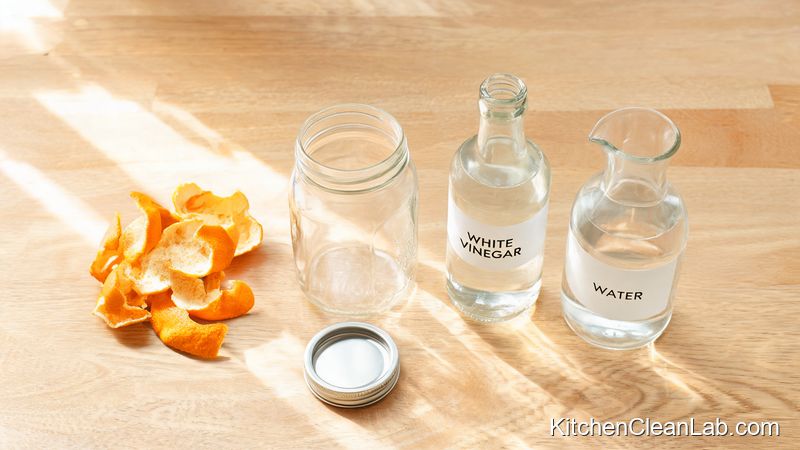
- Citrus peels: enough to fill a 1-quart mason jar. Any mix of orange, lemon, lime, clementine, or grapefruit works.
- White distilled vinegar: about 2 to 3 cups, or enough to completely cover the peels.
- Water: filtered or distilled water is best for mixing the final spray.
- Optional botanicals: fresh rosemary, thyme, sage, mint, lavender, pine sprigs, cloves, or a few drops of essential oil.
Tools
- 1-quart glass mason jar with a non-metal lid or a plastic lid. If using a metal lid, place a piece of parchment paper between jar and lid to prevent corrosion.
- Fine mesh strainer or cheesecloth
- Glass spray bottle
- Measuring cup
- Funnel, optional
- Labels or masking tape
Using a glass container is important because vinegar is acidic and can react with some metals or plastics during long infusions.
Step-by-Step: How to Make All-Purpose Kitchen Spray with Vinegar and Citrus
Step 1: Collect and Pack the Citrus Peels
Start by saving clean citrus peels. Rinse the fruit before peeling to remove wax, dirt, and pesticide residue. Pack the peels tightly into a clean 1-quart mason jar until the jar is full. You can store peels in the freezer or refrigerator as you collect them over several days. Firmly packing the jar helps concentrate the citrus oils in the vinegar infusion.
Step 2: Cover with White Vinegar
Pour white distilled vinegar over the peels until the jar is completely full and the peels are fully submerged. Leave a small amount of headspace at the top before sealing. Use a plastic lid or cover the jar with parchment paper under a metal lid to prevent corrosion. Gently shake the jar to release air bubbles and mix the contents.

Step 3: Infuse for 1–3 Weeks
Place the sealed jar in a cool, dark area or on a sunny countertop. If you place it in the sun, the gentle warmth can speed up extraction. Let the mixture infuse for 1–3 weeks, shaking the jar every few days. The vinegar will gradually turn golden or amber, and the sharp vinegar smell will mellow as the citrus oils are released. For the strongest scent, wait the full two to three weeks.
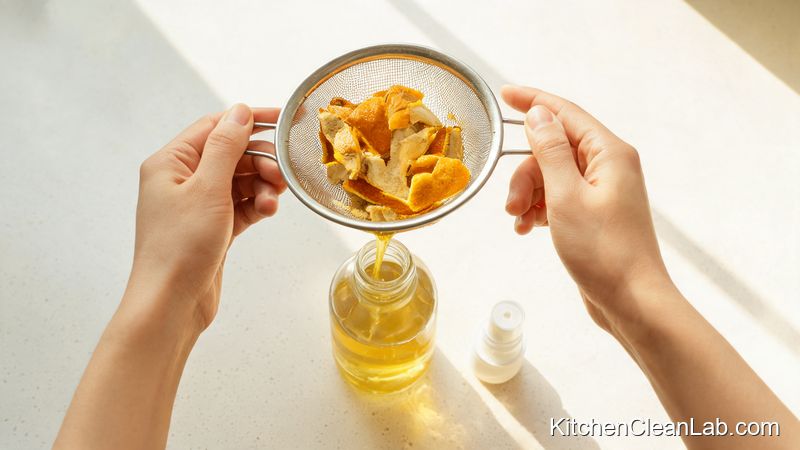
Step 4: Strain the Infused Vinegar
Set a fine mesh strainer or a piece of cheesecloth over a bowl or measuring cup. Pour the infused vinegar through the strainer to remove the peels and any floating solids. Compost the used peels or add them to your food waste bin. Straining well is essential because leftover pulp can clog your spray bottle nozzle.
Step 5: Dilute and Mix the Spray
Pour the strained citrus-infused vinegar into a glass spray bottle. For a standard all-purpose kitchen spray, fill the bottle halfway with the infused vinegar and fill the rest with water to create a 50/50 solution. If you prefer a lighter everyday cleaner, use one part vinegar to two parts water. Shake gently to combine.
Step 6: Label and Store Safely
Always label the bottle with the date and contents. Store the spray in a cool, dark place when not in use. Shake gently before each use. The diluted spray can last for several months, but for best results, make small batches that you can use within a few months.
Where to Use Your DIY Citrus Vinegar Spray
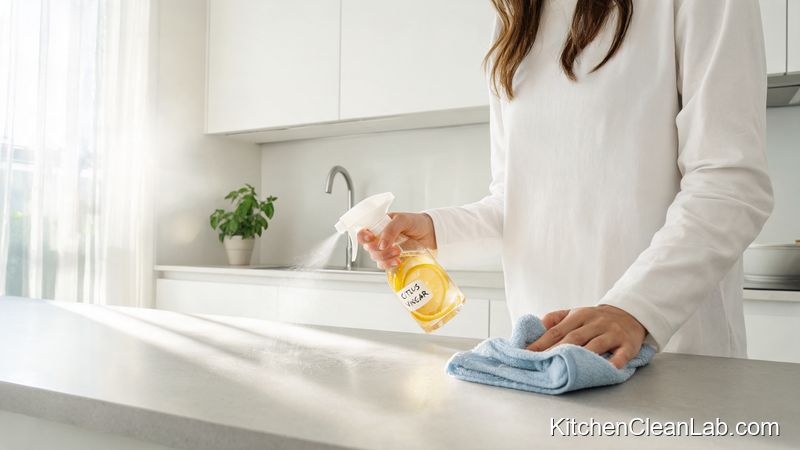
This homemade citrus-infused vinegar cleaning spray works well on many common kitchen surfaces. It is ideal for routine cleaning after cooking, wiping down sinks, brightening glass, and removing light grease. For best results, spray the surface, wait 1–2 minutes, then wipe with a clean cloth or sponge.
- Laminate countertops: Wipe daily spills and food residue.
- Glass and mirrors: Removes light smudges and hard water spots.
- Stainless steel sinks and appliances: Wipe with the grain to avoid streaks.
- Stovetops and range hoods: Cuts greasy film when used regularly.
- Tile backsplashes: Removes splatter and everyday grime.
- Inside trash cans and recycling bins: Deodorizes and cleans.
Surfaces to Avoid
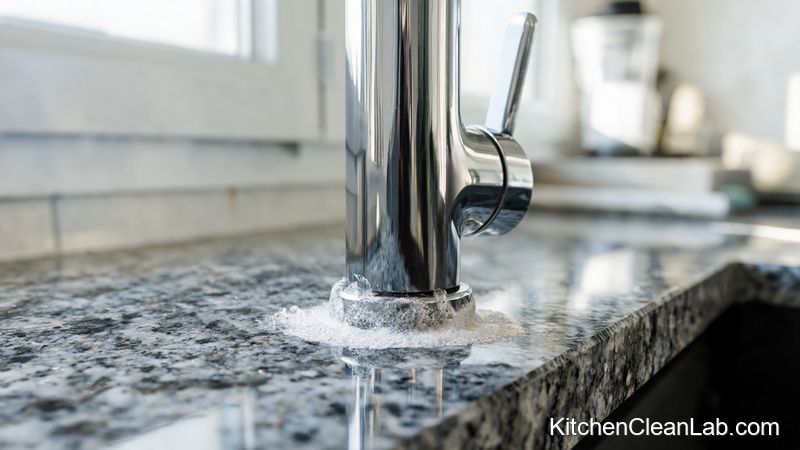
Because this cleaner is acidic, do not use it on natural stone such as granite, marble, travertine, or limestone. The acidity from vinegar and citrus can etch and dull the surface over time. Also avoid using it on unsealed wood, waxed surfaces, cast iron, aluminum, or any surface with a delicate finish. If you are uncertain, test a small hidden area first and wait 24 hours before cleaning the entire surface.
Safety Tips for Storing and Using DIY Citrus Vinegar Spray
- Keep the spray out of reach of children and pets.
- Do not mix vinegar cleaner with bleach or hydrogen peroxide; this can create harmful gases.
- Use gloves if you have sensitive skin or broken skin on your hands.
- Work in a well-ventilated area when cleaning large surfaces.
- Always label the bottle clearly so everyone in the household knows what is inside.
Pro Tips, Variations, and Scent Boosts
- Use a 50/50 vinegar-to-water ratio for heavy grease and grime. Use a 1:2 ratio for light daily cleaning.
- Add herbs during infusion: rosemary, thyme, sage, mint, or lavender add natural fragrance and can provide additional antibacterial benefits.
- Try a winter blend: add a small pine sprig, cinnamon stick, or a few whole cloves to the jar for a seasonal scent.
- Add essential oils at the end: a few drops of lemon, orange, tea tree, or lavender essential oil can enhance the aroma and boost cleaning power. This is especially useful if your citrus peels were mild.
- Keep a collection jar in the freezer: add peels as you eat citrus and make a new batch when the jar is full.
- Strain twice if needed: if your citrus vinegar looks cloudy, strain it through a coffee filter or several layers of cheesecloth for a clearer spray.
- Use a glass spray bottle: vinegar and citrus oils are best stored in glass, especially if you add essential oils. If you must use plastic, choose PET or HDPE and mix only small batches.
- Reuse the peels: sprinkle the strained peels down the garbage disposal and run cold water for a quick freshening scrub.
Frequently Asked Questions
- Can I use any type of citrus peel? Yes. Orange, lemon, lime, clementine, grapefruit, tangerine, and even pomelo peels all work. A mixture often gives a more balanced, layered scent.
- How long should I infuse the vinegar? Infuse for at least 1 week, but 2–3 weeks is best for a stronger citrus aroma and more effective degreasing.
- Does the vinegar smell go away? The vinegar scent noticeably softens after infusing with citrus peels. After spraying, any remaining vinegar smell usually dissipates within a few minutes as the surface dries.
- Can I use apple cider vinegar? Yes, but white distilled vinegar is usually preferred because it is clear, inexpensive, and less likely to stain light-colored surfaces. Apple cider vinegar can leave a slight amber tint.
- How long does the spray last? A properly strained and diluted spray can last up to 6–12 months in a sealed bottle. Labeling the bottle with the date helps you track freshness.
- Can I use a plastic spray bottle? You can use plastic after the vinegar has been diluted, but glass is safer for long-term storage. If you add essential oils, glass is the best choice because some essential oils can break down certain plastics.
- What should I do if the spray leaves streaks on glass? Use a microfiber cloth and buff the glass after cleaning. Make sure your vinegar-to-water ratio is not too strong; for glass, a 1:2 dilution often works better.
- Is this safe for granite or marble? No. The acid in vinegar and citrus can etch natural stone. Use a pH-neutral cleaner on granite, marble, travertine, and other stone surfaces.
Conclusion
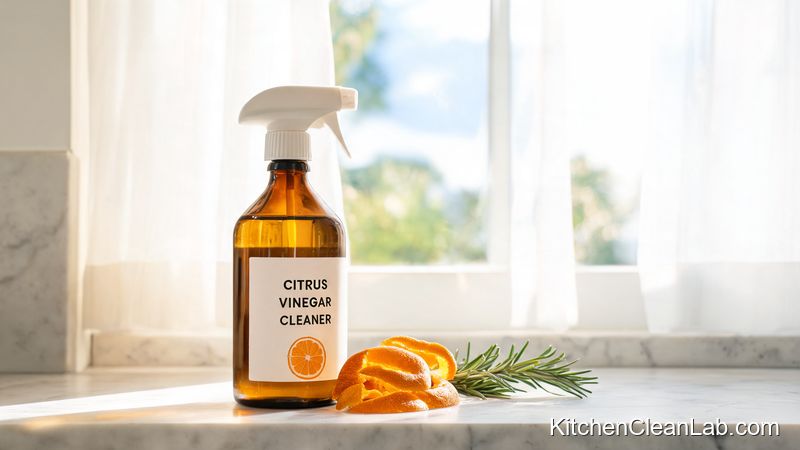
Learning how to make all-purpose kitchen spray with vinegar and citrus is a simple, affordable way to reduce waste, avoid harsh chemicals, and keep your kitchen fresh. With nothing more than leftover peels, white vinegar, water, and a little patience, you can make a natural all-purpose cleaner that tackles grease and grime on many everyday surfaces. Follow the infusion timeline, strain carefully, and always respect the surfaces to avoid. Once you start using this DIY spray, you may find yourself collecting every orange and lemon peel in your kitchen for the next batch.