Can You Mix Baking Soda and Dish Soap for Kitchen Degreasing? Yes—Here’s Why
Kitchen grease is stubborn because it is more than just oil. It is a sticky mixture of cooking oil, butter, food particles, and polymerized fats that have been heated again and again. That is why a simple all-purpose cleaner often fails on greasy stove tops, range hoods, and cabinet fronts. If you are asking can you mix baking soda and dish soap for kitchen degreasing, the answer is yes. This two-ingredient combination creates a powerful DIY kitchen degreaser that is affordable, easy to make, and much less harsh than many commercial degreasing sprays.
In this guide, you will learn the science behind this cleaning duo, how to mix the right ratio for different jobs, where to use it safely, and how to avoid the most common mistakes that can leave behind a white film or scratched surface.
Why Kitchen Grease Is So Difficult to Clean
Grease starts as a liquid, but heat changes its structure. When cooking oil is heated, it can oxidize and polymerize, forming a sticky, varnish-like layer that clings to surfaces. This is why the area around a stove or oven often becomes tacky and yellowish over time. Regular dish soap can remove fresh oil, but it struggles with polymerized grease because the grease is no longer a simple liquid. A baking soda and dish soap degreaser works on both fresh oil and older buildup because it combines chemical action with gentle physical scouring.
The Science Behind Baking Soda and Dish Soap
A baking soda and dish soap degreaser is not just an old cleaning hack. It is a practical example of basic chemistry. Liquid dish soap is a surfactant, which means its molecules have one end that grabs water and another end that grabs oil. When you wipe a greasy surface with soapy water, the soap surrounds oil particles and lifts them away from the surface.
Baking soda, or sodium bicarbonate, adds two important benefits. First, it is a mild alkali with a pH around 8.3, which helps loosen acidic grease components and soften polymerized oils. Second, its fine crystals create a controlled abrasive action. This gently scrubs away residue without being as aggressive as steel wool or harsh scouring powders. The result is a one-two punch: the soap emulsifies grease while the baking soda scrubs it away.
This is why the combination outperforms dish soap alone on baked-on splatter, oily range hoods, greasy backsplashes, and yellowed kitchen cabinets. It also reduces the need for chlorine bleach, ammonia, or heavy solvent-based cleaners.
What You Need Before You Start
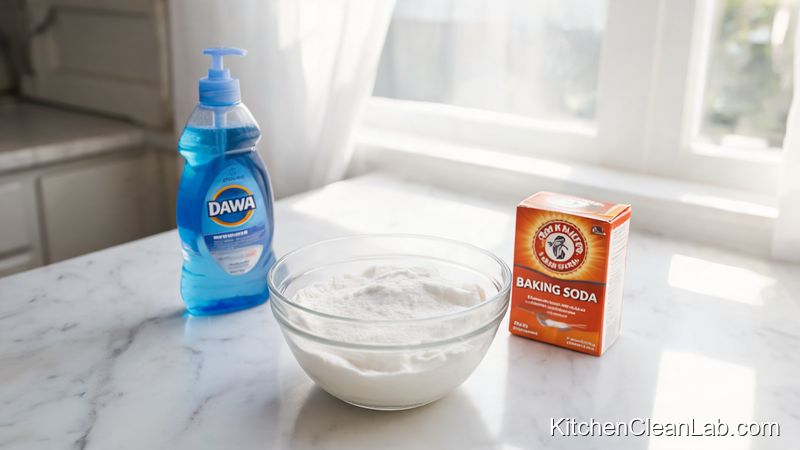
- Baking soda — fresh baking soda works best, not a box that has been sitting in the fridge absorbing odors for months.
- Liquid dish soap — a standard grease-cutting liquid dish soap, not dishwasher detergent or laundry soap.
- Warm water — heat helps soften solidified cooking oil and dissolve the paste.
- Microfiber cloths — they trap grease and do not leave lint behind.
- Non-scratch sponges or a soft-bristle brush — useful for textured surfaces and corners.
- Spray bottle — optional for making a thin degreasing spray.
- Rubber gloves — optional but helpful if you have sensitive skin or are cleaning for a long time.
Always spot-test on an inconspicuous area first, especially on painted wood, sealed stone, or ceramic-coated cookware.
How to Make a Baking Soda and Dish Soap Degreaser
The perfect mixture depends on the job. Use a paste for heavy grease on vertical surfaces, a spray for large lightly greasy areas, and a thicker scrub for burnt-on food.
1. All-Purpose Degreasing Paste
This is the most popular baking soda and dish soap paste. It clings well to vertical surfaces and is ideal for range hoods, cabinet doors, stove knobs, and greasy backsplashes.
- Place 1/2 cup baking soda in a bowl.
- Add 1 to 2 tablespoons of dish soap.
- Stir until a smooth, spreadable paste forms. If it is too thick, add a few drops of water. If it is too runny, add more baking soda.
- Apply it with a damp microfiber cloth or sponge.
- Let it sit for 10 to 15 minutes.
- Wipe clean, then rinse with a clean damp cloth and dry the surface.
2. Fast-Drying Kitchen Degreasing Spray
For large but lightly greasy areas, a spray version is easier to use. It works well for daily countertop cleanup and backsplash splatter.
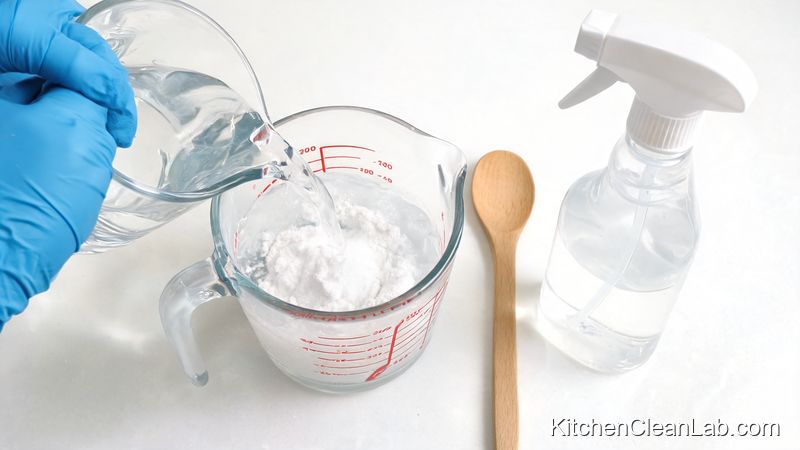
- Fill a spray bottle with 2 cups of warm water.
- Add 1 tablespoon of baking soda and 1 teaspoon of dish soap.
- Cap the bottle and shake gently to dissolve the baking soda.
- Spray the surface, wait 3 to 5 minutes, and wipe with a damp microfiber cloth.
- Follow with a water-only wipe to remove any residue.
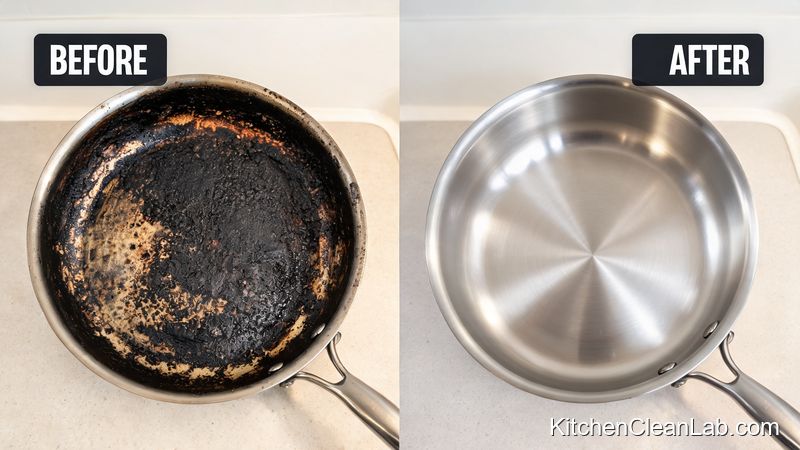
3. Heavy-Duty Oven and Cookware Scrub
For baked-on grease or scorched pans, use a thicker mixture with more baking soda.
- Mix 3 parts baking soda with 1 part dish soap.
- Spread the paste over the greasy or burnt area.
- Let it sit for 30 minutes to overnight for severe buildup.
- Scrub gently with a non-scratch pad, then rinse with warm water.
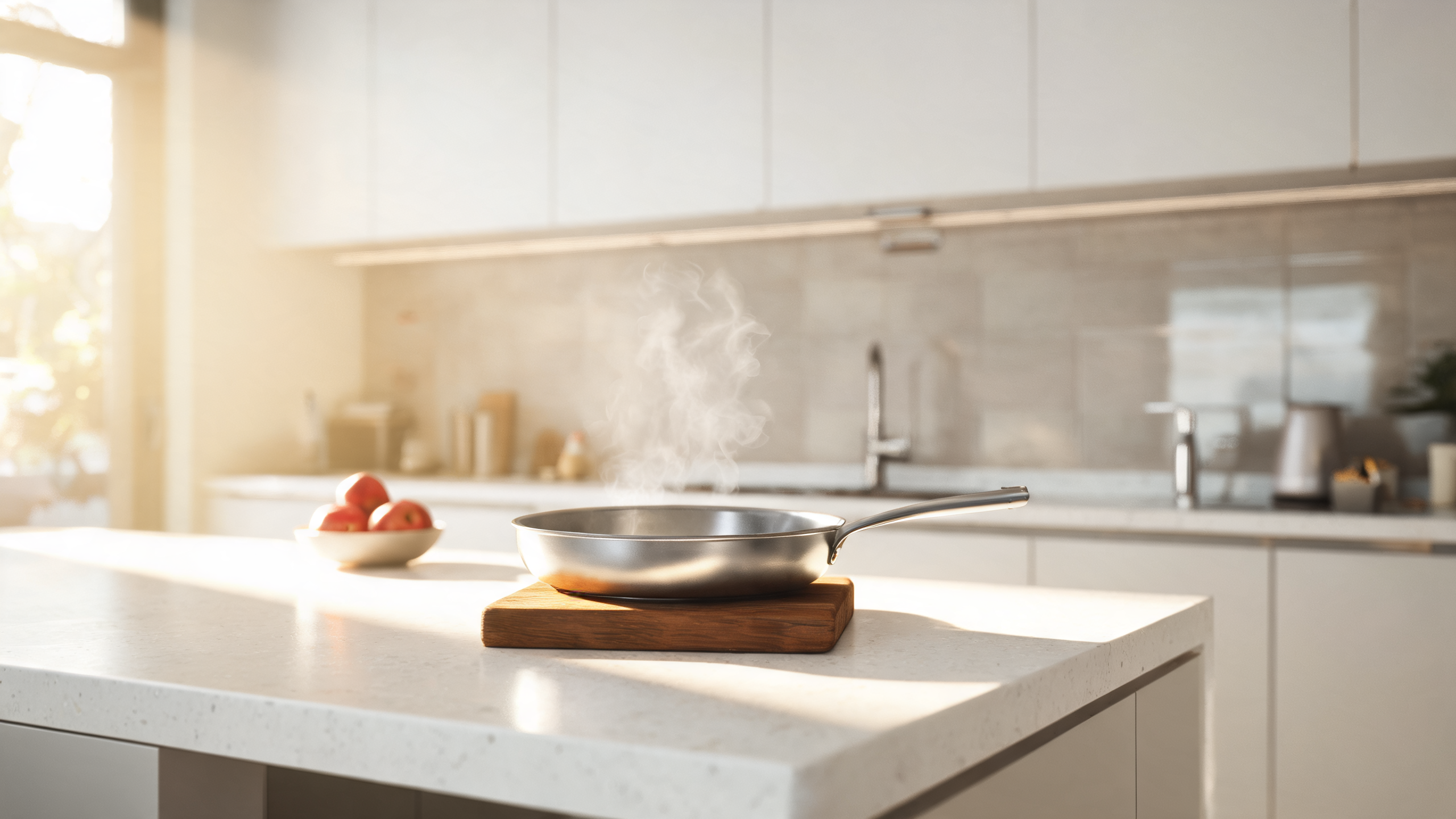
For stainless steel pans, you can also add about an inch of water and simmer the mixture on the stove for 10 minutes to lift polymerized oils.
If your paste looks like pancake batter, it will spread easily but may run off vertical surfaces. If it looks like peanut butter, it will cling and scrub better. Adjust until you reach the texture that matches your cleaning job.
How to Degrease Different Kitchen Surfaces Safely
Not all surfaces respond the same way. Here is how to use your baking soda and dish soap degreaser without causing damage.
Stovetops and Range Hoods
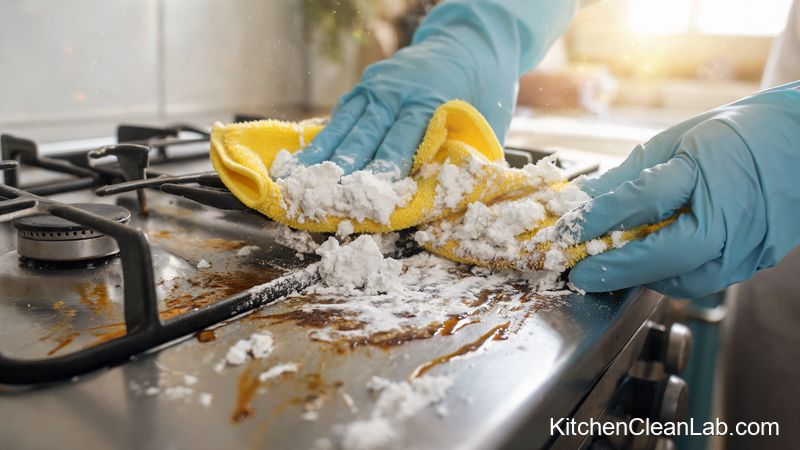
Stovetop grease is often the most stubborn because it has been heated repeatedly. For gas grates, coil drip pans, and sealed burners, apply the all-purpose paste and let it dwell for 15 minutes. Use a soft-bristle brush to agitate around knobs and crevices, then wipe with a hot, damp microfiber cloth. For a glass or ceramic cooktop, avoid heavy pressure and use the spray version with a non-scratch pad.
Kitchen Cabinets and Backsplashes
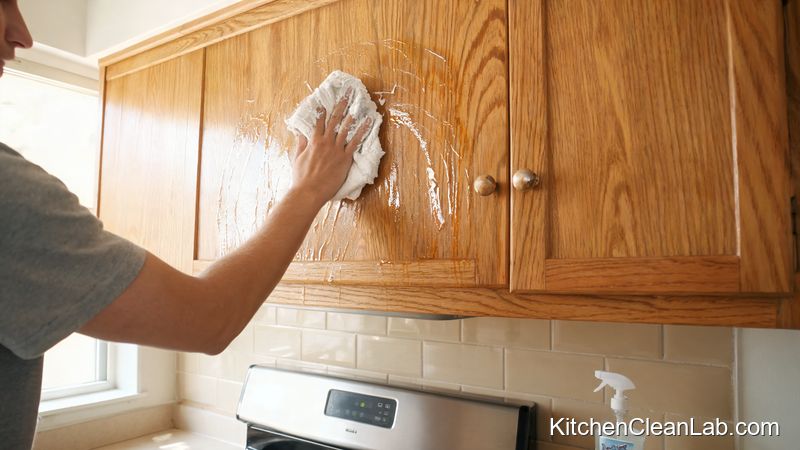
Cabinets above the range often develop a sticky film. Because liquid runs off vertical surfaces, a paste is your best option. Dip a damp cloth into the paste, wring it slightly, and wipe it onto the cabinet face. Let it sit for 5 to 10 minutes, then wipe it off with a clean damp cloth. Repeat if needed. For painted, stained, or lacquered cabinets, always test first. Never soak wood; use a well-wrung cloth and dry immediately.
Countertops
For sealed granite, quartz, laminate, and stainless steel, the spray method is usually enough. Spray lightly, wait three minutes, and wipe with a damp microfiber cloth. Avoid abrasive paste on high-gloss or natural stone. Although baking soda is mild, it can dull some sealers over time. For butcher block or unsealed wood, do not saturate the surface; use a cloth dampened with the soapy solution and wipe dry immediately.
Sinks and Faucets
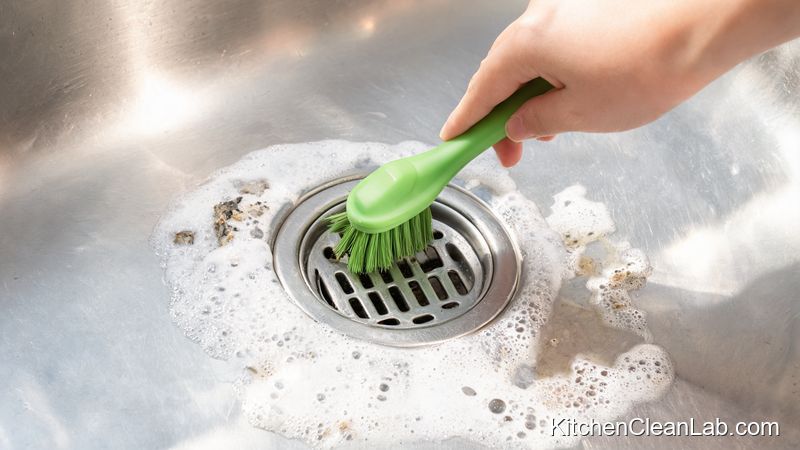
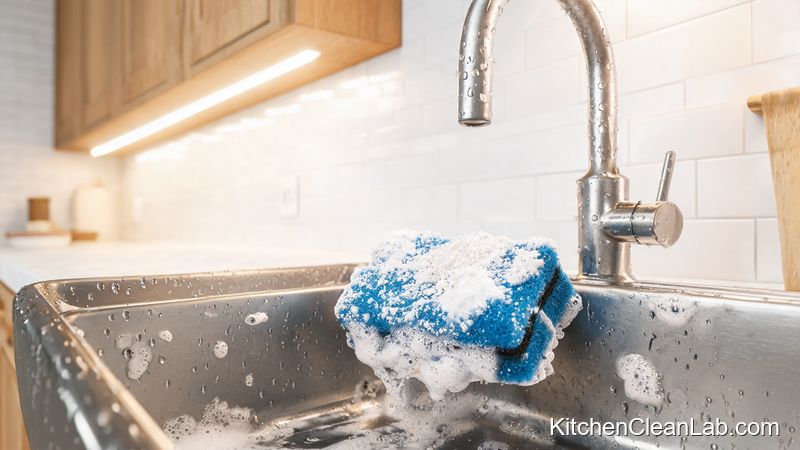
A greasy sink responds well to the all-purpose paste. Sprinkle baking soda directly into a damp sink, add a few drops of dish soap, and scrub with a non-scratch sponge. The mixture removes greasy film and water spots without harmful fumes. Rinse thoroughly to prevent a white film around the drain and faucet base. For stainless steel, rub in the direction of the grain to avoid swirl marks.
Cookware and Bakeware
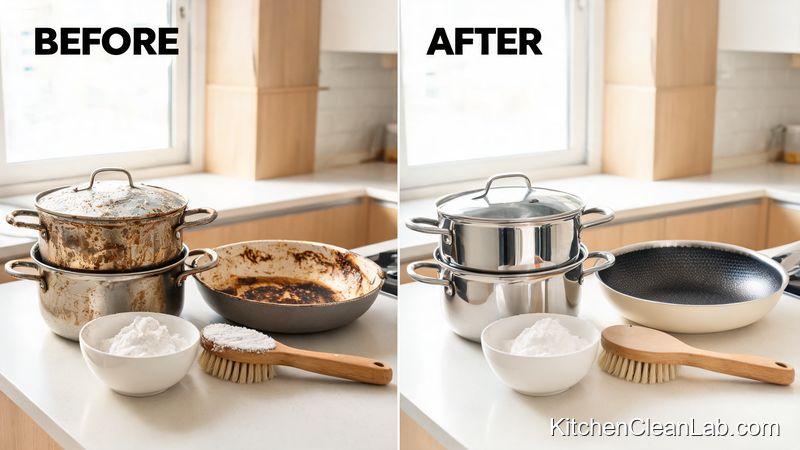
Frying pans, sheet pans, and casserole dishes often carry baked-on grease. For non-stick and ceramic cookware, use the paste-and-wait method: apply the paste, wait 30 minutes, then gently wipe with a soft sponge. For stainless steel and cast iron, the simmering method works best. Place the pan on the stove with water, baking soda, and a few drops of dish soap, simmer for 10 to 15 minutes, cool, and scrub.
Microwave Handles, Appliance Exteriors, and Small Knobs
Greasy fingerprints on microwave handles, air fryer exteriors, and stove knobs respond well to a thin paste and a soft cloth. Dip a soft brush or an old toothbrush into the baking soda and dish soap degreaser, work it around knobs and seams, then wipe with a damp cloth. Avoid letting liquid drip into vents or controls.
7 Pro Tips for the Best Degreasing Results
- Always give the mixture time to work. Dwell time is critical. Grease does not dissolve instantly.
- Use warm or hot water. Heat softens solidified cooking oil and helps the paste penetrate.
- Choose the right cloth. Microfiber traps grease; paper towels can fall apart or leave lint.
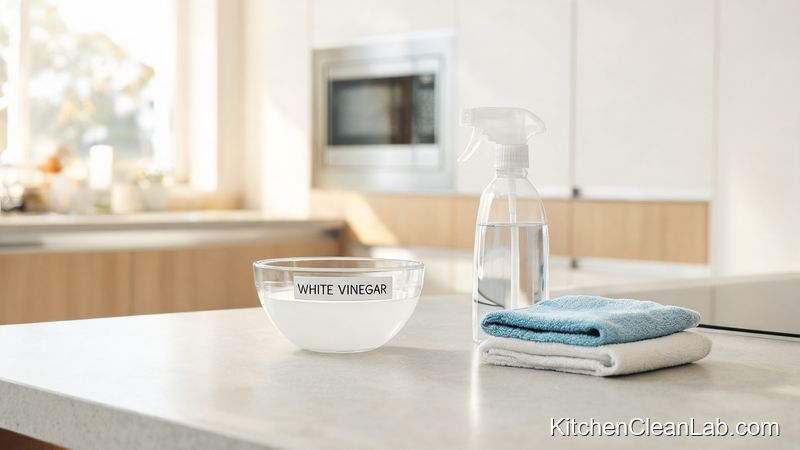
- Do not mix baking soda with vinegar. They neutralize each other. While the fizz looks impressive, it reduces degreasing power.
- Work in sections. Instead of scrubbing the whole kitchen at once, apply paste to one area, then move to the next while it dwells.
- Rinse with clean water. Leftover paste can dry into a white residue that looks worse than grease.
- Dry surfaces after cleaning. This prevents water spots and protects wood finishes.
Common Mistakes to Avoid When Using Baking Soda and Dish Soap
- Using too much dish soap. Too much soap creates excessive suds and a slimy film that is hard to rinse.
- Applying paste to a hot surface. Heat dries the paste before it can break down grease.
- Scrubbing aggressively on non-stick or glossy surfaces. Even mild abrasives can cause micro-scratches.
- Mixing baking soda with bleach or ammonia. This can produce dangerous gases and should never be done.
- Skipping the spot test on wood or painted cabinets. Some finishes can cloud or wear away.
- Assuming more baking soda is always better. Too much can leave a gritty residue and waste product.
Frequently Asked Questions
Can I use baking soda and dish soap on a glass stovetop?
Yes, but use a thin paste or spray and a non-scratch pad. Avoid heavy pressure. Rinse thoroughly to prevent white streaks.
Does adding vinegar make the degreaser stronger?
No. Baking soda is alkaline and vinegar is acidic. When combined, they mostly create water and carbon dioxide, reducing the degreasing power of the paste.
How long should I let the mixture sit on greasy cabinets?
For most cabinets, 5 to 10 minutes is enough. If the grease is very old or thick, you can go up to 15 minutes, but always spot-test first.
Will baking soda scratch stainless steel?
It can leave micro-scratches if you scrub against the grain or use too much pressure. Stick to a soft sponge, rub with the grain, and use a wet paste.
Can I pre-mix a large batch and store it?
It is best to mix fresh batches. Over time, the mixture can dry out or separate. If stored, keep it in a sealed container and remix before use. The spray version may settle and clog the nozzle.
Is this safe for granite or marble countertops?
It can be used occasionally on sealed stone, but avoid frequent abrasive paste applications. For marble and other acid-sensitive stones, skip acidic vinegar rinses and use a pH-neutral final wipe.
Final Verdict: A Simple, Powerful Kitchen Degreaser
So, can you mix baking soda and dish soap for kitchen degreasing? Absolutely. This combination is one of the most reliable natural kitchen degreaser options available. It uses pantry staples, creates no harsh fumes, and is effective on a wide range of surfaces when applied correctly.
Remember to match the texture to the task: sprays for light films, pastes for vertical surfaces and moderate grease, and thick scrubs for baked-on residue. Always test delicate finishes, avoid mixing with vinegar or bleach, and give the paste time to work. With a little patience, your kitchen can be degreased without a cabinet full of specialty products.