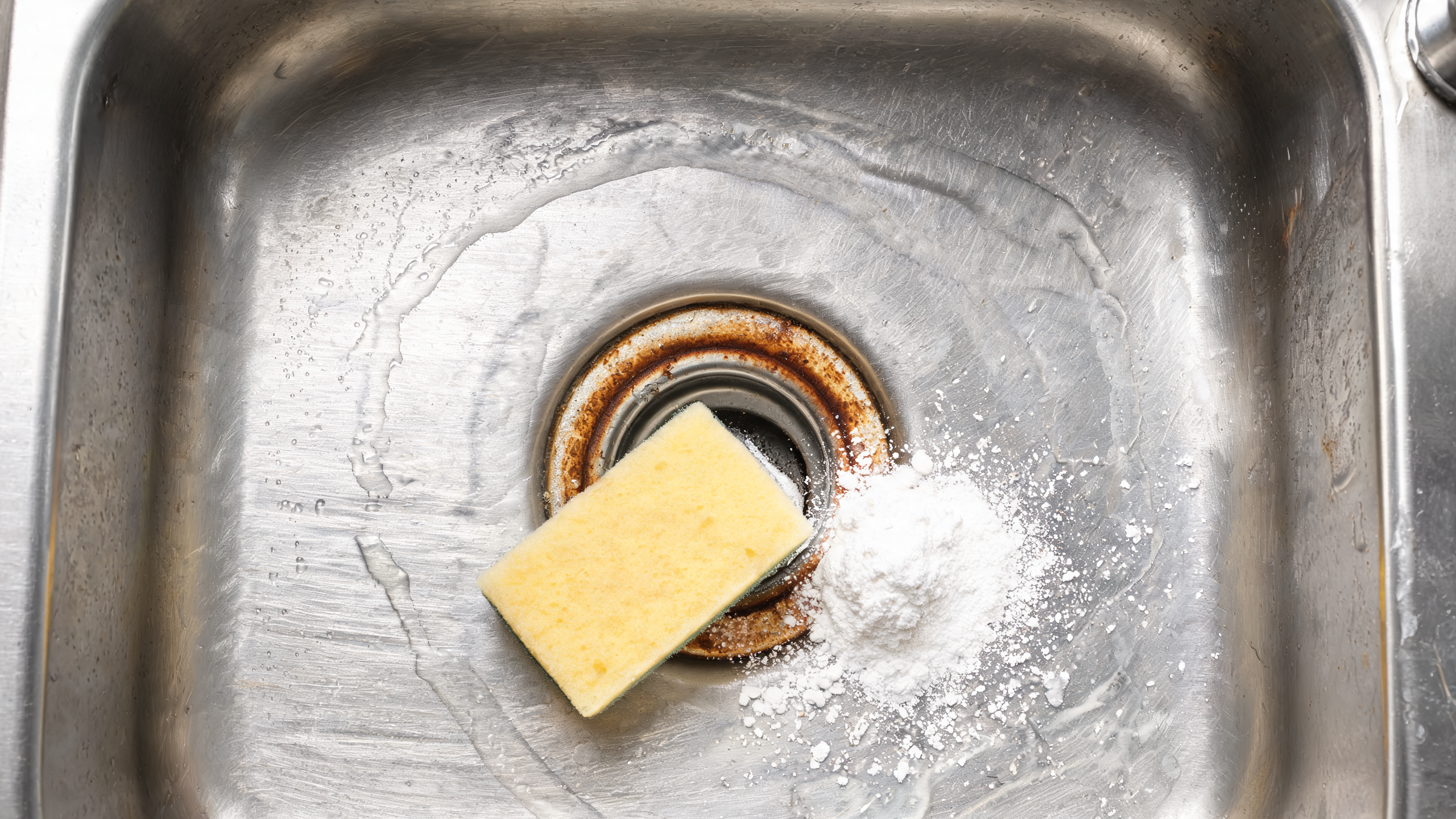
Why Coffee and Tea Stains Form on Composite Granite Sinks
Direct answer: Coffee and tea leave stains on composite granite because tannins and natural pigments settle into the sink’s matte surface, especially if liquid dries. A quick rinse and wipe after every use prevents most marks before they set.
Composite granite sinks are built from a blend of natural quartz or granite particles and an acrylic resin binder. This construction makes them dense, scratch-resistant, and far less porous than natural stone. However, the surface is not glass-smooth. The matte texture and the slight relief created by stone particles give tannin molecules a place to grip when coffee or tea is allowed to dry.
Tannins are astringent compounds found in both coffee and tea. When a tannin-rich liquid evaporates, it leaves behind concentrated pigments. On a white or light-colored composite granite sink, these pigments appear as yellow-brown rings or drip trails. On dark sinks, they often show as a dull, slightly darker film. The key is to treat the stain while the liquid is still wet or rehydrate it before cleaning.
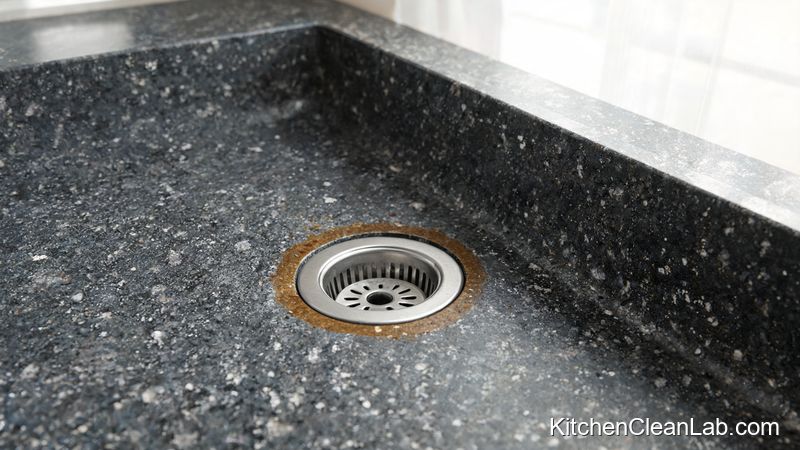
Daily Cleaning Routine That Prevents Coffee and Tea Stains
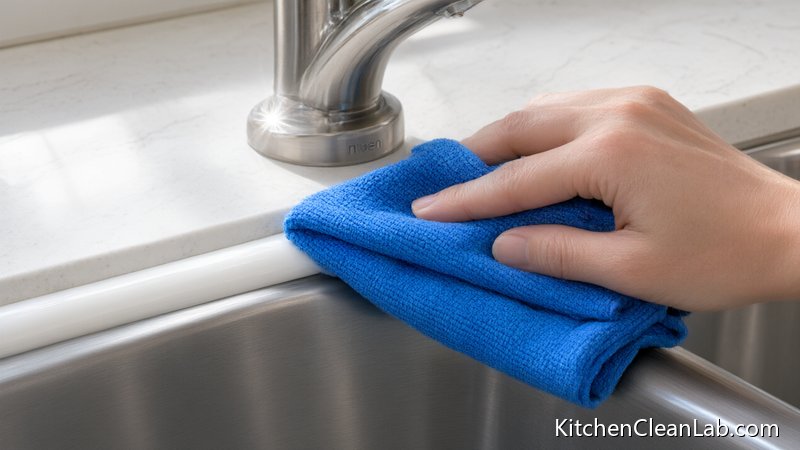
Direct answer: Before reaching for heavy-duty cleaners, adopt a two-step habit: rinse the sink with warm water immediately after pouring coffee or tea, then wipe it dry with a soft microfiber cloth. This prevents tannin adhesion and hard-water spotting.
The most effective stain removal is the one you never have to do. Composite granite responds well to consistent, low-effort care. Most coffee and tea stains begin as a thin film of liquid that has not yet bonded to the surface. Rinsing before that film dries removes the majority of tannins.
- Rinse immediately: Run warm water over the entire sink for 10–15 seconds after discarding coffee grounds, tea bags, or leftover drinks.
- Use a soft microfiber cloth: After rinsing, dry the basin completely. This removes mineral residue and prevents water spots from hardening.
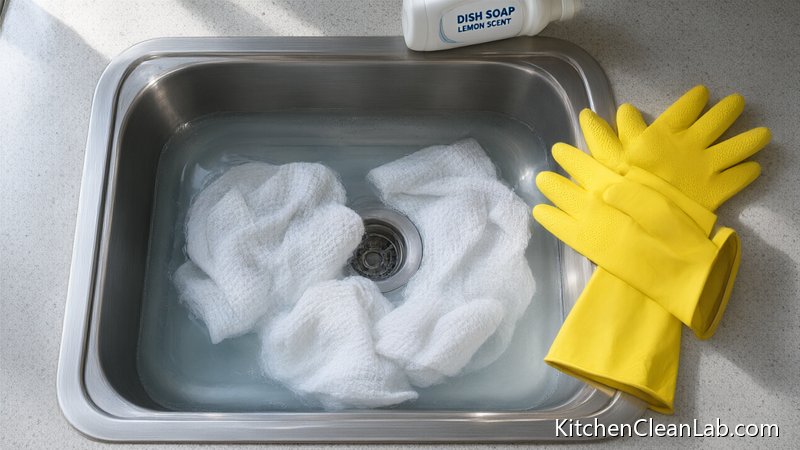
- Wash with mild dish soap: Once a day, use a few drops of dish soap and a non-abrasive sponge to clean the sink.
- Keep a sink grid: A protective grid or silicone mat lifts mugs, spoons, and tea strainers off the sink floor, reducing direct contact with staining liquids.
These habits are especially important in homes with hard water, because mineral deposits can combine with tannins and create a more stubborn brown scale around the drain.
Step-by-Step: Remove Fresh Coffee and Tea Stains
Direct answer: For recent stains, combine warm water with a few drops of mild dish soap. Work a soft sponge over the stain, then rinse and dry. If the mark persists, apply a baking soda paste before moving to diluted vinegar.
Fresh stains are usually easy to lift. Follow this sequence before using anything stronger. You will need a soft sponge, warm water, mild dish soap, baking soda, and a clean microfiber cloth.
- Flush the surface: Rinse the stained area with warm water for 20–30 seconds to rehydrate any dried coffee or tea.
- Apply mild dish soap: Put one or two drops of dish soap directly on a damp, non-abrasive sponge.
- Work in circular motions: Gently scrub the stain, applying light pressure. Do not use the rough side of a dual-sided sponge.
- Rinse and inspect: Rinse the sink thoroughly with warm water. If the stain is gone, dry the sink immediately.
- Treat remaining marks with baking soda paste: Mix 3 parts baking soda with 1 part water. Apply the paste to the stain, wait 3–5 minutes, then scrub gently and rinse.
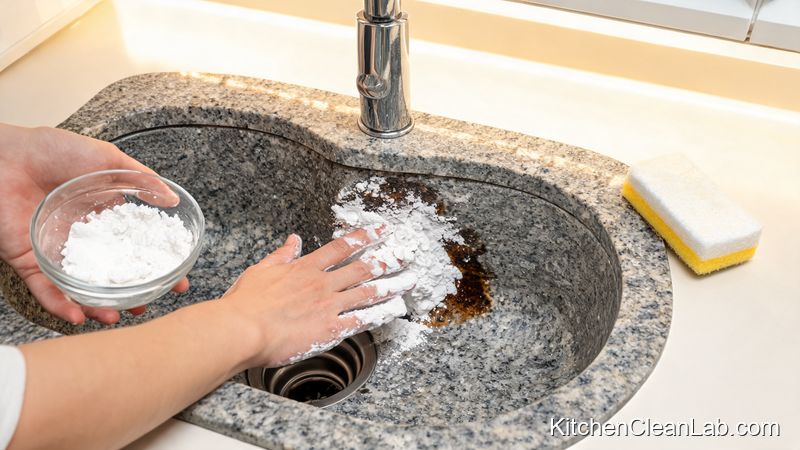
Always finish with a dry cloth. Even a few drops of rinse water left behind can react with minerals and create faint white marks.
Deep Cleaning Set-In Coffee and Tea Stains
Direct answer: For older, darker stains, make a paste of baking soda and water, apply it to the stain, and let it sit for 5–10 minutes before gently scrubbing with a soft sponge. Rinse completely and dry, then apply a light coat of food-grade mineral oil to restore sheen.
Set-in stains need more contact time. The goal is to loosen the bond between the tannin pigments and the sink surface without scratching the resin. Avoid aggressive scrubbing; let the cleaning agent do the work.
- Make a thick paste: Mix 1/2 cup of baking soda with 2–3 tablespoons of warm water in a small bowl.
- Apply to a damp sink: Spread the paste over the stained areas. A damp surface helps the paste adhere.
- Let it sit: Allow the paste to remain for 5–10 minutes. Do not let it dry completely, as this can create a white film.
- Scrub gently: Use a soft sponge, an old soft toothbrush, or your fingertips to work the paste in small circles.
- Rinse with warm water: Remove all traces of baking soda. Check the stain under good light.
- Use diluted vinegar if needed: Spray a 50/50 solution of white vinegar and water over the area. You will see a slight fizz as it reacts with any remaining baking soda. Wait 1–2 minutes, then scrub lightly.
- Rinse and dry: Rinse thoroughly with warm water and dry with a microfiber cloth until no moisture remains.
Quick Reference: Safe Cleaning Methods
- Fresh coffee or tea marks: Warm water + mild dish soap + soft sponge.
- Moderate brown stains: Baking soda paste, 5–10 minute contact time, gentle scrub.
- Stubborn or set-in stains: Baking soda paste followed by 50/50 white vinegar spray.
- Post-cleaning protection: Food-grade mineral oil, applied thinly and buffed after 45 minutes.
Do not go stronger than diluted vinegar without checking the sink manufacturer’s care guide. Composite sinks are durable, but their resin component can react with strong acids or solvents.
What Not to Use on Composite Granite Sinks
Direct answer: Never clean a composite granite sink with bleach, ammonia, steel wool, scouring powders, or acidic drain cleaners. These products can break down the resin binder, dull the finish, and create scratches that trap more coffee and tea pigments.
The list of products to avoid is just as important as the list of safe cleaners. Many common kitchen cleaning shortcuts cause irreversible surface damage on composite granite.
- Bleach and chlorine-based cleaners: Bleach can fade the color and break down the acrylic resin, leaving a chalky or rough patch.
- Ammonia and solvent-based degreasers: These can etch the surface and cause a cloudy appearance.
- Abrasive scrubbers: Steel wool, wire brushes, and scouring powder create micro-scratches. Once scratched, the sink holds more pigment from future coffee and tea spills.
- Undiluted white vinegar or lemon juice: Mild acids can help in diluted form, but full-strength acid left on the surface can dull the finish.
- Drain cleaners with hydrochloric acid or sulfuric acid: These are highly corrosive and should never be used in a composite sink.
- Boiling water poured directly onto a cold sink: While many high-quality composite sinks tolerate heat, rapid temperature changes can stress the resin. Use warm or hot tap water rather than boiling water.
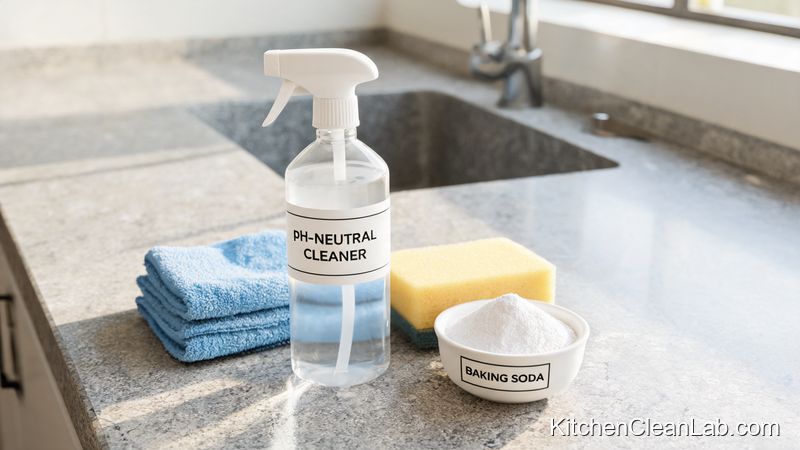
If a product label says “abrasive,” “bleach-based,” or “acidic,” assume it is unsuitable unless the sink manufacturer explicitly approves it.
Common Mistakes That Make Coffee and Tea Stains Worse
Direct answer: The biggest mistakes are letting coffee or tea dry, scrubbing with abrasive pads, leaving wet sponges in the sink, and using undiluted acid. These habits damage the surface and make future stains bond more aggressively.
Even with good intentions, many homeowners accidentally make stains worse. Here are the most frequent errors and how to correct them.
- Leaving a mug or French press in the sink overnight: The liquid dries and leaves a concentrated tannin ring. Rinse the item and the sink before bed.
- Using the rough side of a sponge: The abrasive side can dull the matte finish. Use only non-abrasive sponges or cloths.
- Mixing bleach with vinegar or other acids: This creates toxic chlorine gas. Never mix cleaning products.
- Skipping the final dry: Water droplets evaporate and deposit minerals that look like white stains. A 10-second dry after each use prevents this.
- Applying mineral oil over a dirty sink: Oil can seal in any remaining coffee or tea residue. Clean and dry the sink completely before applying oil.
Preventing Future Coffee and Tea Stains
Direct answer: Prevention relies on three habits: rinse immediately after pouring coffee or tea, wipe dry with a microfiber cloth, and apply a food-grade mineral oil coating once a month. Use a protective sink grid to minimize direct contact.
Long-term stain prevention is about creating a surface that repels liquids. Composite granite does not need sealing like natural granite, but a light mineral oil treatment can add a temporary hydrophobic layer.
- Rinse after every use: Keep a small dish or spray bottle of water near the sink if you often pour coffee or tea.
- Dry thoroughly: A microfiber cloth absorbs more water than a standard dish towel and leaves less lint.
- Weekly wash: Once a week, clean the entire sink with warm water, mild dish soap, and a soft sponge. Dry immediately.
- Monthly mineral oil: After cleaning and drying, apply a few drops of food-grade mineral oil to a cloth and wipe a very thin layer over the entire sink. Leave it for 45 minutes, then buff with a clean dry cloth. This reduces tannin adhesion and restores an even, satin appearance.
- Use sink accessories: A sink grid or silicone mat keeps stained mugs and tea bags from sitting directly on the surface.
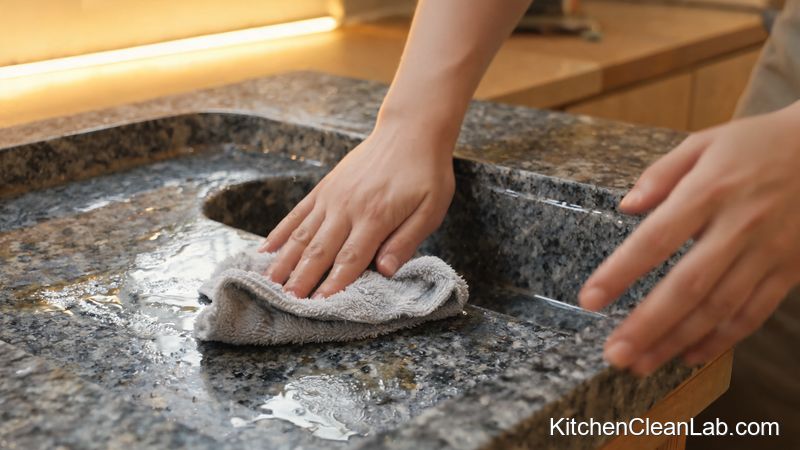
If you have a white composite granite sink, this routine is non-negotiable. White surfaces reveal every trace of tannin, but they also reward daily care with a bright, clean look.
Frequently Asked Questions
Direct answer: These are the most common questions about removing coffee and tea stains from composite granite sinks, covering bleach safety, old stain removal, commercial cleaners, and white haze.
Can I use bleach to remove coffee stains from a composite granite sink?
No. Bleach can break down the acrylic resin in composite granite and cause permanent color loss or a chalky surface. Use a pH-neutral composite sink cleaner or baking soda paste instead. If bleach has already been used, rinse the sink multiple times and apply a light coat of mineral oil to help restore the finish.
How do I remove old, set-in tea stains from a composite granite sink?
Mix baking soda with just enough water to form a spreadable paste. Apply it thickly over the stain, let it sit for 10–15 minutes, then scrub gently with a non-abrasive sponge. Rinse. If a shadow remains, spray a 50/50 white vinegar and water solution over the area, wait one minute, scrub lightly, rinse thoroughly, and dry. Repeat once if necessary.
Is Bar Keepers Friend safe for composite granite sinks?
Bar Keepers Friend can be used occasionally on some composite sinks, but it is slightly abrasive and contains oxalic acid. Check your sink manufacturer’s guidance first. For regular care, a non-abrasive, pH-neutral composite cleaner is safer and less likely to dull the finish.
Why does my composite granite sink turn white or cloudy after cleaning?
White haze typically comes from hard-water mineral deposits or residue from acidic cleaners. Wipe the sink with a 50/50 vinegar and water solution, scrub gently with a soft sponge, rinse thoroughly, and dry with a microfiber cloth. Finish with a very thin layer of food-grade mineral oil to restore even color.
Keep Your Composite Granite Sink Looking New
Direct answer: Stain-free composite granite sinks come down to consistent rinsing, immediate drying, and using the mildest effective cleaner. With the right habits, coffee and tea marks stay on the surface for only seconds, not permanently.
The surface of composite granite is forgiving: it resists scratches and most household wear. However, its matte finish responds best to regular, low-friction care. Instead of waiting for dark rings around the drain, build a 30-second rinse-and-dry habit after every pot of coffee or cup of tea. When marks appear, progress from dish soap to baking soda paste to diluted vinegar, and always finish with a dry cloth. That sequence removes pigments without compromising the resin, preserving the sink’s color and texture for years.
Avoid the temptation to attack stains with steel wool or bleach; those create long-term damage that even professional refinishing cannot fully reverse. A composite granite sink should look evenly colored, satin-smooth, and free of chalky residue. If it starts to look dull, a monthly application of food-grade mineral oil can restore depth and create a temporary barrier against tannins. With these methods, your sink remains a clean, functional centerpiece rather than a stain collector.