The Top 7 Household Products That Ruin Granite Countertops
Granite resists heat and scratches, but common household products like acidic foods, harsh disinfectants, oils, hot pans, acetone, rusting cans, and wet plant pots can break down sealant, etch the polish, or leave deep stains. Prevention is faster and cheaper than professional granite repair.
Granite is a porous natural stone, even when it looks completely solid. The protective sealer fills microscopic pores and creates a sacrificial barrier. Once that barrier is stripped by the wrong household product, liquids and oils penetrate the stone. The result is often a dark oil mark near the stove, a cloudy acid etch near the sink, or a rust ring in the bathroom.
1. Acidic Foods and Drinks: Citrus, Vinegar, and Tomato Sauce
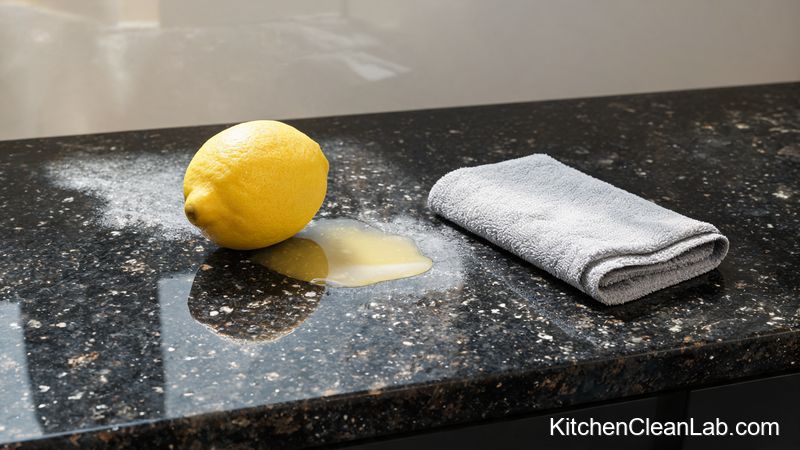
Acidic household food products etch polished granite. Lemons, limes, vinegar, tomato sauce, soda, and wine contain citric, acetic, or phosphoric acids that react with calcium-bearing minerals in many granite slabs. Even a fully sealed countertop can develop a dull, hazy spot if these liquids sit for more than a few minutes.
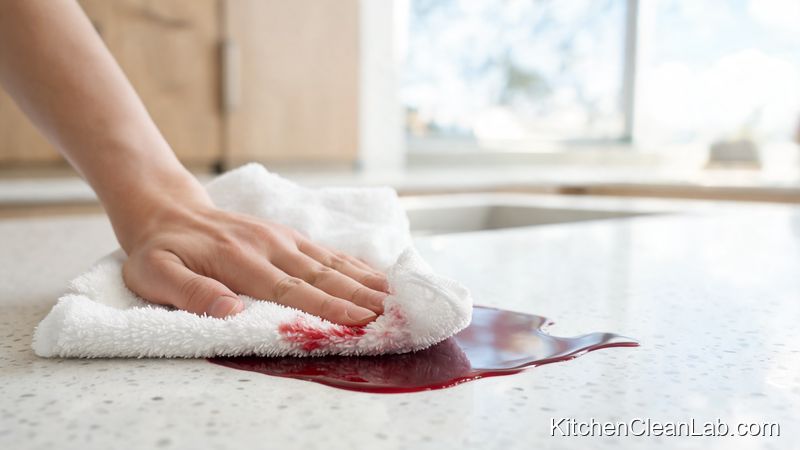
What to do instead: Use cutting boards, coasters, and spill trays. Blot spills with a soft microfiber cloth, never wipe outward in widening circles. For daily cleaning, use a pH-neutral stone cleaner or warm water with a drop of mild dish soap.
Warning: Do not use lemon juice or vinegar as a “natural” granite cleaner. Both are acidic enough to strip sealer over time and cause etching that looks like a cloudy ring on the stone.
2. Bleach, Ammonia, and Multi-Surface Disinfecting Wipes
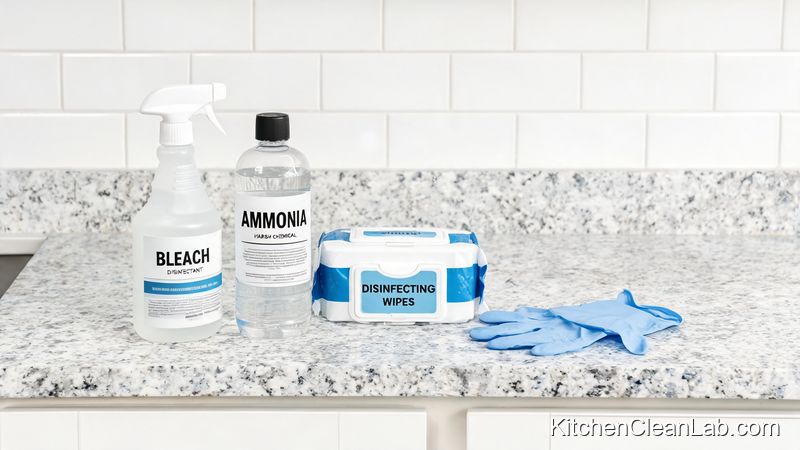
Bleach and ammonia are too aggressive for sealed stone. They can degrade the resin-based sealer, dull the polish, and cause color loss on darker granite. Disinfecting wipes often contain citric acid or quaternary ammonium compounds that leave a sticky film and slowly break down the protective seal.
Safer cleaning routine: Use a dedicated granite cleaner that says “pH-neutral” and “safe for natural stone.” If you must disinfect, choose a stone-safe disinfectant or use a steam cleaner on a low setting after checking the fabricator’s guidelines.
Safety note: Never mix bleach and ammonia in any room. The resulting chloramine gas is toxic and far more dangerous than the countertop damage. Work in a ventilated area and wear gloves when handling concentrated cleaners.
3. Cooking Oils, Oil-Based Lotions, and Grease-Residue Products
Oil stains are among the most difficult granite problems to remove. Cooking oil, butter, greasy pot lids, hand lotion, and even hair oil can seep into porous granite if the sealer is older than 12 to 18 months or has been stripped by harsh cleaners. The stain usually appears as a dark spot that grows darker over time.
What to do: Keep oil bottles on trays. Wipe around cooktops daily. If oil spills, blot immediately and clean with a stone-safe degreaser or a pH-neutral dish soap solution. Do not use solvent-based degreasers unless the product label explicitly approves natural stone.
Quick prevention: Reapply a high-quality penetrating sealer every 12 to 18 months. Test the seal by dropping a few beads of water on the surface; if they do not bead within 10 minutes, it is time to reseal.
4. Hot Pots, Pans, and Thermal Shock from Cookware
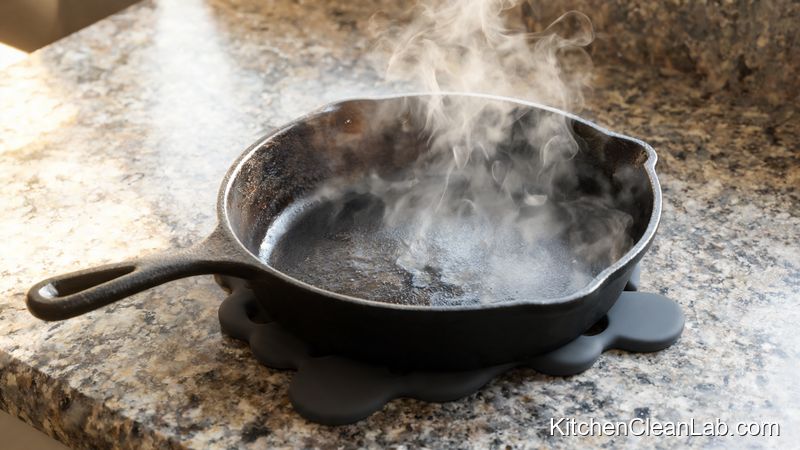
Granite can withstand heat, but the sealer and the stone structure are not invincible. Placing a hot cast-iron skillet directly on a cool countertop can create thermal shock, especially near seams, sink cutouts, and fissures. Over time, repeated heat exposure yellows some sealers and causes micro-cracks around edges.
What to do: Keep trivets, silicone pads, or folded dish towels near the stove. Use them for slow cookers, air fryer baskets, baking dishes, and any cookware that has been in the oven or on a hot burner.
Warning: Do not place an ice-cold bowl or frozen package on a granite surface that is still warm from direct sunlight or a nearby oven. The sudden temperature differential can cause a visible crack.
5. Nail Polish Remover, Rubbing Alcohol, and Perfume
Acetone-based nail polish remover and alcohol-based products are solvents. They dissolve the sealer on contact and can leach color from dyed or resin-treated granite. Fragrances, hairspray, and hand sanitizers that contain high alcohol concentrations can leave ghost marks on bathroom vanities.
What to do: Store these products in a cabinet or on a non-porous tray. If a spill occurs, blot with a white cloth and rinse the area with clean water. Then dry thoroughly. Avoid rubbing the spill into the stone.
Why it matters: Once the sealer is stripped, the stone becomes highly absorbent. A second spill in that same spot, such as body oil or soap, will darken the granite and may require professional poultice treatment.
6. Rust-Prone Metal Cans, Razor Stands, and Utensil Holders
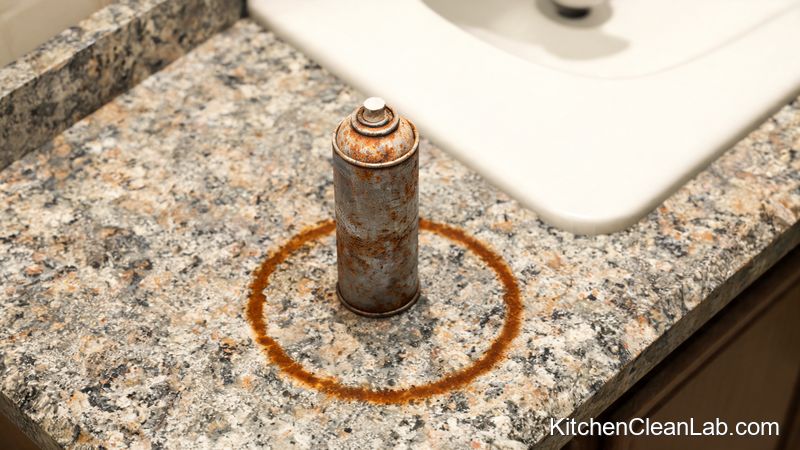
Shaving cream cans, canned goods, steel wool pads, and metal utensil holders can rust when exposed to water on a granite counter. The orange-brown rust transfers into the stone’s pores and forms a stubborn stain. In bathrooms, metal razor stands and toothpaste tubes can be hidden culprits.
What to do: Use plastic, stainless steel, or rubber-coated organizers. Never leave a wet can or steel wool pad directly on the stone. Clean visible rust marks with a stone-safe rust remover, not household acid rust removers, which can etch the surface.
Prevention tip: Add felt pads or silicone discs under metal accessories. They create a small air gap and prevent trapped moisture and rust rings.
7. Unsealed Plant Pots, Vases, and Trapped Moisture
Terra cotta pots and unglazed ceramic vases wick water onto the countertop. That moisture can dissolve minerals in the stone, leave a chalky white ring, and feed mildew growth in the microscopic pores. This problem is common on bathroom vanities and windowsill granite ledges.
What to do: Place plants in waterproof saucers with felt pads. Check for condensation under vases and decorative items weekly. Use a foam gasket or clear silicone bumpers to raise the pot slightly off the stone.
Note: Dark patches that do not dry after lifting the pot may indicate water has penetrated the sealer. Dry the area gently with a fan and have the sealer reapplied if the patch persists.
How to Protect Granite Countertops from Household Product Damage
Use pH-neutral stone cleaners, reapply a penetrating sealer every 12 to 18 months, and keep trivets, coasters, and trays between the stone and risky products. The water-bead test is the fastest way to check whether your granite is still protected.
Granite sealing is not a one-time event. Heavy-use kitchen and bathroom counters should be resealed every 12 to 18 months, more often around cooktops and undermount sinks. A penetrating sealer bonds below the surface without making the stone look plastic. Topical sealers and waxes are not substitutes because they wear unevenly and can leave a cloudy film.
Quick-reference granite danger chart:
| Risky Household Product | Damage It Causes | Safer Alternative |
|---|---|---|
| Acidic foods and drinks | Etching, dull spots, sealant breakdown | Cutting boards, coasters, pH-neutral cleaner |
| Bleach, ammonia, multi-surface wipes | Sealer breakdown, color loss, sticky film | Granite-safe stone cleaner, steam |
| Cooking oils and lotions | Dark oil stains, sealer penetration | Trays, daily degreasing, penetrating sealer |
| Hot pots and pans | Thermal shock, sealer yellowing, cracks | Trivets, silicone pads, air gap |
| Nail polish remover, perfume, alcohol | Sealer stripping, ghost marks, color loss | Cabinet storage, non-porous trays |
| Rust-prone metal cans and organizers | Orange-brown rust stains, trapped moisture | Rubber-coated organizers, felt pads |
| Unsealed plant pots and vases | Water rings, mildew, mineral stains | Waterproof saucers, silicone bumpers |
Step-by-Step Granite Countertop Cleaning and First Aid Guide
Blot spills immediately, rinse with clean water, clean with a pH-neutral stone cleaner, and dry thoroughly. If a stain has already formed, identify whether it is oil, acid etching, or rust before choosing a poultice or professional stone restoration. Always test any product in a hidden spot first.
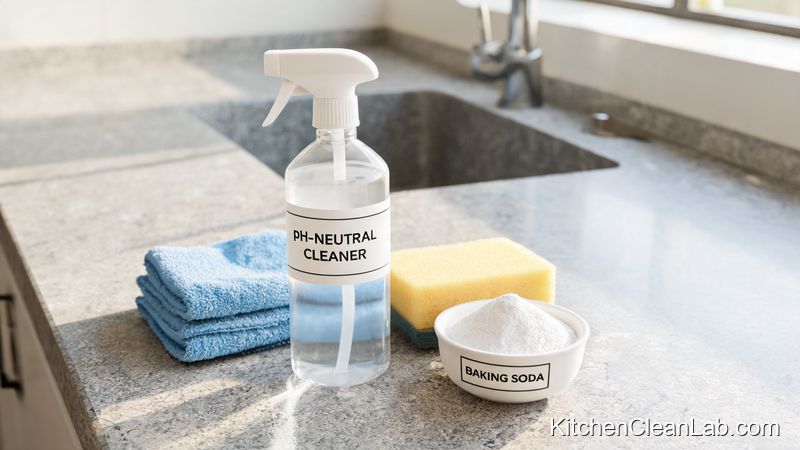
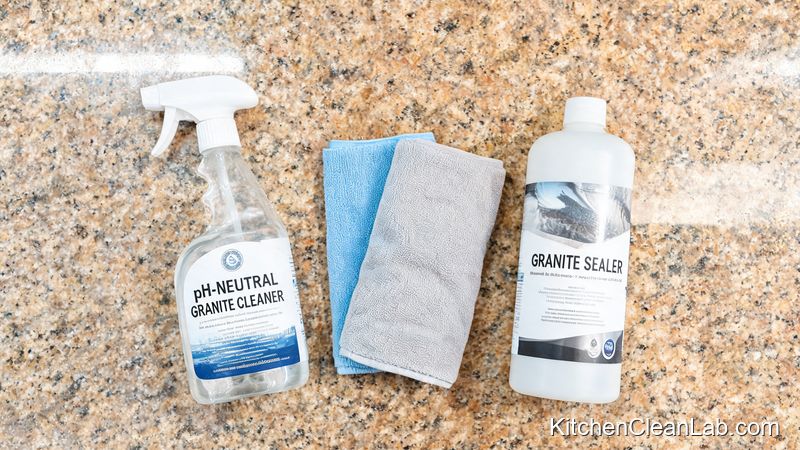
What you need: white microfiber cloths, pH-neutral granite cleaner, clean water, a dry towel, and a penetrating granite sealer if the water-bead test fails. Avoid colored cloths because dyes can transfer to light granite.
- Blot the spill immediately. Press a dry white cloth or paper towel into the liquid. Do not wipe in circles, which spreads the product into a larger area.
- Rinse with clean water. Dampen a fresh cloth with water and wipe the spot. Rinse the cloth frequently if the spill was sugary or acidic.
- Apply a pH-neutral granite cleaner. Spray a light mist over the area and wipe with smooth, overlapping passes. Do not soak the stone.
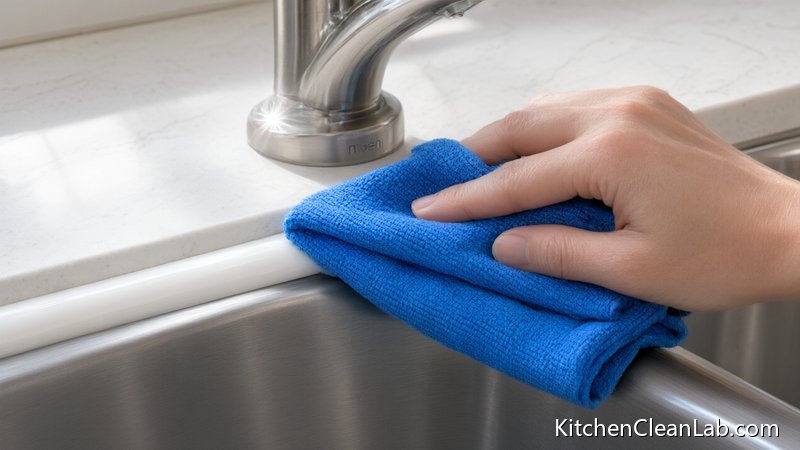
- Dry and buff. Use a dry microfiber cloth to remove all remaining moisture. Standing water is a common cause of water rings and mineral haze.
- Test the sealer. Place a few water drops on a high-use area. If the water beads for 10 minutes, the sealer is working. If it flattens or absorbs, the stone needs resealing.
- Treat existing stains by type. For oil marks, use a stone-safe poultice according to package directions. For acid etches, do not use more acid; call a professional for honing or polishing. For rust, use a non-acidic rust remover made for granite.
Common mistakes to avoid:
- Using vinegar, lemon, bleach, ammonia, glass cleaner, or all-purpose sprays.
- Scrubbing with steel wool, abrasive pads, or powdered cleansers.
- Mixing bleach with ammonia or acidic cleaners, which creates toxic gas.
- Storing liquid bath products directly on polished stone without a tray.
- Standing on the countertop or dropping heavy cast-iron pans near sink cutouts.
Frequently Asked Questions About Household Products That Damage Granite Countertops
These answers cover vinegar, the most dangerous cleaning products, stained granite repair, and heat protection for pots and pans. Knowing the source of the damage determines whether a poultice, stone-safe cleaner, honing, or professional polishing is required to restore the surface safely.
Can vinegar ruin granite countertops?
Yes. Vinegar is acidic enough to strip the protective sealer and etch a polished granite surface over time. Even diluted vinegar used as a “natural” cleaner can leave cloudy marks. Use a pH-neutral stone cleaner instead.
What household products should never be used on granite?
Avoid bleach, ammonia, vinegar, lemon or citrus cleaners, glass cleaners, disinfecting wipes containing citric acid, abrasive scrub powders, steel wool, nail polish remover, and solvent-based degreasers. These products either etch the stone, strip the sealer, scratch the polish, or leave chemical residue.
How do you fix stains from household products on granite?
First identify the stain. Oil stains usually darken the stone and respond to a stone-safe poultice. Acid etches feel rough and look cloudy; they need professional honing or polishing. Rust stains require a non-acidic rust remover labeled safe for granite. Always test on a hidden area first.
Is granite heat proof enough for hot pots?
Granite is heat-resistant, but it is not damage-proof. Direct hot cookware can stress the stone, weaken the sealer, and cause thermal shock cracks near seams. Use a trivet, silicone pad, or dry towel under hot pots and pans every time.
Final Word: Your Granite Countertop Protection Plan
Protecting granite is not about avoiding life in the kitchen; it is about controlling contact time and keeping harsh household products off the stone. A simple daily routine and a few barrier tools prevent most etching, staining, and costly repairs.
Most granite damage is not caused by one dramatic spill. It comes from repeated exposure to the wrong household products. The fix is usually simple: keep barriers on the stone, clean with pH-neutral products, and reapply sealer before the water-bead test fails.
If you already see dull spots, dark stains, or rust rings, stop using the offending product immediately. Photograph the area and contact a stone restoration professional if poultices or stone-safe cleaners do not improve the spot. Prompt action can often save an otherwise permanent stain.