Why Natural Ingredients Break Down Oven Glass Grease
Baking soda is alkaline enough to neutralize acidic food grease but gentle enough to avoid scratching glass, while distilled white vinegar removes mineral haze and Dawn dish soap emulsifies polymerized oil. Used together on a cool oven door, they lift baked-on grime without ammonia, lye, or oven-cleaner fumes.
Greasy oven glass door haze is not just surface oil. Every time you roast a chicken, bake a casserole, or broil cheese-topped dishes, tiny fat droplets vaporize and bake onto the glass. High heat polymerizes those fatty acids into a hard amber film. Most commercial sprays dissolve this with strong alkali like sodium hydroxide, but those chemicals can irritate lungs and skin. Natural ingredients work through a different mechanism: gentle alkalinity, acid reactivity, and surfactant action. The result is a door you can see through clearly without exposing your family or pets to caustic residue.
Here is a quick-reference list of natural cleaners and how they behave on oven glass:
- Baking soda (sodium bicarbonate): pH around 8.4; neutralizes acidic grease; fine abrasive buffs away carbon without deep scratches.
- Distilled white vinegar (5% acetic acid): cuts through hard water spots and mineral film; deodorizes; helps rinse residual baking soda.
- Dawn dish soap (blue formula): a proven grease-cutting surfactant; a small amount breaks the surface tension of oil and makes it wipeable.
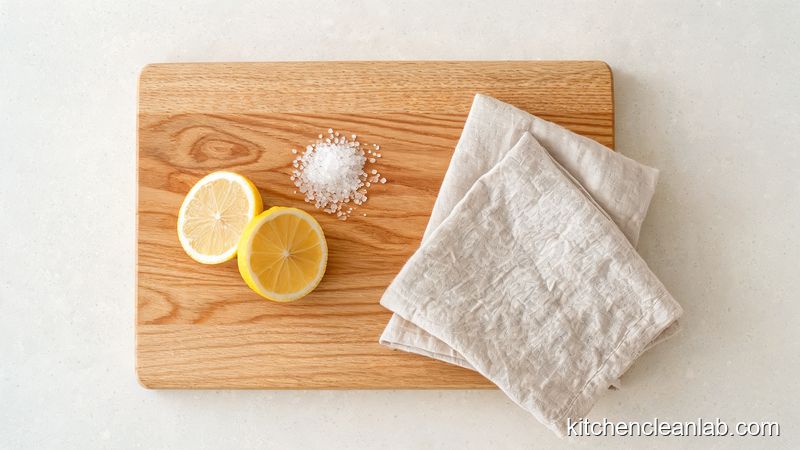
- Lemon juice: mild citric acid for light haze; safe on glass but not aggressive enough for heavy carbon by itself.
- Salt: optional mild abrasive for isolated carbon flakes; use only as a paste component on standard clear glass, never on screen-printed or tinted glass.
Tools and Prep: Set Up a Safe Cleaning Station
Cool the oven completely, open the door to a comfortable working angle, and lay a towel under the door lip to catch drips. You’ll need a non-scratch sponge, microfiber cloths, a plastic razor scraper, a spray bottle, and your chosen natural paste or spray.
Before you begin, remove loose crumbs with a dry microfiber cloth. Pull the racks if they block the glass. Check the door gasket and hinges; avoid saturating those areas because trapped moisture can damage the seal or lead to rust. If your oven door has a screen-printed heat pattern or tinted coating, test any paste on a small corner first. For most clear glass panels on standard home ovens, the methods below are safe when used with non-abrasive tools.
Safety note: Never attempt to clean oven glass while the oven is warm. Sudden temperature changes can crack tempered glass. Also avoid mixing baking soda with bleach, ammonia, or commercial oven cleaners; although baking soda and vinegar are safe together, combining household chemicals can create dangerous fumes.
Step-by-Step: How to Clean Greasy Oven Glass Doors with Natural Ingredients
Apply a thick baking soda paste to cool glass, let it dwell for 20–30 minutes or overnight for deep carbon, then spray with diluted vinegar and wipe with a damp microfiber cloth. If the glass feels sticky yellow rather than hard brown, add one teaspoon of Dawn dish soap to the paste before applying.
The three methods below increase in strength from light maintenance to heavy-duty degreasing. All are safe for the interior glass of a cool oven door when you avoid the gasket and use soft tools.
Method 1: Baking Soda and Water Paste (Best for Heavy Overnight Buildup)
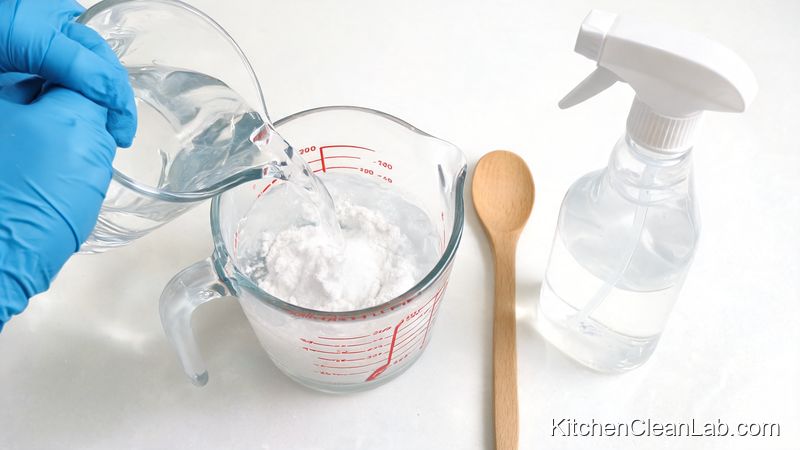
- In a bowl, combine 1/2 cup baking soda with 2–3 tablespoons warm water. Stir until the texture resembles pancake batter. Add water a few drops at a time if it feels dry.
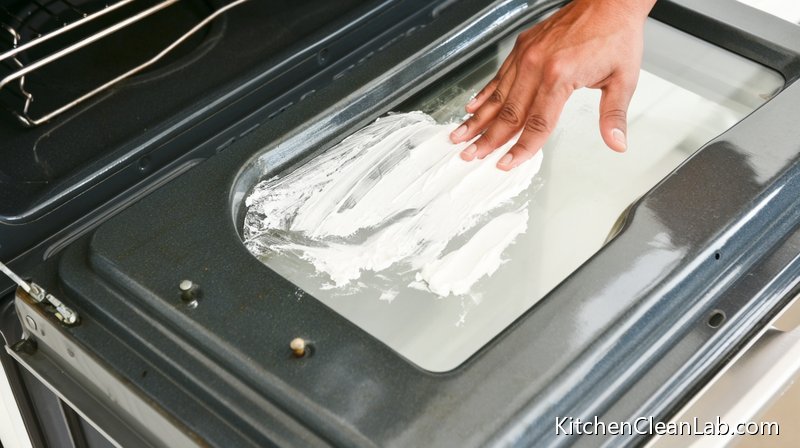
- Remove the oven racks. Spread the paste over the interior glass with a gloved hand, soft sponge, or silicone spatula. Keep it off the door gasket, vents, and hinges.
- Leave the paste on the glass for at least 20 minutes. For years of dark amber residue, leave it for 8 hours or overnight. If it starts to dry, lightly mist with water.
- Wipe off the paste with a damp non-scratch sponge or paper towels. Use a plastic razor scraper on stubborn carbon flakes, holding it at a low angle to avoid scratching.
- Spray the glass with a 3:1 water-to-vinegar solution, then buff dry with a clean microfiber cloth until no haze remains.
Method 2: Baking Soda and Vinegar Fizzing Treatment (Fast 30-Minute Clean)
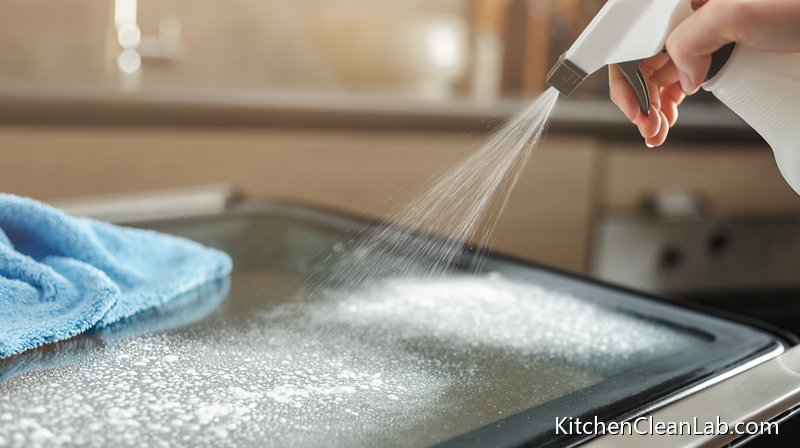
- Sprinkle an even layer of dry baking soda over the glass. The layer should be visible but not so thick that it slides off.
- In a spray bottle, mix 3 parts water to 1 part white vinegar. Spritz the baking soda until it begins to bubble. This carbon dioxide release helps lift grease from the surface.
- Let the mixture sit for 15–20 minutes. Re-spritz if it stops fizzing or starts to dry; keeping it damp is critical.
- Wipe with damp paper towels or a microfiber cloth. For thick areas, gently agitate with a soft-bristled brush.
- Rinse with plain water and dry with a fresh microfiber towel to prevent streaks.
Method 3: Baking Soda and Dawn Dish Soap (Best for Sticky Yellow Grease)
- Mix 1/4 cup baking soda with 3 tablespoons Dawn dish soap in a bowl until it forms a thick toothpaste-like paste.
- Spritz the glass with water. Spread the paste in an even, thick layer over the greasy areas using a gloved hand or sponge.
- Let it dwell for 30–60 minutes. Check periodically and mist with water if it begins to dry.
- Scrub lightly with a non-scratch sponge or soft brush. Dawn suds will turn brown as the grease releases.
- Rinse repeatedly with a damp cloth until all soap residue is gone. Finish with a 3:1 water-to-vinegar spray and dry with a clean microfiber cloth.
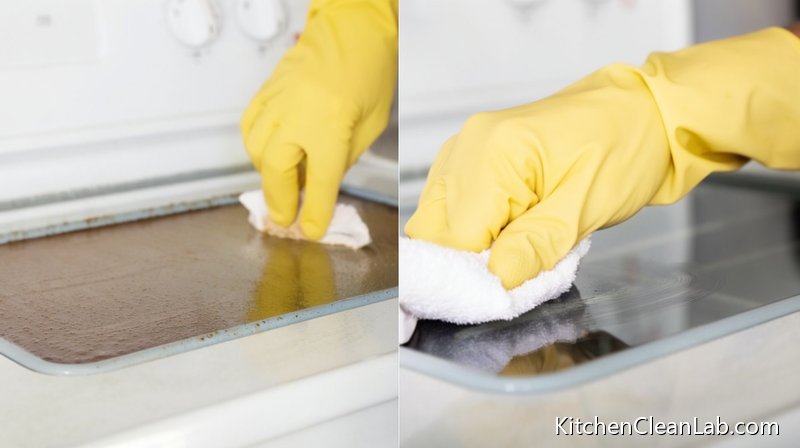
Common Mistakes That Ruin Oven Glass
Cleaning hot glass can cause thermal cracking, and abrasive tools like steel wool leave micro-scratches that make future grease stick faster. The biggest mistake is not rinsing thoroughly enough; leftover baking soda or soap will bake into a white film and smoke during the next preheat.
Even natural cleaners can damage an oven door if used incorrectly. Avoid these pitfalls to preserve the glass and the appliance’s finish.
- Applying paste to warm glass: The paste dries instantly and the temperature change can stress the panel. Always wait until the oven is cool to the touch.
- Using steel wool, metal scrapers, or abrasive pads: Tempered oven glass scratches more easily than it looks. Scratches collect grease and make future cleaning harder.
- Skipping the final rinse: Baking soda residue is white and powdery; dish soap residue is streaky. Both will appear after the next baking cycle and can create smoke or odor.
- Saturating the door gasket and hinges: Vinegar and water can degrade the rubber seal and damage internal door components. Wring out your cloth before wiping near the edges.
- Mixing natural cleaners with commercial products: Never combine baking soda or vinegar with bleach, ammonia, or leftover oven cleaner. Fumes from mixing can be dangerous.
How to Keep Oven Glass Clean Longer
Wipe the interior glass with a damp microfiber cloth after every bake, before grease has a chance to polymerize. Place a rimmed sheet pan on the bottom rack under casseroles, pies, and roasted meats to catch splatter.
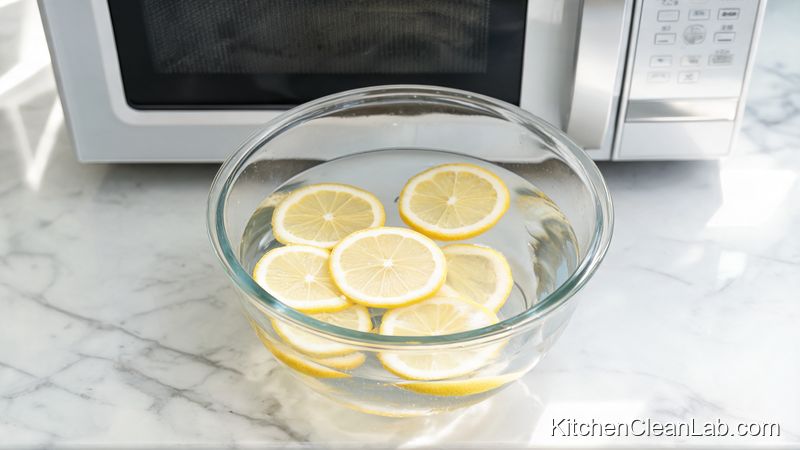
Oven glass stays clear when you treat maintenance as part of the cooking routine. A quick 30-second wipe after the oven cools prevents the amber film from returning. For extra protection, use an oven-safe splatter guard over dishes that bubble or spit. Run a steam-cleaning session once a month: place a heatproof bowl of water with two lemon slices on the middle rack, heat the oven to 200°F for 20 minutes, then wipe down the glass while it is still slightly warm but safe to touch.
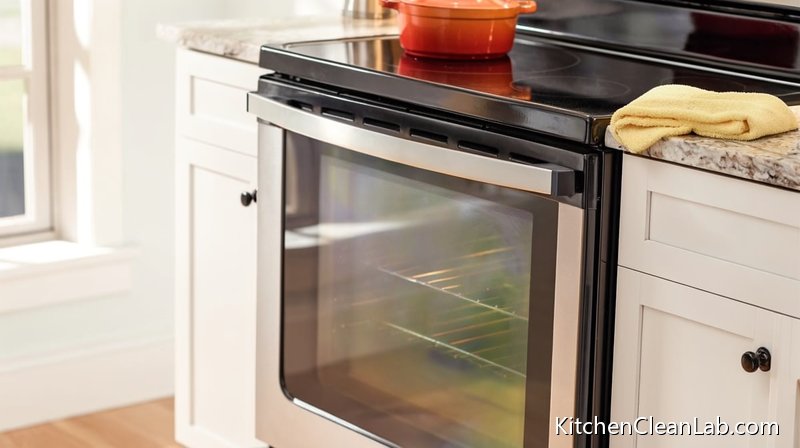
FAQ: Natural Oven Glass Cleaning Questions
These answers cover the most searched questions about non-toxic oven door glass cleaning. Use them to troubleshoot your specific grease problem without switching to caustic commercial sprays.
Can you use baking soda and vinegar together to clean oven glass?
Yes. Baking soda and vinegar react to form carbon dioxide bubbles that loosen grease from the glass surface. The reaction is short-lived, so keep the mixture damp and wipe while it fizzes. For heavy greasy buildup, add a few drops of Dawn dish soap to the baking soda paste before applying vinegar.
How long should baking soda sit on oven glass?
For light film and water spots, leave baking soda paste on the glass for 15–20 minutes. For yellowed or dark brown polymerized grease, extend the dwell time to one hour. For extreme carbon buildup, you can leave the paste overnight. Check it every few hours and mist with water so it does not dry out.
Is Dawn dish soap safe for oven glass?
Yes, Dawn is safe on oven door glass when used in small amounts. Mix 1–2 teaspoons into a baking soda paste to boost grease cutting. Rinse thoroughly with water and a 3:1 water-to-vinegar spray. Residual dish soap can smoke or streak when the oven is next heated.
Does lemon juice clean oven glass?
Lemon juice is a mild acid that removes light mineral haze and gives a fresh scent, but it is not strong enough for heavy polymerized grease on its own. Use a paste of equal parts baking soda and lemon juice for light stains, or use lemon slices in steam cleaning as a follow-up maintenance step.
Final Verdict: Choose the Right Natural Method for Your Oven Door
For routine haze, use a fast baking soda and vinegar spray. For sticky yellow grease, add Dawn dish soap to the paste. For dark brown carbon that has been baked on for months, apply a thick baking soda and water paste overnight, then finish with a 3:1 water-to-vinegar rinse.
The best natural cleaner is the one that matches the age and thickness of the grease. Lightly soiled glass responds to 15 minutes of fizzing action. Medium grime needs the surfactant boost from dish soap. Severe carbon demands dwell time, not extra scrubbing. Whichever method you choose, let the ingredients do the work, keep everything damp, and rinse completely. You’ll get a clear oven door without harsh chemicals, no oven self-clean cycle, and no scratched glass.