Why Clean Cast Iron Without Soap? Understanding Seasoning and Non-Toxic Care
You can clean a cast iron skillet without soap because seasoned iron has a polymerized oil surface that responds well to mild abrasives and hot water. Non-toxic cleaning preserves that patina, avoids detergent residue, and removes stuck food with simple pantry staples. Choose soap-free methods when your seasoning is new, flaky, or you simply prefer fewer cleaning chemicals.
Cast iron seasoning is not a greasy film; it is a heat-polymerized layer that fills pores. Harsh detergents and lye-based soaps were historically a threat, but modern dish soap is mild. Still, soap-free methods are useful because they rely on mechanical action rather than surfactants, reducing the chance of over-stripping when you are in a hurry. They are also non-toxic, affordable, and safe for cookware used daily. Before cleaning, remember that cast iron hates thermal shock and standing water. Use warm or hot water, never cold water on a hot pan, and always dry and re-oil immediately.
The 5 Non-Toxic Cleaning Methods at a Glance
Those five methods are coarse salt and oil, a chainmail scrubber with warm water, a baking soda simmer, a raw potato and salt scrub, and hot water deglazing with a wooden spatula. Each lifts food without soap; choose based on residue type and pan condition. Always dry thoroughly and apply a thin oil coat afterward.
| Method | Best For | Key Tool | Time | Seasoning Risk |
|---|---|---|---|---|
| Coarse Salt and Oil | Light stuck-on crumbs and oily film | Kosher salt, paper towel | 2–5 min | Very low |
| Chainmail Scrubber | Caked-on carbon and rough spots | Stainless steel chainmail | 1–3 min | Low |
| Baking Soda Boil | Burnt sauces and sugar-based residue | Baking soda, water, wooden spatula | 10–15 min | Moderate |
| Potato and Salt | Light rust and starchy film | Raw potato, coarse salt | 3–5 min | Low |
| Hot Water Deglaze | Fresh fond and stuck-on bits | Hot water, wooden spatula | 5 min | Very low |
Method 1: Coarse Salt and a Little Oil
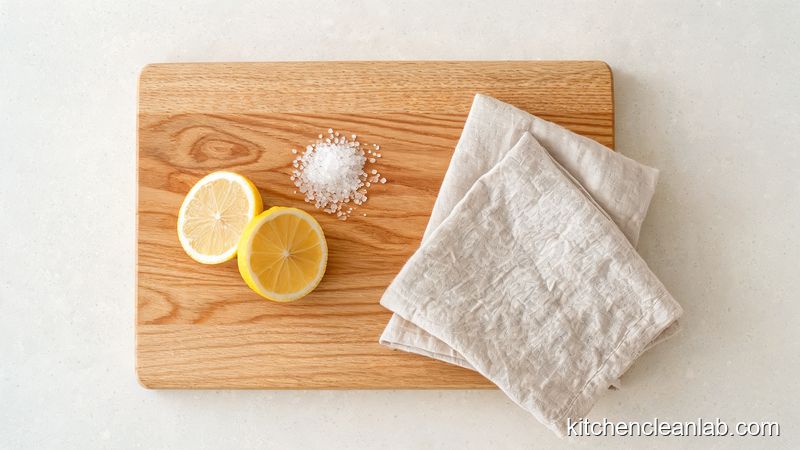
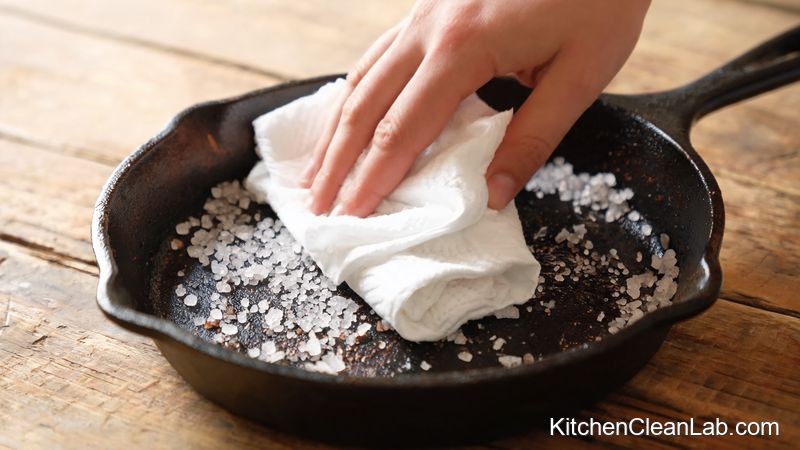
Coarse salt works as a mild abrasive that scrubs away stuck food without scratching cast iron seasoning. Add 2 tablespoons of kosher or sea salt and up to 1 teaspoon of oil to a warm skillet, then scrub with a folded paper towel or stiff brush. The salt dissolves slightly and lifts residue; the oil loosens oily film.
Step-by-step:
- Let the skillet cool until it is warm but safe to touch.
- Sprinkle 2 tablespoons of coarse kosher salt over the cooking surface. Avoid fine table salt; it dissolves too quickly and can over-salt food residue.
- Add 1 teaspoon of high-smoke-point oil if you are dealing with oily or sticky residue. Good options are avocado oil, canola oil, or grapeseed oil.
- Scrub in circular motions with a folded paper towel, lint-free rag, or stiff nylon brush. Use moderate pressure.
- Wipe out the dirty salt and food particles. Discard the salt; do not rinse it down the drain if you have a garbage disposal, as large salt crystals can build up.
- Rinse the skillet briefly with warm water, then dry and re-oil according to the post-cleaning steps below.
Method 2: Chainmail Scrubber with Warm Water
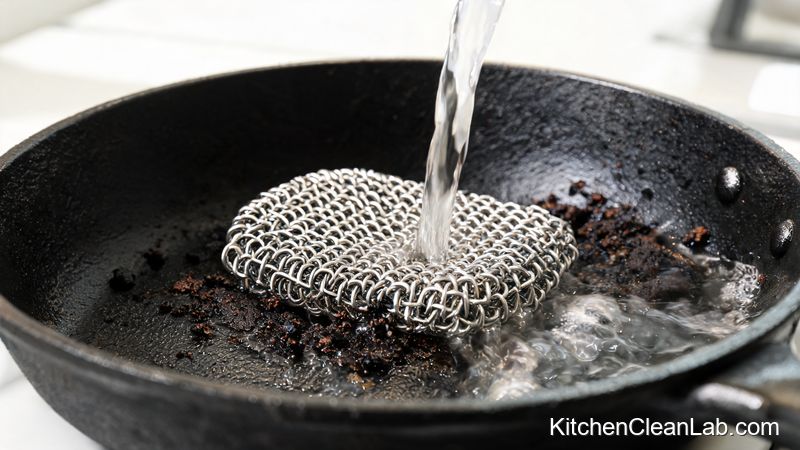
A stainless steel chainmail scrubber removes caked-on carbon without soap because its rounded rings scrape away residue while gliding over the polymerized seasoning. Add warm water to a warm skillet, scrub in small circles, then rinse, dry, and oil. Use light pressure to avoid wearing down thin seasoning.
Step-by-step:
- Make sure the skillet is warm but not hot. Add about 1/2 cup of warm water to loosen surface debris.
- Place the chainmail scrubber flat against the cooking surface and use small, circular motions. Focus on corners and areas with carbon buildup.
- Apply light, even pressure. Let the rings do the work; aggressive gouging can remove seasoning, especially on new pans.
- For severe buildup, add a small amount of coarse salt with the water to increase abrasive action.
- Rinse the skillet and the chainmail scrubber. Most stainless steel scrubbers are dishwasher safe, but hand-washing extends their life.
- Dry and re-oil immediately.
Safety note: Never use chainmail on enameled cast iron. It is only suitable for bare or seasoned cast iron. Avoid steel wool or copper scrubbers, which can leave metal fragments and damage seasoning more aggressively.
Method 3: Baking Soda Boil for Burnt-On Residue
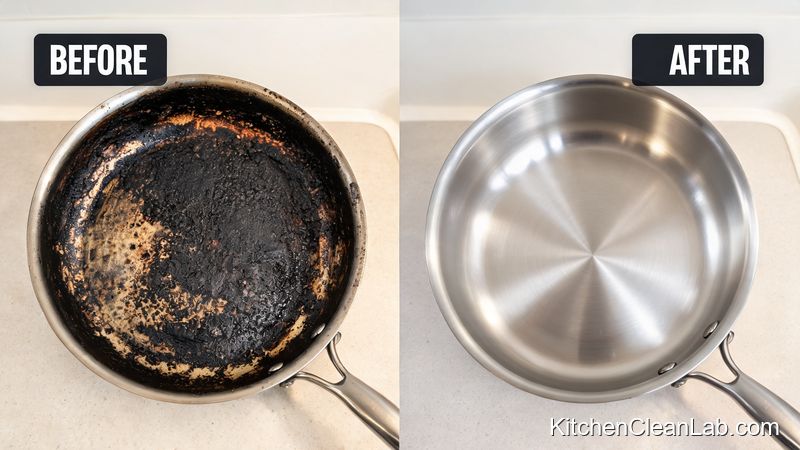
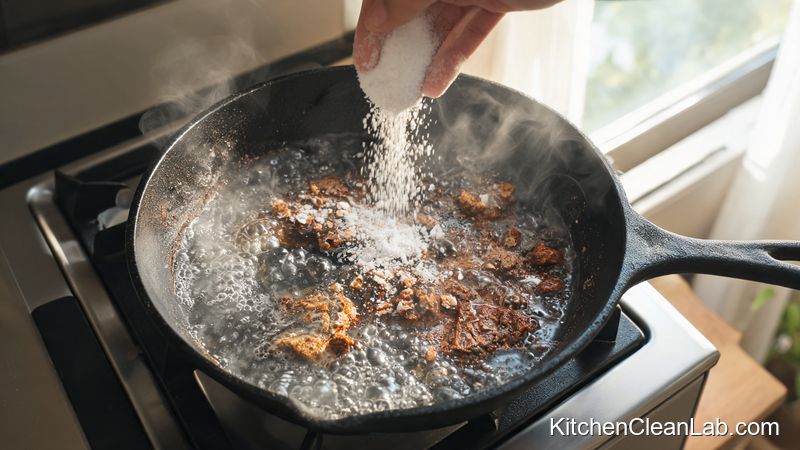
Baking soda is a mild alkaline cleaner that loosens carbonized sugars, sauces, and burnt oils without soap. Simmer 2 tablespoons of baking soda with enough water to cover the bottom for 10–15 minutes, then scrape with a wooden spatula. This method is best for heavy buildup but can soften weak seasoning if overused.
Step-by-step:
- Place the skillet on the stove and add 2 tablespoons of baking soda.
- Add enough water to cover the burnt residue by about 1/4 inch. Do not use cold water on a hot pan; let the pan cool first.
- Bring the water to a gentle simmer over medium-low heat. Simmer for 10 to 15 minutes, checking occasionally to avoid boiling dry.
- Turn off the heat and let the liquid cool slightly. Carefully pour off the water.
- Scrape with a flat wooden spatula or scrub with a stiff nylon brush to remove lifted residue.
- Rinse with warm water, dry completely, and apply a thin layer of oil.
Common mistake: Simmering too long or using high heat can soften the seasoning and expose bare iron. If water turns dark quickly or you see dull gray patches, stop and re-season the pan.
Method 4: Potato and Salt Scrub for Starchy Residue and Light Rust
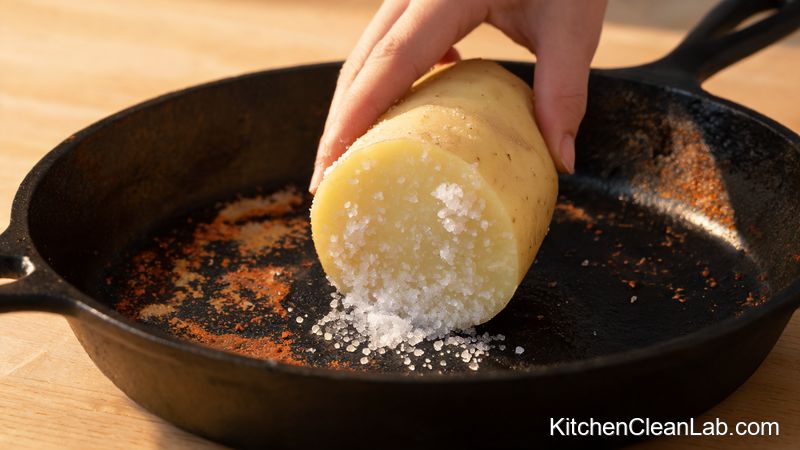
A raw potato dipped in coarse salt uses mild oxalic acid and mechanical abrasion to lift light rust and starchy film without soap. Cut a potato in half, dip the cut side in salt, and scrub the warm skillet in circles. Rinse, dry, and oil immediately to prevent flash rust.
Step-by-step:
- Cut a raw russet or white potato in half. Leave the skin on for a better grip.
- Sprinkle 2 tablespoons of coarse salt onto the cooking surface or dip the cut potato directly into a small dish of salt.
- Scrub the skillet with the salted potato half using circular motions. Apply moderate pressure on rough spots or light rust stains.
- Switch to a fresh potato slice if the cut side becomes slimy or coated with residue.
- Rinse with warm water, dry thoroughly, and re-oil. The potato method is especially useful for starchy residue from tortillas, potatoes, or pancakes.
Safety warning: This method is not a replacement for deep rust removal. If rust is thick or pitted, use a 50/50 vinegar-water soak and re-seasoning process, and keep ventilation on. Do not use the potato method on a very hot pan, as steam can burn you.
Method 5: Hot Water Deglazing with a Wooden Spatula
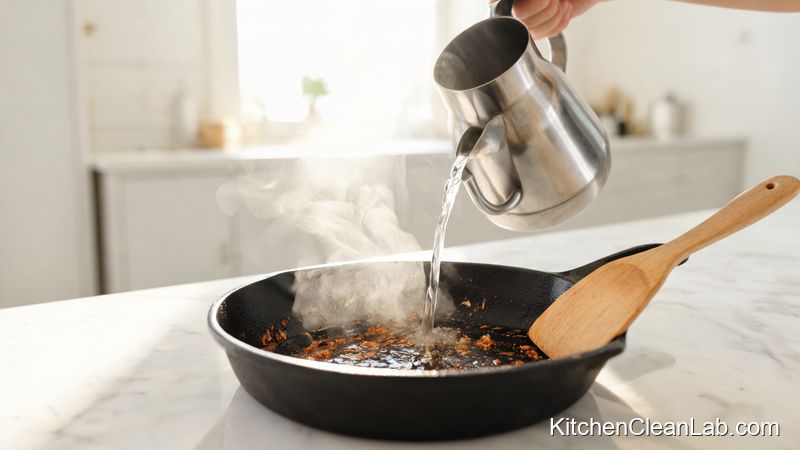
Hot water deglazing uses heat and water to dissolve fresh fond and stuck food before it carbonizes. Add 1 cup of hot water to a warm skillet, let it bubble for 1–2 minutes, and scrape gently with a flat wooden spatula. This method avoids soap and abrasive cleaners entirely.
Step-by-step:
- After cooking, turn off the burner and let the skillet cool for 1–2 minutes. It should still be warm but not smoking.
- Add 1 cup of hot water slowly to avoid steam burns. Do not pour cold water into a hot cast iron pan; thermal shock can crack the iron.
- Let the water bubble and soak for 1–2 minutes. The heat helps loosen water-soluble proteins and sugars.
- Scrape gently with a flat wooden spatula to remove stuck bits. Work from the edges toward the center.
- Pour out the water and food particles. If residue remains, repeat once or use a small amount of coarse salt.
- Rinse, dry, and re-oil.
Best for: This method works immediately after searing meat, frying eggs, or cooking starchy sauces. Once food cools and hardens, you may need the chainmail or baking soda method instead.
How to Dry, Oil, and Store Cast Iron After Soap-Free Cleaning
The most important step after soap-free cleaning is to remove all moisture and apply a very thin oil coat. Place the skillet over low heat for 2–3 minutes until bone dry, rub 1/2 teaspoon of high-smoke-point oil across the entire surface, then buff off excess. This prevents rust and maintains the nonstick seasoning.
- Wipe the skillet with a lint-free cloth or paper towel to remove most water.
- Set the pan over low heat for 2–3 minutes or until you see no moisture. The handle will get hot; use an oven mitt.
- Pour 1/2 teaspoon of oil into the warm skillet. Use a folded paper towel or rag to rub the oil over the cooking surface, sides, exterior, and handle.
- Buff the entire surface with a dry cloth to remove excess oil. The pan should look dark and satiny, not greasy or sticky.
- Store the skillet in a dry cabinet. If stacking pans, place a paper towel or pan protector inside to absorb any moisture.
Common Mistakes That Ruin Cast Iron Seasoning
Soap-free cleaning fails when you soak the pan, scrub too aggressively, or skip drying. Avoid these mistakes to keep the seasoning intact and the surface rust-free. The biggest enemies are standing water, thermal shock, and over-abrasive pads.
- Soaking overnight: Even plain water can penetrate weak seasoning and cause rust. Clean shortly after use.
- Using steel wool or copper scrubbers: These can tear through seasoning and leave metal particles. Chainmail is a safer alternative.
- Pouring cold water into a hot pan: Thermal shock can crack cast iron. Use hot water and allow gradual cooling.
- Skipping the drying step: Air-drying promotes flash rust. Always heat the pan briefly to evaporate moisture.
- Over-oiling: Too much oil becomes sticky and can smoke or turn rancid. Wipe off excess until the pan looks almost dry.
- Over-boiling with baking soda or vinegar: Prolonged alkaline or acidic exposure can etch the seasoning. Limit these treatments to 10–15 minutes and re-season afterward.
Frequently Asked Questions About Cleaning Cast Iron Without Soap
These are the most common questions about soap-free cast iron care. The short answer: yes, you can clean cast iron with only water, chainmail, salt, or baking soda—as long as you dry and oil it immediately.
Can you clean a cast iron skillet with just water?
Yes. Hot water and a wooden spatula or stiff brush can remove many fresh residues. The key is to avoid soaking and to dry the skillet over low heat immediately. If water alone leaves a sticky film, add coarse salt or use a chainmail scrubber.
Does baking soda damage cast iron seasoning?
It can if you simmer it too long or use high heat. Baking soda is mildly alkaline and can soften weak seasoning after 15 minutes or more. Use 2 tablespoons, keep a gentle simmer, and stop if the pan looks dull or gray. Always re-oil after baking soda cleaning.
Is chainmail safe for cast iron?
Yes, stainless steel chainmail is safe for bare or seasoned cast iron when used with light pressure. The rounded rings scrape off carbon without cutting into the iron. Avoid using chainmail on enameled cast iron, and do not use copper or steel wool pads.
How do you clean cast iron without soap and avoid rust?
After any soap-free method, rinse with warm water, dry completely with a cloth, then place the skillet over low heat for 2–3 minutes. Rub a very thin layer of high-smoke-point oil over the entire pan, buff off excess, and store in a dry place. Never leave it in the sink or allow it to air-dry.
Final Thoughts on Non-Toxic Cast Iron Cleaning
Soap-free cast iron cleaning is less about tradition and more about using the right mechanical and mild alkaline tools for the job. Coarse salt, chainmail, baking soda, potato, and hot water each solve specific residues without stripping the seasoning. Pick one method based on the mess, then always dry and re-oil the pan. Over time, this routine builds a slick, dark patina that makes future cleanups even easier.