Why Does Your Ice Cube Machine Smell Bad?
Smelly ice cube machine odors usually come from three places: volatile food odors circulating in the freezer, microbial growth inside the damp ice bin or water line, and stale water or an overdue filter. You have to remove the source, clean the ice-contact surfaces, and replace the affected water or ice.
Ice is not a solid block of protection. It has microscopic pores and a large surface area, so it absorbs odor molecules just like an open box of baking soda. If you store uncovered fish, garlic, onions, or leftover stew in the freezer, sulfur and amine compounds can travel through the air and bind to the ice. A single-evaporator refrigerator can make this worse by moving air between the fresh-food and freezer compartments.
Use this quick diagnosis before you clean:
- Only stored ice smells: The ice bin, scoop, tray, or nearby freezer air is the likely issue.
- Fresh ice smells as soon as it is made: Look for a dirty ice maker, water line, filter, or a strong odor in the freezer or refrigerator.
- The ice smells sour, rotten, or chemical: Stop using it. Find and remove spoiled food, spills, or cleaner residue before making more.
How to Get Rid of Smelly Ice Cube Machine Odors Fast: Step-by-Step
Discard all smelly ice, switch off or lift the icemaker shutoff arm, locate and remove the spoiled food or spill, wash removable parts with warm water and mild dish soap, rinse and dry completely, then run and discard a test batch.
Safety note: Unplug the appliance or switch off the ice maker circuit before cleaning if you can safely do so. Wear kitchen gloves when handling spoiled food or cleaning chemicals, and open a window or turn on the exhaust fan to keep the area ventilated.
- Discard all exposed ice. Empty the ice bin or tray completely. Do not try to save cubes that already taste or smell. If your ice maker has an automatic fill cycle, turn it off or lift the shutoff arm according to the manual.
- Remove the odor source. Inspect both freezer and fresh-food compartments. Check uncovered leftovers, leaking packages, old produce, meat or seafood packages, freezer burn, and spills under drawers. Seal usable food in airtight containers, and discard anything spoiled. This step matters more than any deodorizer.
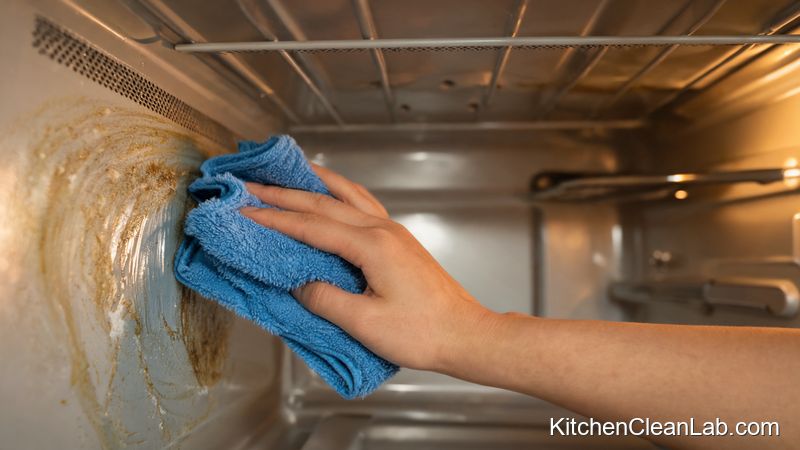
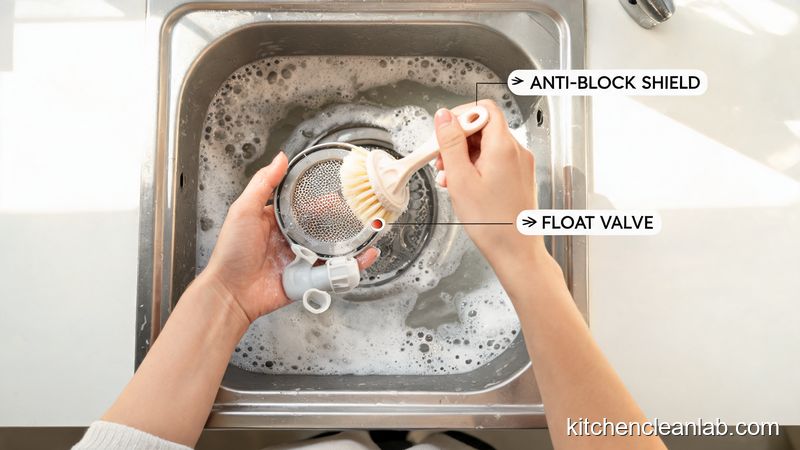
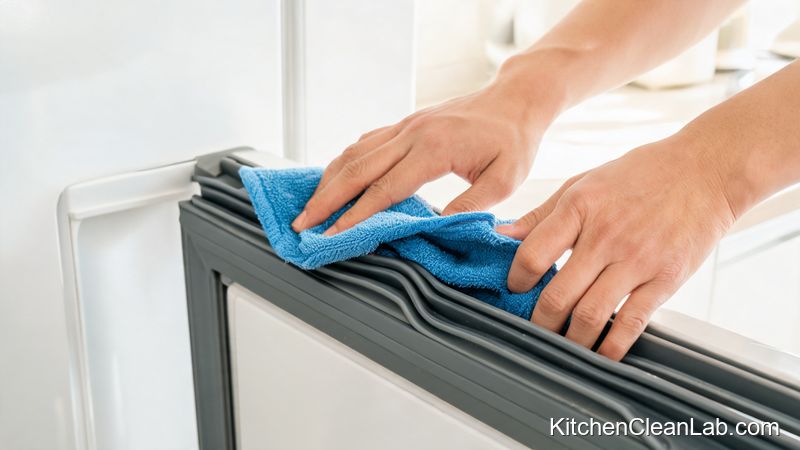
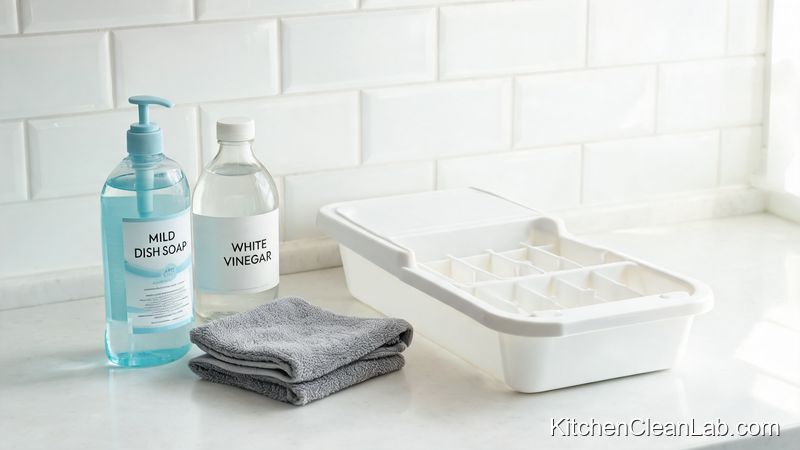
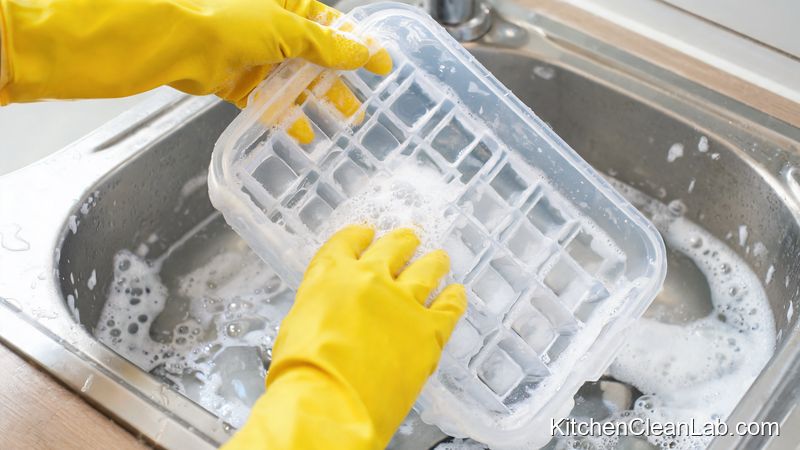
- Wash removable ice-contact parts. Take out the ice bin, scoop, tray, and any removable parts the manufacturer permits. Wash them in warm water with mild dish soap, then rinse thoroughly. Wipe the surrounding interior with a clean cloth and the cleaner specified in your appliance manual. Never spray cleaner into the ice maker mechanism, dispenser chute, fan openings, or electrical components.
- Sanitize if needed. If you see visible mold, slime, or a persistent sour odor, use a food-safe sanitizing rinse only if the manufacturer permits. For portable ice makers, run the manufacturer's cleaning cycle with citric acid or a designated ice machine cleaner. Wear kitchen gloves and keep the area ventilated.
- Dry everything before reinstalling. Dry the bin and tray fully with a clean towel and leave them open briefly if needed. Moisture plus food residue preserves odors and encourages new growth.
- Run and discard a test batch. After cleaning, run the ice maker again. Discard the first batch if the manual recommends it or if it still has an odor. Make another small batch and smell it before serving.
Quick-reference odor source and fast fix:
| Odor Source | Fast Fix |
|---|---|
| Spoiled food or spill | Remove, wash surface with dish soap, dry fully |
| Damp ice bin or tray | Wash with warm soapy water, rinse, dry completely |
| Mold or slime in reservoir | Use manufacturer-approved cleaning cycle or food-safe sanitizer |
| Stale refrigerator water filter | Replace with exact filter type; flush line per manual |
What to Do When Fresh Ice Still Smells
If fresh ice still smells after the freezer and bin are clean, compare the cold tap or dispenser water with a newly made cube. Replace the water filter if the water itself has an odor, and clean the ice maker reservoir, chute, and water line according to the owner's manual.
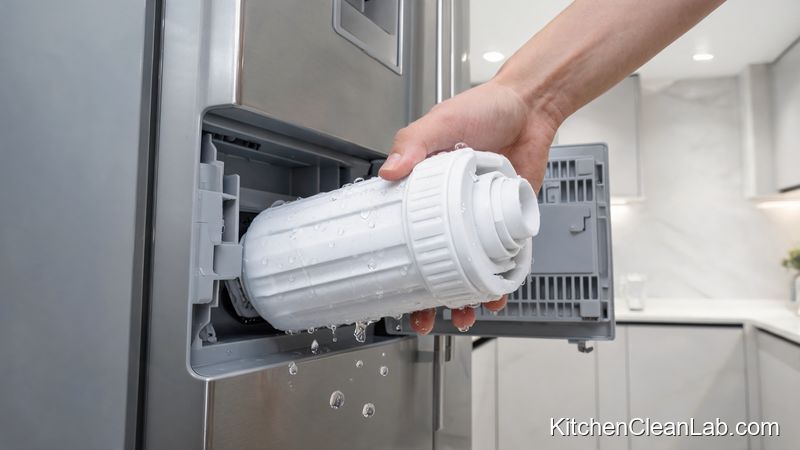
Sometimes the odor is not coming from freezer air. Run a three-part smell test:
- Incoming tap or filtered water: Pour a glass and smell it before freezing. If it smells like sulfur, chlorine, or earth, the water supply may be the problem.
- Refrigerator dispenser water: If the dispenser water is fine but fresh ice is not, the ice maker itself is likely dirty.
- Freshly made cube: Smell and taste a new cube after the machine has been cleaned. If it still has an odor, inspect the ice maker tray, chute, and bin for residue.
Replace the water filter only with the exact type specified for your appliance. A wrong or incorrectly installed filter can leak, reduce flow, or introduce trapped air and old carbon fines into the ice. After replacing, flush the water line for several gallons or as directed in the manual.
If you see visible mold, slime, or a persistent chemical smell after cleaning, stop using the ice. Contact the manufacturer or a qualified appliance professional when the affected part cannot be safely cleaned or accessed.
How to Prevent Smelly Ice Cube Machine Odors From Returning
Keep pungent foods sealed, close the ice bin promptly, rotate stored ice weekly or monthly, and leave room for airflow. Use an open container of baking soda in the refrigerator only as a support, never inside the ice bin or ice maker.
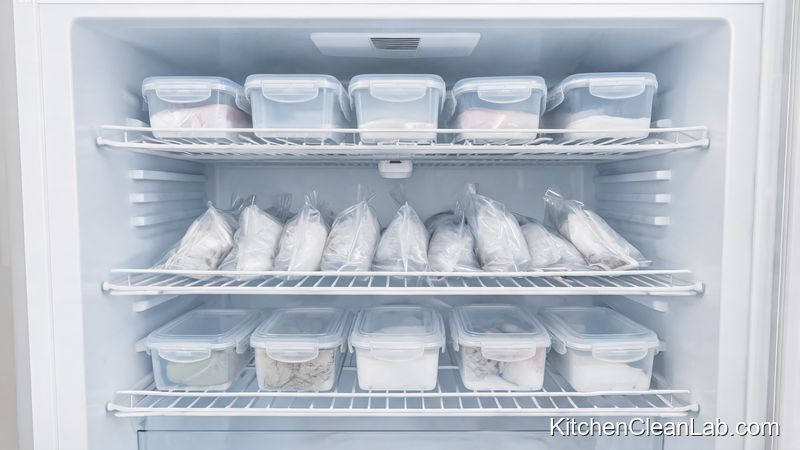
Prevention is easier than repeated deep cleaning. The goal is to reduce the amount of odor molecules in the air and keep the ice-contact surfaces dry and covered.
- Seal strong-smelling foods. Use tight-fitting containers and freezer-safe bags. Press excess air out and label items with a date.
- Keep the ice bin closed and clean. Return the bin promptly after scooping and keep the scoop clean. Never store open food in or on the ice bin.
- Use ice regularly. Old ice has more time to sit near circulating odors. Rotate or empty the bin when ice has been stored for a long time or after a major odor event.
- Leave room for air circulation. Do not pack food tightly against vents or block the ice maker. At the same time, avoid leaving uncovered foods exposed in the airflow.
- Add baking soda outside the ice bin. Place an open container in the refrigerator or freezer away from the ice maker. Replace it according to the product directions. Baking soda is a support measure, not a substitute for cleaning.
Common Mistakes That Make Ice Machine Odors Worse
Avoid masking the smell with scented sprays, putting loose baking soda directly in the ice bin, re-freezing smelly cubes, or overpacking the freezer. These moves trap the source or introduce chemical residue that ruins the next batch.
- Masking odors with bleach spray or fragrance: This can taint ice and may damage plastic surfaces or gaskets.
- Putting baking soda in the ice bin: Loose powder can end up in the ice and does not clean the actual source.
- Skipping the drying step: Moisture reactivates odors and encourages mold or biofilm.
- Overpacking the freezer: Blocked vents force odor-laden air across the ice maker.
- Re-freezing smelly cubes: Freezing does not remove absorbed volatile compounds.
People Also Ask: Smelly Ice Cube Machine Questions
The same principle applies to almost every odor scenario: remove the source, wash and dry all ice-contact surfaces, and replace the water filter or water supply if fresh water itself carries the smell. These quick answers cover specific situations.
Why does my ice maker smell like garlic or old freezer?
Ice is porous on a microscopic level, so it readily absorbs volatile sulfur compounds from garlic, onions, fish, and spoiled food. The freezer air carries those odor molecules into an open or poorly sealed ice bin. Clean the bin, seal or discard the food, and run a fresh batch.
Can baking soda remove ice maker odors?
An open box of baking soda can reduce mild ambient refrigerator or freezer odors, but it cannot clean a dirty ice bin, dirty water line, or spoiled food spill. Keep it in a separate compartment, replace it regularly, and never put loose baking soda inside the ice bin.
How often should I clean an ice cube machine?
Wash the ice bin and scoop at least once a month, or more often if you store strong-smelling foods. Run a manufacturer-approved cleaning or sanitizing cycle on portable ice makers every three to six months, and replace the water filter on a built-in unit according to the manual, usually every six months.
Why does new ice still smell after I cleaned the machine?
If fresh ice still smells after cleaning, the issue is likely stale water, a dirty water filter, biofilm in the reservoir or water line, or odor trapped in the dispenser chute. Compare the incoming water smell, replace the filter if needed, and follow the manufacturer's cleaning instructions for the water system.
Keep the Ice Clean, Dry, and Isolated
Fresh ice stays odor-free when you remove the smelly source, wash and fully dry the ice bin, and seal strong-smelling foods. If the machine still produces smelly ice after a clean reset, stop using it and inspect the water filter, water supply, and internal water line.
The fastest way to get rid of smelly ice cube machine odors is not a deodorizer. It is a hard reset: throw away the affected ice, remove the spoiled food or spill, clean every permitted ice-contact surface, and dry the parts before you make a new batch. Keep the bin covered, replace the filter on schedule, and use ice regularly so it does not sit near circulating odor molecules.
If you follow that routine and the odor persists, you may have a contaminated water line, a blocked drip tray, or mold inside a part you cannot safely reach. Stop using the ice and get a manufacturer-approved repair or cleaning service rather than repeatedly discarding batches.