Why Essential Oils Work for Natural Kitchen Cleaning
Essential oils bring three functional benefits to kitchen cleaning: they cut through grease, help reduce surface microbes, and replace synthetic fragrance with plant-based aromas. Many citrus and herbal oils contain bioactive compounds that support cleaner surfaces without leaving harsh chemical residue behind.
Kitchens collect grease, food particles, bacteria, and stubborn odors in a matter of hours. Traditional cleaners often rely on bleach, ammonia, and artificial perfumes that can irritate the skin, lungs, and eyes. Essential oils offer a different path. Lemon and orange oils contain d-limonene, a natural solvent that breaks apart polymerized cooking oil on stovetops, range hoods, and backsplashes. Tea tree oil contains terpinen-4-ol, which has been studied for its broad-spectrum antimicrobial behavior. Eucalyptus and peppermint add cooling, clean aromas that reduce the stale smells trapped around trash cans and drains.
That said, essential oils are not a like-for-like replacement for an EPA-registered disinfectant when you are handling raw chicken or cleaning up after illness. They are best used as daily surface maintainers, degreasers, and deodorizers that reduce your exposure to synthetic chemicals while still keeping the kitchen fresh.
Essential Oils That Pull Their Weight in the Kitchen
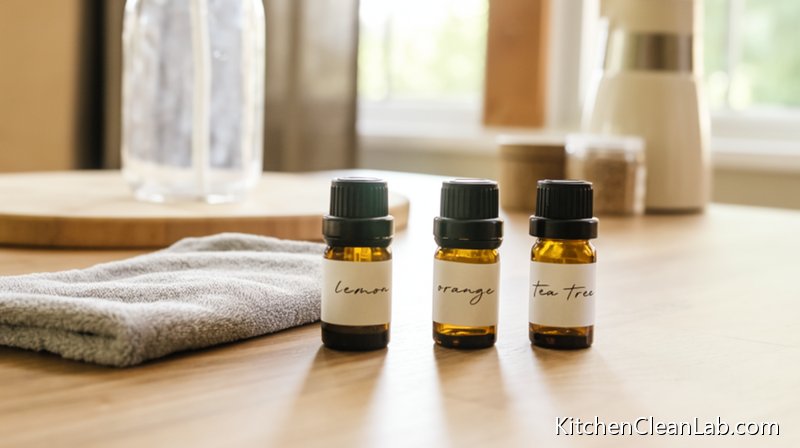
Lemon, orange, tea tree, eucalyptus, lavender, and peppermint offer the best balance of efficacy, scent, and availability for kitchen cleaning. Lemon and orange target grease; tea tree and eucalyptus support microbial control; lavender and peppermint freshen surfaces and indoor air.
| Essential Oil | Key Function | Best Kitchen Task | Safety Note |
|---|---|---|---|
| Lemon | Degreasing, deodorizing, antibacterial | Stovetops, counters, sinks, cutting boards | Avoid pooling on natural stone |
| Orange | Degreasing, uplifting scent | Oven hoods, greasy backsplashes | Use gloves if skin is sensitive |
| Tea Tree | Antimicrobial, antifungal | Sink drains, dishcloths, trash areas | Strong scent; start with low dilution |
| Eucalyptus | Antimicrobial, deodorizing | Floor washes, hard surfaces | Keep concentrate away from pets |
| Lavender | Calming scent, mild antibacterial | General countertop spray | Rinse food-contact surfaces after use |
| Peppermint | Antimicrobial, pest deterrent | Pantry edges, door seals, floors | Avoid near eyes; strong vapor |
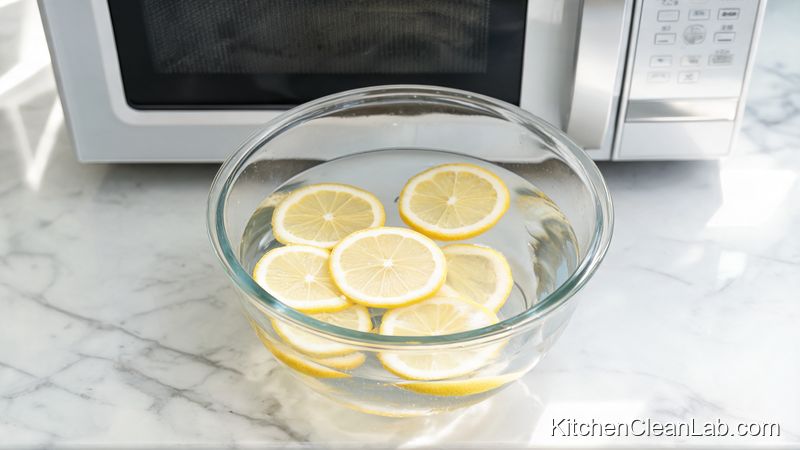
Lemon essential oil is the most versatile kitchen oil. Its d-limonene content makes it useful for dissolving sticky cooking film, polishing stainless steel, and freshening cutting boards. Use it in sprays for sealed countertops, sinks, and range hoods. Avoid allowing vinegar-and-lemon sprays to pool on natural stone.
Orange essential oil has similar degreasing strength with a warmer, sweeter aroma. It pairs well with tea tree or eucalyptus to mask medicinal notes while adding extra oil-cutting power. It is especially effective on greasy oven doors and tile backsplashes.
Tea tree oil is the strongest routine antimicrobial option in most kitchen kits. Its scent can be strong, so a few drops go a long way. Blend it with citrus oils to create a more balanced spray for sinks, dishcloths, and high-touch handles.
Eucalyptus oil freshens damp, closed-in spaces and helps control musty odors. Use it in floor washes and sink drains, but keep the concentrate away from pets and small children.
Lavender oil is gentler and soothing. It adds a pleasant base note to countertop sprays and can help soften the sharper notes of tea tree or peppermint. Its antimicrobial action is milder, so use it more for scent and daily upkeep than heavy degreasing.
Peppermint oil is invigorating and often used as a natural pest deterrent around pantry edges and door seals. A small amount in a floor wash leaves the room feeling cooler and cleaner, but avoid using it in large concentrations around pets.
How to Build a Non-Toxic Kitchen Cleaning Kit
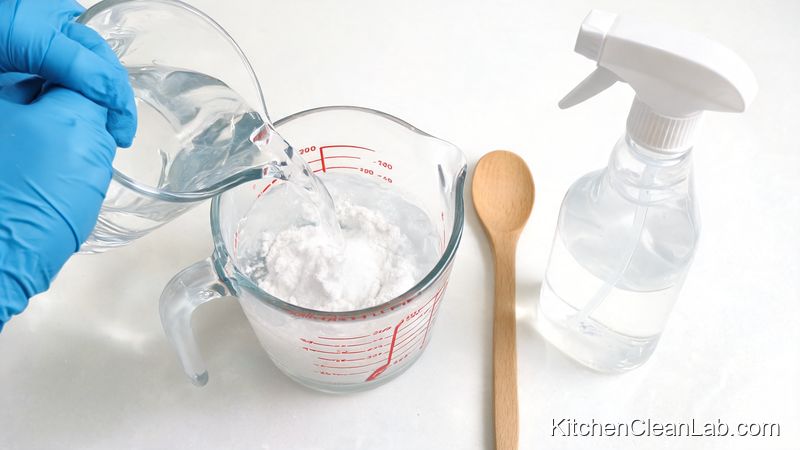
You need four core ingredients: distilled water, white vinegar or castile soap, baking soda, and a set of high-quality essential oils. Pair them with glass spray bottles and microfiber cloths for an effective low-waste kit.
You do not need a cabinet full of products. A practical essential-oil kitchen kit includes:
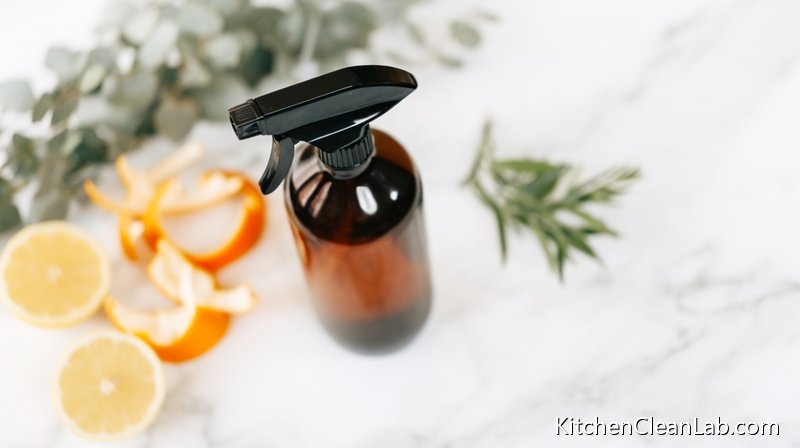
- Glass spray bottles: Essential oils can degrade some plastics over time. Choose two 16-ounce amber or blue glass bottles for daily sprays.
- Microfiber cloths: They trap grease and bacteria better than cotton rags and leave fewer streaks on stainless steel.
- Baking soda: A mild abrasive that removes stuck-on food without scratching most surfaces.
- Distilled white vinegar: Cuts hard-water spots and light odor, but never use it on natural stone.
- Unscented liquid castile soap: A plant-based surfactant for degreasing sprays. Do not mix it with vinegar in the same bottle because the acid and soap can neutralize each other and leave a cloudy film.
- Core essential oils: Lemon, orange, tea tree, and lavender cover most kitchen needs.
For extra antimicrobial action on knobs and handles, you can replace half the water with 70% isopropyl alcohol in a separate spray. Keep that spray away from open flames and heat. Always rinse food-contact surfaces after spraying alcohol-based blends.
Step-by-Step DIY Recipes for Every Kitchen Zone
A daily countertop spray, a degreasing stovetop spray, and a sink scrub cover most kitchen cleaning needs. All three recipes take under five minutes to mix and use simple ratios you can adjust as needed.
Each recipe below uses a 16-ounce glass bottle. Shake before every use because essential oils do not naturally stay mixed with water.
Daily Countertop Spray
Add 1 1/2 cups distilled water, 1/2 cup white vinegar, 20 drops lemon, 10 drops lavender, and 5 drops tea tree to a glass bottle. Spray sealed counters, stovetop controls, and the outside of small appliances. Wait 60 seconds, then wipe with a microfiber cloth.
Heavy-Duty Stovetop Degreaser
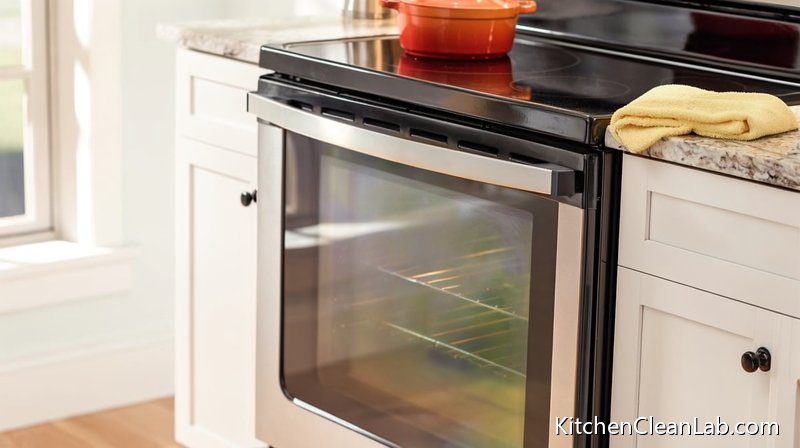
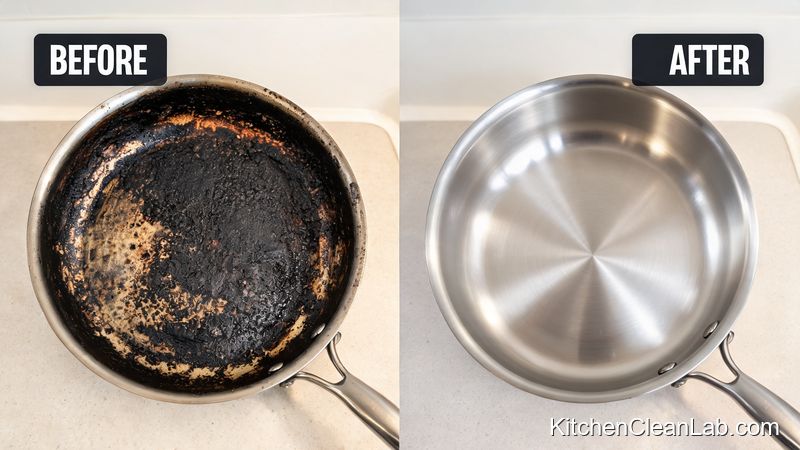
In a separate bottle, mix 2 cups warm distilled water, 2 tablespoons unscented castile soap, 20 drops lemon, 10 drops orange, and 5 drops eucalyptus. Spray only on cool surfaces. Let it sit for 2 to 3 minutes, then wipe away grease with a damp cloth. For baked-on spots, use a non-scratch scrub sponge.
Kitchen Sink Scrub
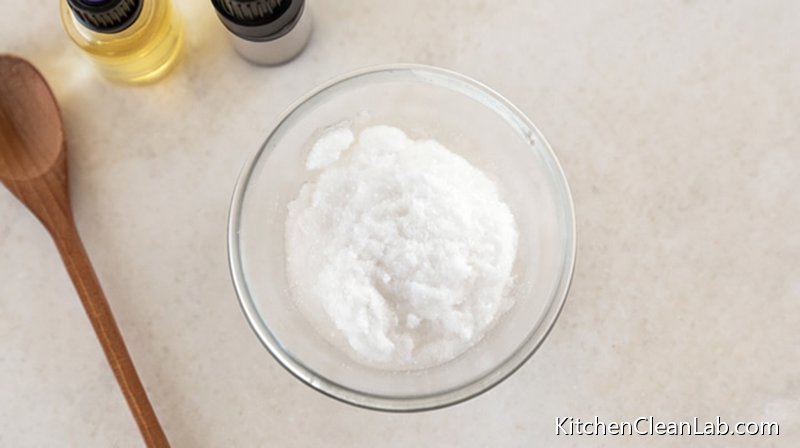
Combine 1/2 cup baking soda, 2 tablespoons castile soap, 10 drops lemon, and 5 drops tea tree. Add water a few drops at a time until a paste forms. Scrub the sink basin, rim, and faucet base, then rinse thoroughly.
Trash Can and Drain Refresher
Sprinkle 1/4 cup baking soda in the bottom of the trash can and add 10 drops tea tree and 10 drops orange. Let it sit for 10 minutes, then rinse and dry. For drains, pour 1/2 cup baking soda down the drain, followed by 1/2 cup white vinegar and 15 drops tea tree. When fizzing stops, flush with hot water.
Surface-by-Surface Guide for Essential Oil Use
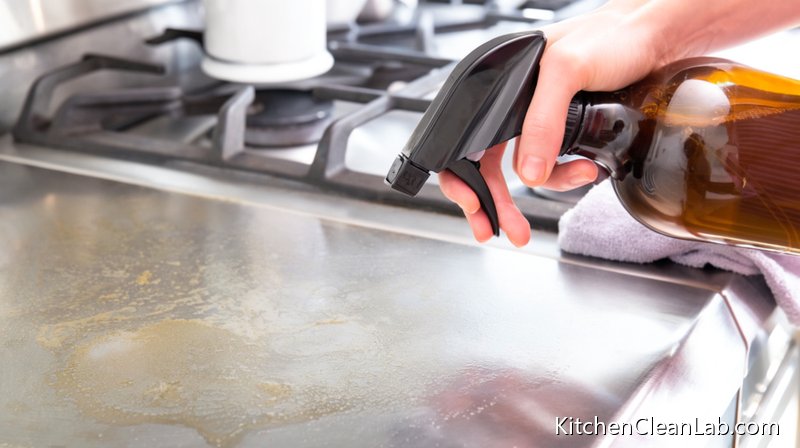
Not every kitchen surface should receive the same spray. Acidic vinegar and citrus oils are fine on sealed surfaces but can damage natural stone, while castile soap works better for heavy grease on stainless steel.
- Sealed granite or quartz: Use a pH-neutral stone cleaner with 10 drops lavender or tea tree per 2 cups of water; avoid vinegar and lemon.
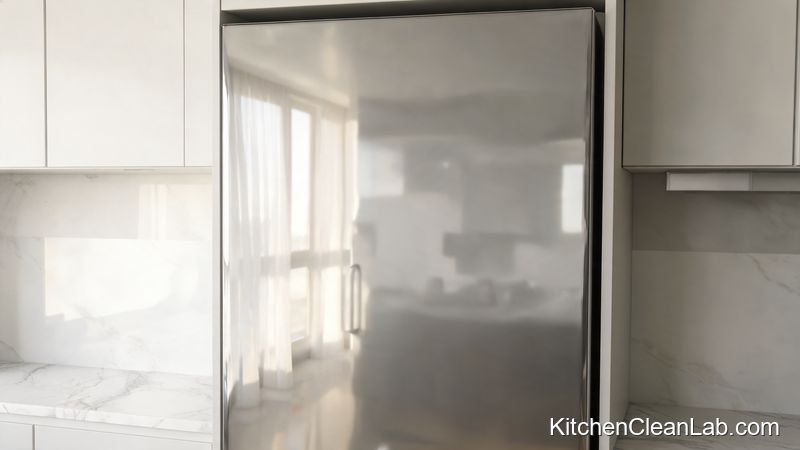
- Stainless steel: Lemon oil with castile soap removes fingerprints and grease. Wipe with the grain, rinse, and buff dry.
- Ceramic tile and grout: A baking soda paste with tea tree or eucalyptus can scrub grout. Rinse well afterward.
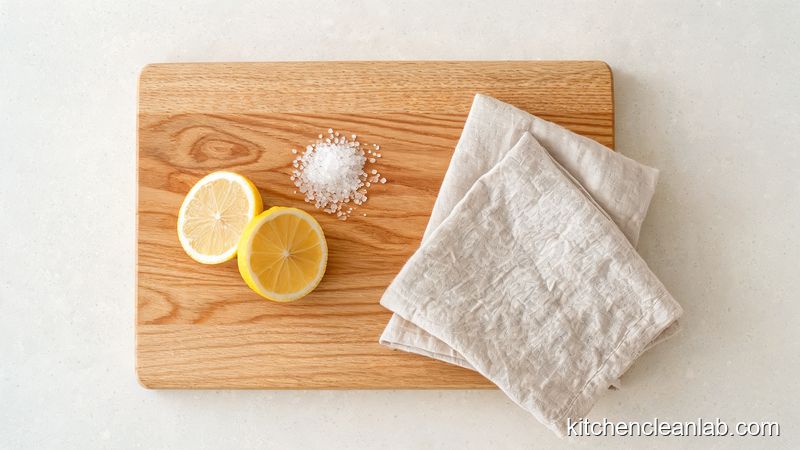
- Wood cutting boards: Scrub with coarse salt and lemon essential oil diluted in a small amount of liquid castile soap; rinse and re-oil the board after drying.
- Plastic cutting boards: Use a stronger tea tree and lemon spray, then wash with hot soapy water.
- Inside the refrigerator: Use diluted lemon or orange in warm water; avoid strong tea tree directly around exposed food.
Always test a new blend in a hidden spot. Wipe dry rather than air-drying on metal and wood to prevent water spots. For surfaces that touch food directly, rinse after cleaning and let dry.
Safety Tips, Dilution Ratios, and Common Mistakes
Always dilute essential oils, use glass bottles, and test any new blend on a hidden area before spraying a full countertop. High concentrations can harm certain surfaces and irritate skin or airways.
For most kitchen sprays, keep the total essential oil load between 30 and 50 drops per 16 ounces of liquid. Heavy degreasers can go up to 60 drops, but only on non-porous surfaces and with good ventilation. Oils are concentrated, and more is not always better.
- Dilute before use. Undiluted essential oils can leave sticky residue, damage finishes, and irritate skin.
- Use glass, not plastic. Citrus oils especially can break down plastic over time and pull unwanted compounds into your cleaner.
- Ventilate the room. Tea tree, eucalyptus, and peppermint have strong vapors. Open a window or run the range fan.
- Wear gloves if you have sensitive skin. Essential oils and vinegar can dry or irritate hands during extended cleaning.
- Keep concentrates locked away from children and pets. Tea tree, peppermint, eucalyptus, clove, and wintergreen are particularly hazardous to cats and dogs.
- Do not mix cleaning products randomly. Vinegar and castile soap can neutralize each other. Never mix vinegar with bleach or hydrogen peroxide in the same bottle.
Common mistakes include using too much oil to chase a stronger scent, spraying acidic blends on marble or granite, and assuming a DIY spray sanitizes raw meat juices. Use oils for daily maintenance, not high-risk sanitation.
Frequently Asked Questions About Essential Oil Kitchen Cleaning
The short answer is that essential oils can support daily kitchen cleaning and deodorizing, but they are not EPA-registered disinfectants. Use them as degreasers and surface maintainers, and keep a separate sanitizer for raw meat or illness cleanup.
Do essential oils actually disinfect kitchen surfaces?
Many essential oils, including tea tree, eucalyptus, cinnamon, clove, and thyme, show antimicrobial activity in laboratory studies. However, home DIY blends have variable concentrations and contact times. For routine wipe-downs they can help reduce surface microbes, but for raw chicken or other high-risk contamination, use an EPA-registered sanitizer.
Which essential oil is best for cutting kitchen grease?
Lemon essential oil is the top choice because it contains d-limonene, a natural solvent that breaks apart oily residues. Orange oil is a close second with similar degreasing power and a sweeter scent. Combine either with a small amount of castile soap or warm water for heavy stovetop buildup.
Can I use essential oils on granite, marble, or quartz countertops?
Be cautious. Acidic ingredients like vinegar and citrus oils can dull or etch natural stone over time, especially marble and granite. For stone counters, use a pH-neutral stone cleaner with a few drops of non-acidic oil such as lavender or tea tree, and rinse well.
Are essential oil cleaners safe for homes with pets?
Some oils are risky for pets, especially cats and dogs. Tea tree, eucalyptus, peppermint, clove, and wintergreen can cause drooling, vomiting, or neurological signs if ingested or heavily inhaled. Use minimal dilution, keep pets out of the area until surfaces dry, and store concentrates in a locked cabinet.
Final Thoughts on a Greener Kitchen Cleaning Routine
Essential oils fit best into a simple, repeatable kitchen cleaning routine. They reduce grease and synthetic fragrance exposure while making daily wipe-downs more pleasant, but they work alongside proper sanitation rather than replacing it.
Start with one spray and one scrub. Lemon, orange, tea tree, and lavender cover most households, and a simple glass bottle prevents plastic waste. Over time, you will learn which ratios cut through your kitchen's specific grease, hard water, or odor patterns without relying on synthetic fragrances.
Consistency matters more than perfection. A quick daily wipe-down with a diluted essential-oil spray reduces buildup, keeps surfaces fresher between deep cleans, and cuts down on the need for aggressive cleaners. Keep your recipes labeled, shake well, and replace water-based sprays every one to two weeks to prevent bacterial growth in the bottle.