Why a 15-Minute Nightly Kitchen Reset Routine Works for Busy Families
Most people do not need a spotless kitchen. They need a kitchen that feels usable at 6 a.m. when they are packing lunches and looking for coffee filters. That is exactly what a 15-minute nightly kitchen reset routine provides. Instead of waiting until the mess becomes overwhelming, this method uses a short timer, a clear sequence, and a few simple tools to restore order every evening.
The strength of the routine is not deep cleaning. It is consistency. Kitchen messes, from crumbs to sauce splatters, become harder to clean the longer they sit. A 15-minute reset removes the overnight aging process that turns a light wipe into a scrubbing project. For busy families, this routine also reduces morning friction: nobody has to clear a messy counter before making breakfast, and the sink is ready for the first glass of water.

Psychologically, 15 minutes feels achievable. When a kitchen is a disaster, cleaning for hours is not realistic after a long day. A timer creates a contained mission. You are not cleaning until the kitchen is perfect; you are cleaning until the timer says stop. That distinction is what helps busy parents, working partners, and older kids stick with the habit.
The Science Behind a 15-Minute Kitchen Reset
Habit researchers often talk about the power of small wins. A 15-minute nightly kitchen reset routine delivers a visible win every single evening. When you clear a counter or shine a sink, your brain gets a small hit of dopamine, which makes the habit easier to repeat. This is far more sustainable than waiting until Saturday for a three-hour kitchen cleaning marathon.
There is also a practical chemistry reason to clean at night. Food residue, especially oils and sugars, hardens as it dries. What starts as a light smear on the stovetop becomes a baked-on stain by morning. A short evening wipe prevents the need for aggressive scrubbing later. In busy households, this is the difference between a one-minute task and a 20-minute restoration project.
Finally, a nightly reset reduces kitchen decision fatigue. Mornings are already overloaded with lunch packing, breakfast choices, and backpack checks. A clean, organized kitchen means you are not clearing counter clutter while trying to find a spoon. That is why the routine is less about cleaning and more about operational readiness for your family.
What You Need Before You Start
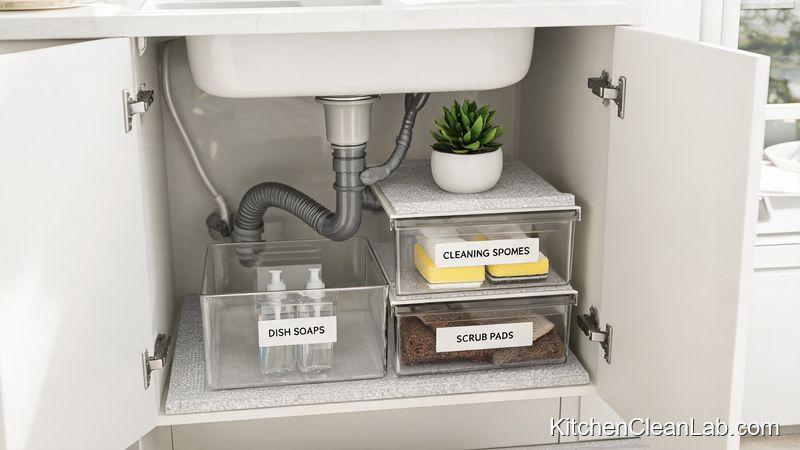
A nightly kitchen cleaning routine works best when you do not waste time hunting for supplies. Store a small cleaning caddy under the sink or in a nearby cabinet, and load it with only what you need.
- All-purpose cleaner or warm soapy water
- Two or three microfiber cloths
- Dish soap and a scrub brush or sponge
- A small trash bag for food scraps
- A broom, stick vacuum, or cordless handheld vacuum
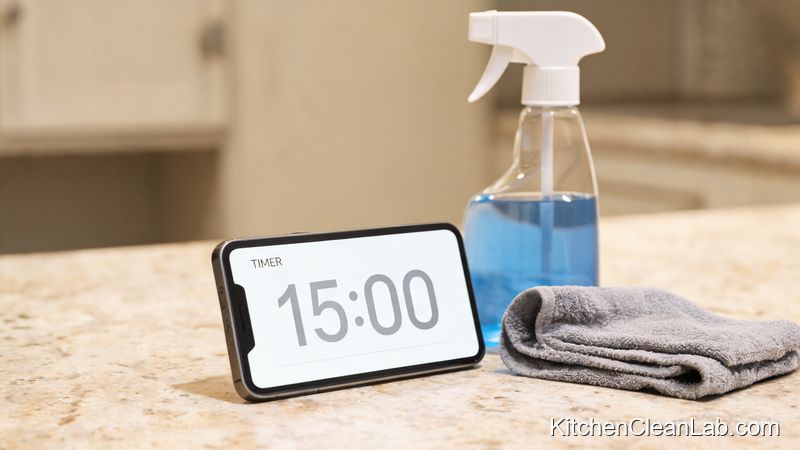
- A timer, usually the one on your phone or microwave
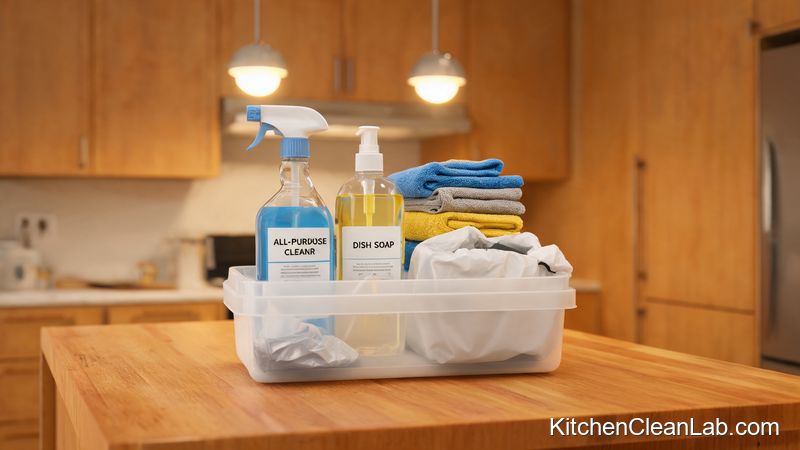
Keep the caddy visible or at least easy to reach. Visual cues make starting easier, especially when you are tired. The timer is non-negotiable. The 15-minute nightly kitchen reset routine is a race against the clock, not an open-ended cleaning session.
The Step-by-Step 15-Minute Nightly Kitchen Reset Routine
Set the timer for 15 minutes and follow this order. The sequence moves from top tasks that clear visual clutter to finish tasks that give the room a clean feeling. Do not skip ahead. If a step is done early, use the remaining time for the final zone check.
Minute 0–2: Clear the Counters
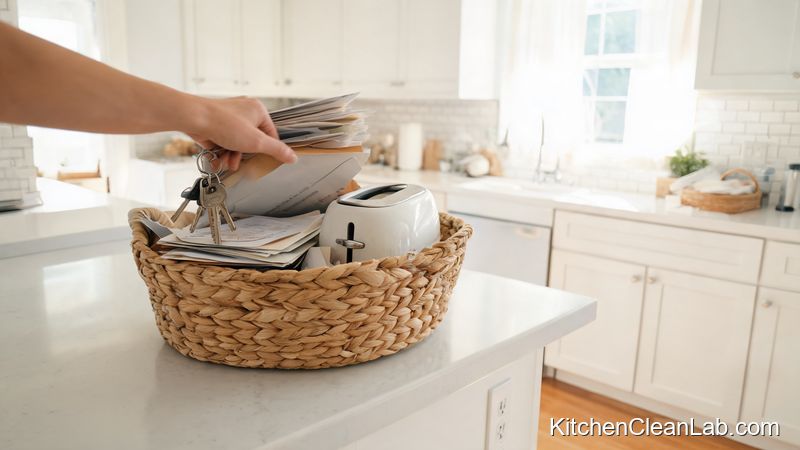
Start by removing everything that does not belong in the kitchen. Put mail, backpacks, toys, and school papers in a temporary bin. Collect dirty dishes and stack them near the sink. If food items are out, put them away or set them on the counter next to the fridge. This step creates visible progress immediately, which keeps motivation high for the rest of the timer.
Minute 2–4: Load the Dishwasher
Load dishes, cups, and utensils first. Put pots and pans in by size, leaving water-sensitive items like wooden spoons and chef knives for hand washing. If the dishwasher is already clean and full, spend this block unloading it so it is ready for the next round. A quick kitchen clean up is easier when the dishwasher is available, not blocked.
Minute 4–6: Spray the Hot Zones
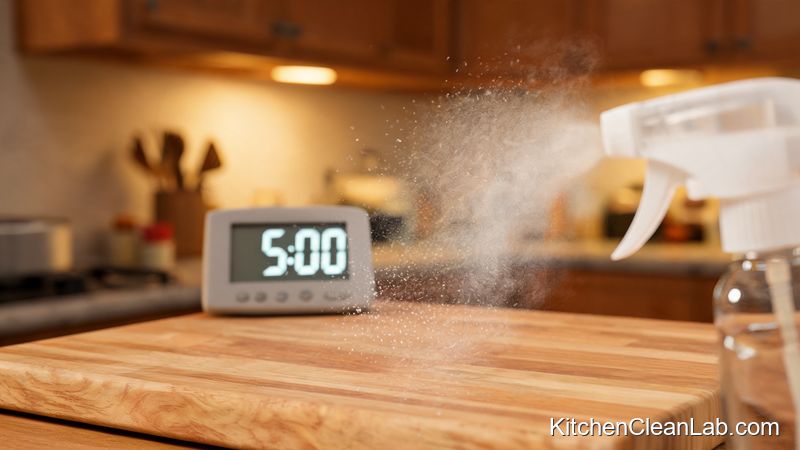
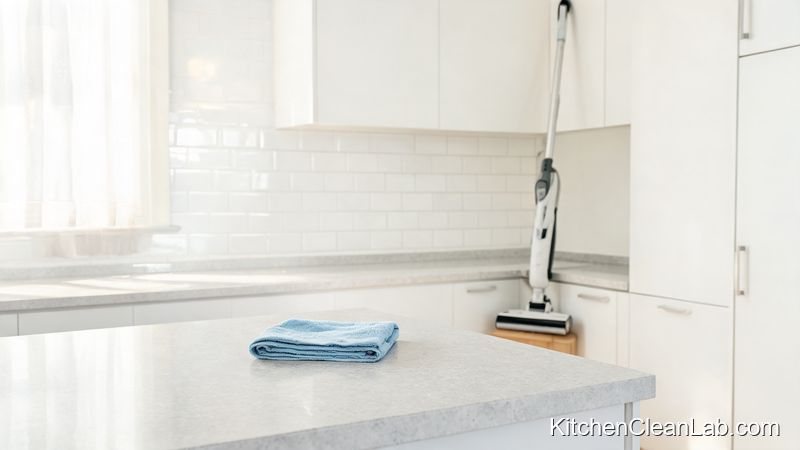
Spray all-purpose cleaner on the countertops, stovetop, and the area around the sink. Let the cleaner dwell while you empty the drying rack or wipe cabinet handles. Then use a microfiber cloth to wipe from back to front, pushing crumbs to the floor. For greasy stovetops, spray first and wipe last after the product has had a minute to soften the grime. This keeps wiping fast instead of scrubbing.

Minute 6–8: Sweep the Floor Hot Zone
Grab a broom or cordless vacuum and sweep the area in front of the sink, stove, and trash can. You do not need to mop the entire floor. Focus on the high-traffic triangle where most crumbs and spills collect. If you have a high chair or a toddler, quickly sweep underneath it. This one step makes the whole kitchen feel cleaner even if you did not scrub the grout.
Minute 8–10: Shine the Sink
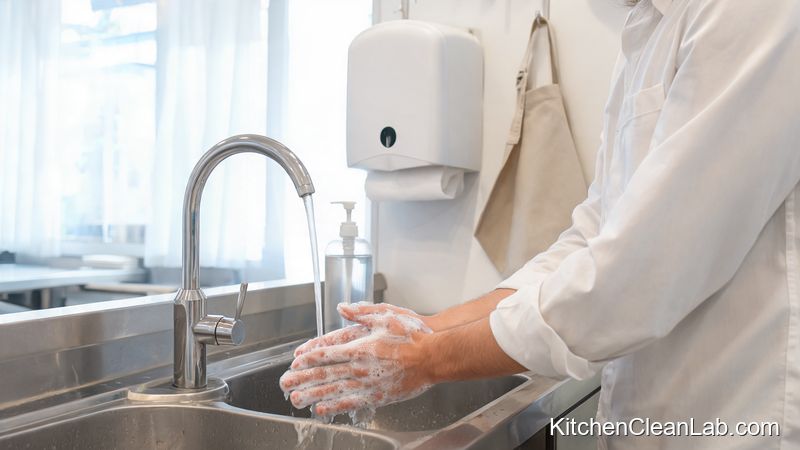
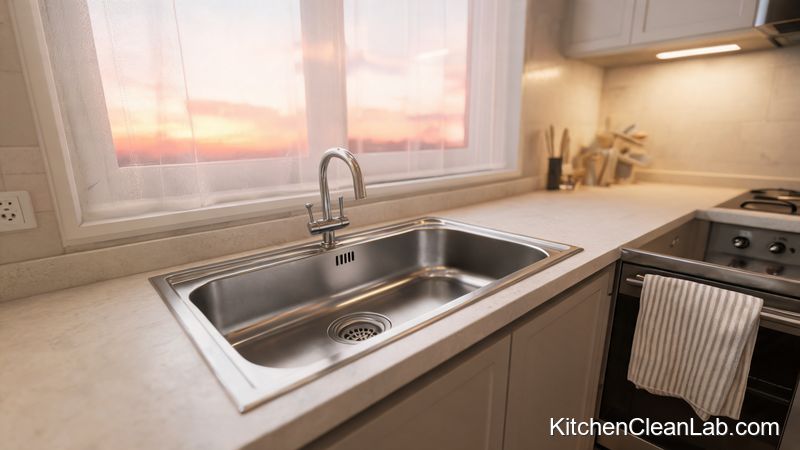
A shiny sink is the psychological centerpiece of a clean kitchen. Wash any remaining dishes by hand, then rinse the sink basin. Sprinkle a little baking soda or dish soap, scrub with a brush, and rinse thoroughly. Dry the basin and faucet with a clean cloth. When you see a dry, clear sink before bed, it signals that the kitchen is closed for the night.
Minute 10–12: Put Food Away and Take Out Trash
Quickly scan the counters, table, and stovetop for any remaining food. Put leftovers in storage containers, close cereal boxes, and return condiments to the fridge or pantry. Tie up the trash bag or compost bag if it is full and place it by the door to take out in the morning, or delegate this to a family member. This step prevents overnight odors and pests.
Minute 12–15: Final Reset and Tomorrow's Setup
Use the last three minutes to fluff the dish towel, set out the coffee maker, empty the dish drainer, or set out cereal bowls and lunchboxes for the morning. Wipe the kitchen table with a damp cloth. Finally, do a 10-second visual scan: clear counters, empty sink, clean floor around the main work zones. If something still looks messy, hit it fast. When the timer goes off, stop. Perfection can wait.
Nightly Kitchen Reset Checklist by Zone
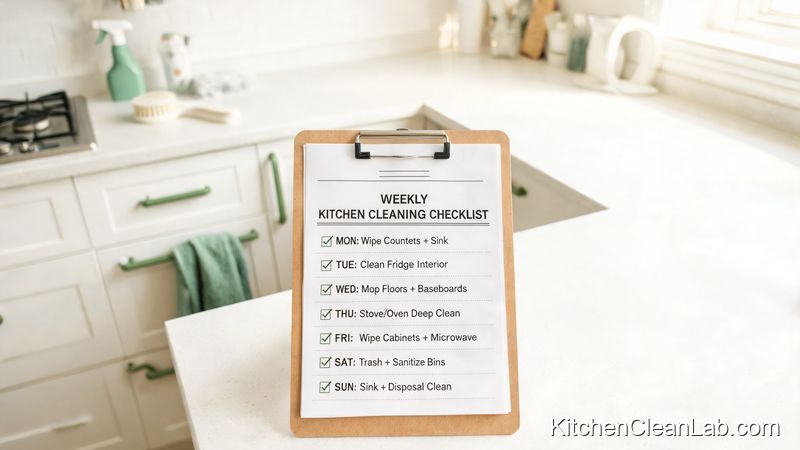
If you prefer a checklist over a timed sequence, use these zones as a guide. Complete each zone quickly, and do not let any single zone take more than two or three minutes.
- Sink: wash or load all dishes, scrub basin, dry faucet.
- Counters: put items away, spray and wipe all horizontal surfaces.
- Stovetop: remove burnt bits, wipe burners and knobs.
- Floor: sweep crumbs and spot mop sticky spots.
- Dining table: clear dishes, wipe placemats or tabletop.
- Trash and recycling: check bags, replace liners, take full bags to the bin.
- Fridge door: remove expired leftovers, wipe smudges.
- Tomorrow station: set coffee, lunches, or breakfast supplies.
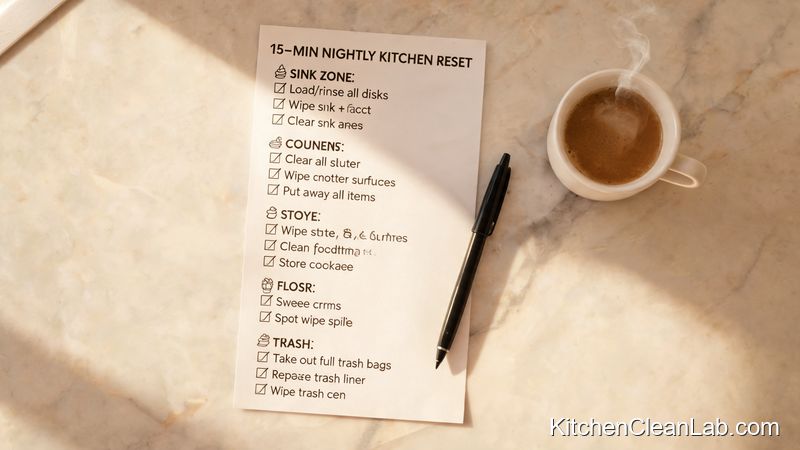
This evening kitchen cleaning checklist works well for family members who like clear direction. Print it and put it on the fridge or inside a cabinet door.
How to Turn the Kitchen Reset Into a Family Habit
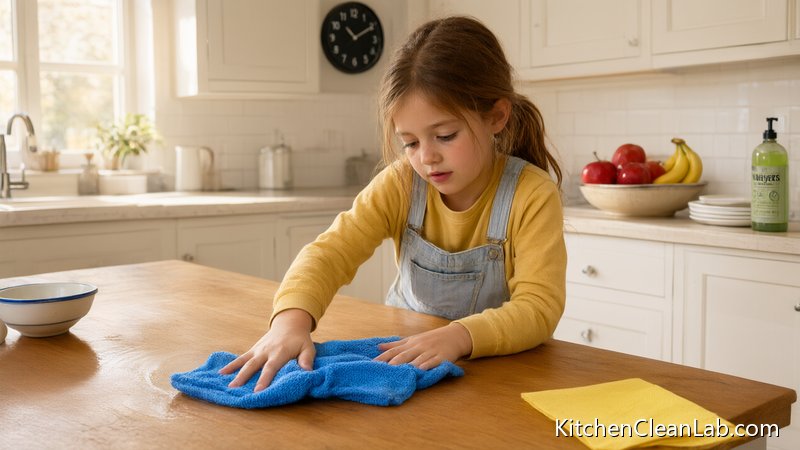
One person should not carry the entire mental load of a 15-minute nightly kitchen reset routine. Busy families can divide tasks by age and ability, but the timer stays the same.
- Toddlers and preschoolers: match plastic containers, wipe lower cabinets with a damp cloth, put away unbreakable items.
- Elementary-age kids: clear their own place settings, sort recycling, sweep under the table.
- Teens and adults: load the dishwasher, wash pots, take out trash and recycling.
Set a predictable trigger, such as when the dinner plates are cleared or right after the last lunchbox is packed. The cue matters more than exact clock time. At first, you may need to model the routine for a week or two. After that, the 15-minute time limit becomes a selling point: no one has to give up their whole evening.
If a family member refuses, give them a one-minute job. Small wins lower resistance and keep the team moving. Over time, the kitchen reset becomes as automatic as brushing teeth.
Common Mistakes That Sabotage a 15-Minute Kitchen Reset
- Skipping the timer: Without a timer, the routine expands into a 45-minute perfection session and people quit.
- Deep cleaning one appliance: Do not scrub the inside of the oven or descale the coffee maker during the nightly reset. Save that for a monthly deep cleaning task.
- Not letting cleaner dwell: Spray first, do another task, then wipe. This uses chemistry instead of elbow grease.
- Treating it as optional: Consistency creates the calm. Missing a night makes the next day harder.
- Doing every step alone: Even small children can help. The 15-minute nightly kitchen reset routine for families works best when the whole household has a role.
Frequently Asked Questions About the 15-Minute Nightly Kitchen Reset Routine
Is 15 minutes really enough for a messy kitchen?
For most nightly messes, yes. This routine focuses on high-traffic zones, not deep cleaning edges or appliances. If the kitchen is extremely messy, do a one-time 30-minute recovery reset first, then maintain with 15 minutes nightly.
What if I get interrupted by kids or phone calls?
Pause the timer, handle the interruption, and resume. The total cleaning time stays around 15 minutes. Even a broken reset is better than skipping it.
Should I mop the kitchen floor every night?
No. A quick sweep or spot mop is enough for the nightly routine. Save full mopping for a weekly or biweekly deep cleaning block.
Can I do this routine in the morning instead of at night?
Yes, but the name says nightly for a reason. Cleaning at night prevents grime from sitting overnight and gives your family a clean start. If mornings work better, use the same 15-minute sequence.
What if I have a small kitchen with limited counter space?
Small kitchens actually benefit more from a daily reset because clutter builds quickly. Use the same zone order, but focus on clear counters and an empty sink first.
How do I keep the routine from becoming boring?
Play music, let a child choose a podcast, or rotate small monthly tasks like wiping cabinet fronts. The main sequence stays stable because predictability reduces decision fatigue.
Conclusion: A Calm Kitchen in Just 15 Minutes a Night
A 15-minute nightly kitchen reset routine is not about creating a showhome. It is about creating a reliable launch pad for your family. By clearing counters, emptying the sink, sweeping crumbs, and setting up tomorrow's essentials, you trade a few minutes of evening effort for a less stressful morning.
Start tonight. Set the timer. Follow the order. Invite your family. Within a week, you will notice the difference: fewer frantic searches for the coffee, less breakfast prep friction, and a kitchen that feels calm even when life is not.
A 15-minute nightly kitchen reset routine may be the simplest habit busy families adopt this year, but its impact is far bigger than the clock suggests.