Is Hydrogen Peroxide Safe for Kitchen Countertop Disinfection? Key Takeaways
Hydrogen peroxide is generally safe for kitchen countertop disinfection when you use the standard 3% first-aid solution and follow material-specific precautions. It kills bacteria, viruses, and fungi, then breaks down into water and oxygen without leaving toxic residue. However, not every countertop material responds the same way. Quartz, laminate, solid surface, and sealed engineered stone usually tolerate occasional 3% hydrogen peroxide disinfection, while porous natural stone, unsealed granite, marble, finished wood, and colored grout can suffer etching, dulling, or bleaching.
Below you’ll learn exactly how hydrogen peroxide works, which countertops are compatible, step-by-step disinfection methods, dwell times, and the most common mistakes that lead to permanent damage.
The Science Behind Hydrogen Peroxide’s Disinfecting Power
Hydrogen peroxide (H₂O₂) is essentially water with an extra oxygen atom. That extra oxygen makes it a powerful oxidizing agent that disrupts the cell walls of bacteria, viruses, and fungi. When you spray it onto a countertop, it releases reactive hydroxyl radicals that attack microbial DNA and cell membranes, delivering a broad-spectrum sanitizing effect.
Unlike chlorine bleach, hydrogen peroxide breaks down into plain water and oxygen. In a kitchen environment, this means you are not leaving behind harsh chemical films on surfaces where food is prepared. This clean-rinsing property is one of the main reasons many households use hydrogen peroxide for countertop disinfection around sinks, cooktops, and food prep areas.
Research has shown that a properly stored 3% solution can achieve significant microbial reduction against common kitchen contaminants. However, its effectiveness depends on three factors: concentration, contact time, and surface compatibility. The fizzing action you sometimes see is more than visual drama—it releases oxygen radicals that help lift debris and penetrate soil films.
Is Hydrogen Peroxide Safe for All Kitchen Countertop Materials?
The short answer is no. Hydrogen peroxide is safe for non-porous and sealed countertop surfaces when used correctly, but it can damage porous, acid-sensitive, or unsealed materials. Before you spray, you should always identify your countertop material and, ideally, perform a patch test in a hidden area.
Countertops That Usually Tolerate 3% Hydrogen Peroxide
- Quartz countertops: Engineered quartz is non-porous and generally resistant to 3% hydrogen peroxide if sealed or polished. Avoid industrial-strength peroxide and prolonged soaking.
- Laminate countertops: Most laminate surfaces withstand occasional 3% hydrogen peroxide misting, but wipe up excess liquid promptly to prevent seam swelling.
- Solid surface countertops: Materials like Corian are usually safe for short-contact disinfection with 3% hydrogen peroxide.
- Sealed granite countertops: Hydrogen peroxide may be used sparingly on well-sealed granite, but frequent use can gradually strip the protective sealant and leave the stone vulnerable.
- Stainless steel countertops: 3% hydrogen peroxide can sanitize stainless steel, but it should be rinsed and dried to avoid water spotting or oxidation over time.
Countertops You Should Never Clean with Hydrogen Peroxide
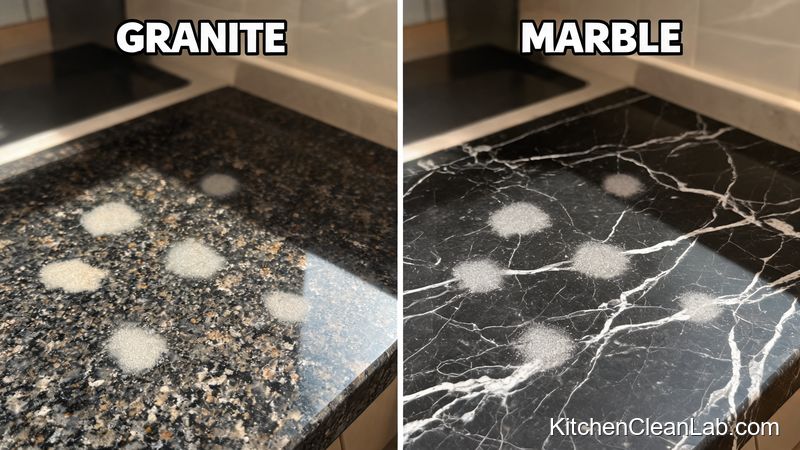
- Marble countertops: Marble is calcium carbonate-based and reacts with acids and oxidizers. Hydrogen peroxide can cause etching, dull spots, and permanent surface damage.
- Unsealed granite or natural stone: The porous surface absorbs the liquid, leading to deep discoloration and sealant breakdown.
- Finished wood and butcher block countertops: Hydrogen peroxide is a mild bleach and can strip wood finishes, lighten the natural color, and dry out the fibers.
- Colored grout or pigmented concrete: It may cause fading or uneven whitening on porous colored surfaces.
- Copper, brass, or other reactive metal inlays: Hydrogen peroxide can accelerate tarnishing and oxidation on decorative metal edges.
Step-by-Step: How to Disinfect Kitchen Countertops with Hydrogen Peroxide
For most sealed and non-porous kitchen countertops, a simple spray-and-dwell method is effective. The goal is not to scrub harder, but to give the hydrogen peroxide enough contact time to break down germs and organic residue.
What You’ll Need
- Fresh 3% hydrogen peroxide solution
- Opaque spray bottle or a nozzle attached to the original dark bottle
- Clean microfiber cloths
- Dry towel or additional microfiber cloth
- Baking soda, if you need to remove stuck-on grime
Everyday Countertop Disinfection Steps
- Clear the countertop: Remove dishes, small appliances, and food debris before you begin.
- Perform a patch test: Spray a small hidden area, wait 5 minutes, and wipe. Check for discoloration or dulling before proceeding.
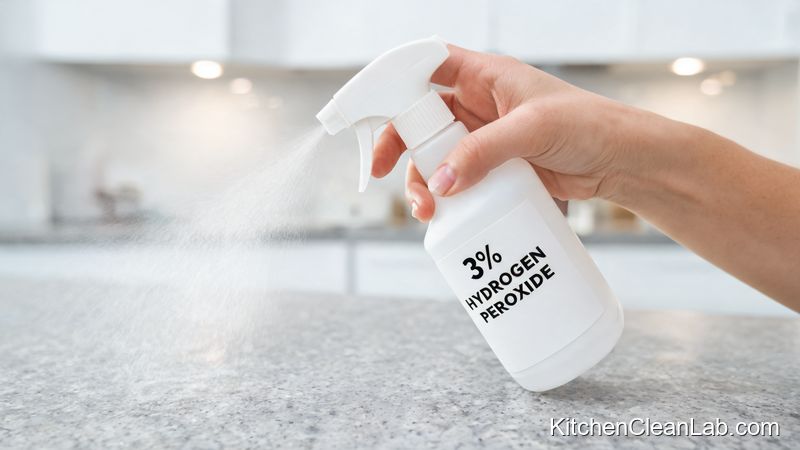
- Lightly mist the surface: Attach a spray nozzle to your hydrogen peroxide bottle and apply a fine mist. Avoid soaking the countertop or letting liquid pool around seams.
- Let it dwell: Allow the hydrogen peroxide to sit for 5 to 10 minutes. This contact time is critical for sanitizing.
- Wipe with a clean microfiber cloth: Use a dry or slightly damp cloth to remove moisture and any loosened grime.
- Buff dry: Finish with a dry microfiber cloth to prevent water spots and remove any remaining residue.
Removing Stuck-On Countertop Grime with Hydrogen Peroxide and Baking Soda
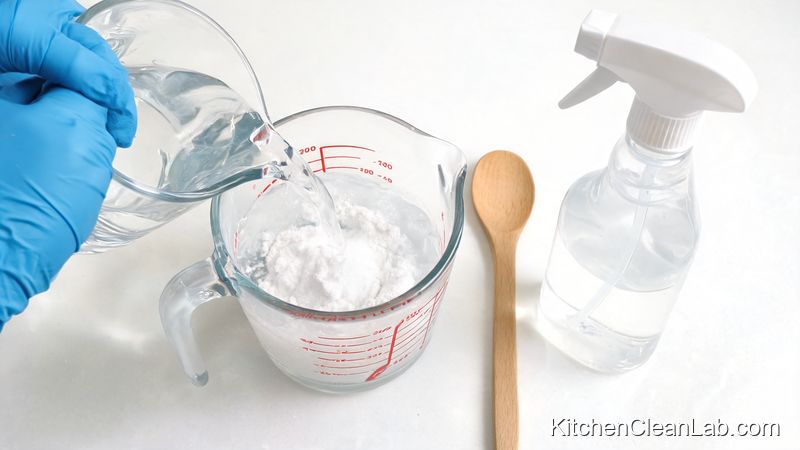
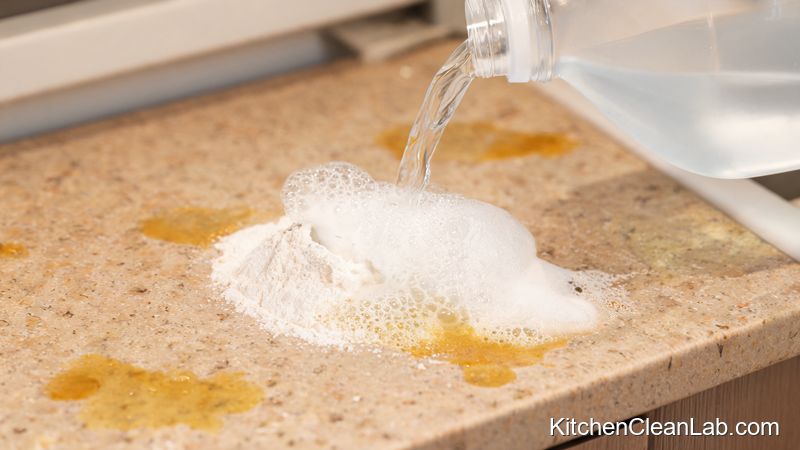
- Spray the stained area with 3% hydrogen peroxide.
- Sprinkle dry baking soda over the wet surface to create a gentle abrasive paste.
- Wait 5 minutes for the paste to lift grease and protein stains.
- Scrub lightly with a non-scratch sponge or microfiber cloth.
- Rinse thoroughly with clean water and dry with a microfiber towel.
This method works especially well on quartz, laminate, and solid surface countertops. Do not use baking soda on high-gloss or easily scratched surfaces without testing, because even a gentle abrasive can dull polished finishes.
How Long Should Hydrogen Peroxide Sit on Countertops?
The required hydrogen peroxide dwell time depends on your goal. For everyday kitchen countertop disinfection, the surface should remain visibly wet for at least 5 to 10 minutes. This is the minimum contact time needed to reduce common bacteria and viruses on hard, non-porous surfaces.
For cutting boards or food-contact surfaces, many food safety guides recommend a 10-minute contact time followed by rinsing with potable water. For mold or mildew on sealed grout, a longer dwell time of 10 to 15 minutes may improve results.
If the hydrogen peroxide dries before the contact time is complete, lightly mist the surface again. Do not simply wipe it off after a few seconds; that significantly reduces disinfecting power.
Does 3% Hydrogen Peroxide Need to Be Diluted for Kitchen Countertops?
No. The standard 3% hydrogen peroxide solution sold in pharmacies is ready to use directly on compatible kitchen surfaces. Higher concentrations, such as 6%, 10%, or food-grade 30%, require careful dilution and are not recommended for routine home countertop disinfection. Using industrial strength hydrogen peroxide can cause skin irritation, respiratory discomfort, and severe surface damage.
Even with 3%, you should wear household gloves if you have sensitive skin or plan to disinfect multiple surfaces in one session. Always avoid contact with eyes and keep the product away from children and pets.
Hydrogen Peroxide vs. Bleach and Vinegar for Countertop Disinfection
Many people wonder whether hydrogen peroxide is a better kitchen disinfectant than chlorine bleach or vinegar. The answer depends on your surface and your priorities.
- Hydrogen peroxide vs. bleach: Both are effective disinfectants, but hydrogen peroxide breaks down into oxygen and water, leaving no toxic residue. Bleach can be harsher, create strong fumes, and damage some metals and colored surfaces more aggressively.
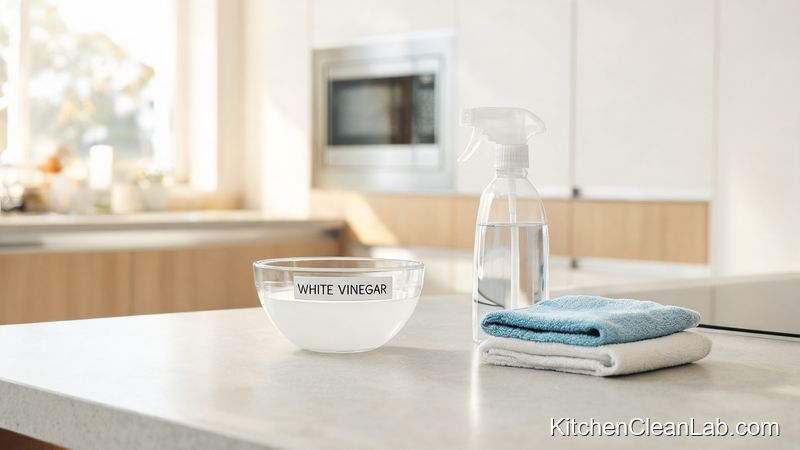
- Hydrogen peroxide vs. vinegar: Vinegar is a mild acid that can help dissolve hard water stains but is not an EPA-registered disinfectant for most kitchen pathogens. Hydrogen peroxide is a stronger germ-killing agent. Never mix hydrogen peroxide with vinegar, because the combination creates peracetic acid, a corrosive and irritating compound.
- Hydrogen peroxide vs. commercial disinfectant sprays: Commercial formulas often contain quaternary ammonium compounds that leave a residue. Hydrogen peroxide offers a residue-free alternative if you prefer a simpler ingredient profile.
For daily kitchen countertop disinfection, 3% hydrogen peroxide is a practical middle ground: stronger than vinegar, gentler than bleach on many surfaces, and safer for food-contact areas when rinsed properly.
Common Mistakes That Damage Countertops
Even a safe product can cause expensive damage when used incorrectly. Avoid these common mistakes:
- Using industrial-strength peroxide: Only use 3% household solution unless you have professional guidance.
- Spraying marble or unsealed stone: Hydrogen peroxide can etch calcium-based stone and strip natural stone sealants.
- Letting it pool or soak: Excess liquid can seep into seams, penetrate porous edges, and cause swelling or discoloration.
- Mixing with vinegar or bleach: This creates hazardous gases or corrosive peracetic acid and must be avoided.
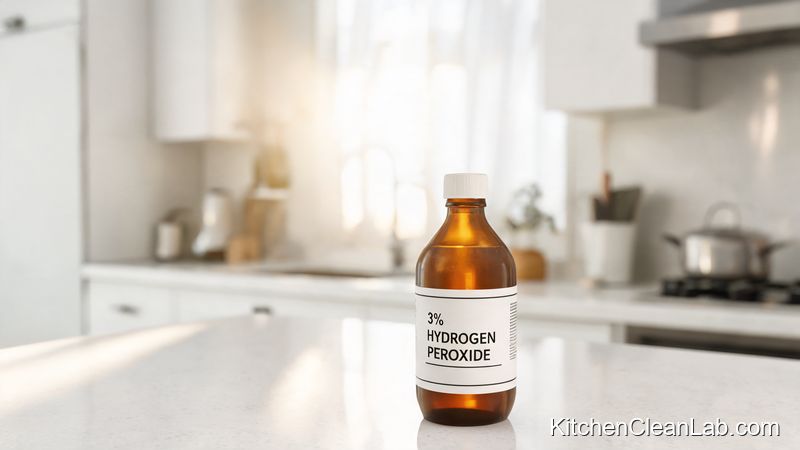
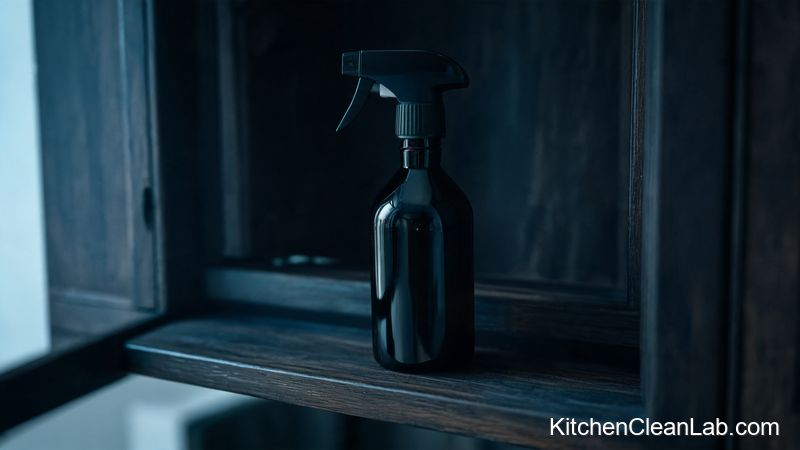
- Storing in a clear bottle: Light degrades hydrogen peroxide into water. Always keep it in an opaque or dark container.
- Using expired solution: An opened bottle loses potency after about six months. If it doesn’t fizz slightly when poured, replace it.
- Skipping the rinse on food-contact surfaces: Although 3% hydrogen peroxide breaks down into water, you should still rinse dishes, cutting boards, and prep zones with potable water after disinfection.
Storage and Shelf Life for Cleaning Hydrogen Peroxide
Hydrogen peroxide is light-sensitive, which is why it is sold in dark brown bottles. For kitchen cleaning, keep the original bottle or transfer to an opaque spray bottle. Store it in a cool, dark cabinet away from direct sunlight and heat.
- An unopened bottle of 3% hydrogen peroxide typically lasts about one year.
- An opened bottle remains effective for roughly six months if stored properly.
- To test potency, pour a small amount into a glass bowl. If it fizzes, it is still active. No fizz means it has degraded and should be replaced.
Use fresh solution for the best kitchen countertop disinfection. Old product may look the same but will not deliver the expected germ-killing performance.
Hydrogen Peroxide Safety Precautions for Kitchen Countertop Use
Even 3% hydrogen peroxide can irritate skin and eyes with repeated exposure. Before you start, open a window or turn on the range hood to improve ventilation. Wear reusable kitchen gloves if you will be disinfecting multiple surfaces. Keep the bottle away from direct heat, flames, and children. If you accidentally spill a large amount, wipe it up promptly and rinse the area with water.
Always label any spray bottle you refill. Never store hydrogen peroxide in a clear glass container, because light will quickly break it down. Finally, if you are unsure whether your countertop has been sealed recently, consult the manufacturer or perform a simple water-bead test: if water no longer beads on the surface, the sealant may need to be renewed before you use any wet disinfectant.
How to Test Your Countertop for Hydrogen Peroxide Compatibility
- Choose a hidden spot: Pick an area behind a small appliance or along a back corner seam.
- Apply a small amount: Spray or dab a few drops of 3% hydrogen peroxide onto the spot.
- Wait 5 minutes: Do not speed up the patch test.
- Wipe and inspect: Dry the area with a white cloth. Look for dulling, etching, whitening, or any color transfer.
- Proceed only if unchanged: If the test spot looks the same as the surrounding surface, the countertop is likely compatible for occasional disinfection.
If you notice any change, stop using hydrogen peroxide on that surface and switch to a pH-neutral countertop cleaner that is specifically approved for your material.
FAQ: Hydrogen Peroxide Kitchen Countertop Disinfection
Can I use hydrogen peroxide to disinfect quartz countertops?
Yes, in most cases. Quartz is non-porous and generally tolerant of occasional 3% hydrogen peroxide. Use a light mist, wait 5 to 10 minutes, and wipe dry. Avoid soaking seams and always check the manufacturer’s care guide.
Is hydrogen peroxide safe for granite countertops?
It depends on the sealant. On well-sealed granite, occasional use may be acceptable, but repeated applications can break down the sealant and cause dull spots. For unsealed or etched granite, avoid hydrogen peroxide entirely.
Does hydrogen peroxide damage marble countertops?
Yes. Hydrogen peroxide can etch marble and leave permanent dull marks. Do not use it on marble kitchen countertops, backsplashes, or bathroom vanity tops.
Can I mix hydrogen peroxide with baking soda on countertops?
Yes. Hydrogen peroxide and baking soda form a safe, gentle abrasive paste for removing stuck-on grime on non-scratch-sensitive surfaces. Avoid using it on polished marble, glossy wood, or any surface that scratches easily.
How often should I disinfect kitchen countertops with hydrogen peroxide?
For most sealed non-porous countertops, you can disinfect once daily or after raw food preparation. If you have natural stone countertops, reduce frequency to occasional use and always maintain your sealant.
Do I need to rinse countertops after using hydrogen peroxide?
For food-contact areas and cutting boards, rinse with clean water after the required dwell time. For general countertops, you can wipe thoroughly with a dry microfiber cloth. Rinsing is a good practice if you are unsure about material compatibility.
Why did my hydrogen peroxide not fizz?
Hydrogen peroxide loses potency when exposed to light, heat, or air. If it does not fizz when poured, it has likely degraded into water and should be replaced before using it for kitchen countertop disinfection.
Conclusion: Use Hydrogen Peroxide Wisely on Kitchen Countertops
Hydrogen peroxide is safe for kitchen countertop disinfection when you choose the right surface and follow the correct method. The 3% household solution is an effective, low-residue sanitizer for quartz, laminate, solid surface, and sealed non-porous countertops. It shines as a daily disinfectant because it kills a broad range of germs and then decomposes into water and oxygen.
However, material compatibility is everything. Marble, unsealed granite, finished wood, and butcher block countertops can suffer permanent etching, bleaching, or sealant damage. Always patch test, use only 3% strength, allow 5 to 10 minutes of dwell time, and never mix hydrogen peroxide with vinegar or bleach.
With these precautions in place, a bottle of hydrogen peroxide can become one of the simplest and most effective tools in your kitchen cleaning routine.