Why Does Your Microwave Smell Bad? Common Causes
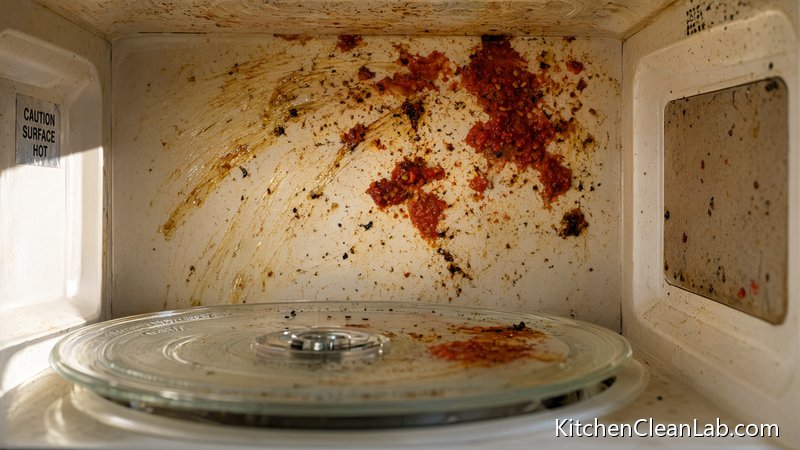
A microwave smells bad when odor-causing food particles, grease, and moisture get trapped inside the cooking cavity. Even if the interior looks clean, tiny residues from previous meals remain on the ceiling, turntable, door seal, and vents. When the microwave heats up again, those trapped particles release volatile odor molecules that make your kitchen smell unpleasant.
The most common culprits include:
- Burnt popcorn or overcooked food - carbonized starches produce a strong, lingering smoke odor.
- Fish, bacon, garlic, and onion - sulfur compounds and oils cling to plastic and metal surfaces.
- Grease and oil splatters - these turn rancid over time and cause a sour smell.
- Hidden moisture - sealed microwave doors trap steam, encouraging mildew and bacteria growth.
- Dried food around the door gasket - crumbs and sauces collect where the door meets the frame.
- Plastic or packaging residue - overheating takeout containers can leave a chemical odor.
Understanding why your microwave smells bad is the first step. The good news is that most microwave odors can be removed quickly with common household ingredients. Below are five fast, natural ways to deodorize a smelly microwave without harsh chemicals.
Why Steam, Acid, and Absorbents Work
Microwave odors are caused by volatile organic compounds and fatty acids that vaporize when heated. Steam condenses on surfaces and dissolves hardened residue. Acidic ingredients such as lemon juice and vinegar change the chemical structure of alkaline odor molecules, especially sulfur-based fish and garlic smells. Baking soda and coffee grounds use physical adsorption to trap odor particles. The five methods below combine these three mechanisms for fast, long-lasting results.
Safety Precautions Before Deodorizing Your Microwave
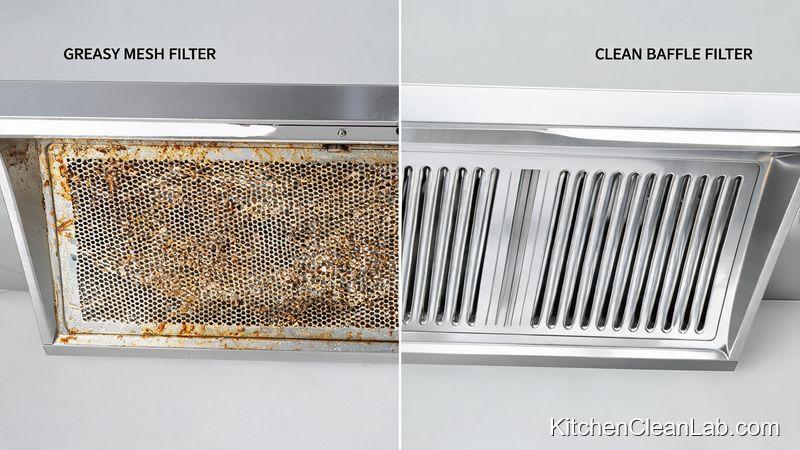
Always use microwave-safe glass or ceramic bowls, never metal. Use oven mitts to remove heated bowls. Avoid harsh scouring pads and chemical sprays inside the cooking cavity. If your microwave has a vent filter, check the manufacturer's instructions before cleaning. For any signs of electrical damage or smoke, unplug the appliance and contact a qualified technician before cleaning.
5 Quick Ways to Deodorize a Smelly Microwave
1. Lemon Steam to Neutralize Microwave Odors
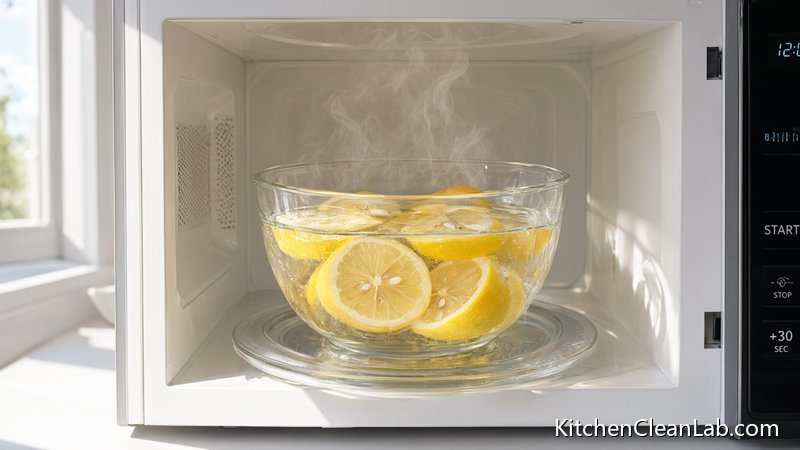
Lemon is one of the most effective natural microwave deodorizers. The citric acid in lemon juice breaks down grease and neutralizes fish, garlic, and burnt smells. The steam softens stuck-on food so it wipes away easily.
Step-by-step instructions:
- Pour 1 cup of water into a microwave-safe glass bowl.
- Cut a fresh lemon in half, squeeze the juice into the water, and drop the lemon halves into the bowl.
- Place the bowl in the center of the microwave and run it on high power for 5 minutes. The water should boil and produce plenty of steam.
- Do not open the door immediately. Let the bowl sit inside for 5 more minutes so the steam can condense on every surface.
- Carefully remove the bowl using oven mitts. Wipe the interior walls, ceiling, floor, and turntable with a clean cloth or paper towel.
- Leave the door open for 15 minutes to let the fresh citrus scent air out.
This method works especially well for burnt popcorn smells and fish odors that have soaked into the plastic cavity.
2. White Vinegar Steam for Deep Deodorizing
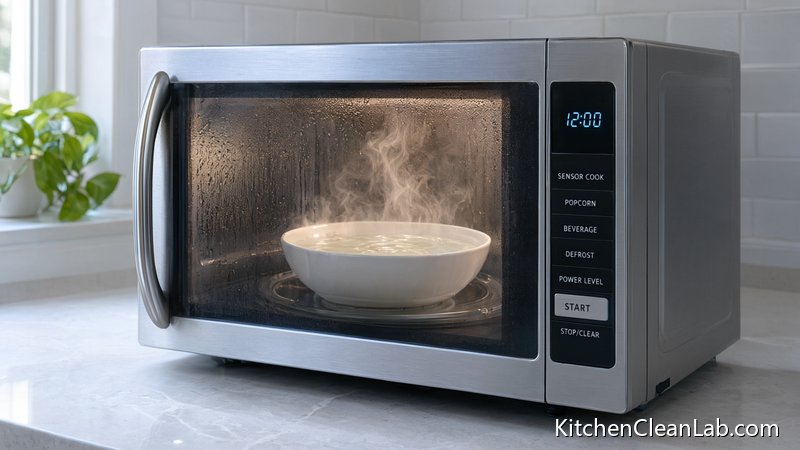
White vinegar is a powerful natural deodorizer because its acetic acid dissolves mineral deposits, grease, and odor-causing bacteria. Although vinegar has a sharp smell while steaming, it quickly neutralizes the underlying microwave odor and disappears as the microwave dries.
Step-by-step instructions:
- Fill a microwave-safe bowl with 1 cup of water and add 1/2 cup distilled white vinegar.
- Microwave on high for 4 to 5 minutes until the liquid boils and the window is fogged with steam.
- Keep the door closed for 3 to 5 minutes after heating to let the acid penetrate greasy residue.
- Remove the bowl with caution. Dip a sponge in warm soapy water, then wipe down the entire interior.
- Pay close attention to the door seal, turntable ring, and ceiling where odors hide.
- Dry with a microfiber towel and leave the door open until the vinegar scent fades.
If the smell persists, repeat this vinegar steam once a week to prevent stubborn microwave smells from returning.
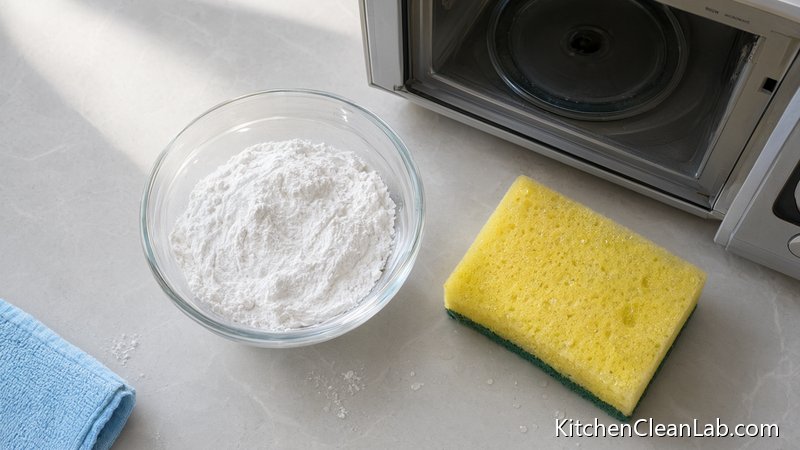
3. Baking Soda Scrub and Overnight Absorber
Baking soda is a classic odor absorber for microwave cleaning. It works in two ways: as a gentle abrasive paste to scrub away residue, and as a dry deodorizer that pulls smelly compounds out of the air inside the closed microwave.
Option A: Baking soda scrub
- In a small bowl, mix 3 tablespoons of baking soda with 1 tablespoon of water to make a thick paste.
- Use a damp sponge to apply the paste to stained areas, the turntable, and around the door frame.
- Scrub gently in circular motions. Do not use steel wool on non-stick microwave interiors.
- Wipe away all paste with a clean wet cloth, then dry thoroughly.
Option B: Overnight baking soda odor trap
- Place an open small bowl of dry baking soda inside the microwave.
- Close the door and leave it overnight or for at least 8 hours.
- Remove the bowl and discard the baking soda. Wipe the cavity with a damp cloth.
Baking soda is especially useful for rancid grease smells and musty odors caused by trapped moisture.
4. Coffee Grounds as a Natural Microwave Deodorizer
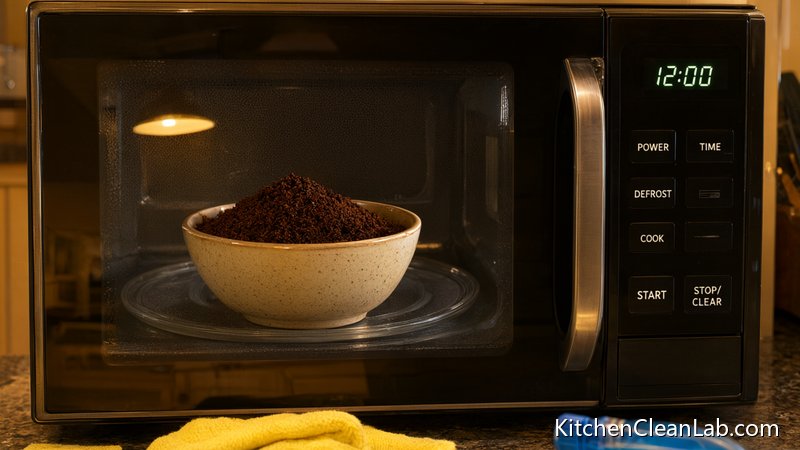
Used coffee grounds are not just for the trash. They contain nitrogen compounds that help absorb and mask unpleasant microwave smells. This method requires no scrubbing and is perfect for overnight odor removal.
Step-by-step instructions:
- Take 2 to 3 tablespoons of fresh or used coffee grounds and place them in a microwave-safe bowl.
- Set the bowl inside the microwave and close the door.
- Leave the coffee grounds in the microwave for 24 hours or overnight for faster results.
- Remove the bowl and discard the grounds. Wipe any dust from the microwave floor with a damp cloth.
If you like the smell of coffee, you can also add 1 cup of water mixed with 1 tablespoon of coffee grounds and microwave it for 3 minutes. The steam will release a coffee scent and help loosen stuck-on food. Do not let the liquid dry out completely.
5. Vanilla Extract Steam for a Sweet, Fresh Scent
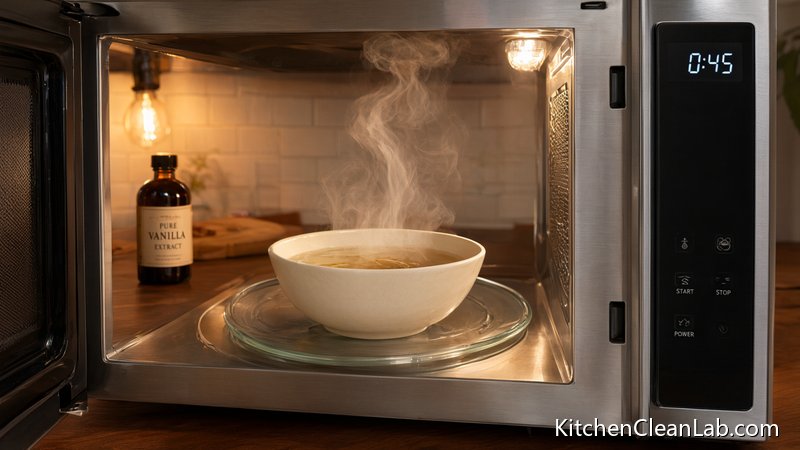
Vanilla extract is a surprisingly effective way to deodorize a microwave and make the entire kitchen smell like baked goods. Its alcohol and vanillin compounds help cut through grease and replace foul smells with a warm, sweet aroma.
Step-by-step instructions:
- Pour 1 cup of water into a microwave-safe bowl.
- Add 1 to 2 teaspoons of pure vanilla extract.
- Microwave on high for 3 minutes, then let it sit with the door closed for 5 minutes.
- Remove the bowl carefully, then wipe down the interior with a paper towel.
- Leave the door open for a few minutes. The vanilla scent should remain light and pleasant.
This is an excellent last step after heavy cleaning or whenever you want a quick microwave odor fix before guests arrive.
How to Prevent a Smelly Microwave
Keeping your microwave fresh is easier than deep cleaning it. Use these practical prevention tips to stop microwave smells before they start:
- Cover food with a splatter guard, paper towel, or microwave-safe lid every time you cook.
- Wipe spills immediately after each use, especially when reheating sauces, fish, or greasy food.
- Run a monthly lemon steam to keep the cavity deodorized and grime-free.
- Leave the door open for 10 minutes after cooking so moisture can evaporate.
- Clean the turntable and ring in warm soapy water at least once a week.
- Avoid overheating butter, popcorn, or sugary foods that carbonize quickly and create smoke.
- Check the door seal monthly and wipe it with a vinegar solution to remove trapped crumbs and grease.
Frequently Asked Questions About Microwave Odors
Why does my microwave smell bad even after cleaning?
If your microwave smells bad after cleaning, the odor may be trapped in the vent filter, door seal, or turntable ring. Remove the turntable and ring, soak them in warm soapy water, and wipe the door gasket with vinegar. Also check the charcoal or grease filter if your microwave has one.
Can I use bleach to deodorize a microwave?
It is not recommended to use bleach inside a microwave because bleach fumes can damage internal components and leave a chemical smell. Use lemon, vinegar, baking soda, or coffee grounds instead.
How often should I deodorize my microwave?
For normal use, run a natural deodorizing steam once a month. If you regularly cook fish, curry, or bacon, clean and deodorize it every one to two weeks.
What is the fastest way to get rid of a burnt microwave smell?
The fastest method is the lemon steam. Heat lemon water for 5 minutes, let it sit for 5 minutes, and wipe the interior. For very strong burnt odors, follow with a shallow bowl of baking soda left inside overnight.
Can I put baking soda and vinegar in the microwave together?
You can use them in sequence but not as a single bowl. Mixing baking soda and vinegar creates a fizzing reaction that is better for scrubbing and drain cleaning. For microwaves, use a vinegar steam first, then a baking soda scrub for best results.
Conclusion
A foul smell inside your kitchen appliance does not have to be permanent. Once you understand why your microwave smells bad, you can use simple ingredients such as lemon, white vinegar, baking soda, coffee grounds, and vanilla extract to neutralize the source of the odor. These quick microwave deodorizing methods are safe, budget-friendly, and much better than covering up the problem with chemical air fresheners.
Choose the method that matches what you have in your pantry, then make monthly steam cleaning a habit. With a few minutes of care, your microwave will stay fresh, odor-free, and ready to cook without unwanted smells.