Why Baking Soda and Vinegar Are the Best Natural Oven Cleaners
If you want to avoid harsh chemical fumes, learning how to clean an oven with baking soda and vinegar is one of the best kitchen upgrades you can make. This method uses two grocery staples to dissolve baked-on grease, lift carbonized food, and leave your oven streak-free. Unlike spray-on commercial oven cleaners, baking soda and vinegar are safe around children and pets when used correctly, and they cost only a few dollars per treatment.
The Science Behind the Baking Soda and Vinegar Method
Baking soda, also called sodium bicarbonate, is a mild alkali. When you mix it with water, it forms a gritty paste that clings to oven walls. The alkaline pH helps break down fatty acids and grease through a process called saponification, turning oily residue into a soap-like film that wipes away. Because it is mildly abrasive, baking soda also provides gentle scouring power without scratching porcelain or enamel.
White vinegar contains acetic acid, which cuts through light grease, dissolves hard water spots, and helps remove mineral haze. When vinegar meets any residual baking soda, it creates carbon dioxide bubbles and water. That fizzing action is more than satisfying to watch—it mechanically loosens the last traces of grime. For the best natural oven cleaner results, always use the paste first and the vinegar second. Do not mix them into one paste, because the acid and base neutralize each other before they can work effectively.
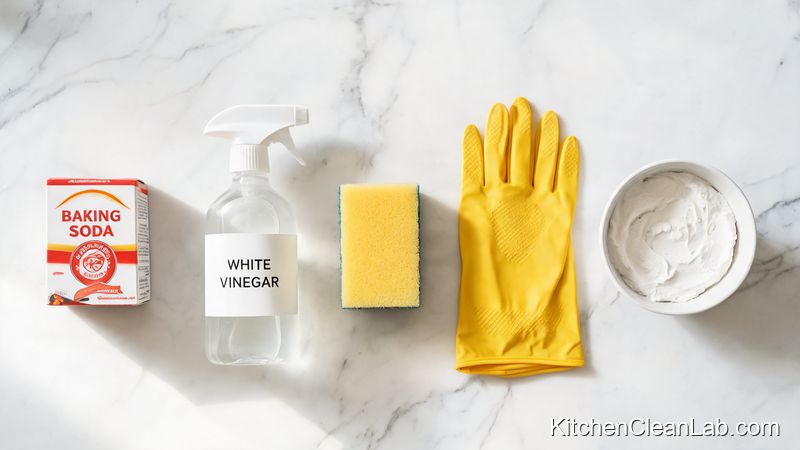
Supplies You Need to Clean an Oven with Baking Soda and Vinegar
- Baking soda – 1/2 to 1 cup for a standard oven
- White vinegar – 1 cup, in a spray bottle
- Warm water – for paste and rinsing
- Dish soap – a few drops for extra grease cutting
- Rubber or dish gloves
- Sponge or microfiber cloths
- Plastic scraper or silicone spatula
- Paper towels
- Bucket or large bowl
- Stiff-bristled brush or old toothbrush
- Optional: vacuum cleaner with hose attachment, old towels, plastic trash bag
Step-by-Step Guide: How to Clean an Oven with Baking Soda and Vinegar
Step 1: Remove Oven Racks and Loose Debris
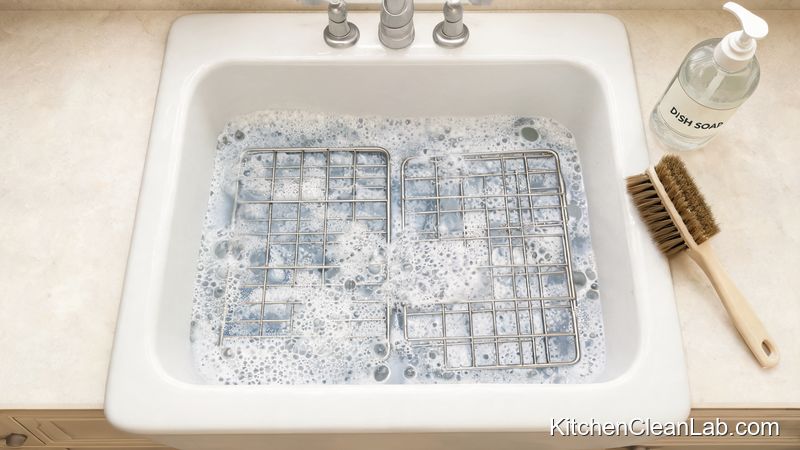
Start with a completely cool oven. Remove the oven racks, oven thermometer, baking stones, and any sheet pans. Place racks in a large sink or bathtub lined with old towels. Fill the tub with hot water, add 1/2 cup dish soap and 1/2 cup baking soda, and let the racks soak for at least two hours. This loosens baked-on grease before scrubbing.
While the racks soak, vacuum or wipe out loose crumbs, pet hair, and blackened food bits from the oven floor and walls. Place old towels or a trash bag under the oven door to catch drips from the cleaning paste.
Step 2: Make a Spreadable Baking Soda Paste
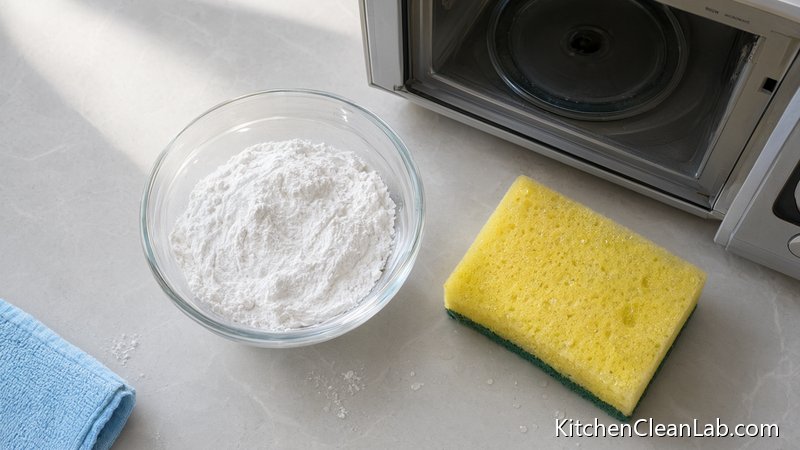
In a small bowl, combine 3 parts baking soda with 1 part warm water. For a standard oven, start with 1/2 cup of baking soda and 2 to 3 tablespoons of water. Stir until it forms a thick but spreadable paste, similar to pancake batter or shaving cream. If your oven is very greasy, add a few drops of dish soap to boost the degreasing power. Add more water only if the paste is too thick to spread.
Step 3: Apply the Paste to the Oven Interior
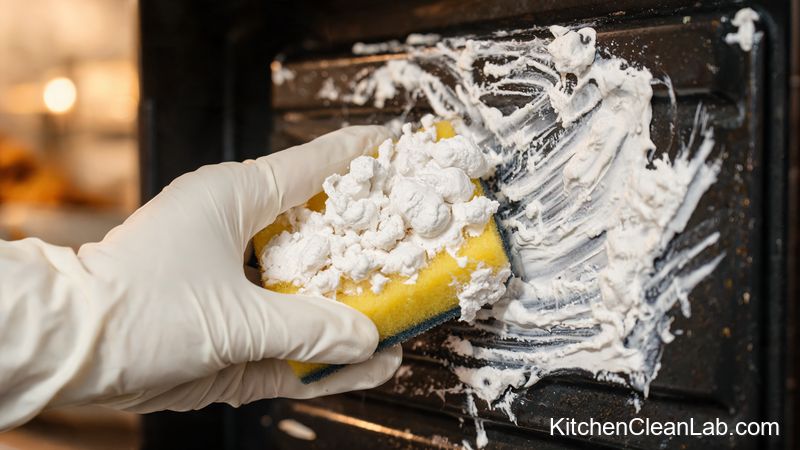
Put on rubber gloves. Use a sponge, brush, or gloved hand to spread a generous layer of paste over the entire cool oven interior: the bottom, side walls, ceiling, and inside of the oven door. Spread it on the door glass as well, but avoid the door gasket seal. Do not apply the paste to heating elements, gas igniters, oven light, or any vents. For really tough, burnt-on spots, add an extra thick layer and gently press it into the stain.
Step 4: Let the Paste Sit Overnight
Close the oven door and leave the paste to work for at least 12 hours or overnight. This dwell time is the real secret behind the method. During this period, the alkaline baking soda breaks down grease bonds and softens carbonized spills. For lightly soiled ovens, 4 to 6 hours may be enough, but overnight gives dramatically better results on heavy buildup.
Step 5: Wipe Away the Baking Soda Paste
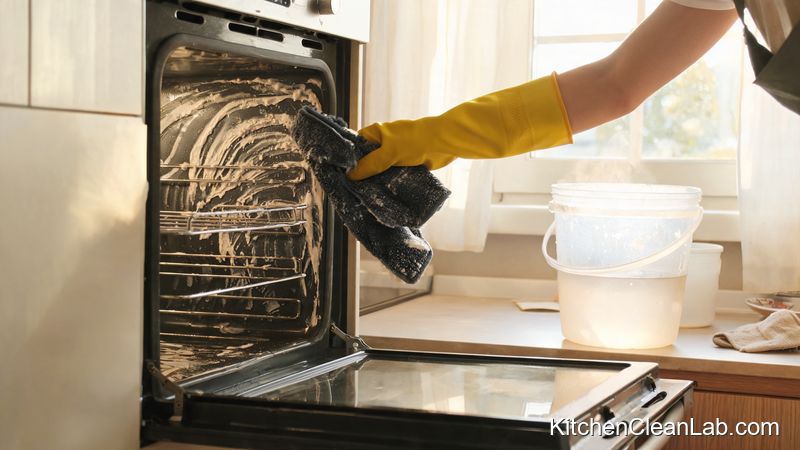
Dampen a sponge or microfiber cloth with warm water and begin wiping away the dried paste. Rinse the sponge frequently in a bucket of clean warm water. The paste will turn gray or brown as it picks up grease—that is normal. Use a plastic scraper or silicone spatula to remove stubborn clumps and stuck-on residue. Avoid metal scrapers or steel wool, which can scratch the oven cavity.
Step 6: Spray Vinegar and Wipe Down
Fill a clean spray bottle with equal parts white vinegar and water. Spray the entire oven interior, including areas with any remaining baking soda film. You will see a mild fizzing reaction—that is the acid neutralizing the alkaline residue. Immediately wipe with paper towels or a clean, damp microfiber cloth. Repeat spraying and wiping until no white film remains. For a streak-free oven door, finish by buffing the glass with a dry microfiber cloth.
Step 7: Clean the Oven Racks and Replace
After soaking, scrub the racks with a stiff-bristled brush or a non-scratching scouring pad. Rinse thoroughly with hot water and dry completely with a soft cloth to prevent rust. If the racks slide unevenly, apply a very light coating of cooking oil to the rack guides. Replace the racks and any other accessories you removed.
Practical Tips for Stubborn Oven Messes
- For very thick burnt spots: Apply a thick baking soda paste and cover it with plastic wrap for 2 to 4 hours to keep it moist and active.
- For cleaning the oven door glass: Use an old toothbrush to work the paste into corners and edges, then spray with vinegar and wipe dry.
- For greasy oven racks: Add 1/2 cup of baking soda and a squirt of dish soap to the soak water. The combination helps cut grease without harsh chemicals.
- For oven odors: After cleaning, place a small bowl of dry baking soda in the cool oven overnight to absorb lingering smells.
- For daily maintenance: Once the oven is cool, wipe spills with a damp microfiber cloth before they bake on. This reduces deep-clean frequency.
Common Mistakes to Avoid When Cleaning an Oven with Baking Soda and Vinegar
- Mixing baking soda and vinegar into one paste. They neutralize each other and lose strength. Apply the paste first, then spray vinegar afterward.
- Applying paste to heating elements or gas igniters. This can damage components or cause smoke the next time you bake.
- Rushing the process. The paste needs hours to soften carbonized grease. Overnight is best for heavily soiled ovens.
- Using metal scrapers. Metal can scratch porcelain and enamel oven interiors. Stick to plastic or silicone tools.
- Leaving behind baking soda residue. White streaks or dust can remain if you do not rinse thoroughly with vinegar and water.
FAQ: How to Clean an Oven with Baking Soda and Vinegar
Can I mix baking soda and vinegar into one cleaner?
No. For the strongest baking soda and vinegar oven cleaner effect, use them separately. Apply a baking soda paste first to break down grease, then spray vinegar afterward to remove residue and add shine.
How long should I leave the baking soda paste in the oven?
Leave the paste for at least 12 hours, or overnight, for heavy buildup. Lightly soiled ovens can be cleaned after 4 to 6 hours, but longer is almost always better.
Is this method safe for self-cleaning ovens?
Yes, in most cases. This hand-cleaning method is gentle and avoids the extreme heat of the self-cleaning cycle. Check your oven manual first, and always keep paste away from the heating elements, gasket, and vents.
Will vinegar damage my oven surfaces?
No. White vinegar is mild and safe for porcelain, enamel, and stainless steel oven interiors when diluted. Avoid pouring undiluted vinegar onto hot surfaces or electrical components.
How often should I clean my oven with baking soda and vinegar?
Deep-clean your oven every three months with regular use. If you roast or bake several times a week, clean every one to two months.
Can I use apple cider vinegar instead of white vinegar?
Yes, but white vinegar is preferred because it is clear, inexpensive, and leaves no color or aroma. Apple cider vinegar works but may leave a slight scent that fades after airing out.
Conclusion
Now that you know how to clean an oven with baking soda and vinegar, you can skip the harsh chemical sprays and still get professional-level results. The key is patience: let the baking soda paste sit overnight, wipe it clean, then use vinegar to neutralize residue and polish the interior. With this simple, affordable routine, your oven will stay fresher, cook more evenly, and keep your kitchen smelling clean.