Why Removing Burnt-on Food Safely Matters
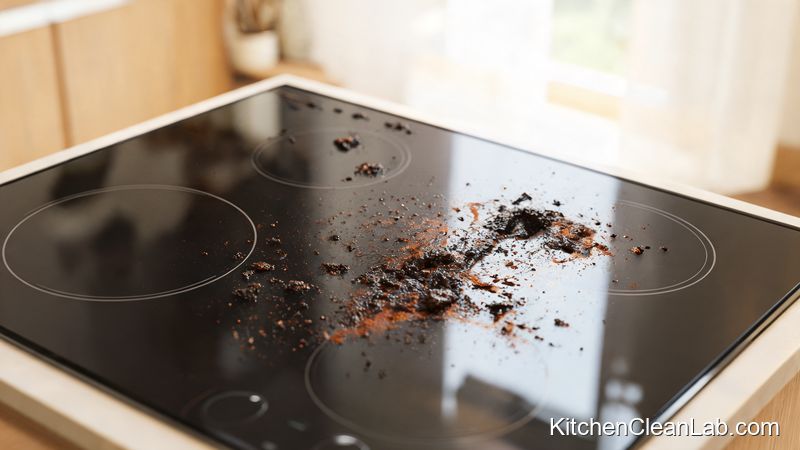
A glass cooktop adds sleek style, but burnt-on food quickly ruins the look and can create hot spots, odors, and permanent stains. More importantly, aggressive scrubbing is the fastest way to create micro-scratches that dull the surface. Learning how to remove burnt-on food from glass cooktops without scratching protects your investment and keeps the surface smooth and shiny.
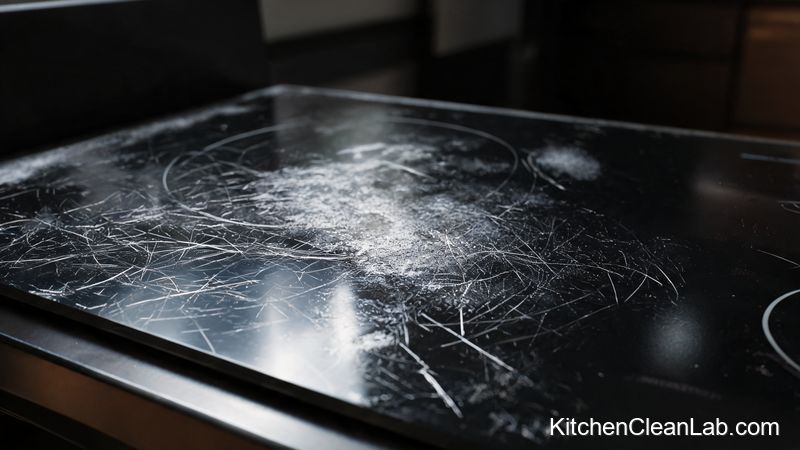
Most scratches are not caused by cleaning products alone. They happen when hard food particles, salt crystals, or burnt sugar get trapped under a cloth or sponge and are dragged across the glass. By softening residue first and using the right tools, you can lift even blackened buildup without damage.
The Science Behind Safe Glass Cooktop Cleaning
Glass cooktops are made from a ceramic glass blend that is hard but not scratch-proof. Burnt-on food bonds to the surface through polymerized oils and caramelized sugars, which tighten as they cool. Baking soda is a mild base that helps break down grease, while its fine particles provide gentle mechanical action. White vinegar is acidic and dissolves mineral deposits and soap film. Together they loosen residue without the harsh abrasives found in many powdered cleansers.
Understanding this is key: you should never rely on pressure alone. Scrubbing harder creates heat and friction that can embed particles into the glass. The safe approach is to chemically soften the bond first, then gently wipe it away.
What You Need to Clean a Glass Cooktop Without Scratching
Gather these supplies before you start. The key is to avoid abrasive powders, steel wool, and ammonia-based cleaners, which can etch glass or leave a cloudy film.
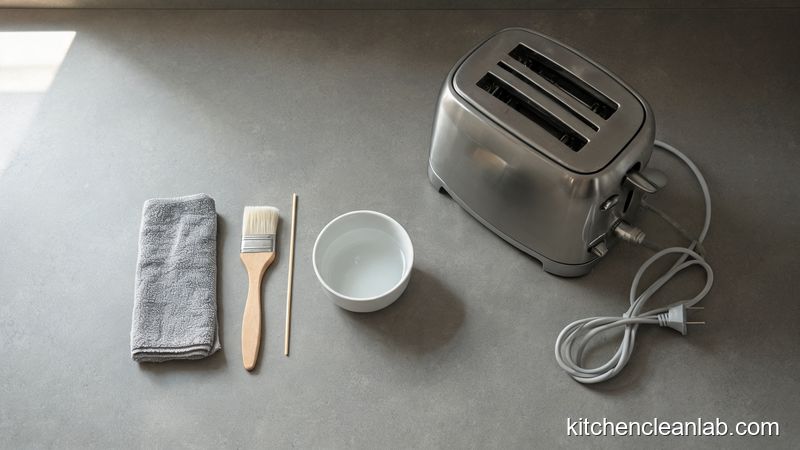
- Microfiber cloths – for wiping and buffing without lint or scratches
- Non-abrasive sponges – for gentle scrubbing
- Baking soda – a soft, alkaline powder that breaks down grease and food
- White vinegar – cuts film and adds streak-free shine
- Dish soap – a gentle grease-fighting formula
- Razor blade scraper – only if approved by your stove manufacturer and used at a low angle
- Warm water – to soften residue
- Cream-based glass cooktop cleaner – optional for polished finish
Step-by-Step: How to Remove Burnt-on Food from Glass Cooktops Without Scratching
This method works for most baked-on spills, including sauce, grease, and starchy boil-overs. Always work on a completely cool surface.
Step 1: Cool the Cooktop Completely
Never clean a hot glass cooktop. Heat can cause cleaning products to evaporate too quickly, create burns, and smear grease. Wait until the surface is safe to touch.
Step 2: Remove Loose Debris Without Wiping
Use a dry microfiber cloth or paper towel to lightly brush away crumbs, salt, and loose food. Do not scrub. Hard particles dragged across glass act like sandpaper and cause tiny scratches.
Step 3: Apply Baking Soda and a Damp Cloth
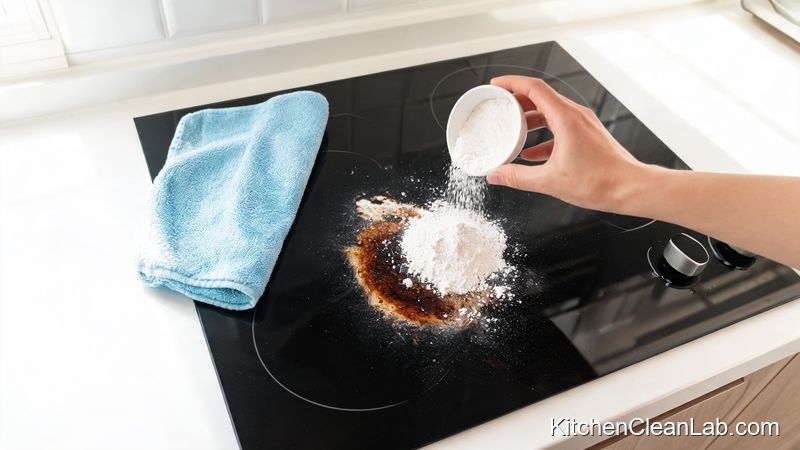
Sprinkle a generous layer of baking soda over the burnt-on area. Soak a clean cloth in hot water, wring it out, and lay it over the baking soda. Let it sit for 15 to 20 minutes. The moisture and mild alkalinity loosen the bond between food and glass.
Step 4: Gently Scrub in Circles
Using the damp cloth or a non-abrasive sponge, work in small, circular motions. Press lightly. If the residue doesn’t lift easily, repeat the soaking step rather than pressing harder.
Step 5: Wipe with Vinegar and Polish
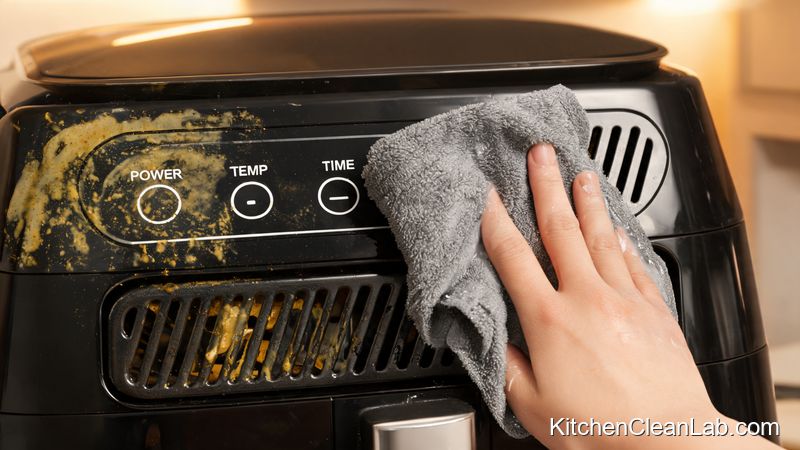
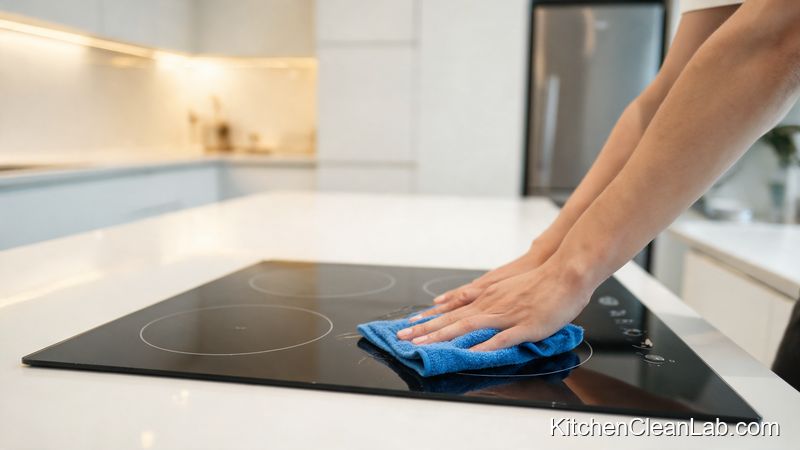
Dampen a clean microfiber cloth with white vinegar and wipe the entire cooktop to remove any baking soda film. Finish with a dry microfiber cloth to buff the surface to a streak-free shine.
Deep Cleaning Methods for Stubborn Burnt-on Residue
When a daily wipe-down isn't enough, use one of these targeted deep cleaning techniques. Always soften the residue first and avoid harsh abrasives.
Baking Soda Paste Treatment
Make a paste with three parts baking soda to one part water. Spread it over the burnt stain and let it sit for 20 minutes. Dampen a non-abrasive sponge and gently scrub. Rinse with a vinegar-dampened cloth and dry.
Razor Blade Scraper Method
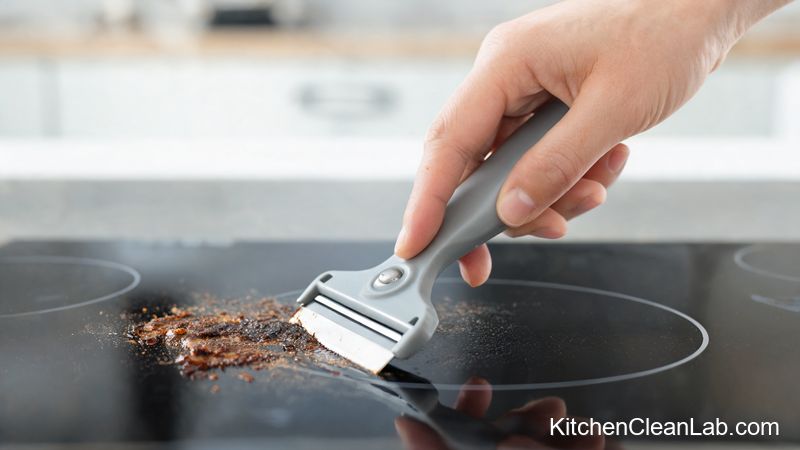
For thin, hard layers of burnt sugar or melted plastic, a razor scraper can be safe if used correctly. Hold the scraper at a 30- to 45-degree angle and push it slowly under the residue. Never scrape the corner into the glass; keep the blade flat. Always check your owner’s manual first. If the manufacturer does not approve scrapers, skip this method.
Cream-Based Glass Cooktop Cleaner
A quality cream cleaner formulated for glass cooktops uses fine polishing agents that are less likely to scratch than powdered cleansers. Apply a small amount to a cool surface, rub gently with a damp microfiber cloth, then wipe away and buff dry.
Vinegar and Dish Soap Soak
For greasy burnt-on residue, mix equal parts white vinegar and warm water with a few drops of dish soap in a spray bottle. Spray the area liberally, cover with a hot damp towel, and let it sit for 10–15 minutes. Wipe clean with a soft cloth.
Commercial Degreaser or Cooktop Kit
If DIY methods fall short, choose a non-abrasive, ammonia-free cooktop cleaner. Follow the label instructions and always rinse thoroughly to avoid residue buildup that can smoke or discolor when the burner heats.
Daily Cleaning Routine to Prevent Burnt-on Residue
The best way to avoid heavy scrubbing is to clean up spills before they bake on. A simple daily routine takes less than two minutes and prevents most burnt-on food from forming.
- Let the cooktop cool. Cleaning hot glass is unsafe and less effective.
- Brush away crumbs and salt. Use a dry, soft cloth with a light touch.
- Spray with a vinegar-water mix. Equal parts white vinegar and water in a spray bottle cuts grease without streaks.
- Wipe with a microfiber cloth. Use circular motions to lift smudges.
- Buff dry. A dry microfiber cloth restores a polished look and removes any remaining film.
Common Mistakes That Scratch Glass Cooktops
Even careful cleaning can go wrong. Avoid these common habits to keep your cooktop scratch-free.
Using Steel Wool or Abrasive Pads
Steel wool, scouring pads, and harsh scrub sponges leave visible scratches and dull the finish. Always choose a non-abrasive pad or microfiber cloth.
Scrubbing Dry Burnt Residue
Dry scrubbing creates intense friction and drags hard particles across the glass. Always soften burnt-on food first with a damp cloth or cleaning paste.
Using Ammonia-Based Glass Cleaners
Windex and similar ammonia products can etch the surface over time, leaving a cloudy blue or gray haze when heated. Use vinegar or a cooktop-specific cleaner instead.
Dragging Cookware Across the Surface
Never slide pots and pans over a glass cooktop. Lift cookware to avoid scratches and check the bottom of pans for grit before placing them on the burner.
Using the Wrong Razor Angle
A razor blade held at a high angle or used with corner pressure can gouge the glass. Keep the blade flat and use slow, controlled passes.
How Burnt-on Food Affects Cooktop Performance
Burnt-on residue absorbs heat and can cause uneven cooking by blocking the transfer from the heating element to the pan. It can also produce smoke, odors, and a cycle of more burnt-on stains. Removing it promptly keeps the cooktop efficient and prevents discoloration that becomes harder to clean over time.
Choosing the Right Cookware for Glass Cooktops
Flat-bottomed stainless steel, aluminum, and enameled cast iron generally work well. Avoid cookware with rough or ridged bottoms. Lift pans instead of sliding, and check for embedded grit before placing them on the surface. This simple habit prevents most scratches before they start.
Safety Precautions When Cleaning
- Always ensure the cooktop is off and completely cool.
- Do not lean on the glass with sharp objects.
- Ventilate if using commercial cleaners.
- Keep razor blades out of reach of children.
- Read your appliance manual for any cleaning restrictions.
FAQs About Removing Burnt-on Food from Glass Cooktops Without Scratching
Can I use baking soda on a glass cooktop?
Yes. Baking soda is one of the safest and most effective cleaners for glass cooktops. Its fine particles are soft enough not to scratch and its alkaline nature breaks down grease and food residue. Always use it as a damp paste or sprinkle with a wet cloth rather than scrubbing it dry.
Is it safe to use a razor blade scraper on glass stovetops?
It can be safe if your manufacturer allows it and you hold the blade at a low angle. Use a new blade, keep the surface damp, and never use the corner. If you are unsure, check the user manual or skip using a razor altogether.
Why does my glass cooktop look cloudy after cleaning?
Cloudiness usually comes from hard water deposits, soap residue, or ammonia-based cleaners etching the surface. Polish with a dry microfiber cloth after vinegar, or use a cream-based glass cooktop cleaner to restore shine.
Can I use magic eraser on a glass cooktop?
While a magic eraser is often safe for glass, it is a mild abrasive and should be used sparingly. Soften the residue first and test in an inconspicuous area. Do not use it on a hot surface.
How often should I deep clean my glass cooktop?
Deep clean once a week or whenever you see burned-on spots. Daily wiping prevents the need for aggressive weekly scrubbing.
What should I do if food is burned onto the burner area?
Let the cooktop cool, brush away loose debris, then apply a baking soda paste and a hot damp cloth to the stained area. Let it sit, gently scrub, and wipe clean. For stubborn residues, use a manufacturer-approved razor scraper at a low angle.
Conclusion
Knowing how to remove burnt-on food from glass cooktops without scratching comes down to patience, the right tools, and a soft touch. Soften residue first, avoid abrasive powders and pads, and never drag cookware across the surface. With the step-by-step methods and prevention habits above, you can keep your glass cooktop looking bright, clean, and scratch-free for years.