Why Slow Cooker Inserts Develop Stubborn, Baked-On Residue
Slow cooker residue forms when starchy sauces, sugars, and proteins climb the insert wall and dehydrate over several hours. As liquid evaporates, a sticky ring hardens just above the food line. High heat, long cook times, and calcium-heavy tap water contribute to the cement-like deposit.
This layer is rarely plain dirt. It includes polymerized oils, caramelized sugars, and minerals. Protein-rich braises leave a frothy protein ring. Tomato-based chili leaves acid stains. Bean dishes create starch films. The hottest zones are near the top rim and along the bottom edge, because that is where evaporation is most aggressive.
Safety Checks Before You Start Cleaning
Unplug the slow cooker and let the insert cool completely before cleaning. Always separate the removable stoneware or ceramic insert from the electric heating base, and never immerse the base in water or allow liquid to enter the control area.
Follow these safety steps every time:
- Unplug the unit before touching any insert, lid, or cord.
- Cool fully. Hot stoneware can crack if placed under cold water. Thermal shock is a common cause of insert failure.
- Never submerge the heating base. It contains electrical components that can become a fire hazard when wet.
- Avoid harsh chemicals such as oven cleaner, bleach, or drain cleaners. They can damage the glaze, leave odors, or contaminate the next meal.
- Use dish gloves if you have sensitive skin, small cuts, or plan to handle vinegar for an extended period.
- Ventilate the area when using the heated vinegar method. Turn on a range hood or open a window because vinegar steam can be strong.
Cleaning Tools and Materials You Should Gather
You do not need specialty cleaners. Warm water, dish soap, baking soda, distilled white vinegar, and soft non-scratch tools remove most stubborn residue. Avoid steel wool, hard scrapers, and harsh chemicals that damage ceramic glaze or nonstick coatings.
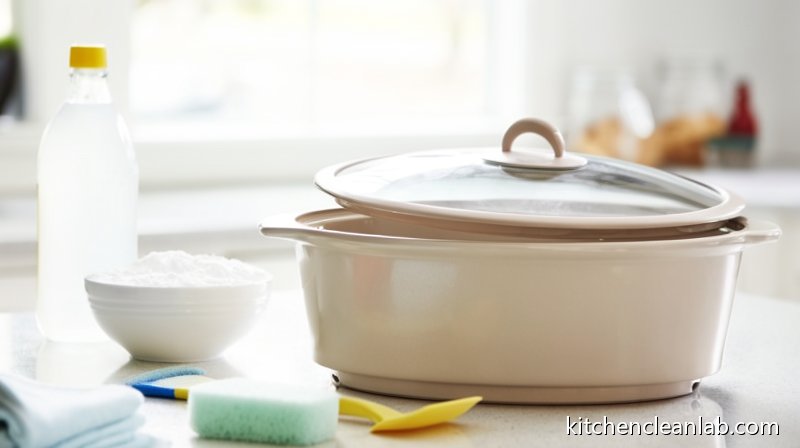
- Rubber or silicone spatula
- Non-abrasive sponge or soft nylon brush
- Mild dish soap
- Distilled white vinegar
- Baking soda
- Clean dish towels
- Optional: slow cooker liners, parchment paper, or an old soft toothbrush for gasket grooves
Step-by-Step: How to Clean a Removable Slow Cooker Insert with Stubborn Food Residue
Cool the insert, scrape loose food away, then soak it in hot soapy water to soften the ring. For stubborn residue, apply a baking soda paste before scrubbing with a soft sponge. Never use steel wool or metal tools on ceramic or nonstick surfaces.
- Unplug and cool: After cooking, unplug the base and let the insert reach room temperature. Never run cold water over hot stoneware.
- Scrape loose debris: Use a rubber or silicone spatula to remove large food pieces. Avoid metal utensils, which can scratch the glaze.
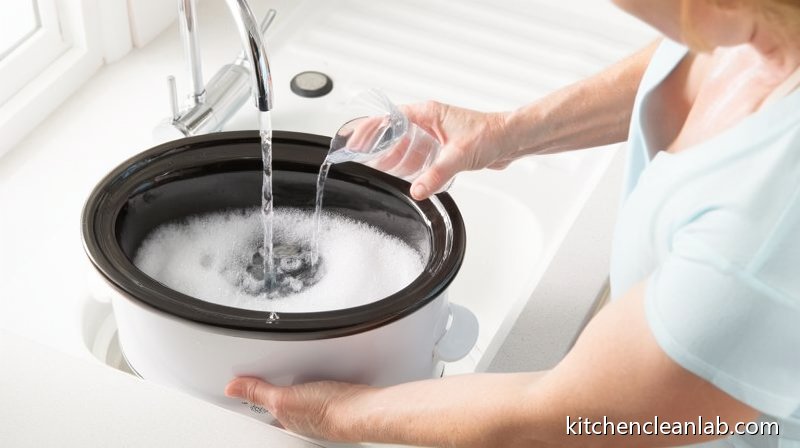
- Fill with hot soapy water: Add two or three drops of grease-cutting dish soap and enough hot water to cover the residue line. Let it soak for 20 to 30 minutes. For heavy rings, soak up to one hour.
- Scrub gently: Use a non-abrasive sponge or soft nylon brush. Work from the bottom upward and pay special attention to the upper ring. Do not use scouring pads or steel wool.
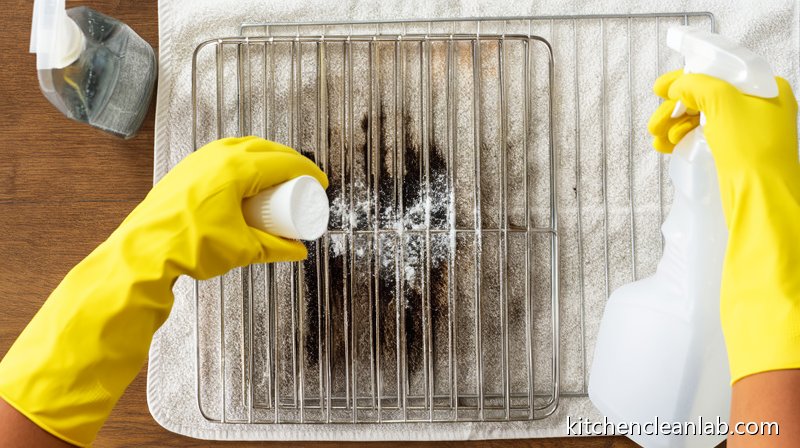
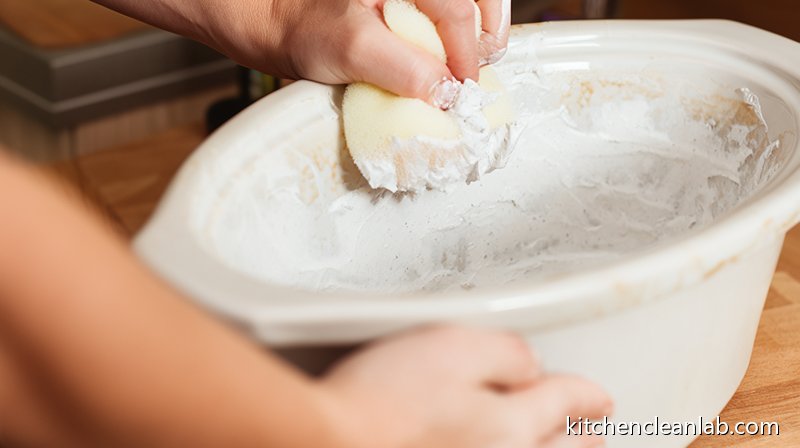
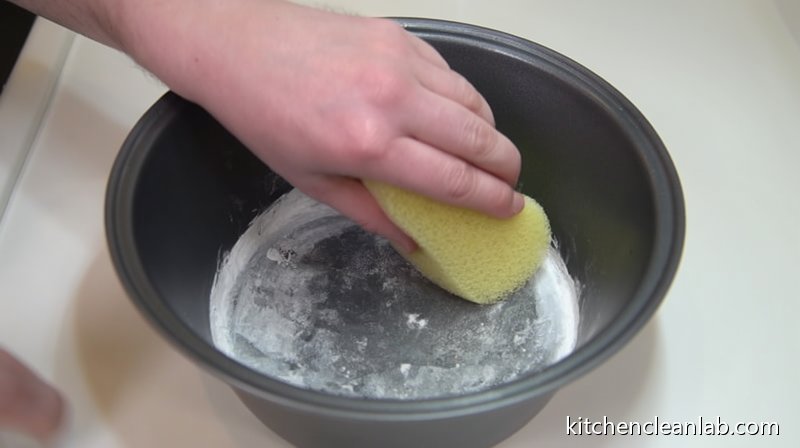
- Apply a baking soda paste: If the ring remains, mix 1/2 cup of baking soda with 1 to 2 tablespoons of water until spreadable. Apply the paste to the affected areas, let it rest for 15 to 30 minutes, then scrub in circular motions.
- Rinse and dry: Rinse with clean warm water until no soap or powder remains. Dry completely with a lint-free dish towel before reassembling the slow cooker.
The Vinegar and Baking Soda Steam Method for Burnt-On Rings
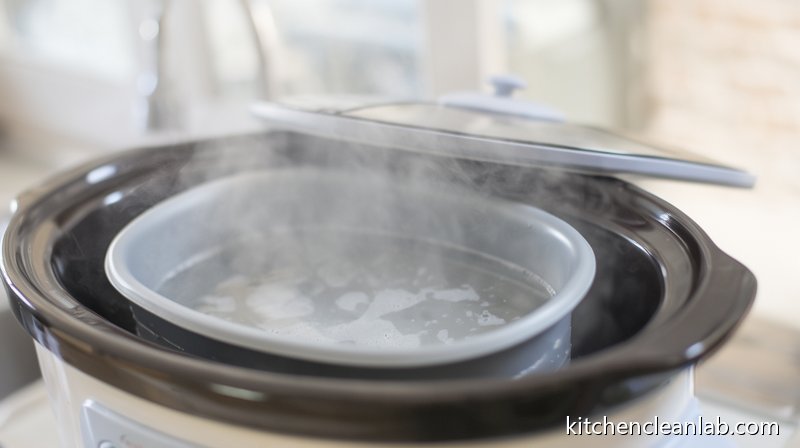
Place the insert in the warming base, fill water to just above the residue line, add vinegar and baking soda slowly, and heat on low for one hour. The gentle steam and alkaline solution soften the crust so it wipes away without aggressive scrubbing.
- Place the insert in the warming base. Fill it with enough water to cover the burnt ring by about 1 inch.
- Add distilled white vinegar. Use 1/2 cup for a 3-quart model or 1 cup for larger 6- to 8-quart models.
- Add an equal amount of baking soda slowly. Sprinkle it in small amounts because it will foam. Keep the fill level low enough to prevent foam from reaching the lid seal.
- Cover and heat on low for one hour. The warm, humid environment loosens the cooked-on layer. Stay nearby and check every 20 minutes if your lid fits tightly.
- Turn off, cool, and discard the liquid. Remove the insert carefully, then wash with dish soap and warm water. Dry completely before reassembling.
This method is useful for burned sauces, caramelized barbecue drippings, cheese dip rings, and dried bean starch. It is not a substitute for daily washing, but it prevents hours of scrubbing.
How to Clean a Non-Removable Slow Cooker Insert
For non-removable inserts, never invert or submerge the base. Fill the pot with hot soapy water below the rim, scrub with a sponge, then dump and rinse with a damp cloth. The same low-heat vinegar treatment works, but electrical parts must stay dry.
- Make sure the unit is unplugged and cool. Do not attempt to detach the insert.
- Fill the pot with hot water and a few drops of dish soap. Leave at least 1 inch of space at the top to prevent spilling over the control panel.
- Scrub the interior with a non-abrasive sponge. Use a soft toothbrush around rivets, seams, and the lid groove if needed.
- Dump the soapy water carefully into the sink. Keep the base upright and avoid getting water on the outside or near the cord.
- Rinse with a clean damp cloth. Repeat until no soap remains, then dry with a clean towel.
- Use the vinegar and baking soda steam method if stubborn residue remains, but keep the water level well below the rim and wipe the exterior immediately if any steam condensation collects.
Slow cooker liners are especially useful for non-removable inserts because they stop many sticky residues from touching the pot.
Removing White Mineral Rings and Discoloration
White chalky rings are usually calcium or hard-water mineral deposits, not food. Wipe the insert with equal parts white vinegar and water, or use a baking soda paste on stained ceramic, then rinse with clean water and dry thoroughly.
Over time, slow cooker inserts often develop a white chalky ring even after ordinary washing. This is common in homes with hard water. The minerals left behind after evaporation build up on the glaze, especially where water bubbles and retreats during cooking.
- For white mineral film: Pour equal parts distilled white vinegar and water into the cooled insert. Wipe the affected areas with a clean sponge, then rinse and dry.
- For brown or gray staining: Make a paste of baking soda and water. Apply it to the stain, leave it for 15 to 30 minutes, then scrub gently with a soft sponge.
- For stubborn scale: Use the low-heat vinegar method described above to soften mineral deposits before wiping.
After removing mineral deposits, rinse the insert thoroughly. Leftover vinegar can transfer a sour smell to delicate dishes.
Dishwasher vs. Hand Washing: Which Is Safer for Your Insert?
Many removable stoneware inserts and glass lids are labeled dishwasher-safe, but frequent dishwasher detergent and high heat can dull glazes and stress seals. Hand washing with mild dish soap is gentler and prolongs the finish, especially for older or nonstick-coated slow cookers.
| Part | Dishwasher Safe? | Best Practice |
|---|---|---|
| Removable stoneware insert | Often yes, check manual | Use top rack and gentle or normal cycle; skip heated dry |
| Glass lid | Often yes, check manual | Secure on top rack so it cannot rattle |
| Heating base | Never | Wipe exterior with a damp cloth only |
| Nonstick ceramic insert | Model dependent | Hand wash to extend coating life and prevent clouding |
| Rubber lid gasket | Sometimes | Remove and wash by hand if possible |
Even dishwasher-safe inserts benefit from occasional hand washing. Dishwasher detergents can be highly alkaline and may contribute to a dull or chalky appearance over time.
Common Mistakes That Ruin Slow Cooker Inserts
Using metal utensils, cold water on hot ceramic, abrasive powders, or submerging the base are the most damaging cleaning mistakes. Thermal shock can crack stoneware, while steel wool and harsh chemicals permanently scratch the glaze or strip nonstick surfaces.
- Running cold water over a hot insert. The rapid temperature change can cause invisible cracks that later widen.
- Using steel wool, metal spatulas, or scouring pads. These create micro-scratches where food and bacteria can hide.
- Spraying harsh oven cleaner or bleach. Chemical residues can remain in the ceramic pores and affect food safety.
- Submerging the slow cooker base. Water can enter the electrical housing and cause short circuits or corrosion.
- Ignoring the lid gasket. Dried sauces and oils collect in the rim, causing odor and bacterial growth.
- Soaking the insert for days. Prolonged standing water can loosen mineral deposits but may create a sour smell and waste time.
Preventing Stubborn Residue Before It Starts
Slow cooker liners, parchment paper, and lightly oiling the insert before sticky dishes reduce cleanup. Also, avoid propping the lid or opening it repeatedly, which lowers liquid volume and leaves a thicker residue line.
- Use slow cooker liners for barbecue sauces, glazed meats, cheese dips, and dishes with tomato paste or sugar.
- Wipe the interior with a neutral cooking oil before adding starchy or sugary recipes. A thin coat helps release food.
- Keep the lid closed. Every time the lid is opened, moisture escapes and the food line becomes more concentrated.
- Add enough liquid. Braises and sauces need sufficient moisture to avoid drying onto the upper walls.
- Cool and clean soon after serving. Letting cooked-on sugar sit overnight makes the ring harder to remove.
- If you cannot wash immediately, fill the insert with warm soapy water. This keeps residue soft until you are ready.
Frequently Asked Questions About Slow Cooker Insert Cleaning
Here are specific answers to common slow cooker insert cleaning questions, including dishwasher safety, burnt-on removal, vinegar effects, and mineral haze. Always confirm your model's care instructions before using dishwasher or heated cleaning methods.
Can I put my slow cooker insert in the dishwasher?
Many removable stoneware or ceramic inserts and glass lids are labeled dishwasher-safe, but check your owner's manual. If using a dishwasher, place items on the top rack and choose a gentle or normal cycle without high-heat dry cycles. Frequent dishwasher detergent can dull glaze or fade markings over time.
How do I remove burnt food from the bottom of a slow cooker insert?
Soak the insert in hot water with dish soap for 20 to 30 minutes. If the burnt layer remains, make a baking soda paste and let it sit on the spot for 15 to 30 minutes, then scrub with a non-abrasive sponge. For severe buildup, use the low-heat vinegar and baking soda steam method for one hour.
Does vinegar damage a ceramic slow cooker insert?
Distilled white vinegar is safe for occasional cleaning of ceramic and stoneware. Do not use full-strength vinegar for prolonged soaking on unglazed or damaged surfaces. Rinse thoroughly after cleaning to avoid lingering odor or acid degradation of the glaze.
Why does my slow cooker insert have a white chalky film after washing?
White chalky film is usually calcium carbonate or mineral deposits left by hard water. It is harmless but can build up over time. Wipe the cooled insert with equal parts white vinegar and water, then wash with warm soapy water, rinse, and dry completely.
Final Cleaning Checklist and Long-Term Care
After every use, wash the insert and lid with warm soapy water, wipe the base with a damp cloth, and dry all parts completely. Once a month, deep-clean with vinegar or baking soda to prevent mineral rings and hidden odor buildup.
- Cool completely before cleaning.
- Scrape loose food with silicone or rubber.
- Wash insert and lid with mild dish soap.
- Rinse thoroughly to remove all soap and paste.
- Dry all parts completely before reassembling.
- Wipe the heating base and cord with a barely damp cloth.
- Deep-clean monthly with the vinegar and baking soda method.
A slow cooker insert with stubborn residue is not ruined. The cause is usually evaporation, sugar, starch, and minerals rather than permanent damage. By pairing low-heat moisture, mild acid, and gentle alkaline paste, you can restore the surface without scratching the glaze. A few prevention habits, such as using liners and keeping the lid closed, will keep future rings minimal and make cleanup faster after every meal.