Can You Put Range Hood Filters in the Dishwasher? The Short Answer
Yes, most metal grease filters—including aluminum mesh and stainless steel baffle designs—are dishwasher safe. Charcoal, carbon, paper, and foam filters should never go through a dishwasher cycle. For any filter, the final word comes from your range hood’s instruction manual.
Range hood filters are designed to trap airborne grease, oil, and cooking residue before those contaminants reach the blower motor and ductwork. Because they collect sticky grime, routine cleaning is not just cosmetic; it directly affects airflow, noise levels, and fire risk. The cleaning method you choose matters, and the dishwasher is a convenient option only for the right type of filter.
Before you remove anything, identify the filter type. Mistaking a charcoal filter for a metal grease filter can damage the filter and reduce the hood’s ability to control odors. The table below is the fastest way to narrow down what you are working with.
Which Range Hood Filters Are Dishwasher Safe?
Not all filters are the same. In most kitchens, the metal grease filter is dishwasher safe, while the charcoal filter is not. This quick reference breaks down the four common types and the action you should take.
| Filter Type | Material | Dishwasher Safe? | Recommended Action |
|---|---|---|---|
| Aluminum mesh grease filter | Aluminum | Usually yes | Top rack, normal or gentle cycle, skip heated dry |
| Stainless steel baffle filter | Stainless steel | Usually yes | Top rack or bottom rack, gentle detergent |
| Charcoal/carbon filter | Activated carbon | No | Replace every 3–6 months |
| Paper/foam filter | Paper or synthetic foam | No | Replace when saturated or visibly dirty |
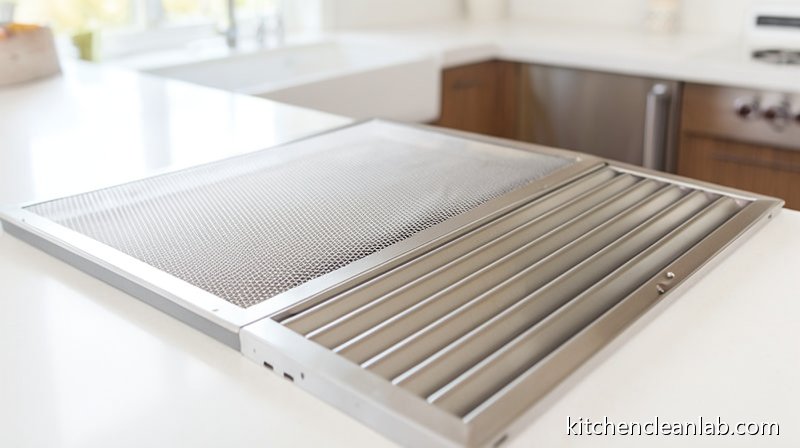
Metal Grease Filters: Aluminum Mesh and Stainless Steel Baffles
These are the reusable workhorses under most range hoods. Aluminum mesh filters are lightweight and generally safe on the top rack of a dishwasher, but repeated high-heat cycles and aggressive detergents can dull the finish. Stainless steel baffle filters are more durable and often hold up better to regular dishwasher cleaning. In both cases, a normal or gentle cycle is better than an intensive or sanitize program.
Some manufacturers use anodized aluminum or add thin chrome trim. If the filter has a coating or plastic end caps, treat it as hand-wash only unless the manual says otherwise. Do not assume that every metal-looking filter is automatically dishwasher safe.
Charcoal and Carbon Filters: Never Wash
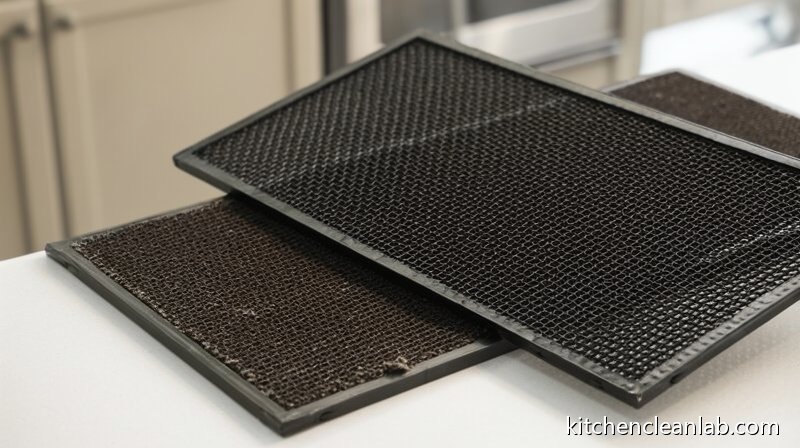
Charcoal filters are used in recirculating range hoods to absorb cooking odors. They contain activated carbon with a porous structure that traps odor molecules. Water does not flush those molecules out; it merely wets the carbon and can degrade the housing. Once a charcoal filter is saturated, it must be replaced—typically every three to six months, depending on cooking volume.
A common mistake is assuming that a good rinse will refresh a charcoal filter because it looks cleaner. The active surface area inside the carbon is already spent, so the filter will release odors back into the kitchen.
Paper and Foam Filters: Disposable by Design
Some older or entry-level hoods use disposable paper or foam filters. They are not designed for water, heat, or detergent exposure. If yours feels like paper or soft foam, do not wash it. Remove it, check the size, and replace it when it becomes visibly greasy or soiled.
If you are unsure whether a filter is paper or a synthetic mesh, squeeze a small section between your fingers. Paper will feel fibrous, while foam will feel springy. Both are replacement-only.
How to Clean Range Hood Filters in the Dishwasher Step by Step
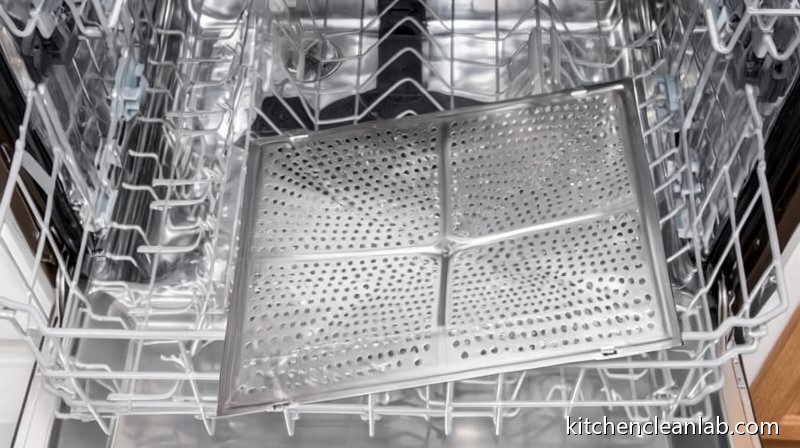
For metal grease filters that are confirmed dishwasher safe, use a normal or gentle wash cycle, place the filter on the top rack, and avoid high-heat drying. Pre-rinsing is the most important step to prevent grease from coating your dishwasher.
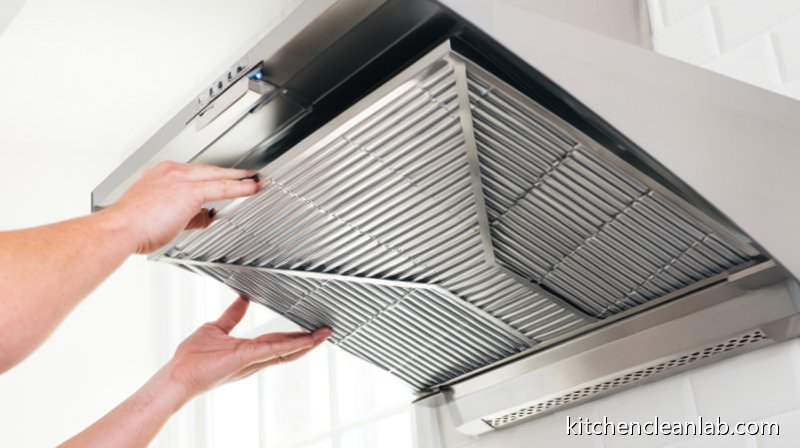
- Remove the filter carefully. Most slide out or unclip from the underside of the hood. If there is a metal loop or latch, use it. Avoid bending the mesh or baffle panels.
- Pre-rinse under warm running water. Place the filter in the sink and use a soft brush to remove heavy surface grease. This keeps dishwasher spray arms and drain lines cleaner.
- Load the filter on the top rack. Position it so it does not block the spray arm. For larger baffle filters, the bottom rack flat is acceptable, but the top rack keeps thin aluminum away from the heating element.
- Use standard dishwasher detergent. Skip highly caustic or industrial-strength tablets, which can react aggressively with aluminum and leave a chalky film.
- Select a normal or gentle cycle. Avoid high-temperature, sanitize, and heated dry cycles. Thin aluminum can warp, and plastic parts can distort.
- Air dry completely before reinstalling. Set the filter on a drying rack for at least an hour. A damp filter attracts grease more quickly and can create a musty odor.
If the filter is very greasy but still dishwasher safe, a quick pre-soak in hot water and dish soap before the dishwasher cycle will improve results. Never use oven cleaner or drain cleaner on range hood filters; these chemicals can break down metal and leave dangerous residue.
When Not to Use the Dishwasher for Range Hood Filters
Skip the dishwasher if the filter is heavily saturated, contains plastic parts, is bent or damaged, or your manufacturer explicitly says hand washing only. These situations increase the risk of dishwasher contamination and filter damage.
- Heavy grease buildup: Thick grease can coat the dishwasher drum, spray arms, and drain lines.
- Plastic components or trim: High heat can warp or crack plastic handles, end caps, or frames.
- Bent or damaged filter: Dishwasher action can worsen bends and prevent a proper fit.
- Manufacturer says hand wash only: Some filters look metal but have special coatings.
- Older or delicate aluminum finish: If you want to preserve a brushed or anodized finish, hand wash instead.
When in doubt, hand wash. It takes only 15 to 30 minutes of soaking and scrubbing, and it is far cheaper than replacing a filter or repairing a dishwasher.
Hand-Washing Range Hood Filters: The Reliable Fallback
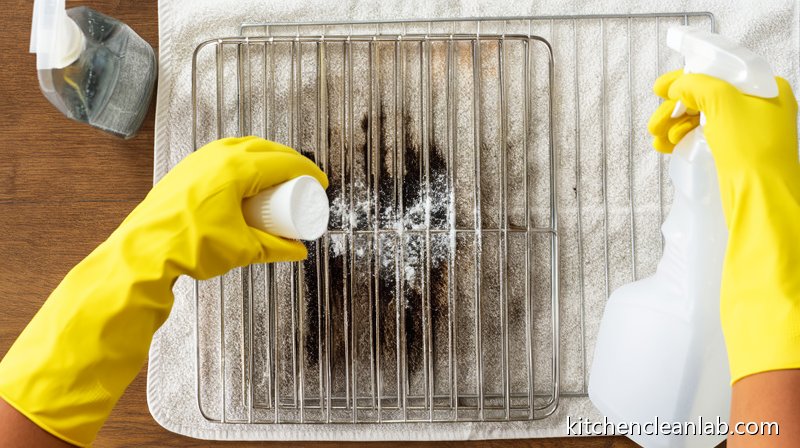
Hand washing with hot water, degreasing dish soap, and baking soda is the safest method for very greasy filters and any filter with an uncertain dishwasher-safe label. It avoids exposing your dishwasher to heavy grease and gives you more control over the finish.
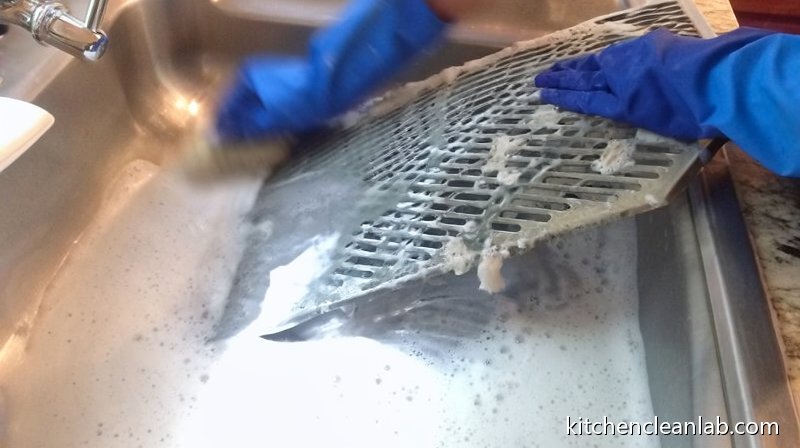
- Fill a sink or basin with very hot water. Boiling water can improve grease removal, but wear long rubber gloves to protect your skin.
- Add degreasing dish soap and 1/4 cup baking soda. Swish until the water is soapy and the baking soda dissolves.
- Submerge the filter completely. Let it soak for 15 to 30 minutes. For heavy buildup, 30 minutes works better.
- Scrub with a non-abrasive brush or sponge. Pay close attention to corners, mesh openings, and baffle channels.
- Rinse thoroughly with hot running water. Remove all soap residue, because leftover detergent attracts grease faster.
- Air dry completely. Place the filter on a clean towel or drying rack. Pat it dry with a microfiber cloth or paper towel before reinstalling.
This method is also useful before you put a metal filter in the dishwasher. If the filter has been neglected, a pre-soak will loosen the worst of the grime and help the dishwasher finish the job.
How Often Should You Clean or Replace Range Hood Filters?
Clean metal grease filters every 2–3 months, or once a month if you fry often, cook with a wok, or use the stovetop daily. Replace charcoal filters every 3–6 months, and replace paper or foam filters as soon as they look saturated.
Your cooking style sets the schedule. A household that sautés daily produces far more airborne oil than one that simmers soups occasionally. Use visual checks and performance cues to adjust the interval.
- Check mesh filters every two weeks for visible yellowing or oil droplets.
- Clean monthly if you cook daily, fry frequently, or regularly use high heat.
- Clean every 2–3 months in a lighter-use kitchen.
- Replace charcoal filters every 3–6 months, even if they look clean.
- Replace disposable paper or foam filters when light no longer passes through or the surface feels sticky.
- Clean immediately after a holiday feast or heavy frying session.
Common Mistakes That Ruin Range Hood Filters
The most damaging mistakes include putting charcoal filters in the dishwasher, using abrasive scrubbers on aluminum mesh, reinstalling damp filters, and ignoring manufacturer instructions. These habits reduce airflow and can permanently damage the filter.
- Washing charcoal filters: They cannot be cleaned; replace them instead.
- Using steel wool or harsh scouring powders: Scratches create places for grease to bond.
- Running a heavily greasy filter with dishes: Grease can redeposit on glassware and the dishwasher interior.
- Skipping the pre-rinse: The dishwasher has to work harder and may leave a film.
- Reinstalling damp filters: Moisture leads to odors and makes new grease stick faster.
- Using high-heat cycles: Thin aluminum and plastic parts can warp or discolor.
- Forgetting the manual: Model-specific warnings override general advice.
If the range hood is louder than normal, weak at smoke capture, or has a burnt oil smell when the fan runs, the filter is almost certainly overdue for cleaning or replacement.
FAQs: Dishwasher and Range Hood Filter Questions
These quick answers cover the most common questions about dishwasher cleaning and alternative methods for range hood filters.
Can I wash a greasy range hood filter with my dishes?
Only if the filter is lightly soiled and dishwasher safe. For a heavily greasy filter, pre-rinse it first or run it in a separate cycle. Heavy grease can coat your dishes, cloud glassware, and leave residue in the machine. A dedicated filter-only cycle gives the detergent room to work.
Will the dishwasher damage aluminum mesh filters?
Not usually. Aluminum mesh filters can safely go in the dishwasher when you use the top rack, a normal or gentle cycle, and standard detergent. Repeated high-heat drying or aggressive detergents may dull or slightly darken the aluminum over time, but this is usually cosmetic and does not stop the filter from working.
How do I know if my filter is dishwasher safe?
Check the range hood manual, the manufacturer’s website, or the label on the filter. As a rule, metal grease filters are usually dishwasher safe, while charcoal, carbon, paper, and foam filters are not. If the manual is unavailable and the filter has plastic parts or feels flimsy, hand wash instead.
Can charcoal range hood filters be washed and reused?
No. Charcoal or carbon filters cannot be washed or reused. The activated carbon becomes saturated with odor molecules, and washing does not clear those pores. Replace charcoal filters according to the manufacturer’s schedule, usually every three to six months for average cooking.
Final Verdict: Clean Filters Keep Your Kitchen Safer
Yes, most metal range hood filters can go in the dishwasher, but charcoal, paper, and foam filters cannot. Use a gentle top-rack cycle, pre-rinse heavily soiled filters, and always let them dry completely.
A clean range hood filter reduces grease buildup, improves airflow, lowers fire risk, and eliminates lingering cooking odors. Check your filter type first, follow your manual, and choose the dishwasher only when the filter is designed for it. For everything else, a hot hand-wash or a replacement filter is the right call.