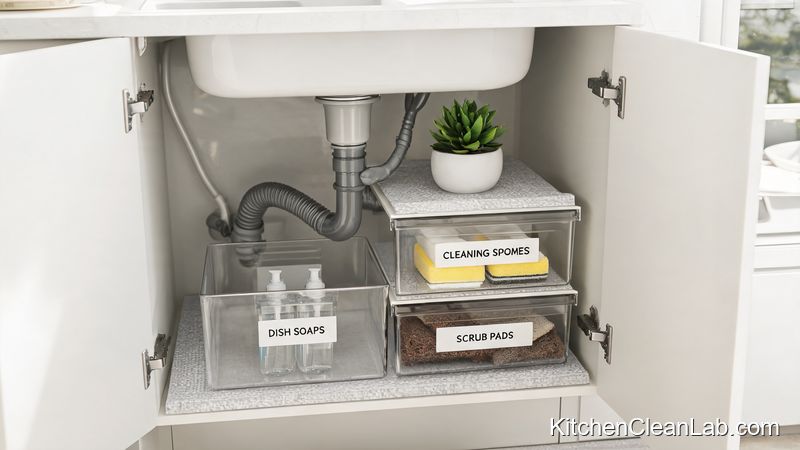
Why a Clear Countertop Makes Daily Cleaning Faster
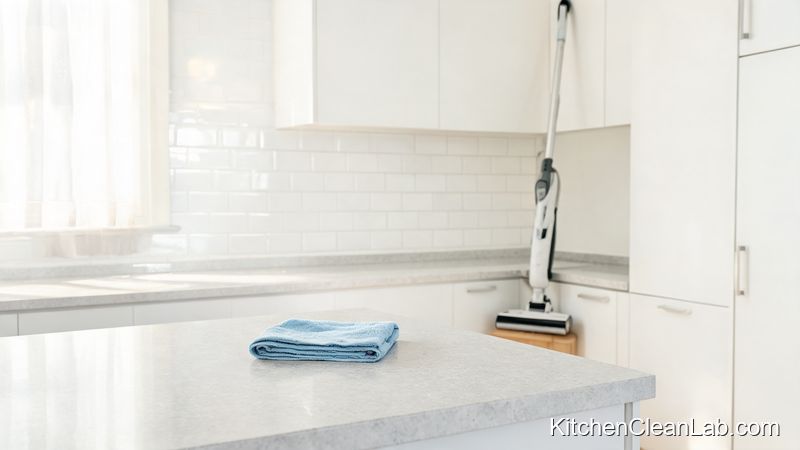
A clear countertop reduces the time you spend wiping, moving, and cleaning around objects. When surfaces stay empty, daily cleaning becomes a 60-second wipe-down instead of a 20-minute obstacle course.
Kitchen counters are high-contact work zones. Every small appliance, spice jar, cookbook, and decorative object collects airborne grease and dust. When items sit near the stove, that film bonds with heat and becomes sticky. Each time you need to wipe the surface, you first have to move a coffee maker, lift canisters, and dig around the fruit bowl. That friction makes you less likely to clean daily.
Cleaning pros consistently link decluttering to better hygiene. When you remove obstacles, you can use a single microfiber cloth to go from the sink to the range in one pass. That makes nightly cleanup faster, which makes the habit stick. The result is less grease accumulation, fewer crumbs under small appliances, and fewer hiding spots for pests.
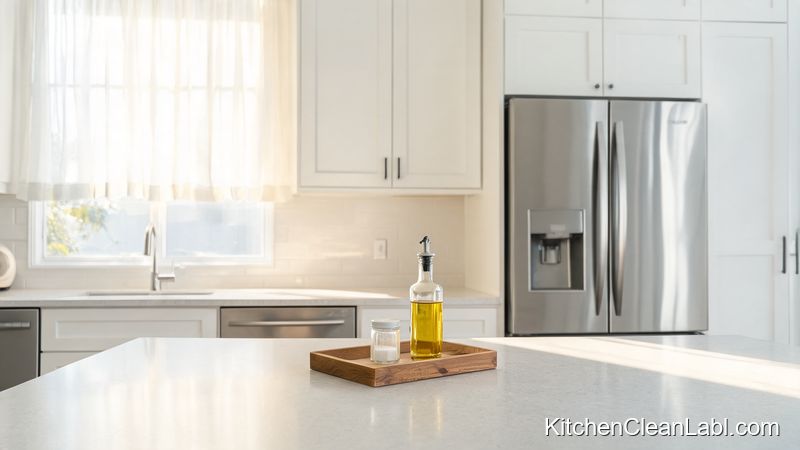
The One-Touch Rule: Sort Items by Real Frequency of Use
Sort every countertop item by how often you actually use it, not how often you hope to use it. Daily and weekly tools can stay; occasional pieces should be stored or donated.
Before you buy bins or risers, remove everything from the surface. For each item, use the one-touch rule: if you have to move it every time you wipe the counter, it needs to earn that friction. Only items used at least once a week deserve premium counter space. Small appliances should generally meet a higher bar; reserve the surface for machines used daily or near-daily.
Use this quick-reference list to sort as you work:
- Keep on the counter: daily coffee maker or kettle, dish soap or hand soap, one utensil crock, the cutting board you use every day, olive oil and salt if you cook daily.
- Store in a cabinet or drawer: stand mixer, food processor, air fryer, spice collection, cookbooks, mail, chargers, backup oils and vinegars.
- Donate or discard: duplicate spatulas, chipped mugs, broken tools, expired oils, old decor, and gadgets you haven't used in six months.
If an item doesn't fit neatly into one of these categories, take a photo of it, put it in a closed box in a pantry or garage, and date the box. If you don't open the box for 60 days, you likely don't need the item.
Step-by-Step: Declutter Your Countertops in 30 Minutes
Use a zone approach: clear the sink, stove, and refrigerator landing areas first. Then sort, clean, and return only items that passed the frequency test.
Set a timer for 30 minutes and grab two boxes: one for relocating items to other rooms, and one for donations or trash. Work left to right so you don't jump around and stall.
- Clear the hot zones. Stand in front of your sink, range, and refrigerator. Move everything off at least one clear section next to each. These are your landing zones for hot pans, dirty dishes, and groceries.
- Empty one zone at a time. Start with the coffee station or the area that collects the most clutter. Move all items off the counter completely.
- Sort each item in 10 seconds. Ask: Have I used this in the last 7 days? If no, put it in the relocate box. If it is broken or duplicate, put it in the donate box.
- Wipe the empty surface. Use warm water with a few drops of mild dish soap on laminate, quartz, or sealed granite. Use a pH-neutral stone cleaner for marble. Dry with a clean microfiber cloth to prevent water spots.
- Make room inside cabinets. If items were on the counter because drawers were full, purge duplicate utensils, mismatched lids, expired pantry items, and broken gadgets for 5 minutes.
- Return only the keepers. Cluster by function: one beverage zone, one cooking zone, and one clear prep strip. Resist the urge to put back items just because they always lived there.
- Create a no-drop zone. Pick one small tray for keys or a phone, but keep paper and devices out. Put a wall-mounted paper sorter near the entry instead.
Safety note: Check your cleaning product label against your countertop material. Acidic cleaners like vinegar or lemon can etch marble and some natural stone. Avoid abrasive sponges on quartz and laminate, and always dry just-cleaned surfaces to prevent water spots.
Appliance Triage: What Earns a Permanent Spot
Treat countertop appliances like real estate: the rent is daily use. A toaster or coffee maker used every morning can stay; a stand mixer used twice a year belongs in a cabinet or pantry.
Many kitchens hold aspirational appliances. The idea of fresh juice every morning doesn't earn the juicer a permanent spot. Use the 24-hour rule for appliances: if you haven't used it in the last 24 hours and won't use it in the next 24, it probably shouldn't live on the counter. For most households, that means a coffee maker, kettle, or toaster oven stays, while a stand mixer, food processor, rice cooker, and blender move to a lower cabinet.
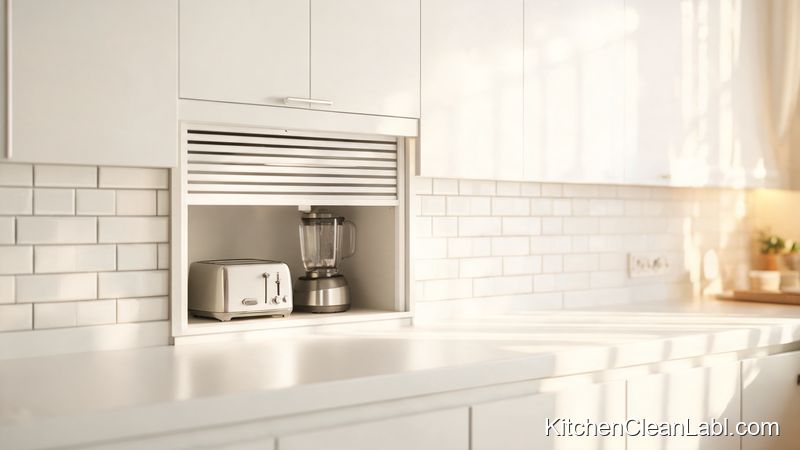
If you have multiple small appliances and limited cabinet space, consider an appliance garage. A roll-up or lift-up cabinet keeps items accessible but hidden. Another option is a small kitchen cart: it adds storage and a secondary work surface without permanently shrinking your prep area.
Before adding any storage piece, measure your counter depth and the appliance footprint. The goal is to keep at least 18 to 24 inches of open prep space near the sink and stove. That clearance makes daily cleaning faster and safer.
Smart Storage Moves That Get Things Up and Off the Counter
Explore vertical space before adding more clutter. Shelves, magnetic strips, cabinet hooks, and wall pockets keep daily tools accessible without sitting on the surface you need to clean.
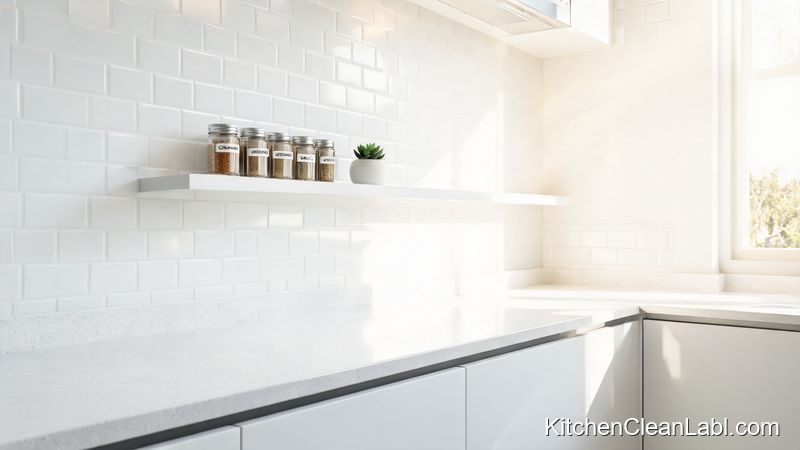
The backsplash area between the counter and upper cabinets is often wasted. Install a slim floating shelf for spice jars, a small plant, or a mug. A foldaway shelf can be lifted up when you need to wipe behind it. A wall-mounted magnetic knife strip frees up a bulky countertop knife block and keeps blades dry and visible.
For spices and oils, store most in a nearby cabinet with a tiered organizer so labels are easy to read. Keep only the two or three bottles you use daily on a small tray by the stove. This prevents grease from building up on bottles and slows flavor loss from heat and light.
If you keep a utensil crock, make it the only catchall on the counter. Wash the crock weekly, and fill it with only the tools you use multiple times a week. Move slotted spoons, tongs, and can openers into a drawer organizer near the range.
Daily Maintenance Habits That Keep Counters Cleaner Longer
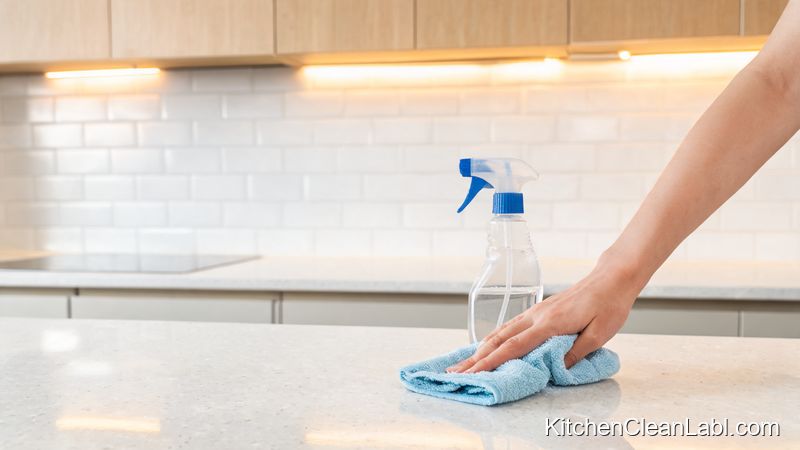
The easiest way to keep counters clean is to wipe them every night, clean spills immediately, and never leave crumbs under small appliances. This prevents sticky grease from building up.
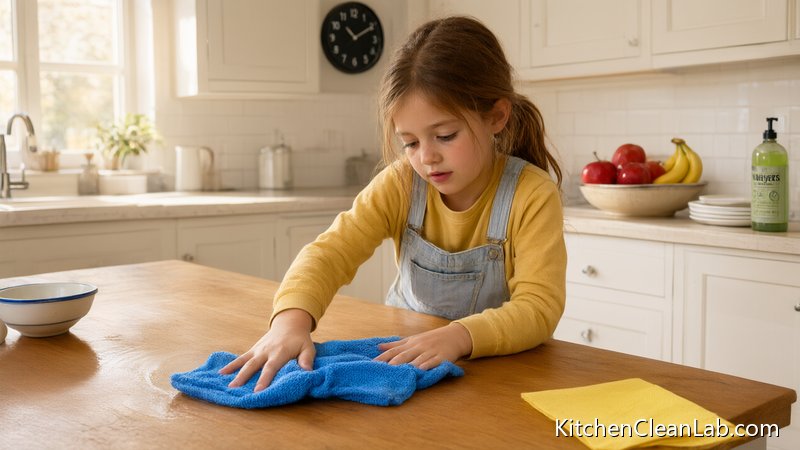
Daily countertop care doesn't require a cabinet full of specialty products. In most cases, warm water with a few drops of mild dish soap works well. For stone surfaces, choose a pH-neutral stone cleaner or a mild liquid dish soap that doesn't contain harsh acids. Use a fresh microfiber cloth or paper towel, then dry the surface with a clean cloth to prevent water spots and streaks.
Adopt a closing shift habit: after dinner, move all items to one side, wipe the entire counter, dry it, and reset the space. If you do this every night, you won't need heavy scrubbing sessions. Wipe up spills as they happen—especially coffee, tomato sauce, wine, and citrus juice—because they can stain porous surfaces and attract germs.
For butcher block, use a food-safe wood cleaner and reseal with mineral oil when the grain looks dry. For granite and marble, test the seal every six months by placing a few drops of water on the surface. If the water darkens the stone within a few minutes, it's time to reseal. For quartz, avoid abrasive pads and bleach; a soft cloth and gentle cleaner is enough.
Use this simple maintenance rhythm:
- Daily: wipe counters, clean spills, clear the sink and stove landing areas, move mail and devices out.
- Weekly: remove small appliances and wipe underneath, wash the utensil crock, clean drip trays and soap dispensers.
- Monthly: check stone seals, deep clean appliance bases, purge expired spices and oils, rotate decorative items.
Common Mistakes That Re-Clutter Kitchen Counters
Avoid using the kitchen as a mailroom, decorative display, or charging station. Those habits put non-kitchen items directly in the path of food prep and make daily cleaning more difficult.
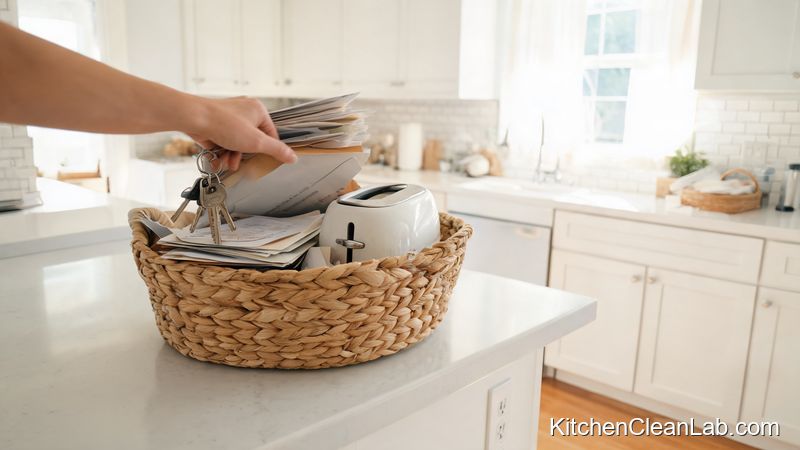
One of the most common mistakes is using the counter as the family communication center. Mail, school papers, keys, chargers, and devices multiply quickly. Even if you start with one tray, it soon becomes a pile. Move paper sorting and device charging to an entryway console, desk, or mudroom.
Another error is over-decorating. One vase or a small fruit bowl is fine, but rows of decor leave no room for prep and become grease traps. Rotate decorative pieces seasonally, or move them to open shelving above the counter.
Avoid overcrowding even useful zones. If the coffee station has a grinder, scale, kettle, pour-over cone, and three jars of beans, it becomes difficult to wipe. Consolidate beans into one airtight canister, store filters in a drawer, and hide backup supplies in a cabinet.
Finally, don't ignore cabinet capacity. If drawers and cabinets are stuffed, counters will stay cluttered. Purge duplicate tools, chipped mugs, mismatched storage containers, and expired food before buying shelves or bins. The goal is less stuff, not more storage for stuff you don't use.
Frequently Asked Questions
These are the most common questions about keeping kitchen counters clear without making daily cooking inconvenient. The answers focus on realistic frequency of use, not perfection.
How do I keep my kitchen counter clutter-free every day?
Start with a nightly reset: move mail and devices out, return ingredients to cabinets, and wipe the surface. Keep one small tray for truly daily items. If it doesn't fit in the tray, store it. The simpler the landing zone, the easier it is to maintain.
What should never be stored on a kitchen counter?
Avoid storing mail, laptops, tablets, phone chargers, cookbooks near the stove, large decorative collections, and appliances you use less than once a week. These items create visual noise, trap grease, and force you to move them every time you clean.
Can I leave small appliances on the counter if I use them weekly?
Weekly-use appliances can stay only if you have abundant counter space and a specific station. In most kitchens, keep the counter for daily-use items. Store weekly-use appliances in a lower cabinet, pantry, or appliance garage so they remain accessible but off the main prep surface.
What is the best cleaner for quartz countertops?
Use warm water with a few drops of mild dish soap or a pH-neutral quartz cleaner. Avoid bleach, vinegar, abrasive sponges, and scouring powders. Dry the surface with a clean microfiber cloth after cleaning to prevent water spots.
Final Reminder: Keep the System Simple
Your countertop system should survive a busy Tuesday, not just a Sunday reset. If maintenance feels too complicated, reduce the number of items on the surface even further.
Clear counters reward you with faster meal prep, easier wiping, and fewer visual distractions. Start with one zone today—clear the sink or coffee station, wipe it, and keep only what you truly use. The rest can wait in a drawer or cabinet. That single clear stretch of countertop is the beginning of a kitchen that cleans itself.